

Harvard Medical School's Diabetes Management Model Launches in China, Smart Healthcare Platform 'Zhangshang Tangyi' Addresses Patient Education Challenges
The incidence of chronic diseases is closely linked to the development of modern society and changes in people’s lifestyles. Characterized by an insidious onset and a prolonged course, chronic diseases require long-term, strict disease control and treatment once diagnosed. In contemporary China, patient education and management face significant challenges due to constraints such as a large patient population and a scarcity of specialist resources. The smart healthcare management model, jointly developed by Tangyi (Pocket Sugar Doctor) and the Joslin Diabetes Center of Harvard Medical School, effectively addresses the difficulty traditional chronic disease management faces in maintaining comprehensive, hands-on control over the nuances of care. Reportedly, this marks the first collaboration between the Joslin Diabetes Center and a mobile chronic disease management platform in China.
Founded in 1898, the Joslin Diabetes Center of Harvard Medical School is the world’s largest center dedicated to diabetes research and clinical care, earning it the reputation as the “Mecca of Diabetes.” With over a century of development, it has become an international hub for collaboration among medical experts worldwide and for multidisciplinary research and treatment of diabetes, playing a pivotal role at the forefront of the global fight against the disease.
For over a century, Joslin Diabetes Center has remained an internationally recognized specialist institution dedicated to the treatment, research, and education of diabetes, committed to improving the lives of patients with this condition. This vision aligns perfectly with that of Zhangshang Tangyi.
Precise Management: Significant Implications for Patient Self-Management
The primary goal of diabetes self-management is to control blood glucose levels. Effective glycemic management can help patients significantly reduce or delay the onset and progression of diabetic complications. Manually recording daily blood glucose readings in chronological order is a time-consuming and error-prone task. Any loss or inaccuracies in these data may lead to misjudgment or oversight by the attending physician regarding the patient’s current clinical status.
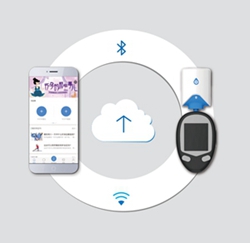
Faced with hundreds or even thousands of blood glucose readings, the “Tang+” smart connectivity module for blood glucose meters simplifies and streamlines batch data management, bringing “smart” capabilities to tens of millions of conventional blood glucose meters. Without any interface operations, users need only open the Zhangshang Tangyi APP and enable Bluetooth on their mobile phones, allowing even middle-aged and elderly individuals to easily achieve “instant” data transmission.
With accurate and seamless continuous glucose monitoring data, Zhangshang Tangyi has made significant strides in increasing the frequency and effectiveness of blood glucose monitoring. For healthcare teams, accessing more detailed clinical treatment feedback through health big data maximizes physicians’ “precision” in managing the entire course of disease diagnosis and treatment.
The Intelligent Healthcare System Continues to Evolve, Benefiting Both Patients and Providers
During self-management, most patients with diabetes prioritize medication regimens, while often paying insufficient attention to diet, exercise, and psychological care. In fact, relying solely on the attending physician for disease-specific condition and medication guidance is far from adequate. The chronic disease collaborative care team provided by Zhangshang Tangyi includes not only attending physicians and nurses, but also the patients themselves, dietitians, exercise specialists, and physician assistants who offer both medical and psychological counseling services. Clinical evidence has demonstrated that this multidisciplinary, interactive healthcare team approach delivers more effective therapeutic outcomes for patients.
Nowadays, an increasing number of physicians have grown accustomed to, and even become reliant on, such intelligent medical management platforms. Mobile healthcare has truly permeated every aspect of doctors’ professional work and learning, from updating medical knowledge and scheduling daily tasks to expanding patient access channels, managing out-of-hospital patients, and building personal professional brands. Director Feng from Shanghai Oriental Hospital shared his insights: “Taking my own experience as an example, over two years of using the intelligent medical platform, I observed a significant reduction in patients’ glycated hemoglobin (HbA1c) levels across multiple follow-up visits. Patients no longer need to frequently visit hospitals and wait in line for consultations as they did in the past, while physicians can manage the entire process with only about half an hour of fragmented time each day. Both doctors and patients are beneficiaries.”
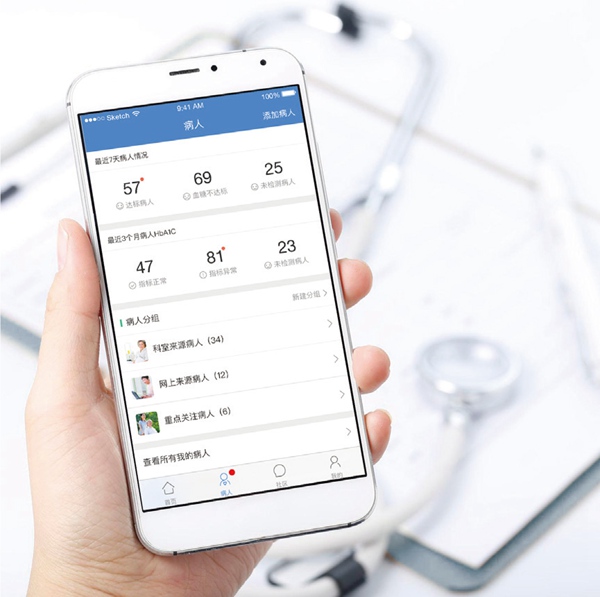
Lifting the “Veil of Mystery” from Doctors in Consulting Rooms: Intelligent Healthcare Management Enhances Treatment Efficiency, While Online Interaction and Multi-Party Collaboration Foster More Harmonious Doctor-Patient Communication. Say Goodbye to the Complex Processes and Overcrowding of Traditional Healthcare; in the Era of Intelligent Healthcare, Both Doctors and Patients Embrace Innovative Smart Treatment Methods and Highly Efficient Management Processes That Thoroughly Disrupt Tradition.