

Serial Biotech Entrepreneur and Investor Dr. Zhao Chunlin Files IPO Prospectus After Founding Three Companies and Investing in Over a Dozen in a Single Year
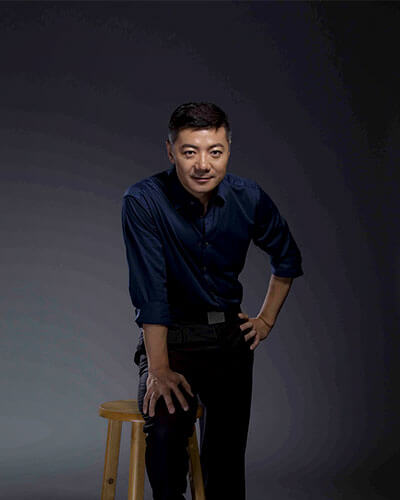
Dr. Zhao Chunlin, Founder of Anlong Fund
In 1985, Zhao Chunlin was admitted to the Department of Biology at Tsinghua University. In 1990, he traveled across the ocean to the University of Pittsburgh School of Medicine in the United States to pursue a Ph.D. in Public Health. Although his graduate studies focused on basic medical sciences, Zhao maintained close ties with American medical students and clinicians. They attended classes together, studied anatomy, and prepared for the MCAT, where he even achieved the third-highest score in Pittsburgh.
At that time, he had also considered pursuing a career in medicine. However, after careful consideration, Zhao Chunlin realized that medical training in the United States was excessively lengthy; one would not be able to independently practice and treat patients until nearly the age of 40. Weighing the pros and cons, he ultimately abandoned the idea.
At that time, it was placed onZhao ChunlinFaced with three options, the first was to become a lawyer. However, Chinese nationals in the United States are largely limited to practicing as patent attorneys, which essentially involves nitpicking wording and preparing documentation—work that did not align with his interests. The second option was to switch to the IT industry, which would have meant completely abandoning his prior academic training, something he found equally unacceptable. After considering various possibilities, Zhao Chunlin ultimately chose business. In 1998, he moved to the University of Chicago to pursue an MBA.
In late 2000, Zhao Chunlin completed his studies and joined Pfizer, entering the pharmaceutical industry. His three-year tenure at this large corporation gave him a profound sense of what it meant to be merely a cog in the machine: “You may think you are indispensable within the company, but to put it bluntly, the company couldn’t care less whether you stay or leave; anyone can easily replace you.”
Pfizer’s experience was a key factor that prompted Zhao Chunlin to return to China and establish his company.
Returning to China to Start a Business
In 2004, amid China’s booming economic development, Zhao Chunlin returned to his homeland alongside numerous overseas-educated scholars, ready to roll up their sleeves and embark on ambitious endeavors.
At that time, Zhao Chunlin was financially modest, with total savings amounting to a mere $20,000. Out of necessity, he borrowed money from his family to raise 200,000 yuan. With an additional subsidy of 100,000 yuan from Zhongguancun, he founded Longmaide, a research and medical device company, engaging in the distribution of life science products and medical instruments.
In 2008, Zhao Chunlin sold Longmaide to a Taiwan-funded enterprise. At that time, the company’s total revenue had exceeded RMB 10 million, and its market valuation had grown nearly 50-fold compared to its inception. Reflecting on this entrepreneurial venture afterward, he still identified areas where improvements could have been made.
First, Longmai operates as a distributor without its own products or brand, effectively doing the groundwork for others. No matter how strong its sales performance is, upstream manufacturers firmly control distribution rights and can replace it at any time. Investment institutions are generally reluctant to invest in pure distribution companies due to various uncertainties that constantly expose them to the risk of failure.
Second, the company sold only high-end scientific research equipment. At that time, there were just over 200 high-end research institutions across China, resulting in a low market ceiling and a limited pool of customers who could afford such products.
In August 2011, Zhao Chunlin joined Guoke Jiahe, a fund under the Chinese Academy of Sciences (CAS), as a partner. The CAS fund had a profound influence on the formation of Zhao Chunlin’s investment philosophy. This was the first fund he participated in; after leaving the corporate sector, he began to evaluate and assess projects from an investor’s perspective.
In October 2014, after spending three years at Guoke Jiahe,Zhao Chunlin joined Kangqiao Capital, a subsidiary of Tasly. As a late-stage fund, Kangqiao Capital typically invests in large-scale projects. At that time, Guoke Jiahe Fund was5a scale of hundreds of millions of RMB, once it came to CB Capital, suddenly increased to $200 million, with each investment project easily reaching over $100 million. This experience greatlyBroadened Zhao Chunlin's horizons.
At the end of 2015, Zhao Chunlin founded Anlong Fund. In his view,Late-stage funds, particularly those exceeding RMB 1 billion, often chase high-profile projects and compete for government resources, with minimal application of professional expertise.。Investing in unicorn companies at a late stage is akin to posing for a group photo with a cohort of high-achievers—basking in their reflected glory—which somewhat runs counter to the original intent of making such investments.
For early-stage funds, beyond generating returns for LPs, the ability to maximize the application of their entrepreneurial experience and professional expertise is what Zhao Chunlin truly aims to achieve.
In January 2016, after extensive preparations, Zhao Chunlin and several members from the Chinese Academy of Sciences jointly established Anlong Fund. This fund, which focuses on the life sciences and healthcare sectors, primarily encompasses three investment areas:Pharmaceuticals, Medical Devices, and Healthcare Services。
Medical Services
In the field of mobile health, Anlong Fund has made limited investments. Due to national policies and the conservative nature of physicians, the development trajectory of this sector has remained unclear, and its profit model is ill-defined.
“It is ridiculous that many startups are valued at over 100 million yuan before their business models have even been clearly defined. Much like the dot-com bubble of the 1990s, they are highly likely to fail in successive waves,” said Zhao Chunlin.
Anlong Maide is the only mobile health enterprise that Anlong Fund has attempted to invest in, and it is also a company co-founded by Anlong Fund. In 2016, Anlong Maide achieved revenues of over RMB 3 million, and by 2017, its contracted revenue had already reached nearly RMB 5 million. It is one of the few profitable companies in the mobile health sector.
In addition to mobile health, Anlong Fund has also invested in several companies in the fields of artificial intelligence and big data, such as Lianxin Medical. Unlike typical AI and big data companies that focus on oncology applications for medical diagnosis, Lianxin Medical centers its efforts not on diagnosis but on radiotherapy treatment planning for tumors.
By providing more precise, intelligent, and efficient personalized clinical radiotherapy plans, to improve the cure rate of radiotherapy for cancer, reduce damage to normal tissues, and ultimately extend the lives of cancer patients.
When Anlong Fund invested in these companies, their valuations were all in the tens of millions of yuan. “For a brand-new sector and credible entrepreneurs, we are willing to take a bet on valuations in the tens of millions. We join founders in exploring new frontiers; who knows, one of these ventures might become the Tencent or Alibaba of this field. However, the odds are exceedingly slim, so we are unwilling to act as ‘bag holders’,” Zhao Chunlin told VCBeat.
New Drug Development
Current opportunities in the pharmaceutical sector lie in “new drug development,” with the quotation marks indicating that domestic new drug development still requires endorsement from multinational pharmaceutical companies.“It is very difficult for new drugs from our country to gain recognition and meet the standards of European and American markets,” said Zhao Chunlin.
Guided by this philosophy, Anlong Fund, in collaboration with the Chinese Academy of Sciences and Pfizer, co-established Kehui Innovation—a corporate incubator focused on the Chinese market, managed with participation from multinational corporations, and eligible for government policy support. Currently, Kehui Innovation has launched its first new drug R&D enterprise in Chengdu, which is also a company co-founded by Anlong.
Anlong Fund currently does not invest in domestic innovative products, especially those claiming to be “globally leading” or “the world’s only.”Even if these products and technologies have secured approvals and certificates from the National Medical Products Administration (NMPA) and navigated various hurdles such as tendering and pricing, most domestic clinicians will remain skeptical of them in the absence of supporting literature from renowned foreign academic institutions and clinical centers, as well as endorsements from well-capitalized multinational corporations. Consequently, these products and technologies will fail to gain rapid acceptance in the clinical market, and may never be recognized at all.
“This is the adverse consequence of the widespread skepticism and rejection among domestic physicians, resulting from years of deception by Chinese enterprises.“Zhao Chunlin said.”
Take cancer as an example: if Chinese entrepreneurs suddenly propose a target that has not been validated and is absent from scientific literature, beyond the important targets already recognized internationally, it can be said that such entrepreneurs have essentially “bid farewell” to Anlong Fund.
In 2016, Anlong Fund invested RMB 10 million in Connexin Therapeutics to support new drug development. This biopharmaceutical company, with products in the clinical (research) stage, is dedicated to developing innovative drugs for autoimmune and allergic diseases. Its lead candidate, CBP-307, is a second-generation immunomodulator targeting S1P1 (a GPCR), intended for the treatment of various autoimmune conditions, including multiple sclerosis, inflammatory bowel disease, and psoriasis.
In January this year, Canaanda secured a $20 million premium financing round led by Qiming Venture Partners.
Zhao Chunlin told VCBeat,Abroad, there are already mature products targeting S1P1, with annual sales reaching $700 million.However, this foreign product has not entered the Chinese market and suffers from insufficient specificity and sensitivity, necessitating higher dosages and resulting in more significant side effects. In contrast, Kangnaide’s product offers higher specificity and sensitivity, which allows for lower dosages and reduced side effects, thereby presenting substantial market potential.
Medical Devices
Import substitution of medical devices, particularly high-end consumables, has also received government support. The policy dividends for high-end substitution lie not only in product patents and the leniency of clinical and regulatory approval policies, but also in the preferential policies governing hospital tendering and procurement.The ideal founders for such projects are distributors of products from multinational corporations.. This is Zhao Chunlin’s core expertise and the industry he knows best.
These individuals typically have a background in clinical medicine. They entered the private sector early in their careers, working as sales representatives for pharmaceutical or medical device multinational corporations. Within a few years, they transitioned into becoming distributors. After more than a decade of navigating the complexities of the medical distribution industry, they have firmly secured control over medical sales channels and possess deep expertise in their respective market segments.
Amid intensifying competition that has squeezed market share and profit margins, they seek to transform into manufacturers with in-house R&D capabilities. Leveraging their market expertise and distribution networks, they collaborate with domestic research institutions to develop medical devices tailored to China’s specific conditions. By capitalizing on government policy preferences in regulatory approval, tendering, and procurement, they aim to replace imported products through their own channels or extend their reach to county- and township-level hospitals, thereby rapidly capturing the domestic healthcare market.
4D Xiangtai, Youtu Technology, and Guoke Hengtai are allInvested by Anlong FundRepresentative of such projects.
Guoke Hengtai operates a logistics platform for high-end medical consumables. Manufacturers sell medical products (high-end devices and consumables) to the logistics platform. These goods bypass traditional distributors; instead, distributors place orders directly with Guoke Hengtai, which then delivers the products directly to hospitals based on those orders. After surgeries, Guoke Hengtai retrieves any unused products. The processes that previously required secondary and tertiary distributors are now handled entirely by Guoke Hengtai as a single logistics provider.
From Struggling to Secure Orders to Achieving Annual Sales Exceeding RMB 2 Billion and Filing for an SME Board Listing: Guoke Hengtai’s Remarkable Achievements in Just Three Years
In addition, there is U-Tu Technology, founded by Wu Zhe. A graduate of the University of Rochester in the United States with a degree in Electrical Engineering, Wu studied under Professor Kevin Parker, an IEEE Fellow. His key research on elasticity imaging patents was adopted by GE, and he was honored with the 2004 Annual Best New Scientist Award, the sole recipient from the American Institute of Ultrasound in Medicine (AIUM). In 2011, this “post-70s” returnee PhD, who had served as a technical core member for global corporations and as a professor at prestigious universities while engaging in medical imaging research for 13 years in the United States, came to Chengdu to establish U-Tu Technology Co., Ltd.
Project Specialist, Ministry of Science and Technology: Professor Yu Xing, a senior domestic ultrasound expert, has stated that medical ultrasound diagnosis has long been widely embraced in clinical practice. Due to its broad applications and the large volume of patients examined, severe queuing for ultrasound examinations is common in many hospitals, particularly in large and medium-sized institutions. For bedridden critically ill patients and elderly individuals with limited mobility, handheld ultrasound devices offer significantly greater convenience. Although portable ultrasound equipment is currently available, it still weighs several kilograms and requires AC power supply, meaning its practical application remains subject to multiple constraints.
Youtu Technology’s handheld ultrasound product has already obtained production licensing from the China Food and Drug Administration (CFDA). The market, gradually matured under the cultivation of GE’s comparable V-Scan product, represents a typical model of high-end domestic substitution for imported products. The miniaturization and portability of imaging diagnostic equipment address urgent clinical needs, offering broad application prospects in anesthesiology, emergency medicine, vascular intervention, and large-scale disease screening.
Invested in 13 Companies
Throughout 2016,including the three companies involved in its founding,Anlong Fund has invested in a total of 13 companies, spanning new drug R&D, high-end medical devices, and intelligent healthcare and big data applications within medical services.
In the current medical field, nearly all new technologies that truly evoke a sense of vast future market potential originate from the life sciences.Life sciences are a fundamental prerequisite for technologies that can drive industry development, including genetic testing, gene editing, and stem cell therapy.
“In 2017, we will continue to focus on the life sciences sector. Among the three areas of pharmaceuticals, medical devices, and healthcare services, the first two will remain Anlong Fund’s investment priorities,” Zhao Chunlin told VCBeat.
The life sciences and healthcare sectors are experiencing a phase of rapid development, under the leadership of Zhao Chunlin,Anlong Fund is also going further and further down the path of cheating.
Note: All data related to this enterprise in this article were provided and confirmed by the interviewee.