

Top 10 Medical & Health Rumors of Q1 2017: Eradicating Misinformation at Its Source
In recent years, medical rumors have gradually become a significant threat to public health. In response to this phenomenon, on April 14, 2017, Tencent News hosted the second offline salon of its Fact-Checking Platform, titled “Tracing Sources • Fact-Checking: Verification and Response to Medical and Health Misinformation.” This salon summarized the outcomes of the first Fact-Checking Salon and discussed the formation mechanisms of medical rumors as well as strategies for addressing them.
At the salon, Wang Yongzhi, General Manager of Media Expansion at Tencent News, stated that the “Jiaozhen” (Fact-Check) platform had achieved phased results. In the first quarter of 2017, more than 150 rumor-refuting articles and methodology pieces were published, accumulating over 100 million total views, with more than ten individual articles each surpassing one million reads.
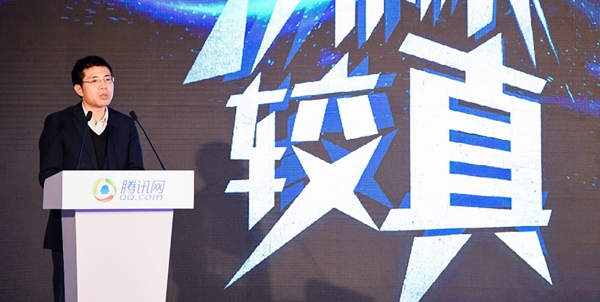
Wang Yongzhi, General Manager of Media Expansion at Tencent.com
Mao Qun’an, Director of the Department of Publicity and Spokesperson for the National Health and Family Planning Commission, believes that the current vast and highly diverse volume of information has caused significant confusion among the public. He places high expectations on the Jiaozhen platform, hoping it will help trace information to its source, correct inaccuracies, enhance the public’s ability to identify misinformation and avoid being deceived, and foster a more critical mindset toward debunking health-related rumors.
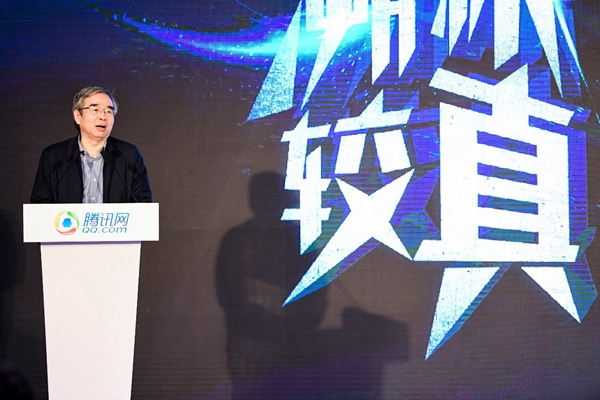
Mao Qun'an, Director of the Department of Publicity and Spokesperson for the National Health and Family Planning Commission
In response to the proliferation of rumors circulating in the marketplace, particularly those related to healthcare, Zeng Guang, Chief Epidemiologist at the Chinese Center for Disease Control and Prevention, pointed out: “Healthcare-related rumors are often linked to health, disease, and death, making them more likely to incite public panic and facilitate widespread dissemination. It is essential to understand the mechanisms underlying rumor formation in order to debunk them effectively.”
In this regard, Ma Ling, a professor at the School of Journalism, Fudan University, shared insights on the harms of healthcare-related rumors in a risk society and strategies for their mitigation. We are living in a risk society where fear, anxiety, and distrust have become prevalent social sentiments. The public has raised questions about the functionality and legitimacy of political, economic, and scientific systems, paying greater attention to information, thereby laying the groundwork for the proliferation of rumors. Collective efforts are needed to debunk such rumors.
Liu Zhefeng, the founder of the China Medical Self-Media Alliance, believes that the alliance serves as an effective organization for purifying the public opinion environment. He noted that members of the alliance include “Burns Superman A-Bao,” “A Journalist with Some Ideals,” CCTV journalist Wang Zhian, and People’s Daily journalist Bai Jianfeng.
In addition to alliances, it is equally essential to leverage technology for efficient rumor refutation. Gao Xuefeng, Technical Director of Tencent’s Online Media Division, pointed out that the “Jiaozhen” (Fact-Check) platform adopts a product-oriented approach to provide greater support for rumor refutation. After filtering through big data, the platform applies dimensional weighting based on the importance, deceptiveness, virality, and harmfulness of rumors, and employs techniques such as deep learning, image recognition, and popularity-based ranking to achieve accurate rumor identification.
Li Tianliang, Deputy Editor-in-Chief of Tencent.com, stated that the Jiaozhen platform currently has over 100 partnered professional fact-checkers, covering various fields such as food, nutrition, and medicine. With its growing influence, the Jiaozhen platform officially joined the Duke Reporters’ Lab’s global database of fact-checking websites in late February, becoming the only Chinese-language media outlet based in China to be included. Meanwhile, the Jiaozhen platform has formed a unified front against rumors with multiple authoritative departments and institutions, including the National Medical Products Administration, the National Health and Family Planning Commission, and the Chinese Center for Disease Control and Prevention, which will significantly enhance the effectiveness of rumor refutation.
During the salon, Tencent News also released the Top 10 List of Medical and Health Rumors for the First Quarter of 2017. The list reveals that long-debunked claims, such as “Vaccines are unsafe, and children should avoid them” and “Facial flushing after drinking indicates high alcohol tolerance,” still rank among the top 10.

Top 10 Health and Medical Rumors of Q1 2017
As social networks continue to fragment audience attention, and many organizations engage in sensationalist tactics by first spreading rumors, then issuing denials, and ultimately confirming the facts, this type of marketing-driven disinformation has further complicated fact-checking efforts. Tencent News remains committed to the professional journalistic ethic of tracing and verifying facts. Through its “Jiaozhen” platform, it aims to pool multi-party resources to trace the origins of rumors and debunk them, thereby restoring a healthy information environment for the public.