

Who Says TCM Isn't Scientific? AI-Powered Prescription Systems Are Already Here!
2005,After nine years of dedicated study at Tsinghua University, Zhou Jin, who earned a Ph.D. in Computer Engineering, stepped out of the campus gates, carrying with him a deep-seated passion forFrontierDriven by a passion for technology, he resolutely joined IBM.
Much like the Qi Sect and Sword Sect of the Huashan School in *The Smiling, Proud Wanderer*, Tsinghua University is similarly divided into two technical schools of thought: one focuses on the technology itself, while the other places greater emphasis on its application. Zhou Jin belongs to the latter.
“Over the years, Zhou Jin has been seeking opportunities to fully showcase his talents.”“If technology cannot be translated into products, it is like a knot in the heart that cannot be released.”
Guided by his family, Zhou Jin once had the opportunity to pursue a career in medicine. However, due to his congenital color weakness, he was ineligible to apply to medical schools and had no choice but to abandon this path. In 2008, after leaving IBM and preparing to start his own business, Zhou Jin serendipitously secured an opportunity to perform data mining for the China Academy of Chinese Medical Sciences.
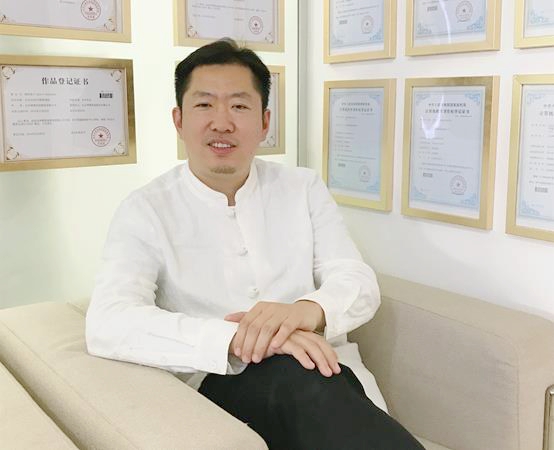
Dr. Jin Zhou, CEO of Shenhuang Technology
Five Years in the Making
The China Academy of Chinese Medical Sciences possesses an extensive collection of traditional Chinese medicine (TCM) classics, yet it has long lacked effective means to unlock their value. In 2008, upon learning of this situation, Zhou Jin decided to take on the task of helping digitize and structure these outstanding ancient TCM texts. The project was named the TCM Think Tank.
“Digitization is a highly complex process. Due to the varying forms of Traditional Chinese characters across different dynasties and the absence of punctuation marks, the texts must first be scanned into electronic format. The characters are then segmented and organized before being handed over to professional editors specializing in Traditional Chinese Medicine for completion and refinement..” Zhou Jin told VCBeat.
According to his recollection, the editorial team of the Traditional Chinese Medicine (TCM) Think Tank at that time consisted of approximately 15 members. It took about five years and a rigorous three-round review and proofreading process by experts from the China Academy of Chinese Medical Sciences to complete the digitization of nearly 600 ancient TCM texts, comprising close to 10 million characters.
“Classical Chinese is far more concise than modern written Chinese; these 10 million characters contain an immense amount of information.”
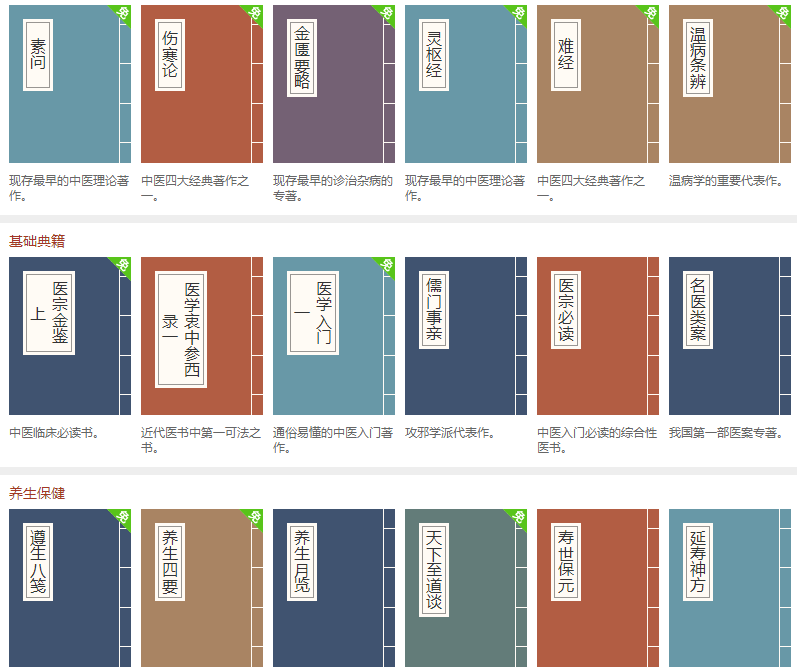
Digitized Ancient Chinese Medical Texts
Obscure and difficult-to-decipher ancient characters were converted into simplified Chinese characters arranged in horizontal lines. However, for Zhou Jin, this merely marked the completion of the initial digitization phase; the structuring of the text was the key step.
Retrieval of Classical Chinese texts is not like a search engine that merely performs string matching; for instance, "ganmao" (common cold), "shanghan" (cold damage), and "fenghan" (wind-cold) are semantically related terms.In Classical Chinese, many near-synonyms lack such a lexicon; for instance, “diabetes mellitus” and “Xiao Ke disease” refer to the same condition. Similarly, “hypertension” was termed “vertigo” in Classical Chinese. These near-synonyms and synonyms must be structured before they can be effectively utilized.
“The ultimate goal of structuring is to decompose the medication, quality, and dosage, thereby describing the etiology, pathogenesis, therapeutic principles, and treatment methods of the herb. Much like paragraphing in language arts, it requires separating the text into distinct sections.。“Zhou Jin told VCBeat.”
At that time, the VBInsight team developed an electronic annotation system in which staff members assigned labels to selected text segments, and the system automatically extracted the labeled content.As there were no standardized templates for the labels at that time, Zhou Jin and his team had to consult with experts from the China Academy of Chinese Medical Sciences to finalize the design. As a result, the entire book took on the structure of a tree, with a complete and coherent framework.
The establishment of the Traditional Chinese Medicine (TCM) Think Tank has been endorsed by the China Academy of Chinese Medical Sciences, the World Federation of Chinese Medicine Societies, and the National Administration of Traditional Chinese Medicine. Meanwhile, this also allowed Zhou Jin to recognize the potential for data mining in ancient TCM texts. Consequently, in August 2012, he formally established Shenhuang Technology in Beijing.
Zhou Jin said.
Digitizing traditional Chinese medicine (TCM) classics is a capability that most companies possess; however, few companies have digitized more than 100 ancient TCM texts.Shenhuang Technology’s Traditional Chinese Medicine (TCM) Think Tank houses nearly 2,000 ancient TCM texts.. Furthermore, only Shenhuang Technology is currently capable of further structuring the content, such as retrieving all medical cases related to vertigo.
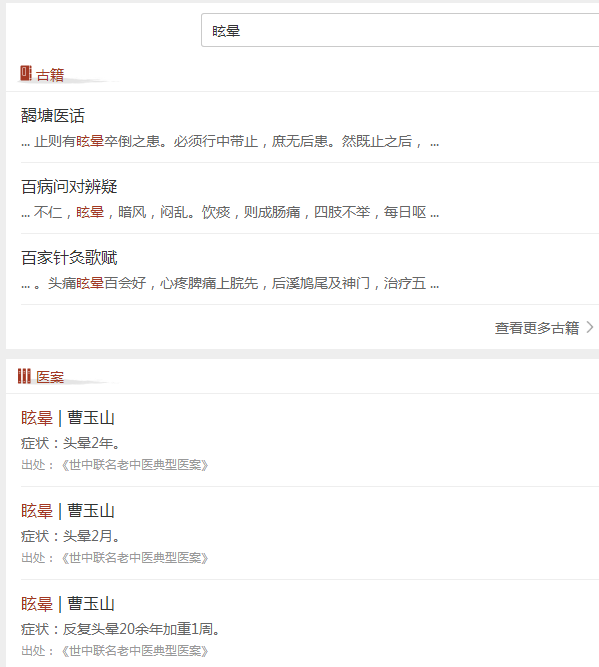
Retrieve Vertigo Results
Introducing Artificial Intelligence
For a long time, the level of informatization in Traditional Chinese Medicine (TCM) has been significantly lagging. On one hand, TCM practitioners have had limited interaction with other industries; on the other, TCM philosophy is relatively conservative. As a result, new technologies remain largely unexplored in this sector, akin to an uncultivated wilderness.
In traditional Chinese medicine formulas composed of multiple herbs, slight adjustments to the dosage of individual ingredients can enable the treatment of a different condition. Substituting a few of the herbs transforms the formula into an entirely different prescription. This inevitably raises questions: What specific therapeutic role does each individual herb play? And what is the significance of the dosage?
Past research approaches often relied on analyzing etiology, pathogenesis, therapeutic principles, and treatment methods through textual sources. Researchers typically compiled existing data alongside their own medical interpretations, yielding findings that were relatively one-sided.
Zhou Jin stated, “There is nothing inherently wrong with this approach, but it lacks scientific support. In such studies, scholars often review only a dozen or so references to produce a single paper, resulting in insufficient data volume and slow progress.”
Variations in drug dosage alter the interactions among the sovereign, minister, assistant, and envoy components of a formula. The underlying patterns governing these interactions require extensive data analysis, for which the digitization and structuring of traditional Chinese medicine classics serve as the foundational basis.。
During his doctoral studies at Tsinghua University, Zhou Jin specialized in pattern recognition, encompassing license plate recognition, facial recognition, and speech recognition—all of which fall within the scope of this field. In the medical domain, this technology is likewise applied to analyze the associations between diseases.
In 2015, the Traditional Chinese Medicine (TCM) Think Tank added intelligent prescription and self-diagnosis features based on ancient medical texts and herbal formulas. Intelligent prescription is designed for physicians, while self-diagnosis is intended for patients.
In the field of Traditional Chinese Medicine (TCM), many renowned experts possess exceptional clinical expertise; however, their therapeutic approaches are difficult to disseminate widely due to a lack of promotional platforms. The TCM Think Tank consolidates these theoretical frameworks, diagnostic methods, prescriptions, and medicinal formulas, presenting them through artificial intelligence and interactive Q&A formats., allowing users to select treatment plans from different TCM masters, informing patients what conditions should be treated and how to treat them.
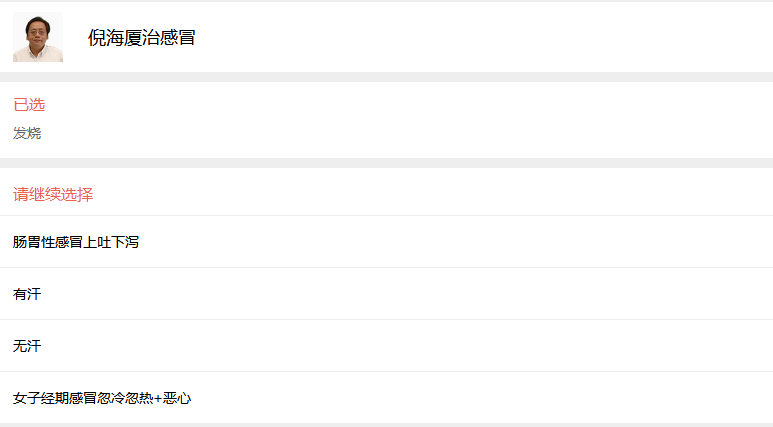
Smart Prescription
“These formulas are all safe prescriptions with national codes, such as Gegen Tang and Chaihu Tang, which are included in the 1,089 TCM formulas certified by the state,” Zhou Jin told VCBeat.
Artificial intelligence and big data can record static medical records, prescriptions, and data, along with the perceptual data generated from the dynamic traditional Chinese medicine diagnostic methods of inspection, auscultation and olfaction, inquiry, and palpation. They then clearly and intuitively present the treatment plans derived from this data to doctors or patients.
Human brains can only reach a limited level of understanding of ancient wisdom within a finite timeframe, whereas artificial intelligence faces no such ceiling. The TCM Think Tank is a biomimetic AI that replicates and reconstructs the diagnostic and therapeutic reasoning of renowned Traditional Chinese Medicine (TCM) masters, enabling not only physicians but also the general public to perform self-diagnosis and self-assessment.
Catering to Diverse Usage Scenarios
Within just one year of its launch, the TCM Think Tank has amassed over 1 million users, including physicians, TCM enthusiasts, medical students, and researchers.
In October 2016, Traditional Chinese Medicine (TCM) Think Tank launched its individual paid subscription service and has since accumulated over 10,000 paying users. Physicians and TCM enthusiasts constitute the primary subscriber base, each accounting for approximately 30% of the total.
In terms of enterprise users, more than 50 government medical institutions, including the Beijing Municipal Health and Family Planning Commission and the Guangdong Provincial Hospital of Traditional Chinese Medicine, have purchased the TCM Think Tank and deployed it for use in secondary Grade-A hospitals or community hospitals.
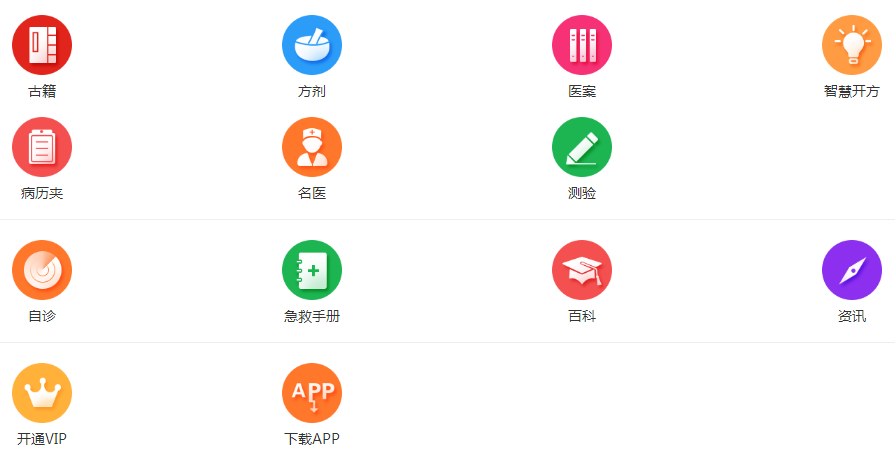
Overview of TCM Think Tank Features
“Different users have different needs, including the need for reading, looking up information, searching for difficult cases, and writing scientific papers. These needs represent different scenarios. Shenhuang Technology has developed various scenarios to allow everyone to experience the value of traditional Chinese medicine,” said Zhou Jin.