

Building an International-Class Pediatric Rehabilitation Clinic Amid a Shortage of Specialists: The LIH Olivia's Place Model
An undeniable fact is that pediatric developmental-behavioral care and pediatric rehabilitation have not yet received widespread attention from healthcare institutions. LIH Olivia’s Place aims to change this predicament.
Shenzhen Changhe Dayun Pediatric Rehabilitation Outpatient Clinic, Beijing Changhe Dayun Pediatric Clinic, and Shanghai Changhe Dayun Pediatric Outpatient Clinic, along with the related clinics/outpatient clinics currently under preparation in Hangzhou and Chengdu, are invested by Beijing Changhe International Healthcare Management Co., Ltd. (hereinafter referred to as “Changhe Medical”). The company has established a long-term strategic partnership with Children’s Specialized Hospital (CSH) in New Jersey, USA, comprehensively introducing CSH’s medical technologies, management processes, and operational models to establish leading healthcare institutions dedicated to providing high-quality services in child development, behavior, and pediatric rehabilitation.
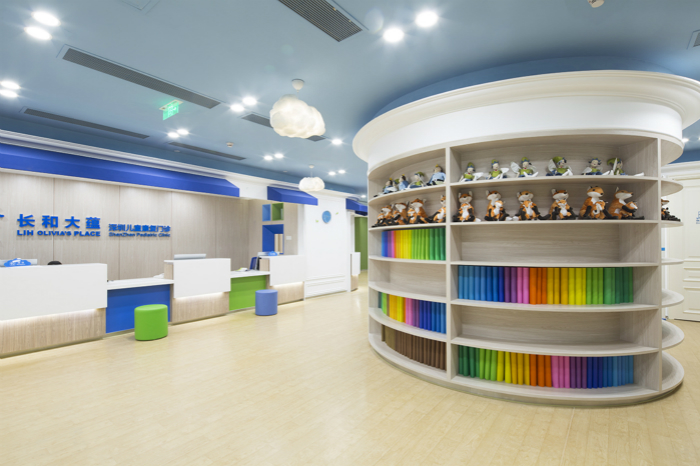
Located in Nanshan, Shenzhen, the Shenzhen Changda Dayun Pediatric Rehabilitation Outpatient Clinic covers an area of 1,400 square meters.
Data indicates that Changhe Dayun provides health management services for infants, high-risk newborns, and children, including growth and development monitoring, nutritional assessment and dietary guidance, neurological and psychological developmental assessment, and family parenting guidance. Meanwhile, it offers internationally advanced diagnostic and therapeutic services for child developmental behavior and pediatric rehabilitation, with particular clinical expertise and advantages in the following areas: Attention-Deficit/Hyperactivity Disorder (ADHD), Autism Spectrum Disorder (ASD), Pervasive Developmental Disorders, language developmental delays and disorders, learning disabilities, reading disorders, cerebral palsy, cognitive impairments, swallowing disorders, and social interaction disorders.
In the early days, pediatric care in China primarily focused on infectious diseases and somatic conditions such as heart disease, diarrhea, and kidney disorders. However, with social development, the passage of time, and rising expectations for quality of life, greater attention is now being paid to psychological and behavioral disorders, making developmental-behavioral pediatrics increasingly important.
So, what exactly sets Changhe Dayun, the branded institution of Changhe Medical’s pediatric rehabilitation services, apart from many other organizations? To explore this, VCBeat interviewed Tian Kun, Vice President of Changhe Medical; Professor Sun Xiaomian, Chief Medical Officer of Shenzhen Changhe Dayun Pediatric Rehabilitation Clinic; and Dr. Michael Dribbon, Vice President and Chief Research Officer of Special Needs Children’s Hospital in New Jersey, discussing the current state of pediatric rehabilitation and clinic development.
1. More than 10% of children require rehabilitation intervention and treatment
Professor Sun Xiaomian told VCBeat, “General pediatrics rarely addresses psychological and behavioral development; however, patients in this category actually account for 10%–15% of the caseload. These children require rehabilitative interventions and treatment, but a systematic solution has not yet been established. Therefore, to address this increasingly serious issue, our clinic has chosen to focus on developmental-behavioral pediatrics, specifically starting with the rehabilitation and prevention of developmental disorders in children.”
There are several major issues in relevant fields in China, namely a shortage of physicians, lack of standardized professional training, and absence of an assessment system for rehabilitation professionals; there are few service institutions, lacking systematic treatment and intervention for children with special needs; meanwhile, the step of preliminary disease screening and diagnosis by general practitioners is missing.
More importantly, rehabilitation institutions in China primarily admit patients with conditions such as cerebral palsy and intellectual (motor) developmental disabilities, with the greatest demand for rehabilitation services focused on motor function impairments. There is a lack of systematic treatment and intervention for children with special needs. These children require multidisciplinary collaborative services involving pediatric developmental-behavioral specialties, pediatric neurology, pediatric rehabilitation, physical therapy, occupational therapy, speech therapy, and psychotherapy. Currently, there is an urgent need to establish a multidisciplinary collaborative healthcare service model for children with special needs in China.
Therefore, the collaboration between Changhe Medical and CSH to introduce Western rehabilitation concepts and models offers significant advantages. On one hand, it adheres to evidence-based medicine to ensure precise treatment; on the other hand, by utilizing the most advanced assessment tools from abroad for detailed evaluations, subsequent treatment and interventions can be highly effective.
So, how significant is the gap between domestic and international assessment tools? Professor Sun Xiaomian stated, “In terms of assessment scales alone, China is relatively backward, with many scales and tools still using outdated versions. Moreover, the introduction of new assessment tools is not easy; standardization requires support at the government level. In short, we cannot continue to use obsolete assessment tools to evaluate children; this situation urgently needs to change.”
Furthermore, clinical assessments by qualified and experienced therapists remain essential. By combining state-of-the-art tools with the expertise of professional therapists, evaluations become highly accurate, minimizing uncertainty. Fortunately, Changhe Dayun Pediatric Rehabilitation Clinic already possesses both of these capabilities.
2. What kind of institution is CSH?
VCBeat learned from Dr. Michael Dribbon that Children’s Specialized Hospital (CSH) in New Jersey, with a 125-year history, is the largest pediatric rehabilitation institution in the United States and the nation’s premier chain specializing in pediatric rehabilitation. Its rehabilitation model, technical framework, operational system, and training programs are distinctive. Leveraging an integrated and continuous service model encompassing outpatient care, inpatient care, and rehabilitative nursing, CSH provides tiered medical rehabilitation services to nearly 30,000 children and young adults aged 0–21 from across the country each year.
CSH’s comprehensive and continuous service model, encompassing outpatient, inpatient, and rehabilitative care, helps children lead fulfilling lives. CSH operates under contracts with the government, and its hospital services are categorized into two types. The first is inpatient treatment, typically lasting 30 days, which provides patients with comprehensive physical, occupational, speech, and psychological therapies, along with rehabilitative nursing care and educational programs. The second is outpatient treatment, designed for patients with milder conditions, where care is delivered at designated facilities located near the patients’ homes.
Reporters learned that in the United States, some renowned pediatric institutions ranked highly by U.S. News & World Report are distinguished by their ability to perform particularly complex and advanced surgeries, such as open-heart surgery and heart transplantation, while offering only limited early-stage rehabilitation services.
CSH differs from others by establishing the continuity and integrity of rehabilitative care—specifically, the ownership of care. Children with disabilities receiving rehabilitation at CSH generally present with multiple special needs involving three or more conditions. CSH prioritizes maximizing benefits for both patients and their families. Their definition of success is distinct; in layman’s terms, it reflects the difference in approach between caring for one’s own child versus a non-biological child. Therefore, CSH places particular emphasis on assessing community needs, thoroughly understanding the specific requirements of each family and child, and providing comprehensive, continuous care. Rehabilitative therapy accompanies the child throughout their growth and development.
99% of CSH’s clinical staff are full-time employees, and the hospital also employs over a dozen family faculty members on a per-diem basis. Over decades of development, CSH has established its own system for managing employee productivity and performance, which has become increasingly refined in the past three to five years. Each year, targets are aligned with the budget and translated into specific workload metrics: physicians are evaluated based on the number of patients treated, while therapists have defined workload requirements. Revenue generated from workloads exceeding these thresholds is shared between the hospital and the therapists, with annual bonuses amounting to approximately 15% of their salaries.
It is evident from CSH’s service model that functional recovery and rehabilitation training during childhood development constitute a long-term process. This necessitates the establishment of a management model characterized by multidisciplinary collaboration, patient- and family-centered care, continuous and coordinated services, and adherence to international standards, with integrated efforts from healthcare, education, community, and family sectors. These practices offer valuable insights for reference.
3. How to collaborate with CSH to facilitate practical implementation and commercialization?
Why Choose to Partner with CSH? Tian Kun, Vice President of Cheung Kong Healthcare, stated, “There are indeed significant differences between overseas and domestic rehabilitation concepts, models, technologies, and operational systems. The reason for introducing advanced technological systems is to integrate them with China’s current market, leverage domestic platforms to facilitate the gradual implementation of these technologies, and help domestic institutions enhance their operational efficiency and technical capabilities. This was our original intention in bringing in the specialized children’s hospital from New Jersey, USA.”
In fact, it took considerable effort for Changhe Medical to initially establish contact with CSH. The process began with consultations with numerous distinguished experts and scholars both domestically and internationally, followed by a two-year period of visiting leading pediatric rehabilitation institutions across Europe and the United States. Ultimately, through the Kessler Institute—the second-ranked comprehensive rehabilitation medical institution in the U.S.—Changhe Medical identified CSH, its pediatric rehabilitation training and research base, thereby securing its ideal partner.
Of course, the introduction does not mean a complete copy. VCBeat has learned that Changhe Dayun Children's Rehabilitation Clinic began to transform it through online communication and training with CSH. Tian Kun told reporters three specific implementation and transformation tasks.
First, in terms of technical training, CSH instructors will provide training to domestic therapists and physicians by integrating textbooks from foreign training systems.
Second, in terms of operations. As is well known, public hospital HIS systems have limited extensibility in the field of rehabilitation and require redevelopment to integrate functional support for rehabilitation services. Changhe Dayun Pediatric Rehabilitation Outpatient Department has collaborated with domestic HIS vendors to carry out secondary development, aligning its systems with international standards.
Third, strengthen multidisciplinary collaboration between Eastern and Western medical teams, including cooperation between physicians and therapists. This necessitates bilingual capabilities. Taking the development of Hospital Information Systems (HIS) as an example, such systems not only provide rehabilitation function support but are also available in bilingual versions, representing concrete, practical implementations.
4. Given the high costs associated with offline chain operations, what are the primary business activities of Changhe and Dayun?
Establishing brick-and-mortar clinics incurs substantial costs, reaching the tens of millions of yuan. Beijing Changhe Dayun Pediatric Clinic began its preparatory work in March 2015 and obtained its medical practice license in August 2015. Shenzhen Changhe Dayun Children’s Rehabilitation Outpatient Department commenced preparations in May 2016 and secured its medical practice license in December 2016.
Tian Kun introduced, “Changhe Dayun primarily promotes interdisciplinary, internationalized one-stop services. In Shenzhen, for instance, it has obtained qualifications in three specialties: pediatrics, child healthcare, and rehabilitation medicine. Centered on each family, three teams of physicians provide services for children.”
What does the diagnostic and intervention process entail? Reporters learned that, based on the child’s needs, specialists from different departments are initially consulted, primarily to conduct differential diagnoses. Following diagnosis, a multidisciplinary assessment of the child’s current condition is performed to lay the groundwork for subsequent treatment. This assessment is comprehensive, covering speech and language issues, gross and fine motor skills, and psychological and behavioral concerns, among others. Accordingly, physicians will convene a multidisciplinary consultation involving relevant specialist therapists, guided by the child’s behavioral manifestations and the clinical history obtained through inquiry.
It is evident that public welfare organizations in China prioritize diagnosis over treatment. The primary reason for this is that the competencies of domestic therapists still require further improvement. To address this, Changhe Dayun Pediatric Rehabilitation Outpatient Department has adopted the approach of directly recruiting senior international therapists to participate in assessments and provide supervisory training for junior therapists.
Furthermore, according to Professor Sun Xiaomian, the team is currently developing more forward-looking services, such as interventions for preterm infants and high-risk infants. Following the relaxation of the two-child policy, there has been an increase in the incidence of preterm birth and high-risk pregnancies. These conditions can directly lead to developmental and behavioral disorders in children.
Professor Sun Xiaomian further elaborated, “The ‘early intervention’ referred to here differs from early childhood education; rather, it denotes early, precision-based intervention. This approach requires the collaborative efforts of physical, occupational, speech, and psychological therapists to deliver targeted interventions. For preterm infants and high-risk neonates, such interventional stimulation facilitates the re-establishment of new neural circuits in the brain, thereby achieving functional reconstruction. The philosophy of preventive rehabilitation aims to proactively prevent the occurrence of problems or minimize their severity and incidence through precision-based interventions.”
5. How to collaborate with schools to address developmental and behavioral issues in school-aged children?
As previously mentioned, in China, a greater number of children in need of treatment are actually located in institutions such as schools. However, under the current circumstances, physicians are not permitted to practice in school settings. How can Changhe Dayun Pediatric Rehabilitation Outpatient Clinic collaborate with schools to provide better services?
It has been learned that this is primarily achieved through the following channels. First, free lectures are conducted in schools to help teachers address gaps in their understanding of children with developmental disorders. Meanwhile, training and educational programs are organized for parents to enhance their awareness of children with developmental behavioral disorders.
Secondly, we collaborate with international schools and special education teachers to conduct health screenings. Upon identifying developmental and behavioral disorders during screening, individuals are referred to the Changhe Dayun Clinic for assessment and, if necessary, further treatment.
Another scenario involves providing on-site guidance directly, subject to institutional or school approval and policy compliance. This approach utilizes break times between classes to facilitate rehabilitation training, thereby saving time. However, this initiative is currently still in the consultation phase.
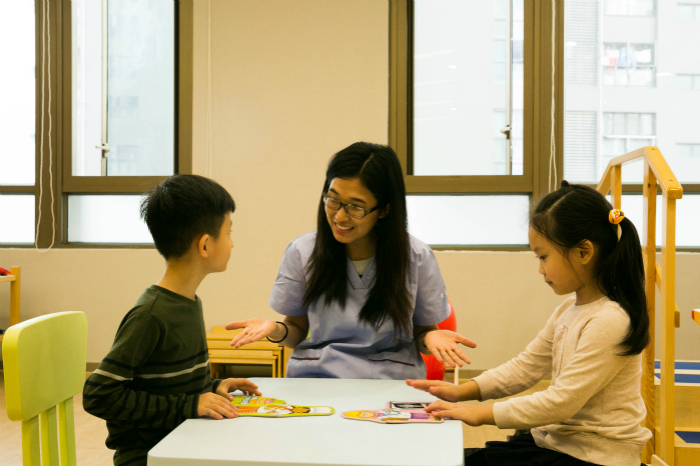
The child is undergoing therapy with a therapist.
6. What Role Should Parents Play in Rehabilitation?
Parents play a crucial role in pediatric rehabilitation and care. In fact, from a family perspective, the responsibility for a child’s rehabilitation cannot be entirely delegated to medical institutions.
If families, especially parents or caregivers, can reinforce rehabilitation training designed by professionals, the effectiveness of the training will be enhanced.
“Generally speaking, parents know what to do but not why. Therefore, we are currently preparing to launch training workshops that bring parents together—particularly those of children with language disorders—for a continuous educational program. This will help parents understand how we train their children and enable them to assign appropriate tasks at home. Only when parents understand the purpose of the training can they implement it correctly; otherwise, it becomes merely a mechanical exercise, failing to achieve the desired therapeutic outcomes,” said Sun Xiaomian.
For parents, Changhe Dayun provides systematic knowledge training. For instance, for parents of children with autism, it imparts comprehensive knowledge about the condition, including the child’s current treatment status, internationally recognized best practices, and integrated intervention models, thereby enabling parents to gain a systematic understanding of their child’s condition.
“In addition to providing education on the overall knowledge structure, we require parents to be present during training sessions. After each session, we guide them on how to continue implementing therapeutic exercises at home, ensuring the completion of assignments prescribed by therapists. We advocate for a family-centered, multidisciplinary, one-stop treatment model.”
It is evident that China has significant shortcomings in the early diagnosis and intervention of developmental and behavioral disorders in children. Pediatric rehabilitation institutions need to upgrade their technical training and operational management models. The explorations undertaken by Zhanghe Dayun are well worth noting.
Regarding future development, Tian Kun expressed great confidence and anticipation: “The model of our pediatric rehabilitation outpatient departments and pediatric clinics, initially established in Shenzhen, Beijing, and Shanghai, has remained focused on knowledge transfer, remote consultations, and training. As our collaboration with CSH deepens, we will move beyond merely exporting technical management expertise. We are also planning to jointly establish and co-manage an internationally top-tier pediatric rehabilitation hospital, with the hope of achieving more sustainable and in-depth growth.”
Note: All data in this article were provided and confirmed by the interviewees, or obtained through publicly accessible sources.