

Wuxi's 'IoT+' Initiative Secures $14B Investment from Cybernaut; Healthcare Sector Highlighted
Following the establishment of connections between people and between computers through “Internet+,” “IoT+” is now fostering an “Internet of Everything” by linking objects to other objects and to humans. As early as 1994, Kevin Kelly described a scenario in which every item—including each book in a library and every light in a home—would be embedded with a chip capable of displaying relevant usage parameters, thereby enabling data collection, functional optimization, and centralized management. Today, the rapidly advancing development of the Internet of Things appears to be turning this visionary concept from more than two decades ago into reality.
From April 14 to 16, at the 2017 China “Internet of Things+” Summit Forum and Cyborg Capital Group Annual Conference, Cyborg Capital Group signed a cooperation agreement with the Wuxi Municipal People’s Government,A total investment of RMB 10 billion is planned over five years to foster collaboration in areas such as IoT infrastructure development, intelligent manufacturing, cloud computing, big data, artificial intelligence, education, healthcare, and internet finance.。
Among these, healthcare is one of the fields where the Internet of Things (IoT) best demonstrates its value in “sensing.” From wearable health devices to various medical instruments and home health monitoring products, IoT is continuously driving the industry toward “smart” transformation. At this “IoT+” Summit Forum, numerous companies in the healthcare sector discussed their perspectives and strategic layouts regarding “IoT+.” VCBeat (WeChat ID: vcbeat) has tracked and compiled the relevant information.
Nightingale: Talent Training as the Foundation, Introducing New Technologies
Wang Liyi, Chairman of Shandong Nightingale Nursing Service Co., Ltd., delivered a comprehensive presentation at the “‘Internet of Things+’ Big Health Industry” forum. He detailed the entire journey of Nightingale—from establishing China’s largest private medical university, Shandong Liming College, to developing a full industry chain integrating healthcare, elderly care, and education, and finally to creating China’s largest “crowdsourced cloud platform for integrated medical care, elderly care, and education.”
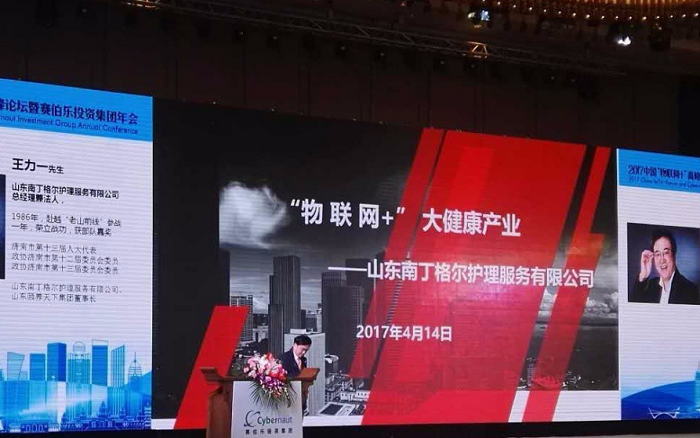
Keynote Address by Wang Liyi, Chairman of Nightingale
“Backed by the first private university established after the founding of the People’s Republic of China, and to date the only private medical university with an educational focus on the integration of traditional Chinese medicine and Western medicine, Nightingale aims to internationalize talent in elderly care and medical nursing. This involves enabling Chinese nursing professionals to access a broader range of job opportunities both domestically and abroad, all of which requires support from a new technological framework.”
In a subsequent exclusive interview with VCBeat, Meng Yu, CEO of Nightingale and General Manager of the Greater Health Division at Cyber Capital Investment Group, shared his views on the integration of the elderly care industry with the Internet of Things (IoT):
“Internet+ has transformed healthcare. For instance, WeDoctor, a domestic leader in internet hospitals, is a typical example of Cyborg Capital’s investment in the internet healthcare sector. Meanwhile, the emerging Internet of Things (IoT)+ will also shape the future of the medical industry. For example, at Nightingale, our caregivers may leverage various sensors and mobile devices to provide services to the elderly or patients. Cloud computing and artificial intelligence can further enhance management and improve efficiency.”
Qingmeng Elderly Care: Integrating IoT into Smart Elderly Care
Zhang Jingbo, General Manager of Qingmeng Elderly Care Services Co., Ltd., delivered a keynote address themed “‘IoT+’ Smart Elderly Care” at the conference, elaborating on how the Internet of Things (IoT) can be integrated into smart elderly care to optimize the nursing training segment.
In a subsequent exclusive interview with VCBeat, Zhang Jingbo stated that, unlike the prevalent agency-based model in the caregiving industry, Qingmeng Elderly Care places greater emphasis on the training and management of care staff, and thus has signed formal employment contracts with all of them.
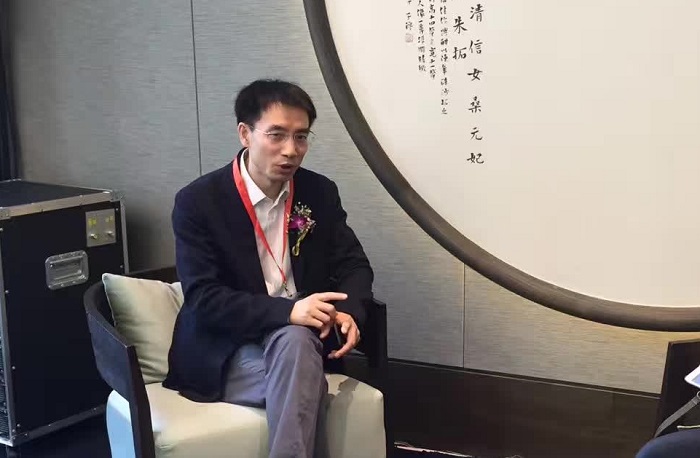
Exclusive Interview with Zhang Jingbo, General Manager of Qingmeng Elderly Care
In terms of progress in “IoT+,” Qingmeng Elderly Care has integrated more than 60 types of smart devices into its system and consolidated all knowledge related to medical and nursing care into a “Home Nursing Consultation Robot.” This robot can address various complex issues arising during the caregiving process and provide detailed assessments of users’ conditions. Reportedly, the preliminary technical reserves for this robot are largely sufficient, with an expected market launch within the year.
“In fact, Qingmeng Elderly Care welcomed its first client in July 2015. Within this period of one year and nine months, we have established a presence in eight cities,” stated Zhang Jingbo. Leveraging the ambitious “Hundred Cities Plan” by Cybernaut in the field of IoT infrastructure, Qingmeng Elderly Care aims to further optimize its path toward scalable replication.
Drawing on Collective Strengths: IoT+ Ideas for Healthcare
At the parallel forum on the healthcare industry revolution in the “Internet of Things+” era, several senior executives from healthcare and pharmaceutical biotechnology companies—including Liu Muyun, General Manager of Shenzhen Beike Biology; Tian Xuwen, President of Easynetwork Communication; Ding Yaoliang, Vice President of Leadman; Qu Gongbo, Director and Vice President of Zhongwei Laikang; and Li Yong, General Manager of Nanfang Pharmaceutical—engaged in discussions on topics such as IoT-enabled smart healthcare. The areas covered included stem cell technology, medical imaging, cloud-based platforms for primary care diagnosis, in vitro diagnostics, remote ECG monitoring, and drug development.
The broad scope and immense potential of Internet of Things (IoT) technology in the healthcare sector have led many companies in the industry to recognize the possibility of integrating their own business operations into this domain.