

Grail Commits $1 Billion to Large-Scale Breast Cancer Screening Trial STRIVE, Eyes Additional Funding Amid Product Development Push
It must be said that this company has always been one to keep a low profile, only to stun the world when it finally makes its move.
On the evening of April 20, 2017, Grail, Illumina’s subsidiary specializing in early cancer screening, announced the launch of a large-scale clinical trial—STRIVE—to further advance its research on blood-based liquid biopsy technologies for early cancer detection.
Large-Scale Prospective Trials Lay the Foundation for Early Breast Cancer Screening
STRIVE is a large-scale prospective observational study in which the company plans to enroll 120,000 women to develop and validate an early breast cancer screening protocol based on the analysis of cell-free nucleic acids in their blood.
Breast cancer is a prevalent malignancy in both developed and developing countries. This year, 40,000 women in the United States have died from breast cancer, with many more patients awaiting effective treatment options.
“Breast cancer can be effectively treated in its early stages. Grail aims to enhance existing breast cancer screening methods to enable early detection of the disease and improve patients’ overall health outcomes,” said Dr. Mark Lee, Head of Clinical Development and Medical Affairs at Grail. “We are committed to advancing our understanding of cancer biology and rigorously evaluating our approach in large-scale studies such as STRIVE.”
The STRIVE trial will be conducted with the assistance of the Mayo Clinic and Northern California’s Sutter Health system, aiming to recruit 120,000 women aged 18 and older. These volunteers will undergo screening mammography over a 28-day period, during which researchers will collect blood samples to analyze circulating cell-free DNA. If any participant is subsequently diagnosed with cancer, researchers will further collect tissue samples.
The project will track these individuals for up to five years, and the data collected will be used to train an artificial intelligence model. Furthermore, these data will support the future development and validation of Grail’s multi-cancer early detection screening.
Large-Scale Trials Are Essential: The Sequel to STRIVE
STRIVE is the second large-scale clinical trial launched by Grail. In December 2016, Grail initiated its first large-scale clinical trial, the CCGA (Circulating Cell-free Genome Atlas), which utilized its “high-intensity” sequencing methods to characterize the distribution patterns of cell-free nucleic acids in cancer and non-cancer volunteers. The study also enrolled at least 7,000 participants.
In March this year, Grail CEO Jeff Huber stated at the Future of Genomics Medicine conference that Grail aims to achieve cancer detection through a single blood draw. To realize this goal, they need to conduct validation trials involving tens of thousands of healthy individuals and cancer patients.
DNA and RNA from early-stage tumors circulate in the human bloodstream. Large-scale, in-depth studies are crucial for understanding subtle individual differences at the blood level. In other words, although such large-scale population studies are time-consuming and labor-intensive, they are indispensable for the development of cancer screening technologies.
This also explains why a company that has been in existence for only 18 months needs to frequently secure such substantial financing. Since its inception, Grail has raised more than $1 billion in total funding.
However, breast cancer screening technology alone requires the collection of 120,000 samples and a five-year follow-up period. Perhaps as data accumulates, the costs of large-scale trials for subsequent product development will gradually decrease. Nevertheless, it must be acknowledged that the development of early cancer screening technologies is indeed capital-intensive. Yet, if the technology can be successfully implemented, it would be a boon for both healthy individuals and patients, with an immeasurable market potential.
Minetta Liu, Chief Researcher at STRIVE, revealed that following the CCGA and STRIVE studies, Grail plans to launch additional large-scale research projects. Despite having raised a substantial $1 billion in funding, conducting a large-scale trial involving 120,000 participants with five-year sample follow-up, and initiating further major trials thereafter remain significant undertakings. It remains uncertain whether Grail will pursue another round of financing in the coming years.
Other Players, Competitors of GRAIL
As previously mentioned, developing early screening technologies is a capital-intensive endeavor. However, if successfully realized, the frequency of product usage could rival that of routine health checkups. This would create a vast and sustainable market, naturally attracting more players than just Grail. The following section introduces Grail’s competitors.
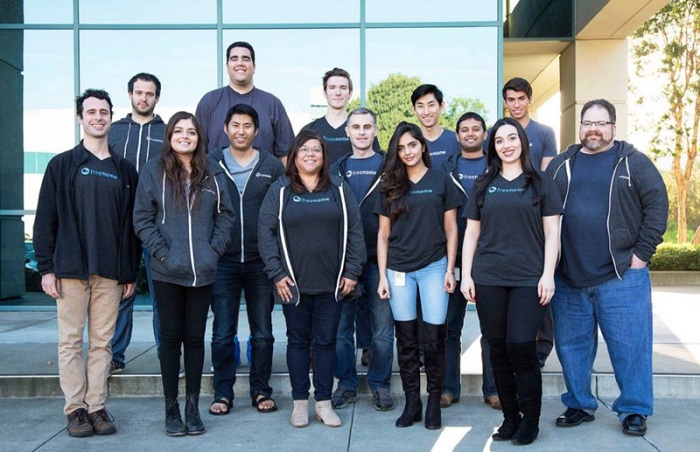
Freenome is also a young company, founded in 2015. On the same day last month when Grail announced its Series B financing, Freenome also announced that it had raised $65 million in Series A financing. Although this amount pales in comparison to Grail’s $900 million, Freenome’s investor roster includes prominent venture capital firms such as Andreessen Horowitz (a16z) and Founders Fund. Additionally, Google Ventures, an investor in Grail, also appeared on the list of co-investors.
Freenome is also developing cancer screening technologies based on blood liquid biopsy. Although it may appear similar on the surface, Freenome is well aware of its competitive advantages: its technology relies on a deep integration of genomics research and algorithms, combining software, machine learning, and computational biology to develop novel computational methods and, consequently, new effective tools for addressing clinical challenges in disease screening, diagnosis, and treatment.
In an interview last year, Gabe Otte, CEO and co-founder, stated: “The most distinguishing feature is our technology’s ability to track a broader range of biomarkers. Freenome aims to address not only the binary question of ‘cancer’ versus ‘no cancer,’ but also whether a lesion is benign or malignant, and even the anatomical location of the cancerous tissue.”
Therefore, Freenome analyzes all genetic material in the blood, rather than merely tracking a few gene mutations already known to be associated with cancer.
Guardant Health, founded in 2013, is a California-based company specializing in blood-based cancer testing. In 2014, the company launched its first commercial blood-based cancer screening product, Guardant360, a technology that enables non-invasive cancer screening using only two small vials of blood.
In 2016, Guardant Health officially announced the launch of its early cancer screening business, building upon its existing oncology treatment guidance services.
Compared with Grail and Freenome, a major advantage of Guardant Health is its early accumulation of samples for cancer screening, which means it faces significantly less pressure in data collection than the other two companies.
However, in the early stages, Guardant Health’s data were primarily focused on five types of cancer: breast cancer, lung cancer, colorectal cancer, skin cancer, and prostate cancer. To achieve detection for other cancers or pan-cancer screening, more data need to be collected.
In January 2016, Guardant Health secured $100 million in Series D financing.
Novigenix is a Swiss molecular diagnostics company founded in 2014. The company is dedicated to the commercialization of novel blood-based tests for early cancer screening. Novigenix’s products leverage next-generation predictive molecular biomarkers and state-of-the-art mathematical analysis models to provide new solutions for early cancer detection.
In May 2016, Novigenix published the clinical validation results of its colorectal cancer diagnostic product, Colox, in the journal *Clinical Cancer Research*, confirming the clinical efficacy of this early-stage colorectal cancer detection technology based on the expression of 29 genes.

In 2014, Professor Dennis Lo, the “father of non-invasive prenatal testing” and Director of the Li Ka Shing Institute of Health Sciences at The Chinese University of Hong Kong, founded Cirina, with the aim of applying non-invasive screening technologies to the early detection of cancer and other diseases.
Chief Executive Officer Maneesh Jain stated that Cirina plans to leverage the technology developed by Professor Dennis Lo to detect and analyze cell-free DNA (cfDNA), with the aim of developing non-invasive techniques for the early detection of cancer and other diseases, such as autoimmune disorders.
The difference from Grail is that Grail aims to develop pan-cancer NGS tests, while Cirina develops tests for different indications.
Unlike Foundation Medicine and Guardant Health, which are developing non-invasive tests to analyze tumors, select appropriate treatments, and monitor disease recurrence or response to therapy, Cirina plans to conduct early screening tests before the need for tissue biopsies arises.
Jain emphasized that the company will focus solely on early detection, rather than tumor analysis or monitoring. Following the completion of its Series A financing last November, Jain revealed that Cirina plans to develop non-invasive tests capable of analyzing copy number variations (CNVs), single nucleotide variants (SNVs), and even methylation. The types of variants analyzed and the technologies employed in these tests may vary depending on the indications.
It is reported that Cirina has already conducted clinical trials with partners in the United States and Asia, involving “thousands of samples.” The company plans to announce some results in 2017 and launch its first diagnostic product in either the U.S. or Asia.