

Final Frontier Medical Devices Wins Tricorder XPRIZE with DxtER, Paving the Way for Consumer-Focused AI-Powered Diagnostic Platform
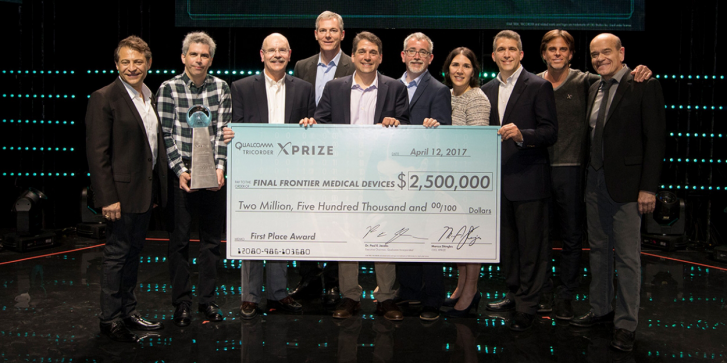
Final Frontier, the winning team (Basil Harris in the center)
After five years of design and iterative testing, the ultimate winner of the Qualcomm Tricorder X Prize has been determined. The top prize was awarded to the Final Frontier Medical Devices team, led by Basil Harris and his brother, network engineer George Harris. They secured the $2.6 million grand prize. Team captain Basil Harris is an emergency physician with a Ph.D. in engineering. The Dynamic Biomarkers Group (DBG) took second place, winning a $1 million award.
Meanwhile, the X Prize Foundation announced that although the competition has concluded, it will continue to support the winning teams as well as the five other finalist teams, helping them bring their developed mobile medical devices to market. The remaining balance of the $10 million prize fund—of which $1 million was already awarded as milestone prizes during the competition—will be used to further fund these teams.
Basil Harris told VCBeat before the competition results were announced, “We have already won the competition; it was a comprehensive victory. No matter what the final outcome is, this process has been absolutely wonderful for me and my team.”
Chung-Kang Peng, captain of the DBG team, added, “Each of the seven teams that made it to the finals is a winner.”
Five Years in the Making: A Long Journey Ahead
The Qualcomm Tricorder X Prize competition was announced at CES in January 2012. The term “Tricorder” (medical tricorder) originates from the handheld scanning device featured in the classic science fiction series Star Trek; more precisely, it is a fictional medical scanning device, with the intellectual property licensed by CBS for this competition. Participating teams were challenged to develop a real-world version of the Tricorder, integrating innovative technologies such as artificial intelligence and wireless sensing into the device.
The competition requires that the device be lightweight, weighing no more than 5 pounds. Additionally, it must be capable of continuously monitoring at least five vital signs and diagnosing 13 common conditions. The mandatory diagnosable conditions include anemia, ventricular fibrillation, chronic obstructive pulmonary disease (COPD), diabetes, leukocytosis, pneumonia, otitis media, sleep apnea, and urinary tract infections. Furthermore, participating teams must select three additional conditions from the following list: HIV screening, hypertension, melanoma, herpes zoster, and streptococcal infection. Most critically, the device must demonstrate high usability, enabling not only healthcare professionals but also lay users to operate it with ease, thereby enhancing medical efficiency.
Basil Harris joked, “When they were conceiving this competition, they may have been thinking, ‘It’s not that hard to build a Tricorder; let’s make one, just like Dr. McCoy (a character from Star Trek).’”
The non-profit XPRIZE Foundation was established in 1995 and first launched the Ansari XPRIZE for suborbital spaceflight in 1996. Grant Campany, Director of the Tricorder XPRIZE, stated that all prizes awarded by the XPRIZE are designed to stimulate market development, particularly in sectors that experience slow growth or lack self-sustaining momentum.
“We closely monitor market segments that we believe are either at a bottleneck or completely dysfunctional,” said Grant. “One of the greatest market failures facing humanity today is that a large number of people do not truly have access to modern medical interventions. The key solution to this problem lies in technology. Without the involvement of the X Prize, where would we seek financial support to develop and test devices that we have never previously researched? By fostering competitive mechanisms, we can chart the course of development and deliver truly powerful momentum to people around the world. By transcending geographical constraints, we can attract top talent, converge the best ideas, and achieve genuine global operations.”
During the initial registration phase of the competition, more than 300 teams were attracted. By the end of 2013, when the X Prize Foundation first announced the shortlisted teams, only 34 remained in the running. These teams came from diverse backgrounds, ranging from Silicon Valley startups and large publicly listed companies to garage-based operations, with little in common. They hailed from all over the world, including university student teams (one of which eventually reached the semifinals) and even high school student teams.
By the end of 2014, the field had been narrowed from 34 teams to just 10 semifinalists. Following the withdrawal of two teams—one by its own choice and the other due to the unfortunate customs seizure of its competition samples—and the merger of two other teams, only seven teams remained. These teams developed 10 product prototypes and were required to demonstrate their accuracy in clinical testing.
By the end of last year, only the DBG and Final Frontier teams remained to compete in the final round. At this stage, the devices they developed were distributed to testers in different rooms to evaluate their ease of use and user-friendliness.
Peak Showdown
The Final Frontier medical device team and the DBG team are two vastly different groups. The Washington Post described this showdown as a “Basil vs. Goliath” battle. Basil’s team consists of only seven members who developed their competition device during evenings and weekends, operating on a shoestring budget. Despite their small size, the team members possess extensive expertise across the medical and technology sectors, bringing together specialized knowledge in medicine, signal processing, programming, hardware design, UI design, and mobile technologies.
Captain Basil himself is an emergency physician with a Ph.D. in engineering. In his earlier years, he earned bachelor’s and master’s degrees in engineering from Drexel University and Cornell University, respectively. He has been actively engaged in emergency medicine at Lankenau Medical Center near Philadelphia for over 12 years. In 2016, he was named a Top Doctor by Main Line Today for the third time in recognition of his outstanding medical practice. Despite the daily demands and high-pressure environment of the emergency department, Basil has never ceased his engineering training.
Chung-Kang Peng’s DBG team comprises as many as 50 members, including scientists, physicians, and programmers, with strong backing from HTC Corporation and the Taiwanese government.
However, on the final day of the competition, the devices developed by the two teams shared many similarities. Both Final Frontier and DBG integrated numerous modular components, including a touchscreen (DBG utilized a smartphone, while Final Frontier employed a tablet called DxtER) and various sensors. Furthermore, the devices from both teams exhibited similar learning curves in terms of user experience.
The award-winning DxtER is centered on artificial intelligence and integrates the development team’s years of clinical emergency medicine experience to deliver intelligent diagnostics from patient vital sign data. DxtER incorporates a suite of non-invasive sensors to collect vital signs and biometric data, after which its diagnostic engine synthesizes the user’s data to provide rapid and accurate assessments.
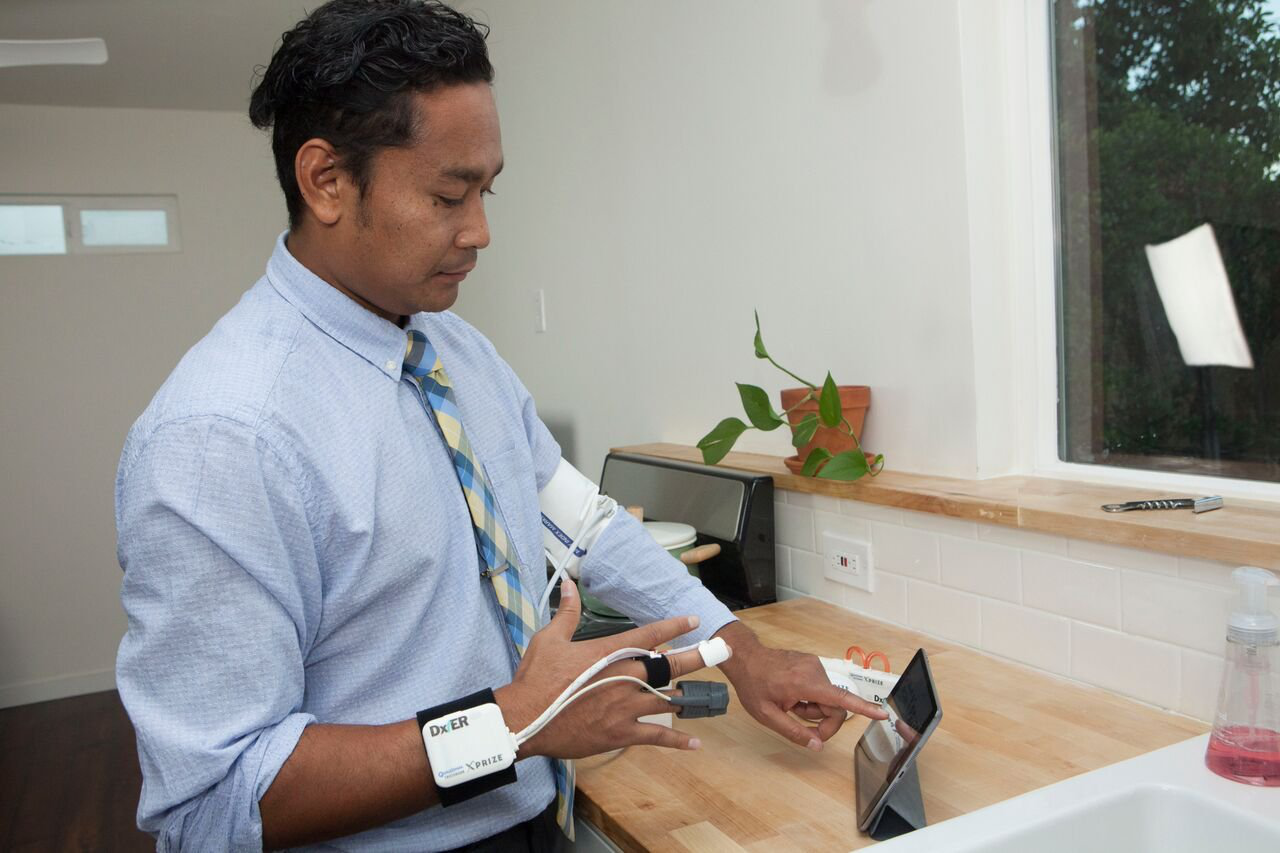
Tester is testing DxtER
“Compared with most other teams, I feel that our team has a slightly different approach to the question of ‘how would I diagnose conditions in the emergency department from an AI perspective,’” said Basil. “Many teams start by working on the sensor components and then build the AI. I believe our team takes the opposite approach. We recognize that both are necessary, but given our very small team size, we can only proceed based on what we already know. In short, we are developing our product from a design-oriented perspective.”
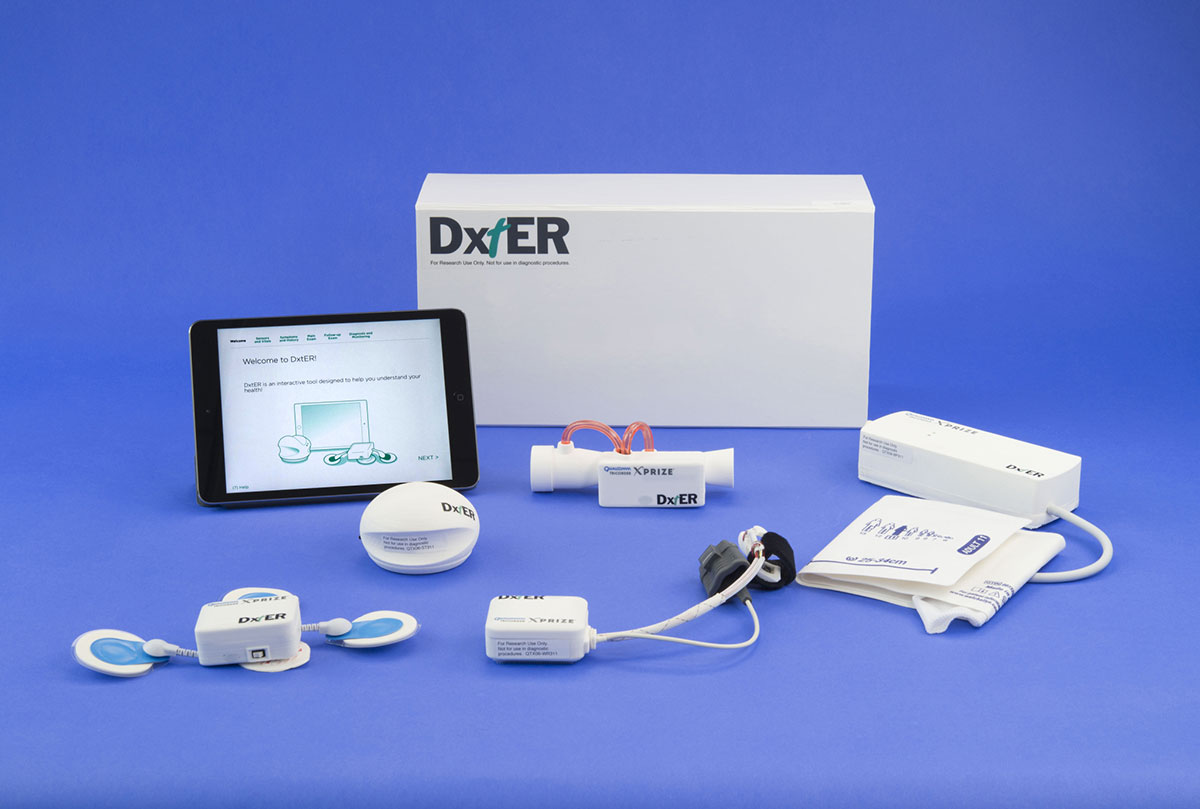
Final Frontier Team's Product Prototype
Peng strongly agreed, stating that it is sometimes truly challenging to effectively integrate the user interface and the clinical components of the team onto a single page.
Peng added, “Initially, we naively assumed it was merely a technical issue. We developed image analysis algorithms for signal analysis. As Basil noted, this represents an entirely different approach. Ultimately, both teams arrived at similar conclusions. Clinical diagnostic AI needs to assist users in achieving pre-screening, screening, and diagnosis—these are, in fact, the more critical aspects.”
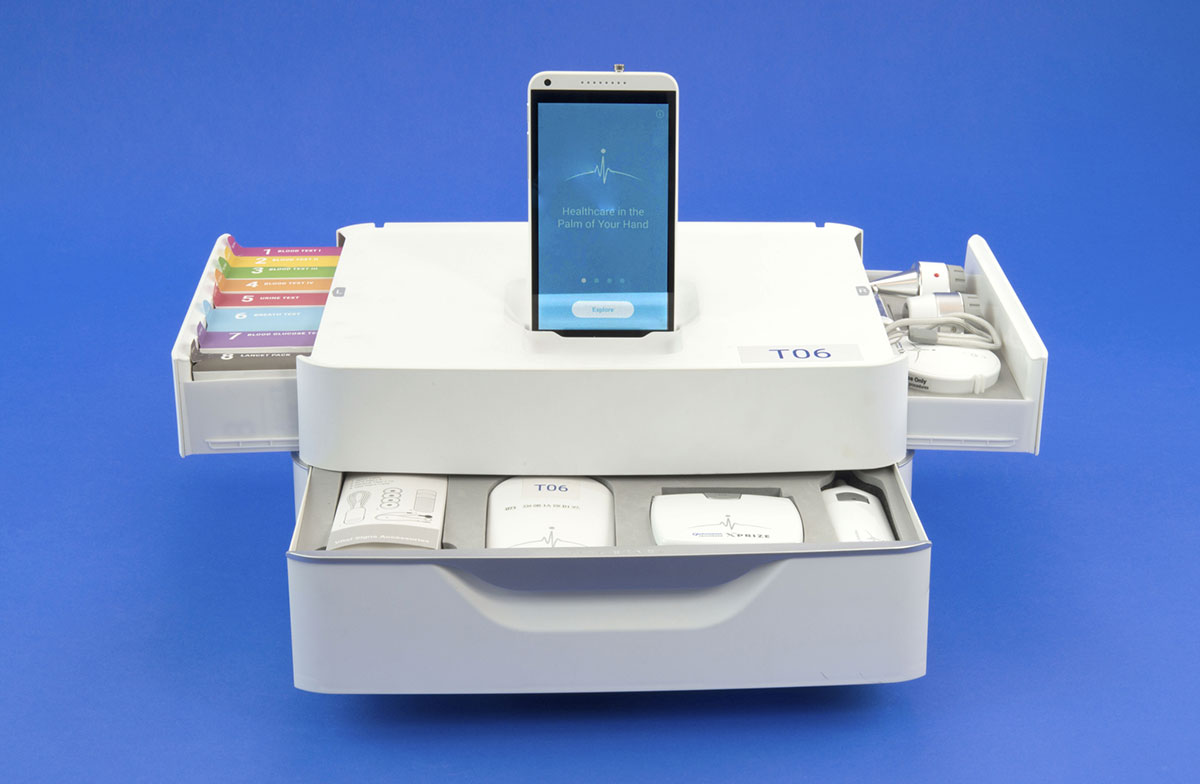
Product Prototype of the DBG Team
Basil candidly stated that their small, tight-knit team size is actually an advantage, as the lack of personnel redundancy allows them to quickly discard valueless ideas.
“When you are exploring such uncharted territory, you will feel at a loss and sometimes hit dead ends. You can only learn from countless mistakes and then regroup.” Basil spoke about the hardships of product development: “You need to decisively abandon an approach when it shows no promise, and then explore alternative methods.”
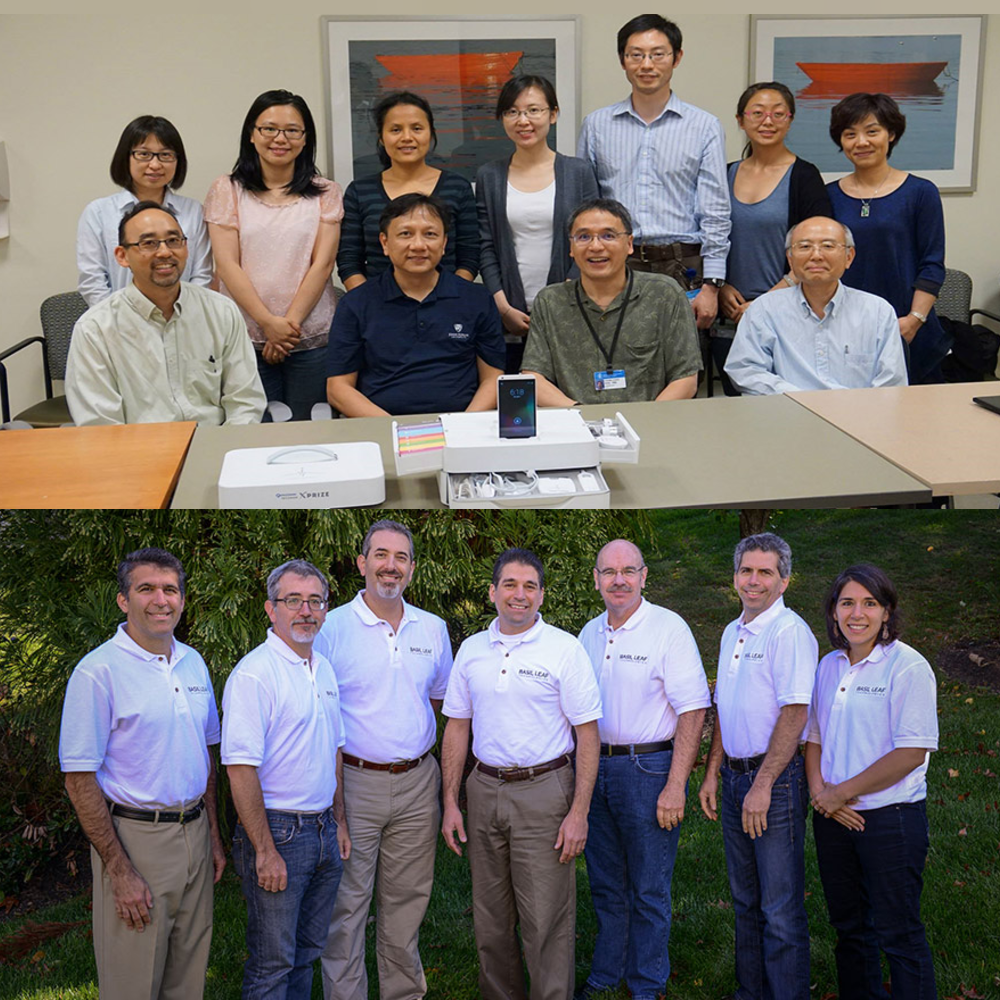
The Two Teams Competing in the Final Showdown
Event Director Grant Campany also reiterated the importance of products engaging directly with consumers, as this enables Tricorder to play a unique role in the healthcare sector and differentiate itself from other advanced sensors. He stated, “I believe what truly sets Tricorder apart from other medical devices is that it targets ordinary consumers and has undergone objective evaluation under rigorous usage conditions.”
“As far as I know, many companies on the market are already promoting their products as Tricorders. However, given the precision and complexity required in designing a Tricorder, I question whether these devices can truly meet such demands. In this competition, we require devices capable of addressing 13 disease conditions, continuously monitoring five vital signs, and being usable by the general public. These design criteria differ significantly from anything we have seen before. Frankly speaking, we believe the outcomes achieved by these teams are at least 18 months ahead of the rest of the world.”
The Road Ahead Remains Promising
Now that the dust has settled on the competition and its objective of stimulating the market has been achieved, a new question arises: Can this momentum sustain market vitality?
“What we can see now is that we have a technology demonstration proven effective by objective conditions,” Campany stated. “We are considering the opportunities that have opened up to us. Now that we have data, we recognize that encouraging people to enter an industry involves not only fostering a competitive environment but also providing funding to help them achieve their goals. With the development of Tricorder, we have crossed the initial ‘valley of death.’ Therefore, we are now exploring how to accelerate the advancement of these technologies so that they can reach a broader population as soon as possible. This is the fundamental starting point for all our efforts.”
This also means that Qualcomm and the XPRIZE Foundation will continue to provide support for these teams.
“Many teams with diverse styles but genuine substance emerged during the Qualcomm Tricorder X Prize. After five years of continuous experimentation and refinement, these extraordinary products were finally born,” said Marcus Shingles, CEO of the X Prize Foundation, in a statement. “We are deeply impressed by the quality and innovativeness of the entries in this competition, particularly those from the two finalist teams, Final Frontier and DBG. Although the competition has concluded, the Qualcomm Foundation, X Prize, and our strategic partners will continue to support the next phase, helping these teams further expand their impact and advance the post-competition development of Tricorder into practical, application-ready products.”
In addition to the award winners, on the night of the ceremony, the X Prize Foundation also announced that the Qualcomm Foundation would invest $3.8 million to “promote the development of the digital health ecosystem, including continuing consumer testing, providing follow-up mentorship to teams participating in the Qualcomm Tricorder X Prize, and further developing Tricorder devices.” Specifically, the foundation has already donated $2.5 million to the University of California, San Diego, with recipients including its Altman Institute. The remaining committed funds will be donated to other organizations in phases.
Additionally, the Roddenberry Foundation has pledged an extra $1.6 million to help promote the Tricorder device in hospitals and communities. Notably, the foundation was founded by Gene Roddenberry’s son, the creator of Star Trek.
During the competition, the FDA also partnered with the X Prize to provide a support platform for participants. After the competition, the FDA will continue to support the market promotion of products developed by the finalist and semifinalist teams.
In response, Campany stated, “We established a collaborative relationship with the FDA and the Center for Devices and Radiological Health (CDRH) as early as three years ago. During the competition, the FDA set up an FDA Help Desk, facilitating interaction and collaboration between 18 volunteers and the participating teams. This collaboration has become even more critical in the post-competition phase, as these devices are developed with commercialization in mind, and the FDA can provide the most appropriate guidance to these teams on practical market entry strategies. We have benefited significantly from our cooperation with the FDA, and I believe that teams leveraging FDA resources will likewise gain substantial insights.”
To popularize this technology among the public and forge partnerships with retailers to secure distribution channels for the final products, the X Prize will also produce a feature-length documentary and curate thematic exhibitions.
Although they can breathe a sigh of relief from the intense competition, the participating teams still have much work ahead. They are now free to engage in open communication and collaboration, learning from one another—a long-anticipated opportunity for all participants.
Basil has merged and expanded his team, renaming it Basil Leaf Technologies. He stated, “We have not stopped here but are moving forward. This product prototype is not yet ready for deployment or commercial sale, as there are no trivial matters in the medical field, and utmost caution is required. The FDA is currently reviewing every component of our product, including clinical testing. Although the recent competition had stringent standards requiring modeling after clinical testing, it was ultimately just a competition, whereas the FDA requires more extensive data. At my hospital, we have already begun clinical testing on our first new-generation sensor. Before the complete suite is established, we need to evaluate each sensor individually.”
Meanwhile, the DBG team is working on developing its second-generation device. This R&D effort will not be constrained by the device weight limits of the X Prize competition, but the number of diagnosable diseases will increase to 50, far exceeding the 13 required by the competition.
Peng, Captain of DBG, stated: “We plan to promote our initiatives in rural areas of China and are currently discussing related matters with the Chinese government.”
Much like the visionary future devices depicted in Gene Roddenberry’s Star Trek, Basil also dreams that its devices, or similar ones, will one day be widely accessible to the general public.
“My dream is that one day, when I’m seeing a patient in the emergency room, he will tell me, ‘I have a Tricorder,’” said Basil. “Perhaps this device was developed by another team, but that doesn’t matter. I firmly believe this technology is moving toward commercialization, and I sincerely hope it will advance to the next stage soon. This presents an opportunity to significantly improve the efficiency of the healthcare system and make high-quality medical care universally accessible.”