

Xiehe Medical Group Files IPO Prospectus Highlighting AI Integration Strategy and Vision of Replacing 50% of Doctors with Intelligent Systems
“50% of doctors will be replaced by artificial intelligence in the future,” stated the Director of the Peking Union Medical College Hospital Physician Group and a Doctor of Medicine from Peking Union Medical College at the xHealthTalk Future Health Summit held today. He noted that in the future, a certain proportion of tasks performed by junior physicians, as well as those in radiology and pathology, will more likely be assisted by AI-driven systems. This shift will allow doctors to dedicate more time to patient communication and clinical research.
The xHealthTalk Health Future Summit was held at the School of Economics and Management, Tsinghua University, on April 17. Medical AI technology experts from IBM Watson, medical specialists from the Peking Union Medical College Hospital-affiliated physician groups, and experts in the health insurance sector shared their professional insights on topics such as how artificial intelligence is transforming the healthcare industry.
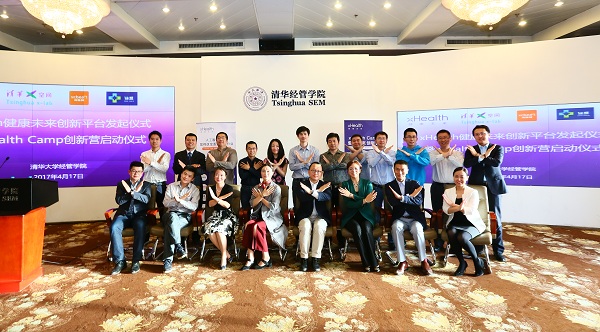
xHealth Camp Established
Zhu Ying’s assertion is primarily driven by the recent robust performance of artificial intelligence, as VCBeat highlights below:
People are expected to be able to diagnose skin cancer via mobile phones, with an accuracy rate exceeding 91%;
FDA Approves First AI-Powered Software for Cardiac MRI Analysis;
“Nature” (Hazlett et al. 2017) Major Breakthrough: AI Outperforms Doctors in Early Diagnosis of Autism in Children;
Humans Completely Defeated... Breast Cancer Diagnosis: 30-Hour Pathology Analysis Less Accurate Than Google AI;
Google Uses Deep Learning to Assist Pathologists in Detecting Cancer, with an Accuracy Rate of 89%;
Impressive! The Third Military Medical University Uses AI to Identify Blood Types Within 30 Seconds with Over 99.9% Accuracy;
We can observe that current frontier research in medical AI is predominantly focused on medical imaging and pathology. With AI positioned as an assistant to physicians, primarily aiding in repetitive tasks—an area where AI excels—it is foreseeable that these tasks will be automated in the coming years.
As for primary care physicians, rather than being replaced, they should be empowered by AI assistance to become competent full-time practitioners. This is essential for the effective implementation of the tiered diagnosis and treatment policy. If primary care physicians were replaced, who would carry out tiered diagnosis and treatment, and who would screen complex and refractory cases for specialists at tertiary hospitals?
IBM Watson for Oncology Enters China, May Face "Acclimatization Issues"
When it comes to intelligent doctors, IBM Watson is a name that must be mentioned. VCBeat has learned that on August 11, 2016, IBM Watson Health officially entered the Chinese market. After nearly a year of development, Watson for Oncology now supports treatment plans for six types of cancer: lung cancer, breast cancer, colorectal cancer, cervical cancer, ovarian cancer, and gastric cancer.
IBM Watson Health is capable of understanding 12 languages and possesses strong learning capabilities. It has stored and analyzed a vast amount of oncology case data from Memorial Sloan Kettering Cancer Center (MSKCC) and dozens of medical institutions across the United States, along with content from over 300 specialized medical journals, more than 200 oncology monographs, and over 15 million research papers. Additionally, it incorporates cancer treatment guidelines based on the National Comprehensive Cancer Network (NCCN) and leverages MSKCC’s century-long practical experience in clinical cancer care in the United States.
However, the localization of IBM Watson for Oncology in China has encountered a series of challenges related to poor adaptation.First, it does not support Chinese natural language understanding; all case information must be entered in English, and reports are also generated in English, which will to some extent hinder the pace of Watson for Oncology’s adoption. Second, its case learning and training are conducted in collaboration with U.S. hospitals, resulting in a lack of Chinese clinical cases and diagnostic and treatment protocols tailored to Chinese patients.
PUMC-affiliated Physician Group to Train Watson for Chinese Patients
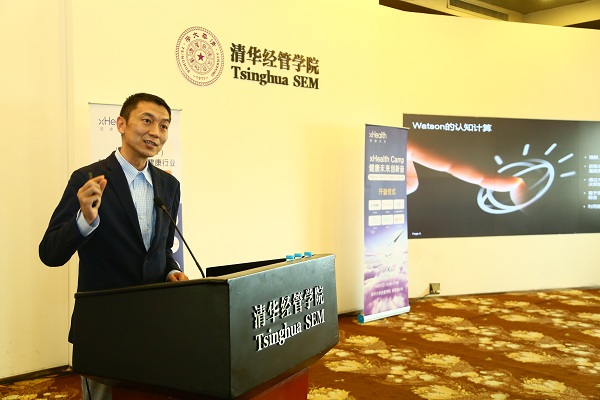
Chief Medical Advisor, IBM Watson Health China
To facilitate the localization of IBM’s oncologists, Xieyi Group will collaborate with the company to jointly advance this localization process. According to Dr. Zhu Ying, Director of Xieyi Group and a Peking Union Medical College doctoral graduate, Xieyi Group will assemble an authoritative team of Chinese oncology experts to assist Hangzhou Cognitive Network Technology in formulating a localization strategy for Watson for Oncology and to jointly train the system.
Zhu Ying told VCBeat that the PUMC-affiliated Physicians Group, abbreviated as “Xieyi Group,” is a multidisciplinary, innovative physician group initiated by physicians affiliated with Peking Union Medical College Hospital (PUMCH). The Xieyi Group has assembled a top-tier medical expert team comprising over 100 chief-level physicians from PUMCH, along with more than 300 doctors from over 50 departments, including clinical specialties, radiology, laboratory medicine, and basic research.
Xieyi Group has partnered with top-tier global AI healthcare companies, aiming to foster the development of more outstanding early- and mid-career physicians and enhance hospitals’ professional standards.
xHealth Digital Health Industry Innovation Service Platform Established at Tsinghua University
Starting a business in the new era is extremely difficult without access to resource-matching platforms. Such matchmaking encompasses startup training and connections with capital, government, and industrial resources. For instance, at today’s forum, an AI-based medical imaging company showcased highly mature algorithms but has seen slow progress due to the lack of standardized databases. For young entrepreneurs, resolving such challenges solely through their own efforts is exceedingly difficult.
It is against this backdrop, and in response to the requirements of the “Healthy China” strategy and the “Outline of the ‘Healthy China 2030’ Planning,” that the Tsinghua x-lab Health and Medical Innovation Center, leveraging Tsinghua University’s technological innovation resources, has taken the lead in establishing the xHealth Comprehensive Health Industry Innovation Service Platform.
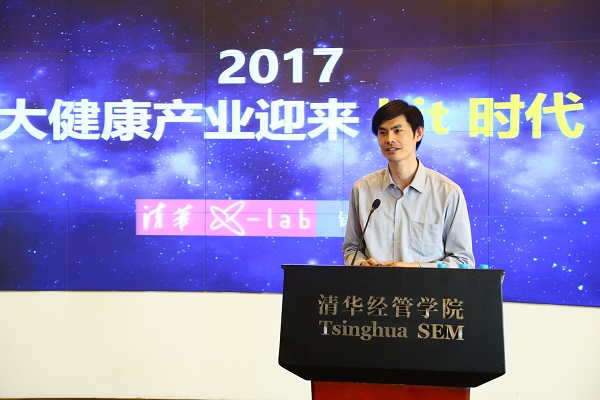
Zhong Hong, Executive Director of the Tsinghua x-lab Health and Medical Innovation Center
Zhong Hong told VCBeat that xHealth comprises three major segments: xHealth Talk (High-Level Dialogue), xHealth Camp (Innovation Camp), and xHealth Fund (Innovation Fund). xHealth ThinkTank (Health Future Think Tank) is the non-profit operating entity of the innovation platform.
xHealth Talk(Health Future Summit Dialogue) is a cutting-edge forum dedicated to the health industry, inviting authoritative industry experts and leading figures from innovative enterprises to share the latest industry trends and innovative practices.
xHealth Camp(Health Future Innovation Camp) is an innovation incubation platform for the health industry. Guided by the principles of “exploring the unknown, interdisciplinary integration, experiential learning, and team-based innovation,” it cultivates future-oriented innovative talents and teams in the health sector, incubates cutting-edge technology-driven projects, and provides focused support to products with innovative technologies to advance their commercial application within the health industry.
xHealth Fund (Health Future Innovation Fund)It is an innovative financial support platform for the health industry, providing diversified funding to innovation projects at different stages through collaborations with governments, universities, listed companies, investment institutions, and other organizations.
xHealth aims to provide services to innovators and entrepreneurs through these three core business segments.