

Verily Launches Study Watch Wearable to Enable Large-Scale Collection of Raw Clinical Health Data
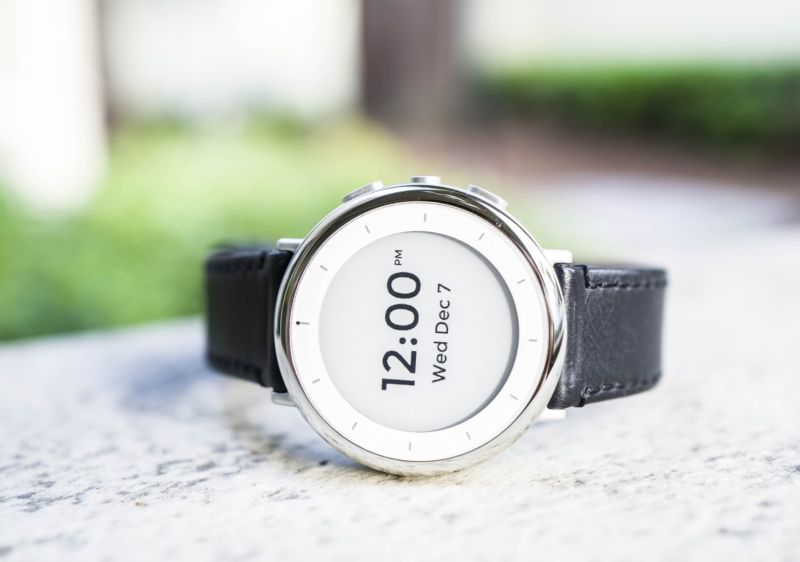
VCBeat has learned that Verily recently launched its new health-tracking wearable device, the Study Watch, and plans to deploy it on a large scale for medical research. Currently, the device is not available for public sale.
As early as June 2015, Google announced plans to develop a wristband specifically designed to track vital signs and other data from clinical trial participants. Now, this vision has finally come to fruition. In fact, Verily, the life sciences company under Alphabet, has been researching wearable devices capable of recording extensive health data over the past two years, conducting in-depth exploration into the scope and dimensions of data collection.
Not for external sale; exclusively for recording raw clinical data.
In terms of appearance, the Study Watch resembles a conventional round watch and is equipped with a low-power, always-on e-ink display.
Most importantly, the Study Watch features built-in multifunctional physiological and environmental sensors capable of recording electrocardiograms (ECG), heart rate, skin activity, and other metrics, enabling the detection of relevant health signals for a range of studies, including those on cardiovascular and movement disorders. Additionally, the Study Watch is equipped with a powerful processor that supports real-time algorithms and allows for automatic system updates, as well as the installation of new algorithms and user interfaces, via over-the-air (OTA) technology.
It appears to differ little from an ordinary watch, but this is not entirely the case. The Study Watch screen displays only the time and indicators, without apps or any of the cumbersome features typical of smartwatches. It is specifically designed to record and store raw data that is highly valuable to healthcare professionals.
As stated in Verily’s official blog post: “The Study Watch represents a significant step in our targeted development of new biosensing tools. While numerous wearable products exist on the market, the Study Watch is designed to address specific needs—namely, the large-scale collection of rich and complex datasets in clinical and observational studies.”
Verily Chief Technology Officer Brian Otis stated, “This smartwatch is specifically designed for high-quality health data collection on mobile phones, featuring long battery life, a minimalist design, large-scale data storage, and multifunctional sensors.”
Clearly, the Study Watch is one of Verily’s many ambitious projects, which also include glucose-sensing contact lenses, nanoparticle pills for detecting cancer and heart attacks, and bioelectronic medicines. By comparison, the Study Watch appears more practical and closer to commercial realization. Of course, this sector already faces strong competitors, such as Nokia, which owns Withings and is also developing smartwatches and similar health data platforms.
Establishment of a Health Database and Parkinson’s Disease
In short, the Study Watch can record health data that is critical for continuous care platforms and clinical research. To achieve this, the watch features a more ergonomic design, such as a battery life of up to one week and the removal of accessories that may cause discomfort to the wearer. It is equipped with a high-resolution display that shows only the time and specific instructions to the user.
Therefore, wearers do not need to interact with the device frequently. Thanks to its large storage capacity and the implementation of data compression technology, it can store raw data for up to several weeks, thereby eliminating the need for frequent device synchronization. Furthermore, all data on the Study Watch is encrypted before being uploaded and processed using Verily’s backend algorithms and machine learning tools.
“This infrastructure is highly scalable and can support research involving large volumes of data,” Verily stated. Verily hopes that the Study Watch will be adopted by large-scale research teams, demonstrating its value as a useful tool for continuous health monitoring.
Regarding specific partners, VCBeat has learned that the smartwatch will be used in multiple observational studies with Verily’s current partners. Initially, these studies will be relatively small in scale. For instance, in collaboration with Duke University and Stanford University, the Baseline Study—a longitudinal observational study—plans to track 10,000 participants over four years, aiming to build a health database that provides deeper insights into aging and disease based on the research findings.
Another initiative is the personalized Parkinson’s disease program, namely the Personalized Parkinson’s Project at Radboud University Medical Center in the Netherlands. This represents a multi-year effort in the Netherlands to uncover patterns of Parkinson’s disease progression. While patients with Parkinson’s disease traditionally had to undergo heart rate variability measurements in hospital settings, they can now perform the same assessments anytime and anywhere using the Study Watch.