

Trump's Failed Healthcare Reform Sparks Interest in Chinese Health Mutual Aid Platform Zhongtuobang
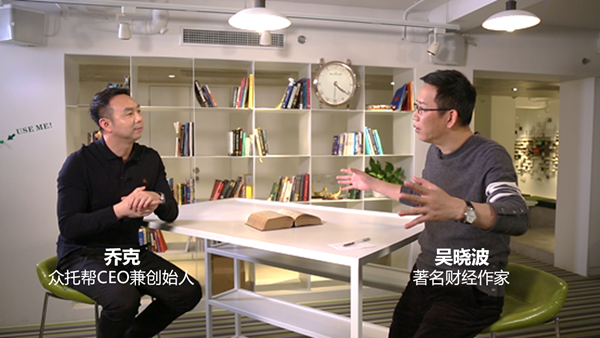
On April 12, renowned financial writer Wu Xiaobo held a dialogue with Qiao Ke, founder and CEO of Zhongtuobang, on the Wu Xiaobo Channel, discussing how to alleviate health anxiety for just five cents through Zhongtuobang.
Qiao Ke revealed on the program that in early March this year, representatives from relevant institutions and companies visited Zhongtuobang’s office in Shanghai’s North Bund. They expressed their hope to introduce Zhongtuobang to the United States to help address the health coverage gap for the 40 million Americans who lost insurance after Trump repealed the Affordable Care Act (Obamacare).
Following the broadcast of this episode, it sparked public attention and discussion, rapidly spreading across social media platforms such as WeChat and Weibo, and quickly becoming a viral sensation.
On the Wu Xiaobo Channel, Qiao Ke remarked to Wu Xiaobo, “Countries such as India and Pakistan, including those involved in the Belt and Road Initiative, are also facing similar challenges. They have expressed strong interest in Zhongtuobang, viewing its model as somewhat akin to Bangladesh’s Grameen Bank, which once received the Nobel Prize.”
Wu Xiaobo believes that the Zhongtuobang model, as a form of business innovation, returns to the original intent of protection through the Internet. It serves as a supplement and enhancement to the traditional insurance industry and is an effective remedy for the widespread health anxiety prevalent among people today.
“Anxiety” is becoming a prominent label for the expanding middle class. This year, an article titled “Two Homes in Shenzhen, Facing Unemployment: Midlife Financial Crisis Triggers Family Tragedy” went viral on WeChat Moments. Despite their seemingly affluent circumstances, middle-class individuals are constantly plagued by worry and uncertainty: What if I fall ill? What if a major crisis strikes my family?
In addition to the middle class, who cannot afford medical care, low-income groups also suffer greatly from health anxiety. Data from the National Bureau of Statistics and the Ministry of Civil Affairs show that by the end of 2016, there were still 43.35 million rural residents in China living below the poverty line, with more than 40% of them falling into poverty due to illness.
Wu Xiaobo believes that anxiety stems from impermanence and helplessness. The inherent presence of these two social issues has given rise to numerous possibilities for business models, among which the insurance industry is likely the largest sector related to this phenomenon.
Jock stated, “Although 1.2 billion people across China have purchased insurance at some point, only more than 40 million have bought health insurance. A large population in need of personal health and safety protection remains outside the coverage of the existing social security system. The Sword of Damocles hangs over the heads of hundreds of millions of people.”
“After witnessing the plight of many families falling into or back into poverty due to illness, I have been contemplating how to leverage internet and technological innovations to build a platform that enables Chinese people to afford medical treatment through a mutual-aid model,” said Qiao Ke.
Wu Xiaobo introduced that mutual aid is not a new species; it originated in the Venice region in the 14th century.
Now, with the development of internet technology and the widespread adoption of mobile payments, the mutual aid model, originally limited to circles of acquaintances, has become viable for application among hundreds of millions of strangers.
Seizing this opportunity, Jock pivoted to found Zhongtuobang after accumulating 12 years of experience in the traditional insurance industry.
Zhongtuobang is China’s leading intelligent platform for critical illness mutual aid and medical services, dedicated to providing the most accessible and cost-effective solution for covering critical illness medical expenses. It ensures that the majority of patients with critical illnesses have access to life-saving funds, alleviating concerns about high medical costs regardless of income level. Within just nine months of its launch, the platform surpassed 7 million members, rapidly becoming the largest platform in this sector in China.
Wu Xiaobo summarized the model characteristics of Zhongtuobang with the four words “low-frequency, broad-reach.” Critical illness coverage is inherently a low-frequency need; meanwhile, Zhongtuobang has a low entry threshold, addressing the dual challenges of ordinary people lacking funds for medical treatment and seeking care indiscriminately when ill, thereby truly making coverage accessible to the general public.
“Zhongtuobang is not just a business; it is also an act of benevolence,” said Qiao Ke. “My dream is to build Zhongtuobang into a platform that promotes ‘health mutual aid, benefiting millions of households,’ making it part of the everyday lifestyle of the general public.”