

BELKIN Laser Files for IPO: Revolutionizing Glaucoma Treatment with One-Second Automated DSLT Technology
VCBeat learned that on April 18, Rimonci International Optometry Fund announced a joint investment with Singapore’s Zicom Group in BELKIN Laser, an Israeli company specializing in laser treatment devices for glaucoma.
Glaucoma is a chronic condition that is asymptomatic in its early stages but causes progressive damage to the optic nerve, ultimately leading to blindness. It is the leading cause of irreversible blindness worldwide.
According to WHO projections, the global number of primary glaucoma cases will reach 79.64 million in 2020, with 11.2% of patients progressing to blindness. In China, the total number of individuals with primary glaucoma is projected to reach 21.82 million, accounting for 27.4% of the global burden. Although glaucoma is incurable, its progression can be controlled and delayed through intraocular pressure-lowering interventions—including medications, laser therapy, and surgery—to mitigate visual field damage and prevent blindness.
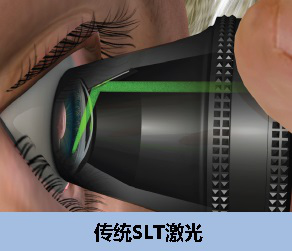
Laser Trabeculoplasty (LTP) has been used for over 30 years to treat glaucoma by lowering intraocular pressure. The current gold standard for laser glaucoma treatment, Selective Laser Trabeculoplasty (SLT), has also been in use for more than 15 years since its introduction in 1998 and FDA approval in 2002. SLT is used to treat Primary Open-Angle Glaucoma (POAG) and Ocular Hypertension (OHT). It is as effective as medication in lowering intraocular pressure but overcomes the long-term compliance issues associated with glaucoma medications, as well as the systemic and local side effects caused by prolonged use. SLT is highly safe and plays a positive role in maintaining patients' diurnal intraocular pressure fluctuations.
However, traditional SLT devices require operation by specialized glaucoma specialists using a gonioscope in contact with the cornea, which may potentially cause corneal abrasions and infections. In China and some developing countries, the adoption rate of SLT is lower than in Western Europe and North America. One important reason is the shortage of specialized glaucoma doctors; equipment costs and treatment prices are also contributing factors. Furthermore, SLT cannot be used to treat angle-closure glaucoma—"Asian" glaucoma—which has a high incidence among Southeast Asian populations and is a leading cause of blindness from glaucoma in China.

BELKIN Laser’s solution is a potential game-changer, transforming a treatment process that was previously specialized and plagued by poor compliance into one that is safe, effective, reliable, and operable by all ophthalmologists, not just glaucoma specialists. Its device integrates technologies such as high-speed imaging, eye tracking, and image recognition to directly deliver laser energy to the limbus, with the entire procedure fully automated and completed within one second.
Furthermore, the company’s solutions make it possible to treat angle-closure glaucoma, which accounts for 30% of the glaucoma population, with Selective Laser Trabeculoplasty (SLT). BELKIN Laser’s solution will significantly reduce reliance on specialized glaucoma specialists, lower the threshold for SLT adoption, and improve diagnostic and treatment efficiency, thereby delivering benefits to both hospitals and patients.
It is precisely due to the social value of this technology that BELKIN Laser, as the lead partner of the GLAUrious project, together with other project partners, secured €2.5 million in R&D funding from the EU’s Horizon 2020 programme in 2016. Launched by the European Union in 2014, Horizon 2020 aims to advance world-class scientific development, remove barriers to scientific innovation, and accelerate the translation of innovative technologies into productive forces.
Michael Belkin, the company’s founder, inventor of its core technology, and current Medical Director, is a renowned Israeli professor of ophthalmology. He is also the inventor of the Express Glaucoma Filtration Device, whose manufacturer was acquired by Alcon for $180 million in 2009.

Remex International Ophthalmology and Optometry Fund focuses on ophthalmic devices and the optometry sector, seeking high-potential early-to-mid-stage solutions within this niche industry globally. By leveraging a precise clinical and industrial ecosystem cultivated by the fund, it supports portfolio companies in their development in China.