

Data Standardization Is Crucial to Making Health Big Data 'Run, Sink, and Govern'
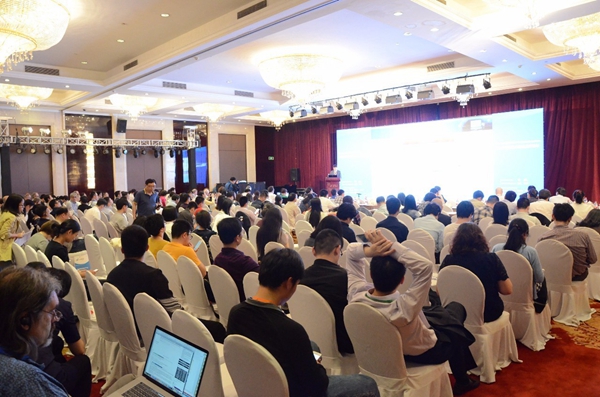
On April 17, the “2017 International Summit on Health Information Standardization,” hosted by the Hangzhou Municipal People’s Government and the China National Institute of Standardization, and organized by the Zhejiang Digital Medical and Health Technology Research Institute and the Open Medical and Health Alliance, was held in Hangzhou.
The forum brought together more than 500 experts in global healthcare information standardization, as well as elites from Chinese government agencies, industry, academia, research institutions, and healthcare providers. They engaged in specialized discussions and knowledge sharing on topics including international and domestic health information standardization, intelligent medicine and artificial intelligence, clinical semantic standards, and DRG standards.
The forum featured one main forum and three sub-forums on “Semantic Standardization of Health and Medical Big Data,” “Medical Cloud and Artificial Intelligence,” and “Standardization and Application of DRGs,” comprising a total of 27 thematic presentations. A special session for dialogue with international experts was also held, exploring issues in the field of health information standardization from multiple levels and perspectives, articulating China’s experience, and outlining the space and potential for aligning with international standards and further advancing the development of health information standardization in China.
The conference was presided over by Mr. Zheng Jie, President of Shulan Healthcare. Attending the event and delivering keynote addresses were leaders, experts, and industry representatives, including Director Hou Yan of the Department of Planning and Information under the National Health and Family Planning Commission (NHFPC); Deputy Director Zhang Ping, Deputy Secretary of the Party Leadership Group of the Zhejiang Provincial Health and Family Planning Commission; Director Meng Qun of the Statistical Information Center under the NHFPC; Mr. Michael Glickman, Chair of ISO/TC 215; Mr. Bron Witt Kisler, Co-founder and Vice President of CDISC; Mr. W. Ted Klein, Co-Chair of the HL7 Vocabulary Technical Committee; and Academicians of the Chinese Academy of Engineering: Li Lanjuan, Zheng Shusen, and Yang Shengli. Also in attendance was Vice President Qiu Yueming of the China National Institute of Standardization.
Hou Yan, Director of the Department of Planning and Information under the National Health and Family Planning Commission, stated in his opening remarks that health and medical big data is a crucial foundational strategic resource for the nation. By implementing three key measures—making health data “flow,” “penetrate to the grassroots,” and “be effectively managed”—the country is advancing toward the long-term vision of a “Healthy China.”
First, we must activate the flow of health data. Health administrative departments at all levels and medical institutions that hold big health and medical data should accelerate compliance testing for regional health information platforms to enhance the level and capability of data interoperability. The goal is to let digital health data do more of the running, so that the public needs to make fewer trips.
Second, by enabling data services to reach the grassroots level, supported by the "Internet Plus" initiative and health and medical big data, we have established a more solid and reliable technological foundation for the derivation and amplification of high-quality medical resources. Through the deep integration of big data technology with healthcare, these resources are extended to grassroots, peripheral, and underdeveloped regions, thereby facilitating the effective implementation of diagnosis and treatment.
Third, we must strengthen the management of health data. Currently, the National Health and Family Planning Commission is formulating regulations on big data management security and standards, as well as administrative measures for internet-based medical and health services. It is also promoting the establishment of health and medical big data centers and application industrial parks. In the future, supported by health and data centers and integration platforms at all levels, massive amounts of data will be rapidly aggregated and exchanged. Therefore, throughout the entire lifecycle of big data—including design, cleaning, circulation, security, and data governance—there must be legal basis and regulatory guidelines to follow. We also hope that more capable domestic and international research institutions and universities will participate in the development of technical specifications, working together to solidly advance industry governance of big data for national health informatization.
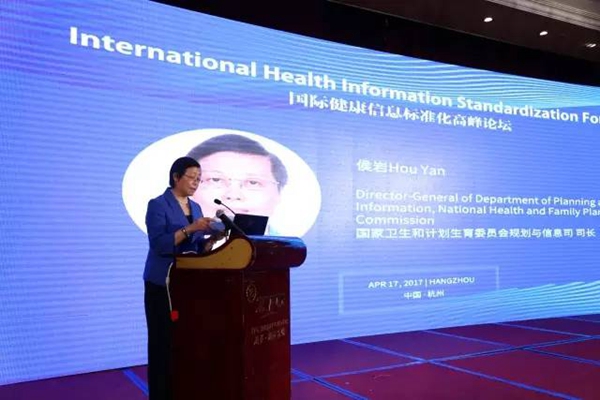
Hou Yan, Director of the Department of Planning and Information, National Health and Family Planning Commission, Delivers Remarks
In his address, Zhang Ping, Deputy Director of the Zhejiang Provincial Health and Family Planning Commission, stated that in the health sector, the user-centric philosophy lays the foundational framework for developing “Internet Plus” healthcare and leveraging big data applications in health. He emphasized that unified standards are a prerequisite for achieving interoperability and information sharing.
In January this year, Zhejiang Province formulated and released the 13th Five-Year Plan for the Healthy Development of Population Informatics, explicitly proposing to supplement and improve provincial standards and specifications based on relevant national industry standards. The plan aims to establish unified standards for disease diagnosis coding, clinical medical terminology, and other related areas; build a standard application evaluation system; strengthen testing for compliance with information standards; and enhance the promotion and implementation of these standards. Zhejiang has long been at the forefront of health information standardization nationwide. As early as April 2010, Zhejiang established the Digital Health Standardization Technical Committee, which is responsible for the formulation and revision of local standards in this field.
In July 2016, Zhejiang Province launched the “Standardization Plus” Action Plan, which defined the Zhejiang standard system across seven key sectors and outlined the implementation of “Standardization Plus Innovation” during the 13th Five-Year Plan period. By the end of 2016, Zhejiang had become the only province in China designated as a national pilot for comprehensive standardization reform.
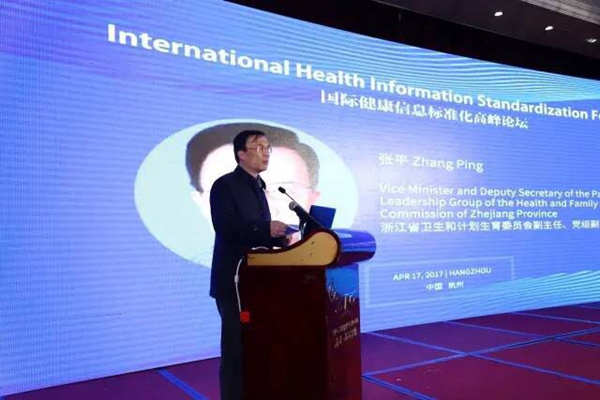
Address by Zhang Ping, Deputy Director of the Zhejiang Provincial Health and Family Planning Commission
Meng Qun, Director of the Statistical Information Center of the National Health and Family Planning Commission, delivered a keynote address titled “Current Status and Prospects of Health Information Standards in China” at this conference. He pointed out that, in the current development of health informatization in China, the more urgent task is to ensure the practical implementation of established standards. The National Health and Family Planning Commission has been promoting standardization through the Interoperability Standardization Maturity Assessment for information standards. He also emphasized that information standards should be closely aligned with demand-oriented principles; their implementation should focus on key priorities in healthcare and public health, strengthen primary care services, advance tiered diagnosis and treatment, and enhance contracted family doctor services.
Meng Qun stated, “Our approach is to strengthen unified standards and promote interoperability. By reinforcing unified standards—enhancing both the development and application of these standards—we can facilitate interoperability, thereby enabling our big data to play a more significant role and allowing informatization to contribute more substantially to the development of health and healthcare.”
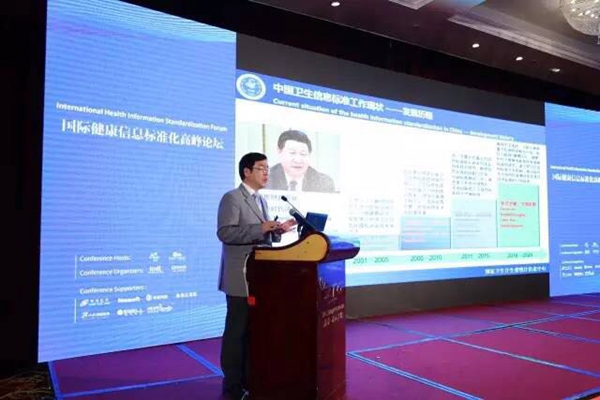
Speech by Meng Qun, Director of the Statistical Information Center of the National Health and Family Planning Commission
In his keynote address titled “From Big Data to Intelligent Medicine,” Academician Yang Shengli of the Chinese Academy of Engineering pointed out that as biomedical big data gains increasing prominence and massive datasets have already been generated, the transition from big data to intelligent medicine faces prominent challenges related to structuring, standardization, and digitalization. Through quality control and digitalization of data, interpretation of data and knowledge formation, mathematical modeling based on big data, or simulation via various virtual reality systems, we can ultimately achieve precise and intelligent medicine.
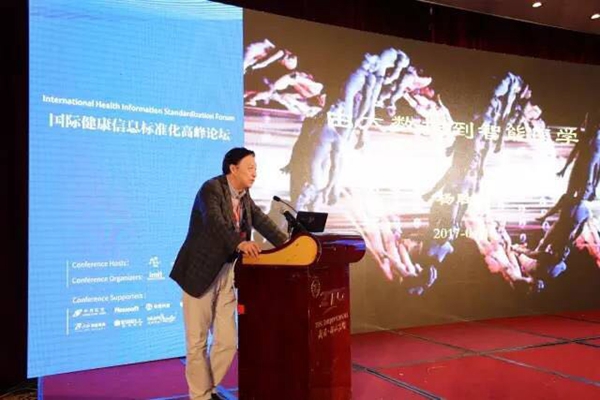
Academician Yang Shengli of the Chinese Academy of Engineering Delivers a Keynote Report from the Perspective of Intelligent Medicine
Academician Li Lanjuan of the Chinese Academy of Engineering recognized the importance of “information standards” in the field of information sharing as early as ten years ago. Relying on the Zhejiang Digital Medical and Health Technology Research Institute, she established the Zhejiang Digital Health Standardization Technical Committee. At this conference, Academician Li Lanjuan pointed out in her report, “Analysis of the Internationalization Strategy for Healthcare Information Standards,” that overall, domestic standards have made significant progress. However, in terms of international standard organization management, China primarily relies on government-driven initiatives, lacking third-party organizations. The comprehensiveness of business operations is insufficient, there is no stable source of funding, and a long-term, stable operational mechanism is lacking.
In the current landscape of vigorously developing the health and medical big data industry, standards must take precedence. We should leverage big data platforms to drive standardization, using platform-based strategies to mitigate the protracted and complex negotiation processes typically associated with setting standards. By establishing open platforms, we can address the diverse and complex requirements for application synergy. Meanwhile, it is essential to promote mass innovation and crowdsourcing mechanisms to generate rich data and applications, thereby fostering the development of Public-Private Partnership (PPP) models. Funding should be provided to third-party organizations similar to the Open Health and Medical Alliance, aligning with international standards and advancing the standardization of foundational information.
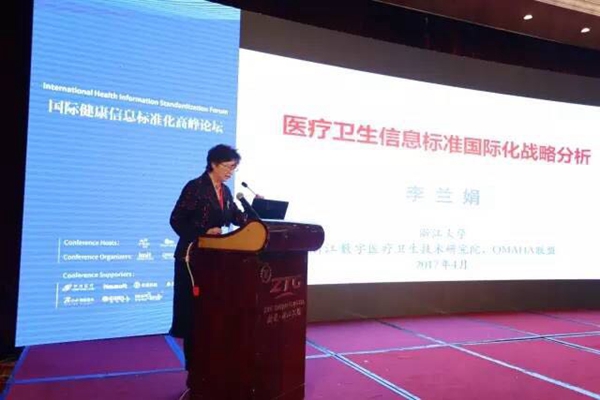
Academician Li Lanjuan of the Chinese Academy of Engineering Delivers a Keynote Report
In his report titled “Standardization of Health Informatics: Current Status and Trends,” Qiu Yueming, Vice President of the China National Institute of Standardization, elaborated on the current state of medical standards in China and worldwide from the perspective of the National Institute of Standardization. He proposed introducing supporting policy measures, making greater efforts in technological advancement and conceptual innovation, and ensuring that the standardization of health informatics plays a more significant role.
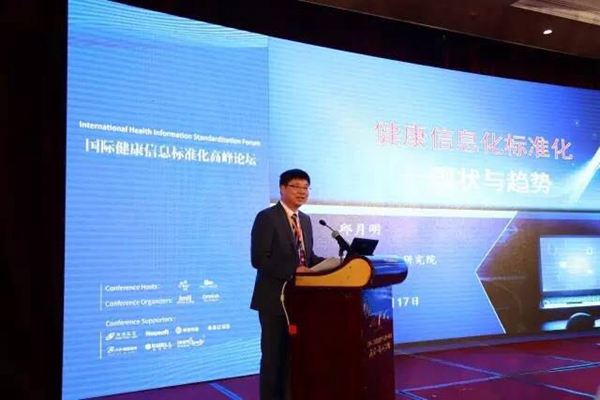
Address by Qiu Yueming, Vice President of the China National Institute of Standardization
Su Lingyun, Dean of the Alibaba Health Research Institute, delivered a speech titled “Standardization of Drug Information in the Era of the Internet of Everything.” He argued that the implementation of standards within China’s current distribution system remains problematic, with suboptimal levels of standardization leading to decreased efficiency in the pharmaceutical distribution network. Starting from the concept of drug health codes, he shared insights on drug regulation, traceability accountability, and public participation.
Mr. Liu Zhile, Chief Security Officer of DBAppSecurity, shared his insights in “Reflections on Digital Healthcare Security Management,” outlining DBAppSecurity’s explorations in digital information security within the healthcare industry. The presentation focused on safeguarding medical information, healthcare devices, digital healthcare applications, and operational personnel, while providing a comprehensive analysis and explanation of information interfaces, core databases, physical security, and cloud data security.
With the deepening of standardization reforms, China has strengthened its exchanges with international health informatics standards organizations. It is increasingly important to promote communication and collaboration between domestic and foreign medical and health informatics and standards organizations and researchers, and to align China’s medical and health informatics and standardization efforts with international practices. Against this backdrop, the “2017 ISO/TC 215 Plenary and Working Group Meetings” were held concurrently with the International Summit on Health Informatics Standards, spanning six days from April 16 to 21.
This marks the first time China has hosted the plenary and working group meetings of the ISO/TC 215 Technical Committee on Health Informatics, alongside the International Summit on Health Information Standardization held concurrently. These events are undoubtedly of great significance to advancing the development of health information technology and standardization in China’s healthcare sector, as well as enhancing the service quality and international competitiveness of Chinese enterprises and medical institutions.
During the International Summit on Health Information Standardization, Mr. Machael Glickman, Chair of ISO/TC 215, introduced the objectives, actions taken, and future work plans of ISO TC215. He stated, “Although there may be differences in specific practices, the overall direction is the same. Moreover, we face common challenges because diseases know no borders; therefore, our collaboration at this level should also be borderless.” He further noted that customized and personalized medical services, as well as better integration of patients with hospitals to create a more robust healthcare ecosystem, have become global trends. Greater coordination, synergy, and communication are needed to harmonize these elements, much like constructing a pyramid.
Mr. W. Ted Klein, a distinguished expert from HL7 International, stated that HL7’s goal is to enable secure, on-demand information applications and improve healthcare through collaboration. He specifically pointed out that traditional standards often lag behind the industry by the time they are finalized. HL7 has adopted a new approach by piloting preliminary standards in real-world settings, continuously refining them through practical application. This methodology has led to the development of standards such as FHIR.
Bron Witt Kisler, Vice Chair of the Executive Committee of Clinical Data Interchange Standards Consortium (CDISC), pointed out that once data are standardized, consideration must be given to the standardization of medical terminology. This also highlights the need to integrate data analysis and research with the clinical care process provided to patients.
Heather Grain, an expert in international semantic standards, stated that the programming languages currently supported by our computers for so-called cloud-based healthcare are ill-suited to future trends. She warned that any disconnect in this area could lead to loss of life, emphasizing that this is by no means an exaggeration. She also pointed out, “When it comes to big data, we must start with the collection of small data. Getting small data right is fundamental, because while the volume of small data is one factor, it is ultimately their quality, standardization, and interoperability that determine the final quality of the big data composed from them. By sharing these data and leveraging global experience, we can establish better standards.”
Christian Hay, Convener of the ISO/TC 215 Working Group on Pharmacy and Medicines Management, also discussed the provision of special labeling in the retail sector to promote industry-wide standardization, thereby enhancing patient safety protection in the future.
Mr. Todd Cooper, Convenor of ISO TC215 JWG7, introduced the Olympic Health Interoperability (OHI) initiative to the attendees. He stated that OHI aims to consolidate various manually operated medical services onto an interoperable technical platform, leveraging global collaboration to leave a lasting legacy in healthcare for the Olympic Games.
During the final Q&A session, international experts addressed a series of questions, including how enterprises and organizations can gradually develop standardized practices in their operational processes; what new opportunities and challenges the growth of internet companies bring to standard development and compliant medical operations; the specific approaches TC215 adopts when formulating standards in emerging fields; and how to harmonize standards to enable the coexistence of multiple frameworks, thereby facilitating information exchange and sharing.
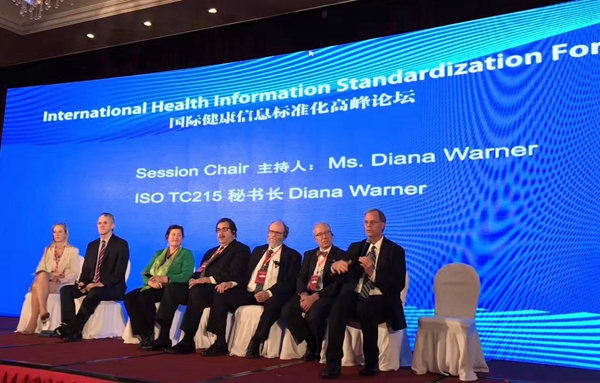
ISO TC215 International Experts and Attendees Dialogue Session
It is reported that ISO/TC 215, the International Organization for Standardization’s Technical Committee on “Health Informatics,” is a renowned international body dedicated to the standardization of medical and health information. To date, it has officially published 168 international standards, with an additional 51 currently under development. In addition to the main forum, this high-level summit featured parallel sessions hosted respectively by Shenzhou Medical, Neusoft Group, and Huazhuo Technology. These sub-forums focused on semantic standardization of health and medical big data, standardization and application of Diagnosis-Related Groups (DRGs), and medical cloud computing and artificial intelligence. Drawing upon real-world industry and enterprise application scenarios, these sessions delivered distinctive and insightful thematic presentations to the attendees.