

Tencent Releases Top 10 'Internet Plus' Excellence Cases of 2016, with Two Healthcare-Related Projects Featured

Today, VCBeat attended the 2017 “Internet Plus” Digital Economy Summit held in Hangzhou, where Tencent Research Institute released the report titled “China’s Internet Plus Digital Economy Index (2017).” The report showed that in 2016, the total volume of China’s digital economy accounted for 30.61% of the national GDP, making it an important component of the national economy. Whether in driving new employment or boosting GDP, the digital economy has demonstrated strong vitality.
At the same time, Tencent announced the Top 10 List of China’s 2016 “Internet+” Excellent Cases (Government Affairs and Public Livelihood Category), among which two cases were related to healthcare. The selection process for the 2016 China “Internet+” Excellent Cases (Government Affairs and Public Livelihood Category) combined public voting with expert review. Experts conducted on-site evaluations and scoring of the 28 shortlisted “Internet+” candidate cases, focusing on multiple criteria including practicality, innovativeness, implementation effectiveness, social impact, and development prospects. The public voting phase, launched on April 1, attracted over 4.8 million online participants within just six days, with the 28 shortlisted cases receiving a cumulative total of nearly 16.36 million votes.
Top 10 Excellent “Internet+” Cases in China for 2016

I.Mobike IntelligenceShared Bicycles
Related Entity: Beijing Mobike Technology Co., Ltd.
II.China UnitedPublic Welfare Service for Telecommunications Fraud Prevention
Related Entity: China United Network Communications Co., Ltd.
III.Innovative Exploration and Practice of “Internet + Smart Healthcare” and Internet Hospitals at West China Second University Hospital, Sichuan University
Related Institution: West China Second University Hospital, Sichuan University
IV.Internet PlusSmart Community
Relevant Entity: Hangzhou Binjiang Real Estate Group Co., Ltd.
V.Mobile HealthPayment Innovation
Relevant Unit: Department of Human Resources and Social Security of Guangxi Zhuang Autonomous Region (Lead Unit)
Shenzhen Municipal Human Resources and Social Security Bureau
Nanshan District Health and Family Planning Bureau of Shenzhen City
Institute of Medical Information, Chinese Academy of Medical Sciences
VI.Guangdong Spring Festival Travel Rush Traffic Big Data Prediction and Analysis Platform
Relevant Entity: Comprehensive Transport Division, Department of Transportation of Guangdong Province
VII.Shen“Yangxin Community” (Smart House) Government Service Platform
Relevant Unit: Shenyang Internet Information Office
VIII.National Public Service Platform for Tendering and Bidding Project
Relevant Entity: China Tendering Public Service Platform Co., Ltd.
IX.Internet + Electronic Invoice Solution
Relevant Entity: Daxiang Huiyun Information Technology Co., Ltd.
X.Yinchuan's "Internet+" Three-Step Strategy for Convenient At-Home Services
Relevant Authority: Yinchuan Administrative Approval Service Bureau
Commentary on Outstanding “Internet+” Cases in the Healthcare Industry
"Innovation and Practice of 'Internet + Smart Healthcare' and Internet Hospitals"
Relevant Institution: West China Second University Hospital, Sichuan University
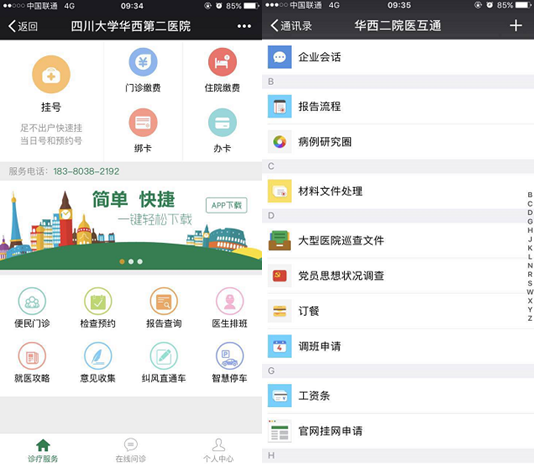
West China Second University Hospital of Sichuan University has launched a suite of convenient healthcare services on its WeChat service account, covering the entire patient journey, including appointment registration, end-to-end payment processing, examination scheduling, report retrieval, online consultations, and post-consultation follow-up. In October 2016, the hospital obtained an “Internet Hospital” license. As the first Internet hospital in Southwest China, it established the “WeChat Smart Hospital” platform and pioneered in-depth innovative services for smart hospital operations. Through the “Internet + Smart Hospital” model, the hospital has enhanced internal management efficiency, bridged gaps in medical resource distribution, and effectively promoted the extension of high-quality medical resources to grassroots levels.
Since the launch of this case study, the WeChat account has garnered over 850,000 followers. It has facilitated 820,000 appointment registrations and 570,000 payment transactions, with a cumulative transaction volume of RMB 216 million. WeChat-based transactions now account for more than 65% of total outpatient visits, saving patients an average of over 2.5 hours per visit. More than 2,000 hospital staff members utilize the “Yi Hu Tong” WeChat Enterprise Account platform for mobile office operations. The platform offers functionalities including official document dispatch and receipt, payslip distribution, leave management, meal ordering, PAC follow-up, meeting room booking, internal memorandum issuance, material and document processing, and equipment procurement requests. This has reduced the hospital’s monthly paper consumption by approximately 30,000 sheets and improved internal administrative efficiency by roughly 400%.
Innovations in Mobile Healthcare Payments
Relevant Authority: Department of Human Resources and Social Security of Guangxi Zhuang Autonomous Region
Shenzhen Municipal Human Resources and Social Security Bureau
Nanshan District Health and Family Planning Bureau of Shenzhen Municipality
Institute of Medical Information, Chinese Academy of Medical Sciences
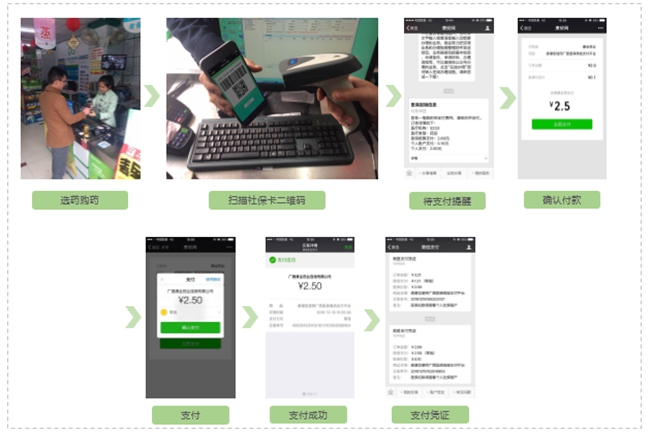
Guangxi and Shenzhen Human Resources and Social Security Departments have pioneered innovations in mobile healthcare payments by leveraging WeChat’s third-party payment platform. This initiative extends into hospitals and designated medical insurance pharmacies, breaking the traditional model that required citizens to queue offline for medical insurance settlements. It streamlines cumbersome processes such as bank and medical insurance system settlements, enabling users to complete mixed payments—covering both medical insurance and out-of-pocket expenses—with a single click. As a breakthrough project in social security payment reform and a key measure in implementing “Internet Plus” public-benefit services, this mobile healthcare payment innovation holds pioneering value.
As of 2015, the number of national health insurance enrollees in China reached 670 million. Health insurance payment has become the primary method of payment, accounting for 50%–70% of medical visits. According to statistical data on offline payment queues from the study “Quantitative Analysis and Research on Waiting Times for Outpatient Visits at West China Hospital,” the average waiting time for payment was approximately 43.6 minutes per person. Long queues for registration, payment for laboratory and imaging tests, and payment for medications have long been persistent challenges undermining the healthcare experience of insured patients. Despite advancements in hospital informatization, including online appointment scheduling and point-of-care payment systems that were initially designed only for self-paying patients, there has been no significant breakthrough in mobile payment solutions for health insurance users.
In 2016, leveraging the power of “Internet+,” connections were established among human resources and social security departments, hospitals, and users. WeChat’s mobile payment for medical insurance was implemented in hospitals and pharmacies, transforming medical insurance services from requiring “patients to run errands” to enabling “data to do the running.” When medical insurance users seek care at hospitals and need to register online or pay during consultations, WeChat Medical Insurance Payment prompts them to bind their electronic social security cards. Upon successful binding, payment password verification is conducted via WeChat Pay. Subsequently, pre-settlement and final settlement requests for medical insurance coverage, as well as settlement for out-of-pocket expenses, are initiated separately to the human resources and social security medical insurance settlement system and the bank settlement system.
First to resolve the issue where users could not simultaneously use social security insurance and WeChat Pay at pharmacies. It supports card-free transactions, secure QR code scanning, and one-click payment via WeChat Medical Insurance—all industry firsts. The solution has been successfully implemented in 40 chain pharmacies designated for medical insurance reimbursement and is poised to expand to cover all 4,000 such pharmacies across Guangxi Province.
Other Shortlisted Outstanding “Internet+” Healthcare Cases
Guizhou Internet+ Chronic Disease Management: Diabetes Prevention and Control Project
Relevant Entities: Guizhou Diabetes Prevention and Control Information Center — Guizhou Bailing Pharmaceutical Co., Ltd. (Lead Entity), Guizhou Provincial Health and Family Planning Commission
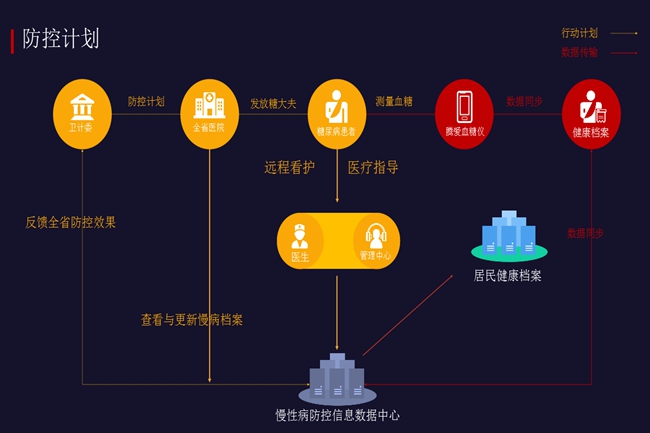
This case stems from the tripartite signing of the “Strategic Cooperation Agreement on Internet+ Chronic Disease Medical Services in Guizhou Province” by the Guizhou Provincial Health and Family Planning Commission, Guizhou Bailing Pharmaceutical Group, and Shenzhen Tencent Company, leading to the establishment of the Guizhou Diabetes Prevention and Control Information Center. Leveraging the “Internet+ Healthcare” model, the initiative collaborates with medical institutions across the province, including all hospitals at Grade II Class A level or above and rural township hospitals. Smart blood glucose meters are distributed free of charge to patients; upon measurement, blood glucose readings are automatically transmitted to a centralized backend system. A team comprising hospital specialists, nutritionists, and medical assistants provides remote clinical consultation and care based on patients’ glucose trends, offering scientific interventions in diet, exercise, and glucose monitoring. This approach aims to prevent and treat diabetes, enhance the capabilities of medical institutions at all levels in diabetes surveillance and patient education, and reduce the incidence of diabetic complications.
Smart Healthcare Tiered Diagnosis and Treatment Platform
Relevant Entities: Hangzhou Zhuojian Information Technology Co., Ltd. (Lead Entity)
The First Affiliated Hospital, Zhejiang University School of Medicine
Henan Provincial People's Hospital
Hangzhou Municipal Health and Family Planning Commission
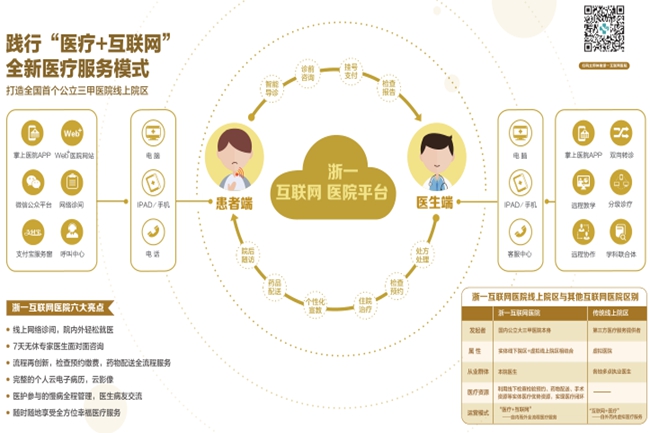
Zhuojian Technology’s Smart Healthcare Tiered Diagnosis and Treatment Platform establishes a three-tier medical collaboration network within a designated region, comprising urban and rural community health service institutions, municipal/county-level hospitals, and provincial-level hospitals. This structure ultimately enables the unified scheduling, sharing, and distribution of medical resources across the cooperative area, thereby maximizing resource utilization. Through this platform, medical institutions at all levels can facilitate two-way referrals, schedule laboratory tests and hospital beds, and share diagnostic and treatment information for referred patients. The platform also features SMS notifications and various query and statistical reporting functions, helping to achieve the goal of “managing minor illnesses in the community, treating serious illnesses in hospitals, and returning to the community for rehabilitation.” Currently, the platform has been extensively deployed in multiple provinces and municipalities, including Henan Province, Zhejiang Province, and Hangzhou City, yielding significant results.
Medical Care at Home: “Internet+” Community Hospital Home-Based Health Service Project
Relevant Entity: Beijing Qianyi Health Management Co., Ltd. (Lead Company)
Beijing Medical Doctor Association, General Practitioner Branch
Beijing Xinjiekou Community Health Service Center
To address the "last mile" demand for in-home services among residents requiring elderly care and integrated medical-nursing support, the Xinjiekou Community Health Service Center in Beijing, in collaboration with the General Practice Branch of the Beijing Medical Doctor Association and Beijing Qianyi Health Management Co., Ltd., has launched an "Internet+" community-based home health service project. After placing an order through the "Nurses to Home" mobile app, community nurses provide in-home nursing care during their working hours or off-duty time. For users covered by medical insurance, reimbursement can be processed later at hospitals; the platform will refund the portion of the fees covered by medical insurance to the user.
“Pioneering Initiatives”: Earnestly Implementing Public Hospital Reform
Relevant Institution: Guangzhou Women and Children's Medical Center
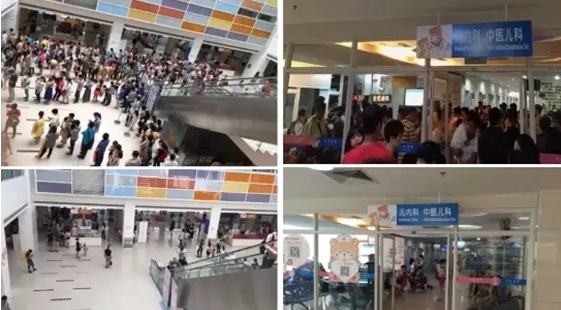
Guangzhou Women and Children’s Medical Center has effectively addressed the longstanding issue of “three long waits and one short consultation” by leveraging “Internet+” technologies. Upholding its mission of “Benevolent Hearts, Skilled Hands, Benefiting Women and Children,” the hospital is committed to enhancing patient safety and operational efficiency while faithfully implementing public hospital reforms and improving medical services. As China’s first mobile internet hospital, it pioneered the “treatment first, payment later” service model and took the lead in trialing the separation of prescribing from dispensing and the outflow of prescriptions through a “consultation-only, no on-site medication pickup” model. By relocating adult outpatient pharmacies outside the hospital premises and completely eliminating non-emergency manual registration counters, the center has achieved an average daily scheduled appointment rate of over 90% for non-emergency cases.