

China's 'Internet Plus' Index Report: Digital Economy Accounts for 30% of GDP, Healthcare Sector Surges by 397%
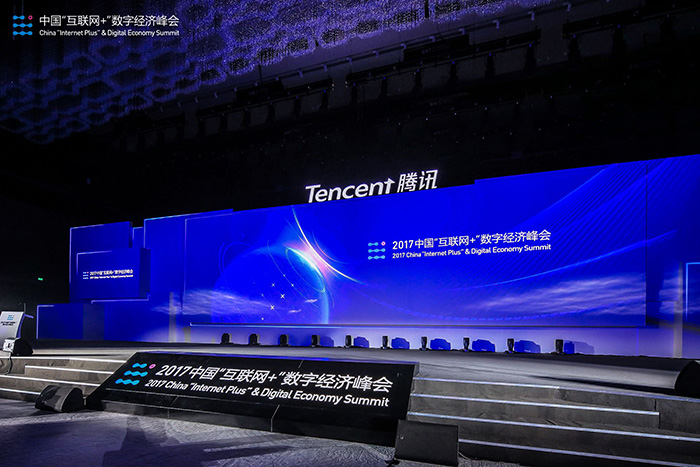
On April 20, VCBeat was invited to attend the 2017 China “Internet Plus” Digital Economy Summit held in Hangzhou, where Tencent Research Institute released the *China Internet Plus Digital Economy Index (2017)* report (hereinafter referred to as the “Internet Plus Index Report”). Compiled by Tencent in collaboration with companies such as Didi Chuxing, Meituan-Dianping, JD.com, and Ctrip through shared big data, this index report is currently the only digital report in China that applies “Internet Plus” to public utilities and economic activities, presenting the current state of Internet Plus development across China from coastal to inland regions.
The report shows that in 2016, the total volume of China's digital economy accounted for 30.61% of the national GDP, becoming an important component of the national economy. Whether in driving new employment or boosting GDP, the digital economy has demonstrated strong vitality. Differences in the development of the digital economy across regions have also reshaped the new landscape of China's digital economy. The "Internet Plus Index" provides a reliable reference standard for the digital economy. With government and technological advancements, the digital economy will further play an enabling role in the future, effectively bridging regional economic gaps and supporting targeted poverty alleviation.
Given the immense potential of the digital economy for the macroeconomy, the Tencent Research Institute, in collaboration with multiple partners, conducted statistical analysis and ultimately compiled and released the “China Internet Plus Digital Economy Index (2017).” Based on digital economy behavioral data from Tencent users and integrating big data from internet companies such as Didi Chuxing, Meituan-Dianping, JD.com, and Ctrip, the report precisely depicts the development status of the digital economy across 31 provinces, autonomous regions, and municipalities directly under the central government, as well as 351 cities nationwide, using a set of indicators. Among them, Guangdong, Beijing, Shanghai, Zhejiang, Jiangsu, Fujian, Sichuan, Shandong, Hubei, and Hunan ranked in the top ten of the “Internet Plus Digital Economy Index.”
The “Internet Plus Index Report” shows that for every one-point increase in the Internet Plus Digital Economy Index, GDP increases by RMB 140.602 billion. By the end of 2016, China’s Internet Plus Digital Economy Index had risen by 161.95 points. Based on this estimate, the total volume of China’s digital economy reached RMB 22.77 trillion in 2016, accounting for 30.61% of the national GDP, demonstrating a significant driving effect of the digital economy on GDP growth.
Certainly, the digital economy has demonstrated more prominent performance in driving employment growth and has already become a new growth engine. The positive effects of developing the digital economy are evident in promoting the development of various related industries, comprehensively boosting employment, and reducing the overall regional unemployment rate. The report shows that for every one-point increase in the Internet Plus Digital Index, the registered urban unemployment rate decreases by approximately 0.02%. Based on this, it is estimated that the development of the digital economy has led to an average decrease of about 0.10% in the registered urban unemployment rate across all 31 provincial-level administrative regions in China. In 2016, it drove 2.8017 million new jobs throughout the year, accounting for 21.32% of total new employment.
The Digital Economy Has Reshaped China’s Economic Landscape
As regional disparities in the digital economy deepen, China’s economic landscape is being reshaped.Based on the cluster analysis of the four sub-indices of the Internet Plus Digital Economy, China’s 351 cities can be classified into five tiers according to their level of digital economy development.Beijing, Shanghai, Guangzhou, and Shenzhen constitute the first-tier cities in the digital economy, accounting for 29.0% of the total index; 14 cities, including Chengdu, Hangzhou, and Nanjing, form the second-tier digital economy cities, representing 19.17% of the total index; 19 cities, such as Dalian, Ningbo, and Qingdao, make up the third-tier digital economy cities, contributing 12.80% to the total index; 65 cities, including Baoding, Tangshan, and Yangzhou, comprise the fourth-tier digital economy cities, with a share of 16.83% in the total index; the remaining 249 cities across China constitute the fifth-tier digital economy cities, accounting for 22.20% of the total index.
The report further indicates that vigorously developing the digital economy helps bridge the development gap between cities and offers valuable insights for targeted poverty alleviation strategies. The report points out that for every one-point increase in the “Internet Plus” index, the GDP of inland provinces rises by RMB 161.948 billion more than that of eastern coastal provinces. This suggests that the development of the digital economy has a more pronounced effect on boosting and driving economic growth in inland regions, effectively narrowing the disparity in economic development levels with eastern coastal areas and bridging the inter-city development gap. Taking Nagqu in Tibet as an example, although its rankings in the “Internet Plus” index for sectors such as finance, transportation, healthcare, and education are among the lowest, its tourism sector stands out. In 2016, the year-on-year growth of digital products in the tourism industry reached 393.39%, ranking among the top nationwide. This demonstrates that Nagqu can leverage its unique natural scenery and local customs to open up tourism resources in a targeted, rational, and orderly manner, thereby achieving targeted poverty alleviation.
So, how are the industry indices for consumption upgrade concepts such as healthcare and education?
In 2016, the Industry Sub-index experienced rapid growth, with an overall growth rate reaching 190.78%, making it the fastest-growing among the four first-tier sub-indices that constitute the Internet Plus Digital Economy Index. This surge in the Industry Sub-index reflects the solid implementation of the Internet Plus initiative across China over the past year. Among specific sectors, healthcare, transportation and logistics, and education recorded the highest growth rates, reaching 397.61%, 307.77%, and 304.88%, respectively.
At the same time, Tencent released the Top 10 List of China’s 2016 “Internet+” Excellent Cases (Government Affairs and Livelihood Category), among which two cases were related to healthcare. One was the innovative exploration and practice of “Internet+ Smart Healthcare” and internet hospitals by West China Second University Hospital of Sichuan University; the other was an innovation in mobile healthcare payment, jointly undertaken by the Department of Human Resources and Social Security of Guangxi Zhuang Autonomous Region (lead unit), the Shenzhen Municipal Human Resources and Social Security Bureau, the Health and Family Planning Bureau of Nanshan District in Shenzhen, and the Institute of Medical Information of the Chinese Academy of Medical Sciences.
It is reported that since its launch, the WeChat official account of West China Second University Hospital, Sichuan University has garnered over 850,000 followers, facilitated 820,000 appointment registrations and 570,000 payment transactions, with a cumulative transaction volume of RMB 216 million. WeChat-based transactions account for more than 65% of total outpatient visits, saving patients an average of over 2.5 hours in medical consultation time.More than 2,000 staff members across the hospital use the WeChat Enterprise Account platform “Yi Hutong” for mobile office operations. Yi Hutong has enabled functionalities such as official document transmission and receipt, payslip distribution, leave management, meal ordering, PAC follow-up, conference room reservation, internal memorandum issuance, material and document processing, and equipment purchase requisitions. This has reduced the hospital’s monthly paper consumption by approximately 30,000 sheets and improved internal office management efficiency by around 400%.
The report also shows that in 2016, smart livelihood services became one of the driving forces behind the digital economy growth in various cities. Governments, service providers, and users have all gone fully online, leading to an explosive surge in new users. Smart livelihood services are highly correlated with industrial development and entrepreneurial innovation.
In particular, by leveraging government connectivity, smart livelihood services are accelerating their penetration into lower-tier cities. Data shows that in 2016, the overall growth rates of the smart livelihood sector in fourth- and fifth-tier cities were 147.23% and 150.40%, respectively, surpassing those in second- and third-tier cities. Among the top 100 cities with the highest growth rates, fourth- and fifth-tier cities accounted for 64 spots. The accessibility of services such as public security, healthcare, human resources and social security, and housing provident funds in fourth- and fifth-tier cities improved significantly compared to 2015, with satisfaction levels nearly on par with those in first-tier cities. This has also driven the impressive performance of the digital economy in fourth- and fifth-tier cities.
It is foreseeable that, with the widespread adoption of mobile internet infrastructure, the deepening implementation of the “Internet Plus” strategy, and the accelerated digitalization and internet integration of traditional industries, the digital economies of mid-tier and lower-tier cities will enter a period of rapid growth, while growth in first-tier cities will moderate appropriately. This trend will effectively bridge the development gap between cities, support social governance and efforts to eliminate the digital divide, and create new development opportunities for late-mover cities and regions.
The report “China’s ‘Internet Plus’ Digital Economy Index (2017),” released by Tencent Research Institute, indicates that the digital economy is exerting an increasingly significant impact on the national economy, while the “Internet Plus Index” provides a benchmark for the digital economy. It is reasonable to believe that as the digital economy continues to deepen and develop, its vital role in national welfare and people’s livelihoods will become even more evident.