

Cognitive Healthcare: Transforming Digestive Tract Imaging Diagnosis Through AI-Powered Solutions
According to World Health Organization data, China has a high burden of gastric cancer, with 680,000 new cases and 500,000 deaths annually. The key to improving the early detection rate of gastric cancer is large-scale population screening.However, the pain associated with traditional gastroscopy deters many people., on the other hand, during gastroscopy, physicians must directly identify and select images of lesions from the continuous video feed transmitted by the endoscopic equipment to generate a report. However, accurately screening for lesion images among such a large volume of data requires substantial clinical experience, and experienced physicians are in short supply.
In China, the weak physician workforce in primary healthcare institutions, the difficulty in channeling high-quality medical resources downward, and the severe brain drain of professional talent constitute major challenges and pain points in the current healthcare reform. This is particularly evident among radiologists and gastrointestinal endoscopists. Most primary care physicians are reluctant to return to work in grassroots medical facilities. Consequently, although the government has procured equipment for these institutions, the utilization rate of much of this equipment remains low due to the shortage of medical personnel.
In reality, primary healthcare institutions face significant challenges, but radiologists and gastrointestinal endoscopists at tertiary hospitals are by no means better off. For gastrointestinal endoscopists at tertiary hospitals, remaining relatively unknown may be preferable; those who have gained prominence are burdened with an endless stream of examinations and an overwhelming volume of gastrointestinal images to interpret. Beyond these clinical duties, they must also engage in teaching and scientific research. As a specialized professional group, physicians are required to continuously advance their skills to deliver optimal clinical care. This has led to a stark disparity: some are overwhelmed with work, while others struggle with insufficient resources.
But what about time? Beyond reading scans, teaching, and studying, doctors are human too—they experience fatigue. As the sum of their social relationships, they also need to spend time with family and friends. Yet for radiologists and gastrointestinal endoscopists who work more than 10 hours a day, this is a luxury.
AI: The “Savior” of Doctors
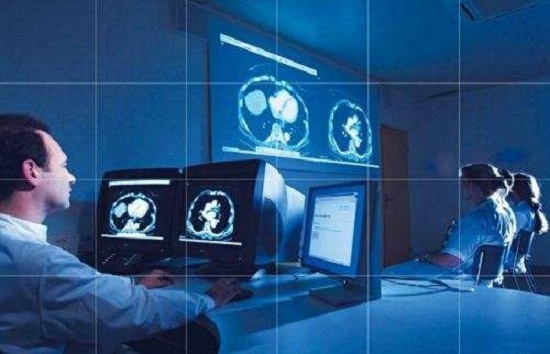
VCBeat conducted a survey and specifically consulted radiologists and experts. They found that much of their image interpretation work is, in fact, repetitive. With the emergence of artificial intelligence (AI), they look forward to having machines take over these repetitive tasks, while leaving cases that require integration with clinical context and specific patient conditions to physicians. In the eyes of doctors, AI is not an enemy but rather their “savior.”
Taking pulmonary nodules as an example, current artificial intelligence technology can identify the location of nodules by analyzing 200 CT images of a patient within 10 seconds, with an accuracy rate exceeding 90%, which is higher than that of physicians. If these tasks are delegated to AI, it can save experts nearly four hours per day.
Some may wonder, doesn’t that replace doctors?Not quite. While AI can confidently identify the location of nodules, determining whether a nodule is benign or malignant requires pathological diagnosis or the assessment of an experienced radiologist who can integrate clinical findings to make such a determination. The two serve complementary roles. In this scenario, physicians would have more time to focus on tasks that are necessary, desired, and appropriate for them to perform.。
The advantages of artificial intelligence lie in its self-learning capabilities and big data analytics. Given that it can learn to interpret medical images, AI is fully capable of supporting physicians when clinical decisions require extensive case evidence, facilitating drug development that relies on massive datasets, underpinning scientific research with robust data support, and providing novel solutions when clinicians encounter complex and challenging cases.
AI Implementation Is the Hottest Topic This Year
Nowadays, if you randomly open any industry-specific WeChat official account, you will almost certainly see seminars and forums related to artificial intelligence (AI). In the healthcare sector alone, VCBeat identified 55 AI companies in its March roundup (with six additional discoveries made recently), participated in five AI-related conferences, and visited nine medical AI companies and hospitals. It should be noted that, as an editor based in Chongqing, I am unable to attend all conferences held in Beijing, Shanghai, Shenzhen, and other major cities; local journalists in those regions undoubtedly attend even more events. From this perspective, AI has clearly become the hottest topic of 2017.
In fact, artificial intelligence had already become widely known in the past two years, especially after AlphaGo became the world Go champion. However, at that time, it was still a topic of discussion and research.By 2017, the focus shifted to the practical implementation and application of artificial intelligence, with companies across various sectors beginning to reflect on and improve their products through real-world use.。
This is not mere speculation by VCBeat. According to VCBeat’s research, Tongji Hospital, Changzheng Hospital, and Zhejiang Provincial People’s Hospital have all adopted domestically produced AI medical imaging products. Anhui Provincial Hospital, Xijing Hospital, and Peking Union Medical College Hospital have already implemented intelligent voice entry solutions from domestic enterprises. A district in Shanghai has begun using artificial intelligence for early lung cancer screening, while Hubei Province is leveraging AI products for early cervical cancer screening.
As for medical big data, I think there is no need to give examples; almost all artificial intelligence enterprises require the support of big data. There are already four companies in the field of medical search. According to recent information from VCBeat, even lung sounds and heart sounds can be digitized, utilizing artificial intelligence to detect cardiopulmonary health in children... In fact, the examples cited here represent only a fraction of what we know...
Cognitive Healthcare Tackles Long-Standing Traditional Ailments
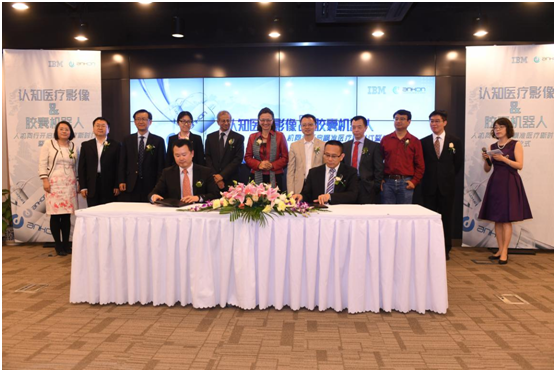
We all know that standing on the shoulders of giants allows us to see farther. This represents a new model for the development of artificial intelligence (AI) enterprises. AI is a tool, and Anhan Capsule Robot provides an excellent example of how to leverage this tool effectively.VCBeat recently learned that Shanghai Anhan Medical Technology Co., Ltd. has entered into a strategic partnership with IBM in the United States, aiming to explore the feasibility of leveraging IBM’s cognitive imaging technologies to enhance early and precise screening for digestive tract diseases.
Anhan Medical’s cutting-edge, precision-controlled capsule gastroscopy system employs a capsule endoscopy robot to acquire medical imaging data, enabling more efficient and less invasive collection of gastric examination information. Precise magnetic control of the robot’s position and orientation ensures a more comprehensive examination of the digestive tract. However, the approximately 20,000 images generated per examination pose new challenges for physicians in terms of data processing and achieving precise analysis.
In clinical applications, it is difficult to rapidly diagnose these massive volumes of imaging data through manual review; IBM’s cognitive imaging technology may well offer a solution to this challenge. The early-stage research collaboration project between IBM Research China and AnHan,Aimed at demonstrating how intelligent lesion detection technology helps Anhan process billions of images generated annually, thereby enhancing the precision and feasibility of disease screening.. Their collaboration will also explore the feasibility of IBM combining multimodal learning with model fusion to extract valuable insights from endoscopic images and electronic health records, thereby providing diagnostic and treatment recommendations to physicians.
Anhan Medical’s partnership with IBM combines their respective data acquisition capabilities and intelligent imaging technologies, leveraging complementary strengths to accelerate the development of both Anhan Medical and the IBM China Research Laboratory.
For inexperienced physicians at the primary care level, having complete medical imaging does not necessarily ensure accurate diagnosis; they require assistance from experts and expert-like artificial intelligence.
By combining these two approaches, Anhan can leverage new artificial intelligence technologies to enhance its development in precision medicine and smart healthcare. With AI-powered diagnostic capabilities, its products can be deployed in primary care institutions, assisting grassroots physicians and addressing the long-standing challenges of traditional imaging diagnosis.