

How Qie Doctor CEO Wang Shirui Realizes the Integrated Online Hospital + Offline Clinic Model
On April 20, 2017, the Medical Sub-forum of the 2017 China “Internet+” Digital Economy Summit, hosted by Tencent, brought together government officials and hospital representatives. The entire Medical Sub-forum focused on the healthcare sector, themed “Integrated Ecosystem, Smartly Connected Health,” to jointly review the achievements made in the “Internet+ Healthcare” field. Wang Shirui, CEO of Penguin Doctor, delivered a keynote speech titled “How General Practice Clinics Can Realize Value: Exploring the Model of Online Hospitals Plus Offline Clinics.” VCBeat provided comprehensive coverage of the event.
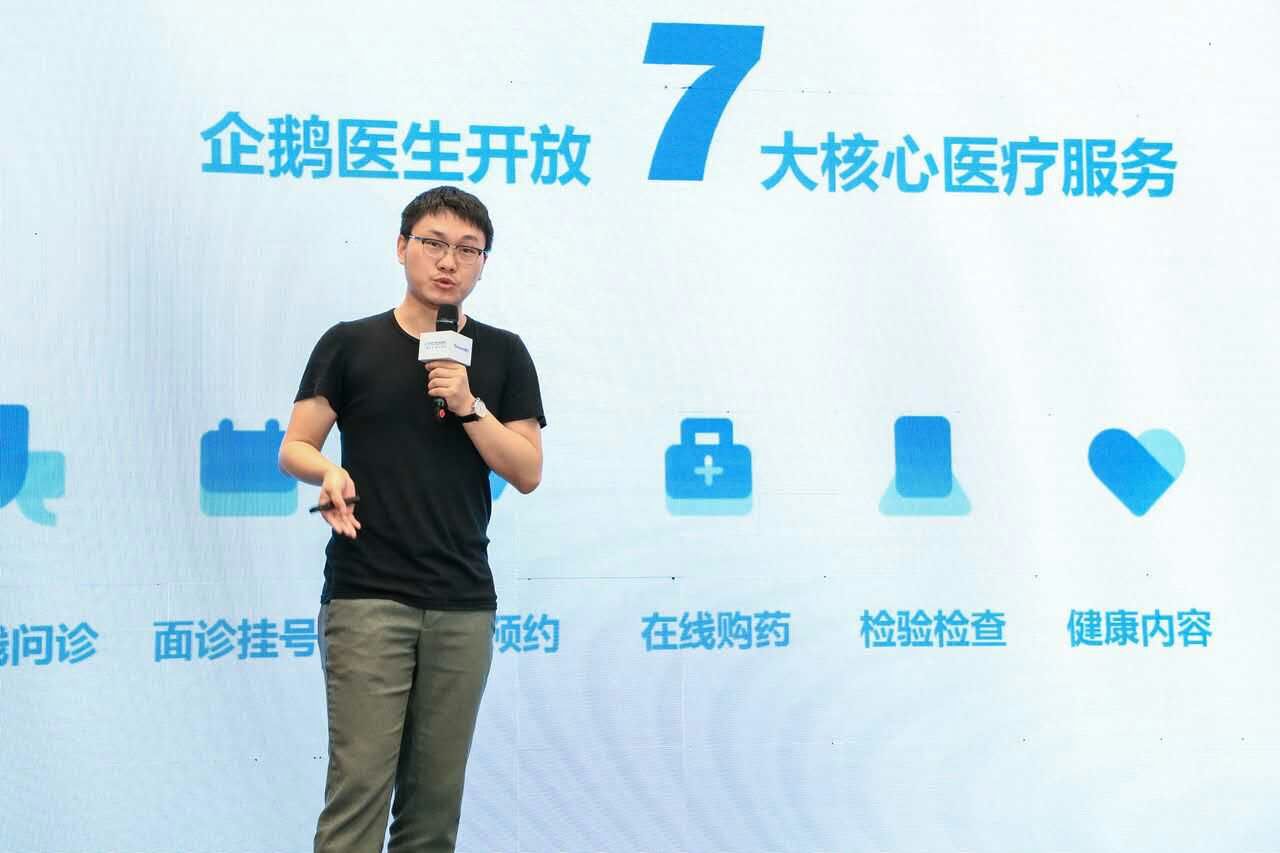
Speech by Wang Shirui, CEO of Penguin Doctor
In June 2016, Wang Shirui had conversations with some colleagues at Tencent and identified a perplexing issue: Tencent’s entry points, such as Mobile QQ and WeChat, each commanded traffic in the hundreds of millions, while there was substantial demand for healthcare services among patients in China. How could these two sides be effectively connected to facilitate patient engagement with physical hospitals?
Wang Shirui told VCBeat, “At the time, we kept wondering: Is there a missing ‘converter’ in between?” This led him to pose a series of self-reflective questions: What exactly is this “converter”? Why do people not think of hospitals when they are healthy, yet find themselves unable to resolve their healthcare needs via the internet once they do think of hospitals?
Through continuous questioning and problem-solving, Wang Shirui discovered that the inability to implement internet-based solutions stems from our narrow understanding of health. According to the World Health Organization’s classification, health management or disease management is broadly divided into four major categories: health promotion, prevention, treatment, and rehabilitation. However, what the Chinese population commonly refers to as “medical care” actually pertains solely to therapeutic medicine, while health promotion, prevention, and rehabilitation remain largely absent in China.
Due to users’ lack of awareness regarding health maintenance, prevention, and rehabilitation, even these high-frequency health management needs remain unmet on the internet. When users fall ill, their first instinct is to call friends for assistance, then proceed to contact hospitals, register for appointments, consult doctors, and obtain medications, going through the entire hospital treatment process until the illness is resolved. Meanwhile, the aspects of health maintenance, prevention, and rehabilitation, which they typically overlook, never come into play.
At the time, he pondered: Is it possible to build a bridge and serve as a converter among the internet, traditional healthcare, and conventional hospitals? This converter would focus deeply on a single point—namely, to develop and strengthen health maintenance, prevention, and rehabilitation, which are high-frequency services that have long been neglected.
If this hypothesis holds true, then Tencent’s hundreds of millions of users are closely linked through its massive traffic volume. Wang Shirui can envision numerous scenarios: users’ daily diet, exercise, sleep, and emotions, as well as their most recent social gatherings with friends and the activities they participated in, can all begin to be recorded. This enables high-frequency online data collection and subsequent secondary analysis. Once these data analyses are completed, it may become possible to integrate with offline traditional medical institutions. One potential realization of this connector could be the concept of general practice clinics.
At that moment, fueled by enthusiasm, I seized the opportunity and proposed to our partners at Tencent: “Let’s spin off healthcare, prevention, and rehabilitation into a standalone initiative—the Penguin Doctor Project.”
Although the Penguin Doctor project was born and established rapidly, how to operate it has become a challenging issue. Wang Shirui began to ponder again:How is Medlinker associated with Penguin Doctor?
In his view, YiLian also faces a dilemma: although the government advocates multi-site practice, tiered diagnosis and treatment, and greater professional autonomy for physicians, the vast pool of medical professionals under its network remains uncertain about where and how to exercise these freedoms. Once they step outside the hospital walls, they find themselves in the dark, instantly reduced to strangers with no clear path forward. While eager to unleash their clinical expertise, they lack the know-how to do so.
This may not be a major problem for YiLian alone; the entire healthcare industry is grappling with this issue. Even Tencent faces a similar challenge: it has access to a large pool of potential patients but struggles to identify and reach them.
Wang Shirui once again employed a continuous process of self-questioning and self-answering, hoping to find a path to resolution amidst the tangled thicket of problems that seemed “impossible to cut through, yet too chaotic to sort out.” “Is there a missing bridge for transformation between us? Is it possible to directly break down this barrier? How should we go about doing this?”
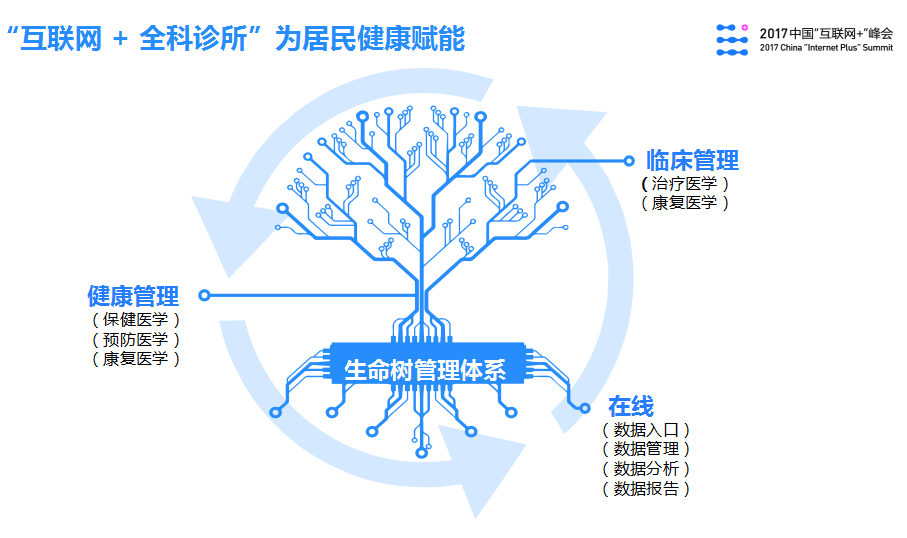
At that time, they jointly drafted a diagram illustrating that the future health management process should be structured around three fundamental elements, akin to a tree: the base serves as its roots, representing the data layer.Health data generated by users every moment of every day—every breath, every movement, and every heartbeat—is statistically analyzed via smart hardware and WeChat Sports, with comprehensive data reports produced. Furthermore, integration with the family doctor system of Penguin Doctors (a general practice clinic network) enables these physicians to conduct continuous follow-up care. These capabilities are unattainable through traditional medical practices.
Simultaneously establish a comprehensive health management system for users, andHealthcare medicine, preventive medicine, and rehabilitative medicine are all integrated in, forming the central trunk of the entire health management system.Once established, if users exhibit signs of disease or become ill, they can then access the clinical management module, which encompasses therapeutic medicine and rehabilitative medicine.
This is an ideal strategic blueprint outlined by Wang Shirui, yet practice remains the sole criterion for testing truth. In the course of implementation, his ability to identify, raise, and resolve problems once again played a pivotal role.
“We considered whether it would be feasible to establish a comprehensive health management system centered on the individual. If we were to adopt this approach, what would still be lacking in our current real-world healthcare landscape? We are not short of tertiary hospitals or specialist physicians; what we lack most is family doctors.” Li Bin, Director of the National Health and Family Planning Commission, stated recently at the national on-site promotion conference for family doctor contract services that 26 provinces, autonomous regions, and municipalities have already issued guidance documents or implementation plans to advance family doctor contract services.Family doctor contract services are to be expanded to more than 85% of prefecture-level cities this year.
In fact, although the enrollment in family doctor contracts is surging,However, there are no more than 100,000 truly competent family doctors in China, a large proportion of whom are internists rather than the general practitioners that Wang Shirui and his team actually envision.
So, they found that such implementation was difficult. What should they do? Thus, they began to deconstruct it again.
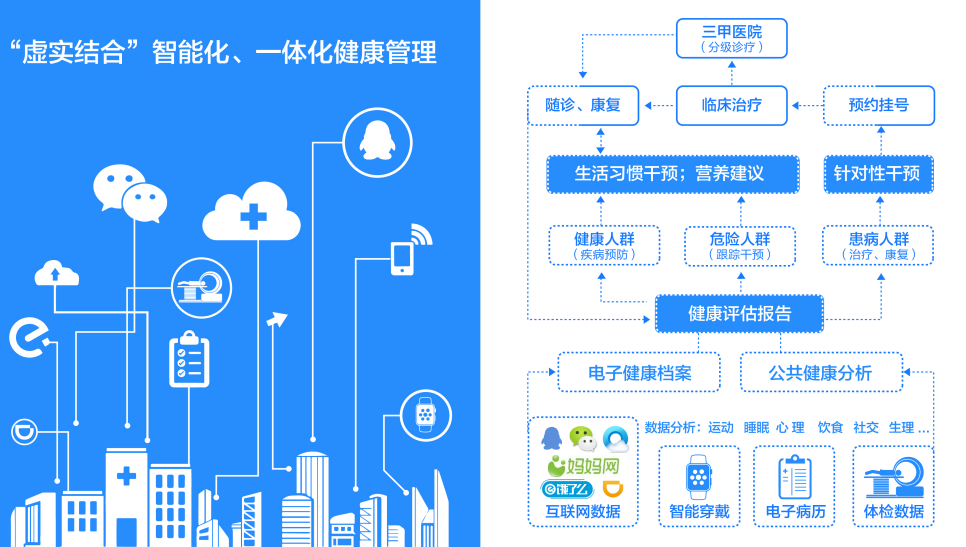
From the perspective of data acquisition: Basic user data is obtained through vertical forums such as Tencent, Mama.cn, and Ele.me; this is then combined with data from smart wearable devices, users’ electronic medical records, and experience data. After comprehensive integration, electronic health records and public health analyses are generated for users, leading to the production of health assessment reports. The results may fall into three categories:
First, you are healthy, and of course, you should continue to maintain your health. We will tell you how to keep it up.
Second, you may be at risk. You belong to the sub-health population; although you appear healthy on the surface, there are many hidden dangers lurking deep within your body or mind.
Third, you may already be diseased without realizing it, or you may be aware that your condition is progressing. For individuals who are healthy or at risk, we provide lifestyle interventions and nutritional advice; for those who are already diseased, we deliver targeted interventions.
Upon falling ill, users enter the appointment registration and clinical treatment modules to receive tiered care at tertiary hospitals. Healthy individuals remain in the online system for follow-up consultations and rehabilitation; patients discharged from tertiary hospitals also return to this follow-up and rehabilitation phase.
From the perspective of the entire health management process, it was previously believed that mobile health users were hard to engage and traditional healthcare was difficult to penetrate. This is because traditional healthcare has always focused on genuine therapeutic and interventional work. The internet lacks penetrative power in the treatment domain and is even considered worthless in this area. However, if we expand the scope of health management, we find that tasks such as maintaining electronic health records, public health analysis, health assessments, lifestyle interventions for healthy and at-risk populations, user follow-ups, nutrition, rehabilitation, and even appointment scheduling can be fully completed online. In fact, these activities occur every moment of every day.
Upon identifying this pattern, Wang Shirui felt a slight surge of excitement. Consequently, he segmented users by age: individuals aged 16 to 35 were defined as “business district users,” while those under 15 or over 50 were categorized as “pre-community” and “post-community” users, respectively. It can be seen that the business district user segment comprises approximately 80 million people among urban residents in China. This represents a substantial scale and lends itself readily to integration with internet-based services.
Therefore, Wang Shirui developed a product suite called Penguin Doctor within the “business ecosystem,” and from June 2016 to this year, he has been secretly and diligently preparing all aspects of Penguin Doctor.
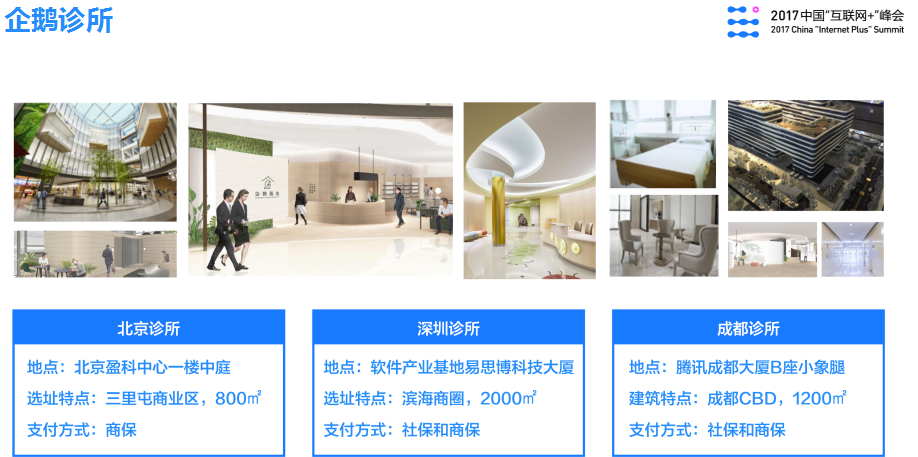
How to prepare? Initially, Wang Shirui aimed to establish general practice clinics by introducing best practices from Western family physician management models. As a pilot, three general practice clinics were launched in Beijing, Shenzhen, and Chengdu, located respectively in Sanlitun, Binhai, and Chengdu’s Central Business District (CBD). Each clinic ranges in size from 800 to 2,000 square meters.
Operate the entire general practice clinic, including online patient engagement, and the core service providers and partners for both online and offline services.
Where do patients come from? Wang Shirui made an attempt at an open platform, making all of Medlinker’s physician resources and doctors capable of directly providing medical services openly available. Specifically, they now fully offer seven major services: online consultations, appointment registration, surgical scheduling, medication purchases, laboratory tests, diagnostic imaging, and health content along with family doctor services.Utilizing mini-programs and official accounts, embedded in numerous platforms.And they do not operate doctor-patient platforms themselves, nor do they directly promote such platforms.
It primarily embeds its services into high-traffic platforms such as Mobile QQ, QQ Browser, and Dayima, thereby assisting and empowering other health platforms to fully unleash their medical content.
Furthermore, Wang Shirui observed that these seven so-called core services still adhere to traditional, specialty-oriented concepts. They merely replicate the entire care pathway of specialty medicine. In contrast, the true focus of general practice lies in online consultations, health content, and family doctor services—areas that have not yet been fully explored and remain in their early stages.In the future, he hopes to fully open up,So, what should it look like?
For example, weight loss is also part of the scope of general practice. If users want to lose weight, they should adopt a scientific approach through comprehensive management in general practice. This includes issues such as insomnia, anxiety, anger, and even diarrhea—all of which fall within the domain of general practice.
With such a high volume of user demands, he hopes to implement online general practice management in the future to help people organize their daily lives effectively.
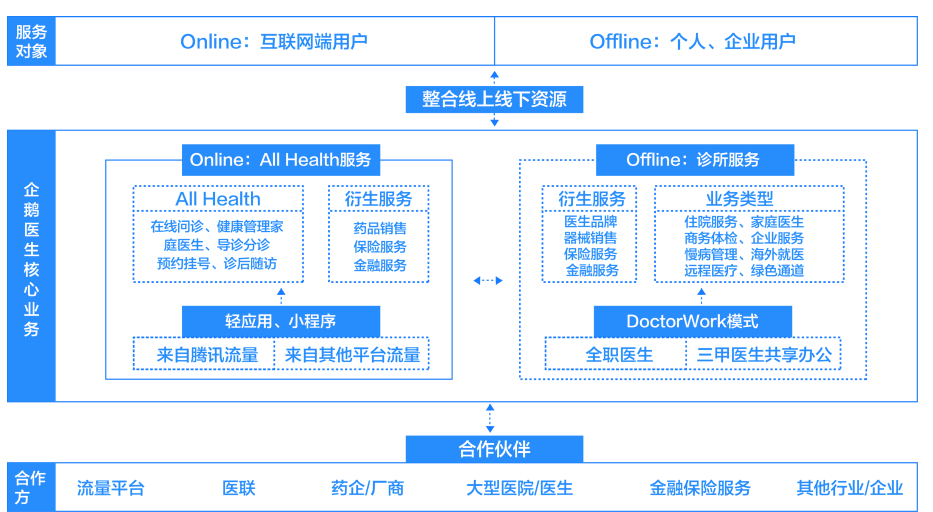
Furthermore,Wang Shirui also hopes to build a connector,Embrace a wider range of partners with an open mindset, including pharmacies, clinics, and the Agricultural Bank of China.For example, the external connectivity of general practice clinics is achieved through a large number of clinic alliances.To effectively channel substantial online traffic into precise offline service delivery, it is prerequisite that Penguin Clinic implements highly standardized and streamlined internal management controls, ensuring strict adherence to quality assurance.
“If future partners have needs, they need to join us or use our medical services. We will open up the platform for everyone and ensure proper connectivity.”