

How a Domestic IVD Company Expanded to Over 100 Hospitals Across 20+ Provinces in One Year: A Grassroots Healthcare Success Story
In 2017, VCBeat launched a case study solicitation campaign themed “The Power of Downward Reach: Seeking Best Practices in China’s Primary Healthcare.”May 17–18, will be held in Chengdu byChina Association for the Promotion of Rehabilitation Technology Translation and DevelopmentHosted by,VCBeat, VCBeatCo-hosted by“2017 China Primary Healthcare Innovation Practice Forum”,Call for “Best Practice Cases in China’s Primary Healthcare” Across the Entire IndustryCentered on the release of the “2017 Report on Innovative Practices in China’s Primary Healthcare,” this initiative explores development trends in the primary healthcare industry from the perspectives of industrial policy, technological evolution, business models, and industry collaboration, while sharing outstanding practical cases in primary healthcare.
To learn more about the event details and register, please clickRegistration Link。
Liu Juan (a pseudonym) is an internal medicine physician at a township hospital. At 8:15 a.m., she attended to a patient presenting with pain in the hepatic region, distension and fullness in both hypochondria, yellowish complexion, and fever. Suspecting that the underlying cause was abnormal liver function, Dr. Liu ordered laboratory tests for the patient.
This is the first laboratory test requisition issued since the hospital’s clinical laboratory underwent its upgrade. The hospital where Liu Juan works is located in a small township in the mountainous region of Southwest China. Although the hospital has its own clinical laboratory, the staff have long been acutely aware of the inconveniences posed by the cramped, dimly lit testing room and the patchwork of cobbled-together instruments. Apart from complete blood count (CBC) tests, no other assays could be performed. Patients with slightly more severe conditions had to be referred to larger hospitals.
Late last year, a laboratory equipment company was selected through a bidding process to redesign the hospital’s clinical laboratory department. Initially, it was assumed that this would be another superficial upgrade involving only one or two instruments, much like previous initiatives. However, Liu Juan was surprised to find that the laboratory underwent significant transformations. In addition to a comprehensive upgrade of all equipment, the department adopted more standardized procedures, and its overall appearance and working environment were completely revitalized. For frontline medical staff like her, this has undoubtedly brought greater convenience. Of course, the primary beneficiaries are the patients.
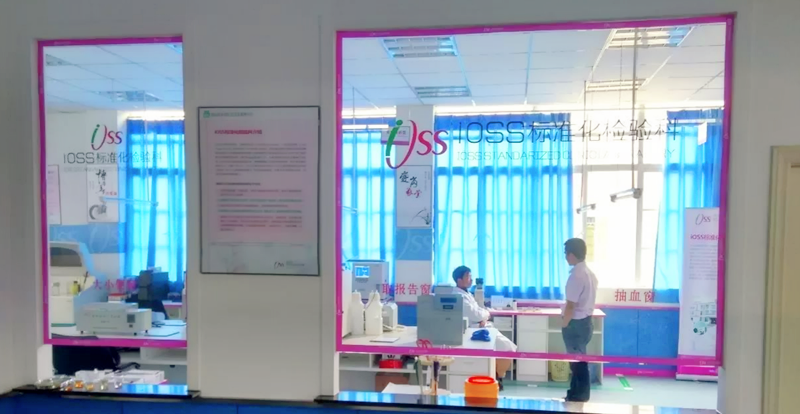
Kubeier is a national high-tech enterprise based in Shenzhen, specializing in in vitro diagnostics (IVD). The company positions itself as a provider of standardized clinical laboratory solutions for primary care hospitals, offering one-stop services for the planning and construction of their laboratory departments. Over the past six years, Kubeier has supplied its proprietary brand of clinical laboratory equipment, including biochemistry analyzers and hematology analyzers, to more than 3,000 hospitals across China and over 30 countries worldwide. Since late 2015, the company has helped establish standardized clinical laboratory departments in more than 100 primary care hospitals across over 20 provinces in China.
Startup: IVD May Present an Opportunity
In 2010, the 21st Winter Olympics were underway in Vancouver. Zhang Zhiqiang and a few friends gathered at the well-known Old Tree Coffee in Shenzhen’s Science and Technology Park. What they discussed was not the performance of Chinese athletes at the Games, nor was it even related to the Winter Olympics.
Several friends, who had previously been key personnel at several listed medical device companies in Shenzhen, launched their own startups and were seeking investment. At that time, Zhang Zhiqiang was reevaluating his future after weathering the 2008 financial crisis. Coincidentally, the Shenzhen municipal government was encouraging private enterprises to build independent brands in the fields of “biomedicine, internet, and new energy.” Spurred by this call, he was eager to seize the opportunity for a second entrepreneurial venture to establish a brand in one of these three sectors.

Seven years ago, Zhang Zhiqiang founded a foreign trade company specializing in mechanical components, supplying non-standard mechanical parts to Fortune 500 medical device companies abroad, including industry giants such as Siemens, GE, and Abbott. Over the past few years, the company has operated quite successfully. Having accumulated a certain amount of capital, Zhang Zhiqiang is now looking for his next project.
After several years of working with companies such as Siemens and Abbott, Zhang Zhiqiang observed that the industry experienced counter-cyclical growth in the wake of the financial crisis, remaining largely unaffected by it. A friend who invited him to invest and start a business remarked, “There are few domestic players capable of producing high-quality IVD products. I believe that if we commit ourselves to excellence, the prospects are very promising.” Following extensive discussions, they decided to inject capital under the name of a foreign trade company, and Zhang Zhiqiang, together with his friends, established a new venture—Cube Biologics.
At that time, most high-end laboratory equipment in China was imported from abroad, with resources primarily concentrated in tertiary hospitals. Foreign giants such as Roche, Siemens, and Abbott captured more than 50% of the medical device market in these tertiary hospitals.
Domestic listed companies such as Mindray and Dirui have secured a foothold in the tertiary hospital market through their reagents. Meanwhile, these hospitals have also captured the relatively lower-tier county-level and secondary hospitals, forming a presence that spans both secondary and tertiary tiers.
Zhang Zhiqiang reasoned that the scale of foreign IVD companies can reach tens of billions, while domestically listed companies have a market capitalization of at least one billion. For startups, competing with them in the secondary and tertiary markets would be highly unwise. In contrast, primary healthcare institutions suffer from significant resource shortages, as most high-quality resources are absorbed by higher-tier hospitals. Consequently, there is substantial demand for cost-effective medical devices manufactured in China. Moreover, these markets are often neglected by foreign companies, and few domestic players currently serve this segment.
“There may be opportunities here,” Zhang Zhiqiang told VCBeat.
Transformation: Primary Care Needs More Than Just Equipment
Initially, like most medical device companies, Kubell’s positioning was limited to simple R&D, manufacturing, and sales, struggling to make ends meet.
Over the past two years, the company has focused primarily on product research and development. In 2012, its first fully automated clinical chemistry analyzer was launched for commercial sale, and by 2014, its independently developed reagents were gradually introduced to the market.
“For the first five years, our business model was essentially centered on instrument sales, with reagent sales as a supplementary offering,” Zhang Zhiqiang told VCBeat.
In 2015, with the implementation of a series of policies such as tiered diagnosis and treatment, medical resources began to concentrate in more primary care hospitals. After analysis with their partners, they identified this as a blue ocean market.
After visiting more than 100 primary-care hospitals across China, Zhang Zhiqiang identified numerous pain points in their clinical laboratories.
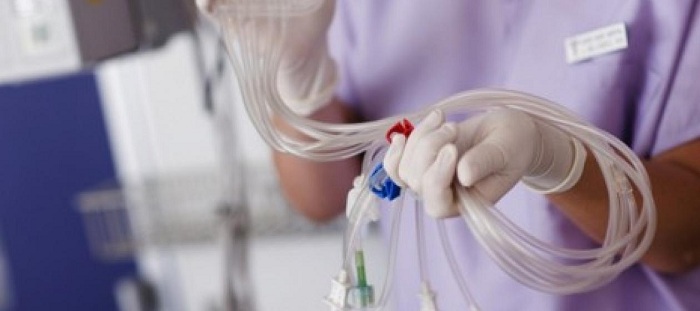
The most obvious point is that,The equipment in the clinical laboratories of these hospitals is perpetually in a state of being updated yet incomplete.“Perhaps one item is applied for today, and another tomorrow, with the government issuing tenders to hospitals on an irregular basis,” explained Zhang Zhiqiang. “This creates a problem where the entire clinical laboratory department remains in a constant state of upgrading and replacement.”
Moreover, the diagnostic equipment in these hospitals is a hodgepodge of devices from different manufacturers and purchased at various times.Each instrument has its own system and standards, making it difficult for different instruments to achieve “communication.”
There are also domestic companies targeting primary care institutions, but for many primary hospitals, the standardization and operational capabilities of their clinical laboratories are inherently weak—Merely providing instruments may not resolve all issues.. Consequently, Zhang Zhiqiang decided to reposition the company, upgrading it from a medical equipment supplier to a provider of standardized clinical laboratory solutions for primary care hospitals.
China’s First: iOSS Laboratory Departments in Primary Hospitals—From Instrument Suppliers to Solution Providers
At the end of 2015, the company officially launched its iOSS laboratory project for primary care hospitals at the National Autumn Medical Device Expo, marking a nationwide first.
i—information, i.e., informatization services.In addition to enabling automatic screening, entry, and printing of device detection data through software, the system can also upload data to the National Public Health System, thereby facilitating the informatization of resident health record management and laying the groundwork for future personalized health management.
OS- One-stop Service, one-stop service.In the past, diagnostic equipment at primary-level hospitals was procured through intermittent government tenders, resulting in a fragmented assortment of instruments. This approach neither allowed for the one-time completion of equipment inventory nor ensured the availability of professional technical personnel to provide support services.
Kuber’s one-stop service encompasses a comprehensive suite of solutions, including laboratory planning and design, equipment configuration, consumables distribution, after-sales support, IT infrastructure development, standardization, training for laboratory technicians and hospital directors, departmental operations management, and financing support. Through this all-encompassing, concierge-style service, Kuber aims to address the prevalent challenges currently faced by primary care hospitals.
S-Standard, standardization.Zhang Zhiqiang told VCBeat that the state has relevant laboratory management standards. However, their implementation at grassroots hospitals has been less than ideal, due to issues with funding and space, as well as a lack of professional personnel.
Based on this, Kubel has established laboratory standards tailored for primary-care hospitals across three dimensions: software, hardware, and corporate image. First, in terms of software standards, it assists hospitals in defining quality objectives, procedural documents, and work instructions in accordance with the ISO 15189 quality management system. Second, for hardware standards, it plans laboratory drainage, cabling, network infrastructure, ventilation, and lighting, while also selecting and configuring equipment. Third, regarding image standards, it creates a cohesive, high-end corporate identity and visual identity (VI) system for partner hospitals, ensuring a unified appearance from interior to exterior.
“Primary care hospitals lack the professional personnel to carry out planning, so we provide them with services; the hospital only needs to provide a space and an operator,” said Zhang Zhiqiang. “We help hospitals establish standardized clinical laboratories in a single, comprehensive step.”
In addition, Cube Medical can subsequently assist hospitals in establishing platforms such as official WeChat accounts, leveraging online promotion and offline operational support to help them grow their business. “Following the implementation of the tiered diagnosis and treatment policy, many resources have been decentralized to primary care hospitals,” said Zhang Zhiqiang. “However, these grassroots institutions often have limited service capabilities, operational efficiency, and diagnostic testing levels. We aim to enhance their capacities so they can better serve patients.”
"This model offers significant convenience to primary care hospitals. For them, providing a space of just over 20 square meters is sufficient. 'The remaining site planning, design, equipment configuration, and even operations can all be handed over to us,' he told VCBeat."
Zhang Zhiqiang also revealed that the company plans to collaborate with third-party testing firms, gradually rolling out high-end diagnostic services such as cancer screening and genetic testing. Meanwhile, once data accumulation reaches a certain scale, the company will sequentially expand its big data operations business.
“Each of our clinical laboratories serves a population of 10,000 to 20,000. If we scale to 10,000 laboratories, that would encompass data from 100 to 200 million people,” he explained to VCBeat. “These data hold immense value for pharmaceutical companies and the public health sector, enabling local governments to better understand residents’ health status and promote tiered diagnosis and treatment.” At this point, he appeared visibly excited.
Leveraging Capital to Access More Social Resources
In January 2016, Kubel was officially listed on the National Equities Exchange and Quotations (NEEQ). For a startup, going public on the NEEQ in less than six years may not seem slow. However, Zhang Zhiqiang stated that the company’s development has not been smooth sailing; it has had to continuously confront and resolve challenges.
In February 2012, Kubel entered into a partnership with a European company to develop high-end immunotherapy products. Prior to this, the company had never raised external financing, and the funds accumulated from its foreign trade operations were quickly depleted. While significant investment was required for research and development, the lack of commercialized products resulted in severe cash flow difficulties.
“I was on the verge of being unable to continue,” Zhang Zhiqiang joked. He realized that it is difficult for an individual alone to accomplish significant endeavors. Only by leveraging capital can one gain greater social influence and access more social resources.
By opening up to capital in a timely manner, the company weathered the crisis, completed two additional rounds of financing within the following two years, and acquired a peer company to enrich its product portfolio.
Today, Kubel has helped 100 hospitals across China establish standardized clinical laboratories; some are community health centers, and in certain counties, all township health center laboratories have been entrusted to Kubel.
After the iOSS laboratory information system has been gradually rolled out and matured, Zhang Zhiqiang also plans to open up the platform to more excellent grassroots laboratory products and talents in society, as well as peer enterprises. Internet thinking is also a trend that Zhang Zhiqiang highly recognizes.
“It is very difficult for small enterprises to excel in all aspects, including R&D, manufacturing, marketing, after-sales service, capital management, and operations. We have deep personal experience with this challenge. It is hard enough to manage these tasks internally, let alone compete with foreign companies,” said Zhang Zhiqiang. “If an open platform could be established to bring together small and medium-sized enterprises, we believe the Chinese in vitro diagnostics industry would gain significantly greater capabilities, thereby providing better resources for patients at the primary care level.”
Moving forward, the company plans to establish a regional laboratory medical consortium connecting village-level clinics, township hospitals, and county-level hospitals, thereby integrating laboratory resources and enabling the sharing of diagnostic information.
“In this way, specialists from higher-level hospitals can provide support to lower-level hospitals, while the latter can help refer patients to the former. This enables hospitals at different levels to assume responsibility for treating different diseases, thereby helping the country achieve a tiered diagnosis and treatment system,” said Zhang Zhiqiang.