

How Tencent Connects Everything in Healthcare: The Real Story Behind Its Digital Health Strategy
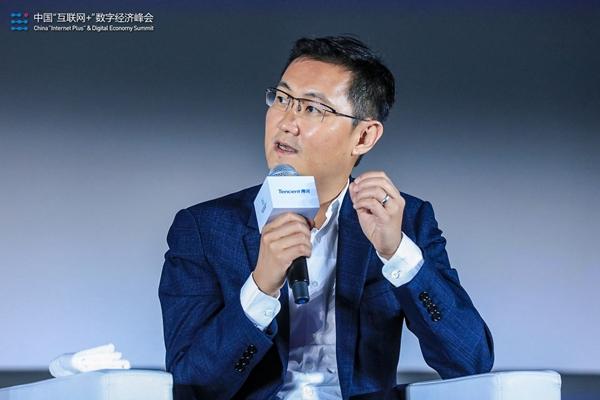
The 2017 China “Internet+” Digital Economy Summit quietly concluded amidst enthusiastic support from media and corporate attendees. Many people remain immersed in the heated exchange between Zong Qinghou and Ma Huateng.
With high-definition screens worth millions and a series of eye-catching big data indices, Tencent once again demonstrated how a decisive internet enterprise permeates various industries with openness and connectivity. What’s more, this took place in Hangzhou—right on the doorstep of another industry giant, Alibaba.
This seemingly calm public exchange, with its hidden implications, has inevitably sparked unfounded speculation among industry insiders. Yet compared to AI and cloud computing—the sectors that “Brother Ma” has repeatedly highlighted—the latter clearly offers more substantial fodder for commentators’ discussions.
As early as this year’s Two Sessions, Ma Huateng made his stance clear: “Traditional industries constitute the existing base of the digital economy, and their integration with new internet technologies will create substantial opportunities for transformation and upgrading. For instance, deep convergence between traditional sectors such as finance, education, and healthcare and mobile internet, cloud computing, and big data will unleash entirely new vitality.”
In his remarks on the digital economy, he has, to some extent, unveiled Tencent’s future strategy.
Cloud Computing: A Cold War Without Smoke
Although cloud computing is hardly a novel concept, its development in recent years has not resulted in absolute market monopoly. Compared with Alibaba, Tencent started later in the cloud computing sector; however, in today’s era of rapid AI ascent, new competitive dynamics are already subtly reshaping the landscape.
At the Hangzhou Yunqi Conference in October 2016, Alibaba Cloud reduced prices across its entire lineup of cloud products in China, with core cloud products seeing price cuts of up to 50%. Shortly thereafter, in December, Alibaba Cloud announced a 30% discount on cloud servers for new users in the South China region, adjusted pricing for its full range of cloud database services across all major regions in China with an average reduction of 20%, and offered discounts of up to 30% on dedicated instances of cloud servers.
Not to be outdone, Tencent also entered the fray. In March 2017, Tencent Cloud won the bid for Xiamen’s e-government extranet cloud services project with a symbolic price of RMB 0.01. This seemingly bottomless price war, viewed as crossing ethical boundaries by industry peers, instantly propelled Tencent Cloud into the spotlight amid intense controversy.
Price wars have always been the hallmark of internet disruptors.
In Jack Trout’s *Marketing Warfare*, low pricing is a representative form of flank attack. Its advantage lies in the ability to rapidly bring products to market. After all, for payers, lower prices for equivalent products are always the preferred choice. For Tencent and Alibaba, low pricing does not imply quietly reducing costs in certain areas. Rather, it constitutes a dimension-reduction strike that leverages their absolute financial superiority to swiftly capture market share and carve out territorial dominance.
After Alibaba Cloud opened four overseas data centers last November, Tencent Cloud quickly followed suit by launching 11 overseas service nodes. This tit-for-tat rivalry underscores that neither party is willing to cede any ground in the fiercely contested cloud computing market.
Foreign cloud providers such as AWS and Azure, constrained by domestic policies and security regulations, still primarily serve overseas customers. Domestic projects, such as government clouds, have not yet issued “licenses” to foreign-owned cloud providers. In other words, foreign cloud providers are not yet participating in market competition on a large scale, and thus their presence in government tenders remains rare.
However, this does not mean that domestic cloud providers can rest on their laurels or become complacent. Despite numerous restrictions, foreign cloud vendors often enter the Chinese market through partnerships with local enterprises. A prime example in the healthcare IT sector is Dell’s Future-Ready Enterprise Cloud Alliance, which collaborates with companies such as Neusoft and Utecloud.
In 2016, Tencent’s third-quarter financial report showed that its payment-related services and cloud computing services revenue increased by 348% year-on-year, with total revenue reaching RMB 4.964 billion. Among this, Tencent Cloud’s revenue grew by over 200% year-on-year. This marked the first time that Tencent’s cloud business was disclosed in its financial reports.
Similarly, Tencent’s fourth-quarter 2016 financial report showed that revenue from its “Others” segment increased by 289% year-on-year to RMB 6.385 billion in the fourth quarter of 2016. This growth was primarily driven by increased revenue from Tencent’s payment-related services and cloud services.
It is evident that the strategic importance of cloud computing within Tencent’s overall strategy is steadily rising.
The Core of Connecting Everything Is the Underlying Layer
If Tencent is determined to excel in its role as a connector, then its strategic choices—what it does and what it refrains from doing—are perceived by external observers as more of a prudent move to align with the current landscape.
In VCBeat’s view, it is a wise move for Tencent, whose foundational services have yet to gain a firm footing, to shift its focus at this juncture to AI, cloud computing, big data, and the Internet of Things. Only in this way can Tencent’s “Connect Everything” strategy logically and seamlessly penetrate other industries from the ground up, free from disruption. These new technologies will naturally become powerful tools capable of overcoming formidable barriers.
Looking back five years, finding a cloud computing company in China’s healthcare industry was like searching for a needle in a haystack. Never mind a reward of one million; even with a bounty of 100 million yuan, no one would have dared to take on the challenge.
Nowadays, private clouds, public clouds, and hybrid clouds are ubiquitous. Cloud computing is no longer an ethereal castle in the air but a mature, practical tool. With its strong openness and adaptability, not only the healthcare industry but also traditional sectors such as finance, government, education, and even industry are embracing cloud computing with an open attitude, using it as the spark to ignite another round of accelerated growth within their organizations.
When analyzing Tencent’s healthcare strategy, media outlets often limit their focus to the companies it has invested in or acquired. As it turns out, Tencent’s true efforts are directed at a more foundational level than commonly perceived.
Tencent Cloud Vice President Xie Yuefeng once used the phrase “bones and flesh intertwined” to describe the relationship between Tencent Cloud and its partners. This not only signifies mutual dependence and inseparability but also clearly defines their respective roles. Within this cloud ecosystem, Tencent Cloud serves as the “bones,” while its partners constitute the “flesh.”
If interpreted through the lens of cloud computing’s layered architecture, Tencent’s healthcare strategy can be divided into three tiers from bottom to top: IaaS (Infrastructure), PaaS (Platform), and SaaS (Software). Tencent Cloud focuses exclusively on IaaS and a limited portion of PaaS, providing clients with IT infrastructure services capable of handling high concurrency and high traffic volumes.SaaS-level applications and services are provided by partners. This clear division of labor maximizes the protection of partners' interests and prevents both parties from competing for customers.
From a structural perspective, whether it is Zhuojian and WeDoctor, which are deeply engaged in hospital informatization, or Xingren Doctor, which focuses on physician tools, they are all SaaS applications built on the underlying infrastructure of Tencent Cloud.
In the healthcare industry, Tencent Cloud, with infrastructure at its core, can meet four major needs:
1. Accelerate the informatization of internet-based healthcare applications, enrich the medical cloud ecosystem, optimize patient care processes, and enhance physicians' diagnostic and treatment capabilities;
2. Break through the constraints of time and space, enhance the flexibility of scheduling for doctors and patients, and enable rapid remote communication and collaboration between them;
3. Facilitate data-driven insights, analyze the value of healthcare big data, precisely identify application scenarios, and enhance patient satisfaction;Enable data storage and interaction for services such as remote imaging, remote pathology, and remote consultations; implement multiple data backups to ensure the continuity of medical care data.。
4. In the private cloud and hybrid cloud sectors, last September, Tencent Cloud made a strategic investment in Haiyun Jiexun, a domestic OpenStack service provider. The two parties will provide enterprises with one-stop integrated cloud services covering private cloud, hybrid cloud, and public cloud.
The integration of AICloud’s OpenStack management platform with Tencent Cloud’s “Blackstone Hybrid Cloud” solution delivers a highly elastic and secure enterprise-grade hybrid cloud platform to businesses. As one of the leading players in China’s OpenStack ecosystem, AICloud brings extensive experience in traditional IT system integration, consulting, and services, offering complementary strengths to Tencent Cloud.
With the support of these technologies, Tencent Cloud’s partners—whether they are developing healthcare IT products, building internet hospitals, or providing telemedicine services—can freely and conveniently establish their platforms. This truly embodies the essence of Tencent’s mission to “connect everything.”
WeChat + AI: How Is Tencent Cloud Overtaking on the Bend?
In April this year, “Tech Ten O’Clock Insights” compiled a revenue ranking of China’s specialized cloud computing providers. According to the list, Alibaba Cloud ranked first with RMB 5.56 billion in revenue for the full year 2016, while Tencent Cloud ranked fifth with RMB 650 million.
To overtake its rivals, Tencent Cloud must not only maximize its inherent advantages but also leverage emerging markets and technologies to achieve a leapfrog advancement; mobile payments, WeChat, and artificial intelligence present the most promising opportunities.
Mobile medical insurance payment has been one of Tencent’s key focus areas over the past two years. WeChat’s medical insurance payment functionality covers not only out-of-pocket expenses but also cross-regional healthcare services under the New Rural Cooperative Medical Scheme (NRCMS). In the future, Tencent plans to extend coverage to commercial health insurance, enabling a one-click and hybrid payment model. This will allow users to complete all types of payment structures in a single operation on WeChat.
Yet Alibaba’s Alipay is equally dominant in this regard. Therefore, Tencent still needs more leverage.
According to Mary Meeker’s 2016 data, all platforms combined—including WeChat, QQ, QQ Browser, video services, and Yingyongbao (Tencent MyApp)—account for more than 50% of the time Chinese users spend on the internet. Currently, WeChat has surpassed 800 million users, while Mobile QQ and QQ Browser are also platforms with hundreds of millions of users.
Such a robust ecosystem empowers Tencent with more precise user reach and more comprehensive user profiling capabilities. This enables Tencent to deliver precise, personalized services when operating in specialized sectors such as healthcare.
According to data released by Tencent, more than 38,000 medical institutions currently operate their own WeChat Official Accounts, with over 110 million users searching for and utilizing these accounts. Eighty percent of medical WeChat Official Accounts have enabled Tencent’s online services. Among them, 60% of Service Accounts provide online consultation and appointment registration services.
More than 2,000 hospitals have enabled WeChat Pay, with mobile payments accounting for up to 60% of transactions at some of these institutions. At certain hospitals, over half of all payment transactions are processed through third-party payment platforms. Additionally, WeChat offers city-level appointment registration services in 189 cities, and 1,500 hospitals have implemented online appointment registration through WeChat’s City Services.
On January 9, 2017, WeChat Mini Programs were officially launched. The phrase “use and go” profoundly encapsulates the application scenarios of Mini Programs. The healthcare industry also exhibits low-frequency usage characteristics, making the concept of Mini Programs a natural fit.
At the 2017 China “Internet Plus” Digital Economy Summit, Gu Haijun from the WeChat Open Platform Department provided an interpretation of the application of Mini Programs in mobile healthcare and the medical ecosystem.
Gu Haijun believes that mini-programs can achieve applications in at least four areas:
First, the mini-program can enable online payments combining basic medical insurance and commercial health insurance on the WeChat platform. Furthermore, it can function as a mobile digital diagnosis and treatment card, replacing physical cards for use within hospitals. In terms of family doctor contracting, the mini-program can integrate with backend client systems to establish an efficient mechanism for signing up with family doctors.
Regarding the currently popular internet hospitals, mini-programs have given rise to a new capability called two-way video, which is currently in the testing phase. Patients can use the mini-program while doctors access via web services, enabling effective remote consultation services.
WeChat is more than just a platform for information dissemination. Its mobile user base, serving as Tencent’s impregnable “moat,” also constitutes the foundation for its penetration into various industries.
On March 19, 2017, in Tokyo, Japan, at the finals of the 10th UEC Cup World Computer Go Tournament, “Fine Art,” the Go AI program developed by Tencent AI Lab, made its debut and triumphed over Japan’s DeepZenGo and France’s CrazyStone to claim the championship title.
This AI competition, which appears to be a mere publicity stunt, fails to conceal Tencent’s ambitions in artificial intelligence.
Zhang Tong, Director of Tencent AI Lab (Tencent Artificial Intelligence Laboratory), once stated: “The internet era is divided into two halves. The first half, encompassing the PC internet and mobile internet eras, was driven by demographic dividends, traffic dividends, and content dividends; this phase has essentially come to an end. What is the second half? Artificial intelligence.”
For Tencent’s artificial intelligence initiatives, data is the most critical factor. Only with sufficient data processing capabilities can an intelligent robot be trained. Big data is a prerequisite for artificial intelligence, and Tencent possesses precisely the necessary volume of data and rich data dimensions.
Taking the collaboration between Tencent and Sun Yat-sen University Cancer Center Nanshan Hospital as an example, the two parties jointly piloted an early esophageal cancer screening system in the Shantou region of Guangdong Province.Certain towns and county-level cities in the Shantou region are among the areas with the highest incidence of esophageal cancer nationwide. Tencent leverages AI-based image processing to help hospitals that require extensive preliminary screening but lack sufficient medical capacity improve their efficiency, thereby significantly reducing manual labor inputs.
According to Chen Guangyu, Vice President of Tencent’s Mobile Internet Group, Tencent’s AI Lab will collaborate with Zhuojian and Yilian to develop a future-oriented follow-up consultation system, providing primary care physicians with tools for managing common diseases.
Leveraging AI in the cloud to process big data is arguably the direction for all enterprises pursuing digital transformation. Although Tencent was a latecomer to cloud computing, it is presumably no longer willing to remain merely a follower in the field of AI.
Revisiting the Connection of Everything
Modern people always pin their hopes on new scientific and technological advancements when facing adversity.
Currently, China’s healthcare sector is undergoing an unprecedented transformation. Amidst the complex interplay of competing interests, internet companies, as disruptors, have also gained some opportunities to enter the market. However, relying solely on business model innovation is clearly insufficient to truly reshape this industry.
At the “Internet Plus” Digital Economy Summit, Ma Huateng repeatedly emphasized that Tencent should position itself at the foundational layer, aiming to provide more basic components and connectivity capabilities to support traditional industries across all sectors.
Shun the hollow hype and wield technology as a trekking pole to gain firm footing. Tencent’s “clarity” comes none too soon.
As Bill Gates’ famous quote goes, “We always overestimate the change that will occur in the next two years and underestimate the change that will take place in the next ten.” The connectivity Tencent is building today is precisely a endeavor for that ten-year horizon.