

Rimonci Capital Closes First Round of Its Specialized Ophthalmic Fund, Signaling a Potential Shift Toward Niche Investment Firms
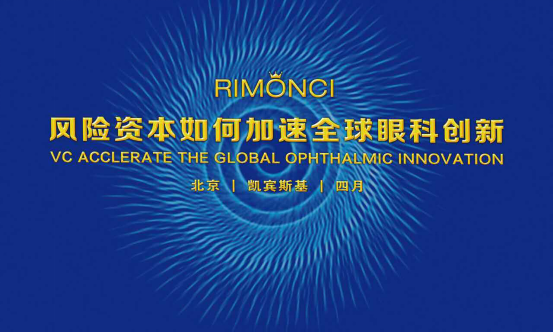
On the afternoon of April 21, at the forum “How Venture Capital Accelerates Global Innovation in Ophthalmology” hosted by Ruimengxi Capital, the firm announced the first closing of the International Optometry and Ophthalmology Fund it initiated.
Ophthalmology-Focused Industry Fund
A couple of days ago, VCBeat conducted a specialized interview with this investment firm focused on ophthalmology. As I stepped into the office of Raymax Capital, located in Beijing’s Chuangye Building, I was immediately drawn to several medical images of eyes displayed on the wall. My first thought was how unusual it seemed for an investment firm—didn’t these anatomical charts belong in an ophthalmologist’s consultation room? Wang Su, COO of Raymax Capital, joked, “Whether your eyes are open or closed, these anatomical diagrams should always be before your eyes and in your mind.”
Wang Su told VCBeat that their focus on ophthalmology investments has little to do with their background, but is entirely derived from industrial analysis logic.Richel, the founder, previously served as CEO of an IT enterprise with annual sales of approximately RMB 10 billion and as chairman of a publicly listed company, boasting over 15 years of experience in investment and industrial operations. Wang Su was responsible for strategic investments at this company. However, neither of them has a medical background.
Wang Su stated that their rationale for choosing ophthalmology is as follows:First, the potential market size is sufficiently large with room for development; while current penetration rates remain low, the industry is experiencing rapid growth. Second, private enterprises must demonstrate robust vitality within this sector. Third, hard-tech innovations can drive breakthroughs and enhance service capabilities in this field, where a technological gap persists between domestic and international markets. Although Ruimengxi Capital focuses on niche industries, it allocates investment resources on a global scale, integrating with China’s market, technology, and talent pools, and leveraging the precise clinical environments established by its funds.Industrial implementation environment, promoting the development of portfolio companies, while also creating industrial synergy value for industry LPs.
It is precisely based on these considerations that, during the nearly one-year fund preparation period, Remaxic repeatedly narrowed and refined its focus. After screening hundreds of projects across various categories, the firm decided to concentrate on the eye care and optometry industry. As Richel stated, “Anyone who has run a business knows that subtraction is often more difficult than addition. Only through focus can we consolidate our strength and create value. We do not pursue scale and comprehensiveness. Rather than being a hunter chasing hot trends, we prefer to be farmers cultivating deeply—channeling all our efforts into a single point to thoroughly master a specific niche. This approach also better aligns with the characteristics of our team.”
In his opening keynote address, “Prospects for the Ophthalmic Diagnosis, Treatment, and Rehabilitation Industry,” delivered at the forum on April 21, Professor Sun Xinghuai, President-Elect of the Ophthalmology Branch of the Chinese Medical Association, pointed out that visual disability has become the third major condition severely impacting people’s survival and quality of life, following cancer and cardiovascular diseases. According to the World Health Organization (WHO), fewer than 2% of individuals with visual disabilities worldwide receive effective low-vision rehabilitation services. In China, 80% of those with low vision who require rehabilitation still lack access to such services, indicating substantial social and market demand for the ophthalmic medical rehabilitation industry. This demand will inevitably drive the rapid development of ophthalmology-related industries, with technological innovation playing a particularly prominent role in this growth.
Most of the advanced medical devices required in ophthalmology, particularly surgical instruments, are manufactured by foreign companies. There is a significant technological gap between China and other countries in research and development within this field. Therefore, the two founders targeted the ophthalmology sector and sought out promising, high-potential solutions in the United States, Israel, Europe, and other regions.
Capital, Industry, and Clinical Collaboration Jointly Advance the Development of Ophthalmology
At this forum, VCBeat observed that collaboration among capital, industry, and clinical sectors has accelerated the development of ophthalmology.
Wang Zhongmin, Vice Chairman of the National Council for Social Security Fund, pointed out that venture capital can not only spawn and accelerate technological innovation. Specialized industry funds, such as the Ruimengxi International Eye Care and Optometry Fund, which focus on niche sectors, allocate investments globally, and link industry ecosystems, are better able to combine monetary capital and knowledge capital through “partnership models,” integrate industry resources, promote the effective connection between innovative technologies and market applications, truly facilitate the commercialization of innovative technological achievements, and leverage global innovation resources for our benefit.
As one of the initial limited partners (LPs) of the Ruimengxi International Optometry Fund, Mr. Chen Bang, Chairman of Aier Eye Hospital Group, outlined Aier’s Global Technology Innovation Incubation Plan. Through equity investments in funds and the establishment of self-built incubators, Aier aims to connect with global ophthalmic innovation resources and share worldwide ophthalmic expertise, thereby enhancing the capacity of ophthalmic medical services. Additionally, Dr. Li Shaowei, Director of Beijing Aier Eye Hospital, introduced Aier Eye Hospital’s academic framework, emphasizing that its integrated system of medical practice, education, and research is a key driver of the organization’s development.
In his report titled “Future Developments in Corneal Transplantation Surgery,” Professor Hong Jing, Deputy Director of the Ophthalmology Center at Peking University Third Hospital, stated to forum participants that precision medicine is a shared goal pursued by the medical community. He emphasized that precision medicine should not be narrowly understood as merely gene sequencing; rather, it entails achieving “complete removal of diseased tissue where necessary, and meticulous preservation of healthy tissue down to the finest detail” during treatment. This approach aims to maximize the retention of patients’ own healthy tissues while minimizing damage. Component corneal transplantation represents a quintessential embodiment of precision medicine, and the development and refinement of component corneal grafts—exemplified by endothelial keratoplasty grafts—are undoubtedly the direction of future advancement.
Will Small, Specialized Investment Firms Become the Trend?
![X9D613F_FHAN$WSUZG)]UBY.png](https://cdn.vcbeat.top/upload/image/05/04/23/03/1492923837583030.png)
Many of the investment firms we see today are large and comprehensive, pursuing multi-theme investments and constantly chasing hot trends. However, VCBeat is considering whether small and specialized investment firms like Ruimengxi could establish a viable business model for funds, define a distinct style, and ultimately represent a genuine trend.
First, such investment institutions boast management teams with extensive experience in industrial investment and operations. Leveraging their industry-focused limited partners (LPs), robust clinical resources, and a unique post-investment management model, they provide substantial support to portfolio companies in areas such as clinical development, regulatory certification, sales expansion, product upgrades, and indication expansion. Furthermore, as highly recognizable institutions that focus precisely on a single sector, they can seamlessly connect projects seeking financing within that sector to Richel’s resource network, thanks to their specialized expertise. Richel has repeatedly emphasized to VCBeat: “Professionalism creates value.”