

Unlocking the Future of Healthcare: Medical Big Data Mining, Ecosystem, and Applications – Prospectus Submitted
Understand the Tianjin Binhai Medical Big Data Development and Application Conference in 1 Minute
At this year’s Two Sessions, Premier Li Keqiang of the State Council stated in his Government Work Report that in 2017, the government would vigorously upgrade and enhance traditional industries, continue to deepen the implementation of the “Made in China 2025” strategy, accelerate the application of big data, cloud computing, and the Internet of Things (IoT), and drive transformations in production, management, and marketing models of traditional industries through new technologies, new business formats, and new models. Since big data was first included in the Government Work Report in 2014, its mention again this year marks the fourth time it has appeared in the Premier’s Government Work Report, underscoring the significant role big data plays in the future development of China’s new economy.
In the healthcare sector, emerging technologies such as mobile internet, big data, and cloud computing, along with new service models, are rapidly permeating every aspect of medical care. As a critical foundational strategic resource for the nation, the application and development of health and medical big data will bring about profound changes to healthcare delivery models.
In 2016, the State Council formulated the “Guiding Opinions on the Application and Development of Health and Medical Big Data” from the perspective of national strategy, proposing interconnectivity, integration, openness, and sharing of health and medical data, and exploring new service models and fostering new business formats through “Internet + Health and Medical Care.” Beijing, Tianjin, and Hebei each possess distinct advantages in medical resources and have accumulated abundant health and medical big data resources. The coordinated development of the healthcare sector in the Beijing-Tianjin-Hebei region is of great significance for effectively promoting the integration of public services and the coordinated development of social undertakings in the region.

2017 marked the centenary of the birth of Mr. Wu Jieping, a renowned Chinese medical scientist and educator, an outstanding leader of the Jiusan Society, Lifetime Honorary President of the Wu Jieping Medical Foundation, and an academician of both the Chinese Academy of Sciences and the Chinese Academy of Engineering. Academician Wu was distinguished by his rigorous scholarly spirit and numerous innovative achievements, with countless anecdotes from his research and clinical practice. Over a period of 16 years, he collected data on 17 rare cases of “medullary hyperplasia,” ultimately leading to the identification of this condition and earning international recognition. It was precisely under such a rigorous and innovative academic approach that Academician Wu discovered and proposed a substantial body of scientific research findings.
In response to the national guidelines and requirements for the interconnectivity, integration, open access, and sharing of health and medical data, and in deep remembrance of Mr. Wu Jieping’s outstanding contributions to the development of China’s healthcare industry, we aim to promote his noble moral character and rigorous academic spirit. In particular, we honor his respect for data, his courage to innovate, and his lifelong dedication to advancing the development and progress of evidence-based medicine.
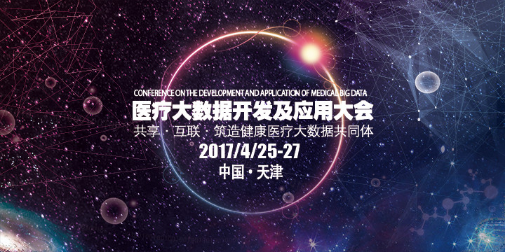
From April 25 to 27, the Wu Jieping Medical Foundation, in conjunction with the People’s Government of Binhai New Area, Tianjin, and the Tianjin Municipal Health and Family Planning Commission, jointly hosted the “Conference on the Application and Development of Medical Big Data,” part of the series of events commemorating the 100th anniversary of Dr. Wu Jieping’s birth, under the theme “Sharing, Interconnectivity, and Building a Community for Medical and Health Big Data.” The event aimed to break down data-sharing barriers across industries and regions within the broader framework of coordinated development in the Beijing-Tianjin-Hebei region, revitalize data resources in the area, and achieve optimal allocation of medical resources through interconnectivity, complementary advantages, and collaborative efforts in data and information exchange, thereby further strengthening the role of big data in promoting coordinated regional development.
This conference has invited relevant leaders from the Ministry of Industry and Information Technology (MIIT) and the National Health and Family Planning Commission (NHFPC), discipline leaders from the Chinese Academy of Sciences, Tsinghua University, and the Chinese Academy of Medical Sciences, officials in charge of information and medical big data from local health and family planning commissions, hospital presidents, as well as authoritative experts and scholars from domestic and international fields including medicine, computational technology, information technology, artificial intelligence, statistics, health economics, evidence-based science, and social security/medical insurance. Together, they will discuss the current status and prospects of the application and development of medical big data in China, as well as the legal and regulatory issues involved in data storage, collection, development, and application.
The conference was specifically organized by the Administrative Committee of the Central Business District of Binhai New Area, Tianjin; LinkDoc Technology Co., Ltd.; and the Yujiapu Medical Big Data Industry Base.
The conference will invite delegates through targeted invitations. It is expected that over 1,000 representatives from health administrative departments across major provinces and municipalities in China, presidents and academic leaders from more than 300 Grade A tertiary hospitals, as well as stakeholders from related industries, high-tech enterprises, internet healthcare, insurance institutions, and hospital information system providers, will gather in the Binhai New Area. The three-day event will feature two main forums, four parallel sessions, two closed-door meetings, and several press conferences.
This will be the highest-level conference on medical big data in recent years, boasting the greatest academic and technical depth!
It is also the first high-level conference led by a local government to discuss the development and application of medical big data!
Highlights — Early Access · Full Enjoyment
Morning of April 26
Main Forum (I): Development and Application of China's Medical Big Data: Policy Perspective
With the successive release of major policy guidelines and development plans for health big data, how are policies related to healthcare big data being implemented under the new circumstances? What progress has been made in local practices of medical big data across various regions? How should industry standards for medical big data be formulated and implemented? How can a physician core value-oriented data network drive industry development? To address these questions, this forum has specially invited leaders from the Ministry of Industry and Information Technology (MIIT), the National Health and Family Planning Commission (NHFPC), local governments, local health and family planning commissions, and relevant departments of the Chinese Academy of Sciences to provide insightful, authoritative, and comprehensive answers.
Recommended Attendees: All
Morning of April 26
Main Forum (I): Development and Application of China's Medical Big Data · Vision
An international panel of top medical experts, comprising Academician Wang Chen, Academician Fan Daiming, and Professor Dong Jiahong, conducted in-depth discussions from the perspectives of retrospection, foresight, and exploration. Grounded in China with a global outlook, they focused on the current status of medical big data applications and the challenges facing future development. By drawing inspiration from outstanding international case studies of medical big data applications, they sought to chart a course for disciplinary development in China based on a robust medical big data application system.
Recommended Attendees: All
Afternoon of April 26
Sub-forum (I): Data Gold Mining · Path Reshaping: Exploration of Real-World Healthcare Big Data
At the end of last year, the United States released the final version of the 21st Century Cures Act. Its provisions on using “real-world evidence” to replace traditional clinical trials for approving expanded indications have stirred concern across the industry. Will drug approval speeds accelerate as a result? Will the scientific rigor of drug evaluation be compromised? Compared with traditional clinical medical research, will big-data mining of real-world healthcare data yield greater value discovery?
Leaders and experts from the National Medical Products Administration, Peking University Clinical Research Institute, Chinese Evidence-Based Medicine Center, and major tertiary hospitals in China analyzed key challenges and hot topics, including post-marketing re-evaluation of drugs based on real-world medical big data, innovative applications of medical big data in precision medicine, translational medicine, and personalized treatment, as well as the design of future clinical research agendas.
Recommended Attendees: Medical Experts, Clinicians, Pharmaceutical Representatives
April 26, Afternoon
Sub-forum (II): Data Empowerment · Sharing and Collaboration: Information Security and Technical Applications of Medical Big Data
Data security and patient privacy are critical issues that the healthcare sector can never avoid, and they remain one of the core technical barriers currently hindering the development of mobile health, smart healthcare, and emerging therapeutic technologies. Led by the China Internet Network Information Center (CNNIC) and the Institute for Data Science at Tsinghua University, this conference will host a forum on information security and technological applications in medical big data. The forum will facilitate exchanges and sharing on topics such as the interpretation of policies and regulations regarding information technology security, and how to ensure patient privacy and information security within appropriate limits. Additionally, the event will feature insightful content including hospitals’ technological achievements in medical big data applications, advanced case studies, and experiences in establishing regional data center systems.
Recommended Attendees: Hospital Presidents, IT Leaders, Clinicians, Corporate Representatives
Morning of April 27
Sub-forum (III): Data Energy · Ecosystem Sharing: How the Industrial Ecosystem Leverages Medical Big Data
From clinical decision support and new drug R&D by pharmaceutical companies to health insurance reimbursement and genetic testing, a multi-dimensional industrial ecosystem has formed around medical big data, spanning information integration, data processing, analytical mining, and ultimately value realization. To master medical big data, you must first listen to the insights of industry insiders. At this forum, internet hospitals, pharmaceutical enterprises, drug R&D institutions, insurance companies, genetic testing firms, and medical device manufacturers come together to interpret medical big data from a broader perspective, covering the entire industry chain of its current applications.
Recommended Attendees: Clinicians, Corporate Representatives (from pharmaceutical companies, insurance firms, genetic testing companies, internet healthcare providers, etc.)
April 27, Morning
Sub-forum (IV): Data in Action · Caring for Life: Embracing a New Era of Hospital Management—Innovation and Value
As healthcare reform deepens and advances, key initiatives such as the expansion of pilot programs for urban public hospitals, the implementation of tiered diagnosis and treatment pilots, and the adoption of the “Two-Invoice System” to transparentize drug procurement have become focal points of public attention. Among these, tiered diagnosis and treatment is particularly urgent. Currently, tiered diagnosis and treatment present both opportunities and challenges for tertiary hospitals. Under this new landscape, how should hospital management shift its mindset? What is the significance of professionalizing hospital leadership for the future development of hospitals? How can large public Grade-A tertiary hospitals innovate and reform to achieve further breakthroughs in this new environment? The forum invites leaders from relevant departments of the National Health and Family Planning Commission and presidents of major domestic Grade-A tertiary hospitals to engage in in-depth discussions on these issues.
Recommended Attendees: Hospital Presidents, Clinicians, Corporate Representatives
April 27, 2017, PM
Main Forum (II): Development and Application of China’s Medical Big Data – Applications
Topic Preview:
Leaders from the National and Local Health and Family Planning Commissions, officials from the Food and Drug Administration, elites from the medical commercial insurance sector, renowned experts in big data from universities, and top international experts in the field of oncology gathered together to conduct in-depth discussions and exchange ideas on current hot topics such as the opportunities and challenges of supply-side reform in the pharmaceutical industry, urban medical big data planning and design, and the training and development of medical big data talent.
Recommended Attendees: Hospital Presidents, IT Leaders, Pharmaceutical Company Representatives
For more exciting topics, the launch of multiple big data products, and major research projects, please attend the “Tianjin Binhai 2017 Medical Big Data Application and Development Conference” on April 25.
Conference Registration Link: http://www.rabbitpre.com/m/z6Fb6ny
Conference Mobile Micro-Website: http://mhbigdata.linkdoc.com/