

BeiDa Healthcare Group Appoints Former Fosun Pharma Senior VP Song Jinsong as New CEO, Replacing Lü Hedong
VCBeat (WeChat ID: vcbeat) reports that Peking University Healthcare Group has officially confirmed to the public that former CEO Lü Hedong has resigned, and Song Jinsong, former Senior Vice President of Fosun Pharma, has succeeded him. The two completed the formal handover last week.
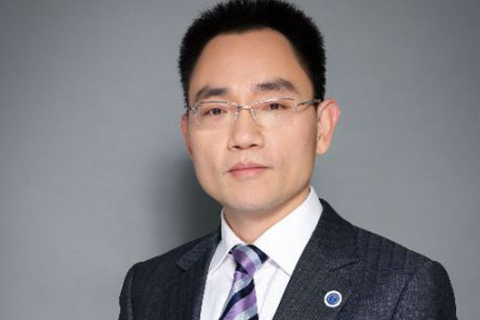
File photo of Lü Hedong, former CEO of Peking University Healthcare Group
Rumors about the resignation of Lu Hedong, former CEO of Peking University Healthcare (PKU Healthcare), began circulating during the Spring Festival and have intensified over the past few months. According to an informed source, the primary reason for Lu’s departure was internal disagreement within PKU Healthcare regarding the group’s strategic business direction. Additionally, the substantial capital expenditure on Peking University International Hospital, coupled with the fact that newly acquired hospitals are still in their growth phase, has placed significant performance pressure on the group’s operations, ultimately leading to Lu’s exit.
Peking University Healthcare Group was established in 2003, byJointly Established by Peking University and Founder Group. According to business registration records, as approved by October 25, 2016, Peking University Healthcare Industry Group Co., Ltd. had a registered capital of RMB 2.5 billion, with Xiao Jianguo serving as the legal representative. Regarding shareholder information, Founder Group held an 85.60% equity stake, Peking University held 13.80%, and Beijing Peking University Science Park Co., Ltd. held 0.60%.
In terms of specific operations, the official website of Peking University Healthcare states that it leverages the comprehensive medical education, research, and clinical training system of Peking University Health Science Center, its abundant professional medical resources, and extensive hospital management experience, as well asFounder Group's Financial Strength and Industry Integration Capabilities, established a comprehensive hospital and specialized medical service network across China, led by Peking University International Medical School, and created an industrial landscape deeply integrated with health insurance, healthcare informatization, medical supply chains, elderly care, and pharmaceuticals.
Business registration records also show that Peking University Medical Industry GroupInvested in 15 companies, covering pharmaceutical research, healthcare investment, health supplements, and medical equipment leasing.
To date, Peking University Healthcare Industry Group has established a hospital group centered on Peking University International Hospital. It has invested in and constructed multiple hospitals and healthcare investment management companies, including Peking University Healthcare Luzhong Hospital, Peking University Healthcare Zibo Hospital, Peking University Healthcare Management Center, and Peking University Healthcare Oncology Hospital Management Company. Furthermore, the group provides comprehensive healthcare support services, encompassing healthcare informatics, medical supply chain solutions, healthcare industry incubation bases, elderly care, and health insurance.
Industry insiders also pointed out that Peking University Healthcare Group has now become a giant in medical investment in China, withChina Resources Healthcare, Phoenix Healthcare, CITIC Healthcare, and Fosun Healthcare are now in the same tier in terms of investment volume and scale.。
As a key priority project, the Peking University International Hospital project was submitted to the Beijing Municipal Government by Peking University in 2012, with Peking University Healthcare Group serving as the main construction entity. The hospital officially opened in December 2014, following a 12-year construction period.
According to the official website, Peking University International Hospital has a total construction area of 440,000 square meters, a total investment of RMB 4.5 billion, and an approved capacity of 1,800 beds. It features more than 60 clinical and medical technology departments and will be among the first hospitals in China to achieve Level 7 of the HIMSS (Healthcare Information and Management Systems Society) Electronic Medical Record Adoption Model.
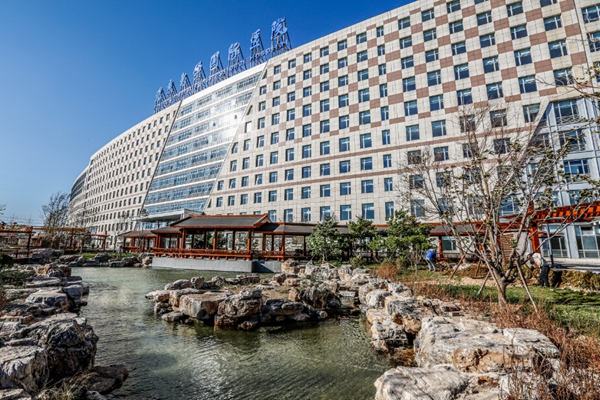
Exterior View of Peking University International Hospital
The business model of Peking University International Hospital was personally crafted by Li You, former CEO of Founder Group, with significant involvement from Lü Hedong. By January 2015, after Li You was reported and investigated for suspected insider trading violations, Lü Hedong assumed the role of CEO of PKU Healthcare Industry Group, serving in his capacities as Vice President of Founder Group and Vice President of PKU Healthcare Industry Group. This could be considered asAppointed in a Crisis。
During his tenure, Lv Hedong stated that Peking University Healthcare should exercise strict control over brand stewardship and process management in the course of hospital acquisitions, with a view to “nurturing the ecosystem.” Meanwhile, in accordance with Peking University Healthcare’s new five-year plan, byIn 2020, its revenue from healthcare services exceeded RMB 10 billion, with its bed capacity surpassing 20,000.。
It is reported that after stepping down, Lu Hedong will join a healthcare industry fund to continue his work in healthcare investment.
According to another announcement by Fosun Pharma, Song Jinsong has ceased to serve as the Company’s Senior Vice President since March 28, 2017.
Appendix: Song Jinsong’s Resume:
Mr. Song Jinsong, born in February 1967. Mr. Song served as CT Product Manager at GE Healthcare (China) Co., Ltd. from June 1999 to August 2002. From June 2003 to July 2015, he successively held the positions of South China Region Manager for Magnetic Resonance Imaging (MRI), General Manager of MRI for Greater China, Vice President for Greater China and General Manager for Central China, Vice President for Greater China and General Manager for North China, and Vice President for Greater China and General Manager of HCS China at GE Healthcare (China) Co., Ltd. Mr. Song obtained his Bachelor of Medicine degree from China Medical University in July 1991, his Doctoral degree in Diagnostic Imaging from Peking Union Medical College in July 1999, and completed his postdoctoral research at Ludwig Maximilian University of Munich in Germany from September 2002 to May 2003.