

Global Telemedicine Investment Reaches $43 Million Across 18 Deals in Early 2017

Telemedicine has transformed the role of modern physicians and expanded global access to healthcare services. Although it has not yet reached every hospital or country worldwide, the industry is rapidly maturing.
Meanwhile, venture capital has fueled the industry’s growth. Since 2013, telehealth startups have raised more than $1.2 billion in funding. Companies such as Teladoc and TelehealthcareTeleconsultationMarket leaders have successfully completed their IPOs. Moreover, with trading volumes reaching a five-year high in 2016, investment showed no signs of slowing down.
Investment Trends
In 2016, financing for telemedicine companies fell by 14% to $362 million, down from $420 million in 2015. However, sales growth increased from 61% in 2015 to 71% in 2016.
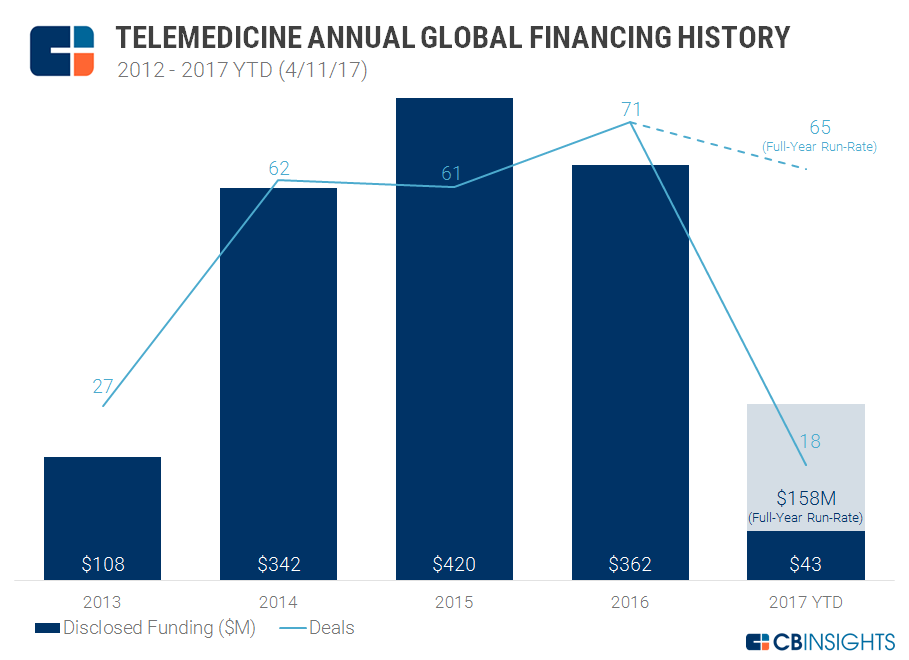
Since the beginning of 2017,There were 18 investments in telemedicine, with a total investment amount of $43 million. As of nowthe trend in pace, the number of investments in 2017 is projected to reach 65 deals, with a total investment amount of USD 158 million, significantly lower than that in 2016.
The largest deals of 2016 included:
Raised $55 million in Series E funding from investors including Andreessen Horowitz and Comcast Ventures, based in PennsylvaniaAccolade, a digital health and insurance platform. AndSecured $25 million in Series A funding from institutions such as DeepMind,and $40 million in growth capital for PodiCare ServicesAI Consultation Platform Babylon Health.
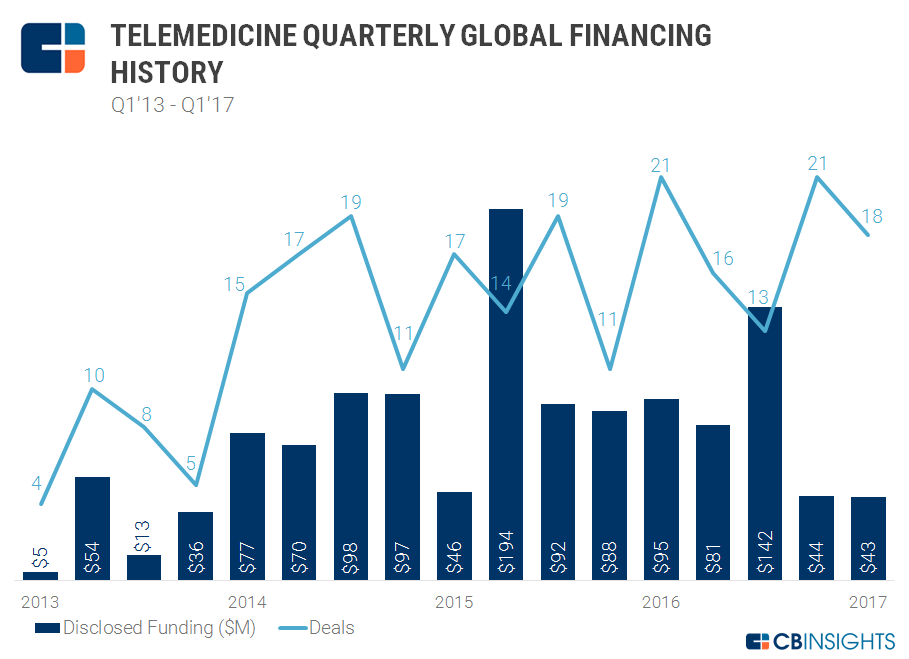
From a quarterly perspective, the investment amount in the first quarter of 2017 was $43 million, marking the lowest quarterly investment since the fourth quarter of 2013.
Quarterly Trends
From a quarterly perspective, stock funding for telemedicine companies declined slightly, dropping from $45 million in the fourth quarter of 2016 to $43 million in the first quarter of 2017. This brought quarterly funding to its lowest level since the fourth quarter. Trading volume also fell from 21st place in the fourth quarter of 2016 to 18th place in the first quarter of 2017.
The largest financing deal in the first quarter of 2017 wasSense.ly SecuresIncluding institutions such as the Mayo Clinic and Fenox Venture Capital, a total of $8 million in investment was secured. Sense.ly has developed a virtual nurse assistant designed to regularly monitor patients' physical conditions and remotely update clinical records.
Financing Stage
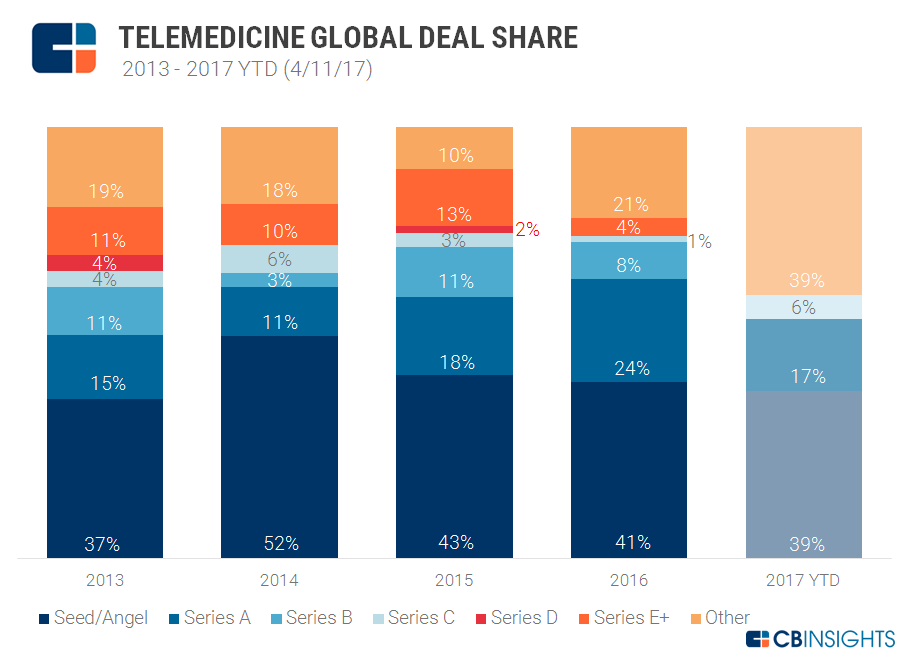
Although there areTelaDoc-typeWell-funded publicly listed telemedicine companies exist, but early-stage startups still account for the majority of financing transaction amounts in the industry. In 2016, early-stage seed and Series A rounds accounted for 56% of the total transaction value, marking the first time since 2013 that this figure has fallen below 60%.
These early-stage startups are attracting investment from large corporations by achieving significant technological breakthroughs or developing entirely new business models. For example, Babylon Health, backed by DeepMind Technologies, has applied artificial intelligence to its doctor-patient communication platform, thereby helping physicians automatically pre-screen patients.by Index Ventures and Kapor CapitalSupportiveCall9, connecting emergency physicians with nursing services, thereby reducing unnecessary hospitalization costs for patients.
Mid-stage financing (including Series B and Series C rounds) accounted for 9% of the total transaction value in 2016, down from 14% in 2015. Late-stage financing (Series D and Series E rounds) declined from 15% in 2015 to 4% in 2016.
Source: CB Insights