

Expert Insights: China's Four Pillars and Key Challenges in Healthcare Big Data
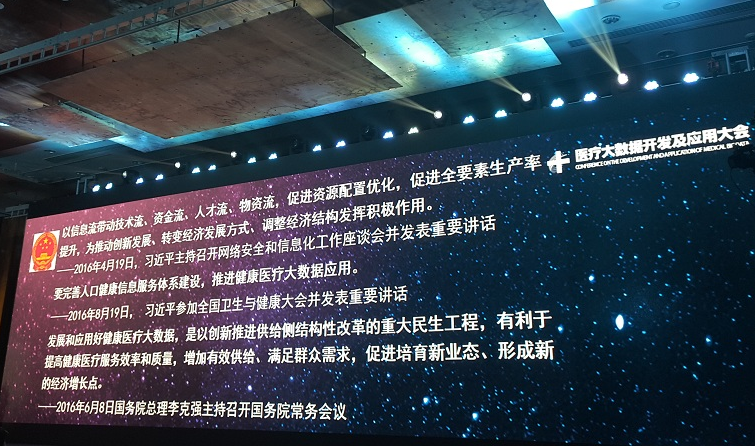
During the morning session on policy, Fu Yongbao, a researcher from the Department of Information Technology and Software Services under the Ministry of Industry and Information Technology, delivered a keynote speech titled “Actions and Reflections on the Implementation of Health and Medical Big Data Policies in the New Era.” The following highlights were curated by VCBeat:
Big data is a data collection characterized by large volume, diverse types, fast storage speed, and high application value. It is rapidly evolving into a new generation of information technology and service models that collect, store, and perform associative analysis on massive, dispersed, and multi-format data to discover new knowledge, create new value, and enhance new capabilities.
The convergence and integration of information technology with the economy and society have triggered a rapid surge in data, making data a fundamental strategic resource for the nation. The Central Committee of the Communist Party of China and the State Council attach great importance to the role of big data in economic and social development, proposing the “implementation of the national big data strategy” and issuing the Outline for Promoting the Development of Big Data.
“Leveraging information flow to drive technology, capital, talent, and material flows.” In this statement by Premier Li Keqiang, “information flow” is placed at the forefront, serving as a catalyst and engine.
Led by three ministries—the National Development and Reform Commission of the People’s Republic of China, the Ministry of Industry and Information Technology of the People’s Republic of China, and the Office of the Central Cyberspace Affairs Commission of the Communist Party of China Central Committee—under a “3+N” framework, together with 40 other ministries and commissions, the state is jointly implementing the national big data strategy.
In the “Guiding Opinions of the General Office of the State Council on Promoting and Regulating the Application and Development of Health and Medical Big Data,” two points are particularly important. The first is to “leverage medical big data to gain insights into health and medical needs, optimize the allocation of medical resources, enrich service offerings, expand service channels, broaden service coverage, and improve service quality.” Through these “services,” the application of big data helps establish a fair, inclusive, convenient, and efficient public welfare service system.
“Leveraging big medical data to extend public health services to the grassroots level, narrow the urban-rural and regional gaps, and continuously meet the people’s growing personalized and diversified needs.” This point is equally important.
Why Is the Era of Big Data Arriving?
The computing power, storage capacity, and other capabilities of mobile phones have improved dramatically compared to a decade ago. Data storage volume has experienced exponential growth: the total amount of data was 10 ZB in 2015 and is projected to reach 44 ZB by 2020, more than four times the level of 15 years prior. Furthermore, the price of storage devices has dropped significantly; between 2000 and 2015, the cost of hard drives decreased to 1/200th of its original price.
The sharp decline in hardware costs for various sensors and smart terminals has enabled individuals, enterprises, and organizations alike to adopt them. The collection, transmission, and storage of data have ultimately led to the emergence of big data.
Four Foundations for the Development of China’s Big Data Industry
I. Significant Breakthroughs in Big Data Technology Innovation
Breakthroughs have been achieved in the development of key big data technologies, giving rise to a number of innovative enterprises and applications. For instance, in the scientific research domain, many companies are exploring areas such as natural language processing, facial recognition, intelligent analytics, and text mining, including the structuring, standardization, and modeling of medical case data.
II. Accumulated Abundant Data Resources
China boasts the world’s largest number of internet and mobile internet users, with abundant data resources and advantages in application markets. The share of the internet economy in GDP continues to rise, making China one of the countries that generate and accumulate the largest volume and most diverse types of data.
III. The Big Data Industry’s Support Capabilities Are Growing Stronger
A preliminary framework for the big data standard system has been established, with project initiation and development underway for 20 key national standards covering areas such as big data technology, trading, open sharing, and industrial big data. A number of industry support platforms, including big data technology centers, industrial innovation platforms, industry alliances, and investment funds, have been successively established.
IV. The Industry Has a Solid Foundation for Development
In 2016, China’s software and information technology services industry reached RMB 4.3 trillion, maintaining an annual growth rate of over 20% for consecutive years. Leading domestic enterprises actively launched new products and services, while a cohort of emerging specialized big data companies rose to prominence. New business formats and models, such as data cleansing and processing, data trading, and Data Analysis as a Service (DAaaS), continued to emerge.
Four Major Challenges Facing Big Data
I. Institutional and Mechanistic Frameworks Remain to Be Streamlined
Insufficient open sharing of government data, low levels of data resource sharing, and difficulty in leveraging data value.
II. Incomplete Industrial Support System
Laws, regulations, standards, and norms concerning data ownership, information security, and open sharing remain inadequate; a data openness, management, and information security assurance system that balances security with development has yet to be established.
III. Insufficient Technological Innovation and Support Capabilities
Compared with developed countries, there remains a significant gap in emerging computing platforms, distributed computing architectures, and big data processing, analytics, and visualization, while influence over open-source technologies and their related ecosystems remains relatively weak.
IV. Shortage of Big Data Talent
There is a shortage of interdisciplinary professionals who are well-versed in both business requirements and big data technologies and management, far failing to meet development needs.
In addition, this includes the opening of big data platforms, the formulation of big data standards, and big data security issues.