

Genomenon, a 10-Person Startup Building Manually Curated Genomic Mutation Database, Secures $1.8M NIH Grant and Files IPO Prospectus
On April 25, 2017, Genomenon, a U.S.-based developer of genomic interpretation software, announced that it had secured $1.8 million in funding from the U.S. National Institutes of Health (NIH). This grant is part of the Small Business Innovation Research (SBIR) program, initiated by the National Human Genome Research Institute.
“Both in terms of technical approach and market prospects, this grant has given us significant affirmation and greatly boosted our confidence,” said Mark J. Kiel, Co-founder and Chief Scientific Officer (CSO) of Genomenon.
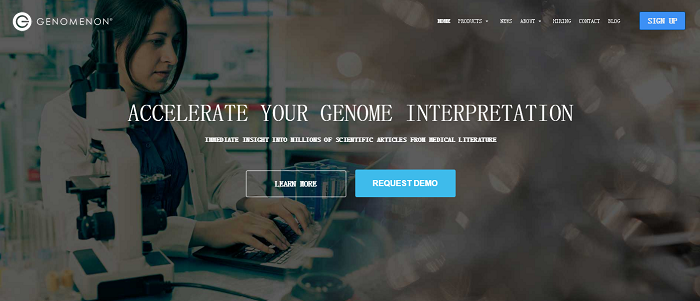
Genomenon is a data analytics and visualization software developer from the University of Michigan, dedicated to developing intelligent search software and databases to realize the value of genomics in clinical decision-making.
In February 2017, the company launched its first product—Mastermind, a database of manually curated gene mutation sequences. This database automatically sifts through tens of thousands of medical publications and journals, using algorithms to filter publicly available literature and identify associations between gene mutations and diseases. Based on these associations, Mastermind ranks the literature by priority, facilitating review by clinicians and saving time spent on literature searches.
Motivation: Seeking Automation of Literature Search
Mike Klein is the company’s co-founder and CEO. Before founding Genomenon, Klein was a molecular pathologist at the University of Michigan, where he became increasingly frustrated with the inefficiency of information retrieval in scientific research. Only about 6.6% of the literature reflects the association between diseases and gene mutations in their titles and abstracts. This means that, in most cases, researchers must read through entire articles to locate the necessary information, thereby consuming a substantial amount of their time.
Kieln revealed that before launching his startup, he spent the majority of his time on information retrieval. He scoured PubMed, COSMIC, HGMD, a wide array of magazines and journals, and even Google, hoping to find the most comprehensive and suitable information through various channels. However, because he often spent too much time searching, the time remaining for subsequent research was always extremely limited. He expressed deep frustration with this situation: “It feels like being in zero gravity. You clearly possess a wealth of knowledge, yet you get bogged down in the information search process, preventing you from doing anything else.”
Thus, Kieln began seeking a solution. Drawing inspiration from IT technology, Kieln aimed to find a method that could automate the search process, much like a search engine.
Molecular Diagnostics and Software Development, Interdisciplinary Team
In 2014, he co-founded Genomenon with Mark, Steve Schwartz, Kojo S.J., and Megan S. Lim. Among them, Mark, Kojo, and Megan are all alumni of the University of Michigan.
During his doctoral studies, Mark was awarded the Weintraub International Graduate Fellowship. His background in molecular diagnostics and clinical pathology provided a foundation for his work in sequence analysis and clinical applications. Mark designed a suite of foundational software tools for Genomenon and has served as a consultant for numerous research and clinical diagnostic institutions. Kojo previously served as Director of the Molecular Diagnostics Laboratory at the University of Michigan and has held positions at the National Institutes of Health (NIH) and the University of Utah. Megan is a tenured professor at the University of Michigan with years of research experience in the molecular mechanisms underlying leukemia and lymphoma.
Steve is the company’s CTO and has co-founded several successful software startups, such as Alfa Jango. The jquery-ujs and jquery-rails scripts he developed for the Ruby on Rails framework have been downloaded more than 30 million times. It is fair to say that his addition has significantly enhanced the team’s professional capabilities and entrepreneurial expertise.
Three Years of Dedicated Research: Integrating All Pathogenic Gene Variant Sequences
To achieve optimal search results, the first step is to accumulate data on genetic variant sequences. To this end, Genomenon spent three years analyzing 3.3 million publications, integrating all pathogenic gene mutation sequences covering all types of somatic and hereditary cancers, as well as conditions such as cardiomyopathy and infertility.
Kieln vividly likens this process to a “three-step approach”: the first step is manual screening, and the second involves identifying correlations across a large volume of clinical cases. Building on these initial two steps, the third step is implemented through algorithms and software—namely, Mastermind—providing users with an automated “Google-like” search experience.
Based on the input keywords, Mastermind employs algorithms to perform full-text searches of original literature and extract relevant documents, helping clinicians save approximately 80% of the time spent on information retrieval while also improving the accuracy of sequence interpretation.
“Mastermind does not directly help them draw conclusions, but it can quickly present the literature and materials they need, aiding them in decision-making,” said Kiel.
Raised a total of $3.6 million, aiming to enter the global market
In November 2016, the team, which had only 10 employees, completed a $180 seed funding round. Investors included two funds from the University of Michigan and several angel investors. The funds raised in this round were mainly used to market Mastermind, with the company aiming to generate revenue through paid access. The company also planned to expand its database literature inventory, adding 250,000 to 500,000 new documents each month, with the goal of increasing the total number of documents to 7 million by mid-year.
The funding secured from the NIH is comparable in amount to the seed round financing. Mark revealed that the first tranche of funds will be used for concordance testing between the Mastermind database and current genomic gold-standard references, to demonstrate the utility and reliability of Mastermind. Furthermore, upon completion of this phase, the second tranche of funds will be allocated to subsequent product development, leveraging the Mastermind database to create various related applications, including decision-support software for patient diagnostic results and research findings.
Kieln predicted that by 2021, the global market for intelligent search could reach $1.3 billion. Although there are strong competitors in the industry, such as Watson Health, he firmly believes that Genomenon will carve out its own niche by leveraging its expertise in genomics and clinical molecular diagnostics, combined with its software development capabilities.
It is understood that Genomenon is currently preparing to launch its products on the global market.