

Mpirica Health Secures $4.6M Series A Funding to Expand Its Healthcare Quality Scoring Platform
VCBeat (WeChat ID: vcbeat) has learned that digital health startup Mpirica Health has successfully raised $4.6 million in Series A financing, led by OurCrowd First, a global equity crowdfunding platform. Mpirica previously secured $1.6 million from McQuinn Trust and $400,000 from OurCrowd First in seed funding in 2015, bringing its total fundraising to $6.6 million. Chris Diede, Chief Medical Officer of Mpirica, stated that the company will use these funds to expand its operations and promote its technology platform nationwide to individuals enrolled in Medicare Advantage plans or self-insured coverage.

Historical Financing History
Mpirica Health, headquartered in Bellevue, Washington, was founded in 2014. Its founder and CEO, Shakil Haroon (a former Microsoft manager), recognized the difficulty of demonstrating hospital quality systems at the procedural level. Building on Michael Pine’s MPA Healthcare Solutions—Michael Pine being a Harvard cardiology expert—Haroon conceived the idea for Mpirica, assembled a founding team and advisory board, and developed a rating system along with cloud-based applications and APIs designed to help users avoid surgical risks and reduce medical costs. How does Mpirica’s platform conduct its assessments, and how is it utilized?
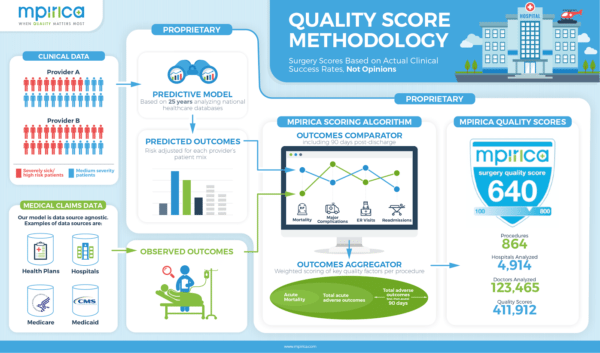
Objective Data-Based Evaluation System for Healthcare Quality Transparency
“If patients choose the wrong hospital for surgery, their risk of death will triple!” The company’s vision is that, in the coming years, people will rely on Mpirica’s rating system to make informed healthcare decisions.
Mpirica leverages decades of risk analysis and claims data from the Centers for Medicare & Medicaid Services (CMS) to objectively evaluate the actual performance of surgical hospitals and physicians across the United States. Using mortality, recurrence rates (based on 90-day continuous monitoring), and complications as key parameters, Mpirica has collected real-world objective data from over 58,000 physicians and 4,800 hospitals, analyzing thousands of surgical clinical cases. It employs a risk-adjustment model with a 30-year foundation and calculates surgical quality scores through a summation method. Scores range from 100 to 800, with 600–800 indicating excellent performance, 400–600 representing average performance, and scores below 400 deemed unsatisfactory.
This means that Mpirica’s final ratings are based on objective facts rather than subjective opinions. They reflect the actual overall level of care, not isolated individual cases. In addition to quality ratings, the company’s cloud platform provides users with comprehensive cost-effectiveness analysis capabilities.
Expand the Platform's Business Scope and Seek Commercial Partners
Individual users of Mpirica can gain three months of access to the personal client application by making a one-time payment of $49. Commercial clients of Mpirica, such as corporate wellness programs, pay an annual subscription fee based on the number of users and coverage scope. Fees for the Mpirica API are determined by the number of members and data traffic volume. Over the past two years, Mpirica has entered into commercial partnership agreements with multiple organizations, including Welvie (a surgical decision support company) and APH (a health management plan). These partnerships involve sharing scoring systems and integrating data via cloud platforms, delivering outcomes that enable partners to enhance their own applications and management programs.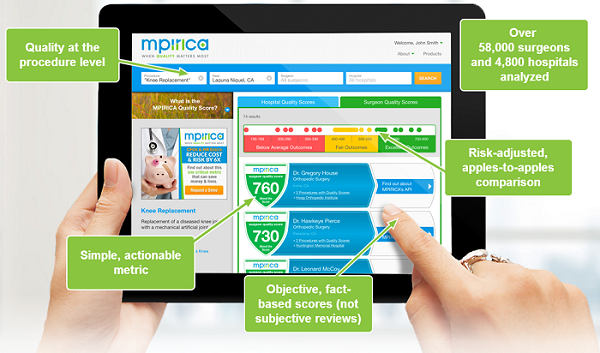
One fact is that most current methods assess a hospital’s medical standards based on patients’ subjective satisfaction scores or “surgeon scorecards.” However, these metrics are influenced by a range of factors, some of which are even unrelated to actual medical care. In contrast, quality scores objectively reflect the level of nursing care. In summary, satisfaction and quality scores are two independent variables affecting the overall doctor-patient treatment plan. Eduardo Shoval of OurCrowd First stated, “We chose to invest in Mpirica because the firm firmly believes that outcomes are the most critical factor in surgical decision-making. The product is supported by robust theoretical and technical foundations and has undergone rigorous design, development, and evaluation phases. Mpirica’s current commercial partnerships with several leading healthcare management companies have driven rapid growth and significantly contributed to shaping standards for transparency in healthcare quality. By providing patients with real-time data, the company continuously validates the practicality and versatility of its platform. We are eager to pursue deep collaboration to effectively expand healthcare services such as cost management and risk assessment.”
Source: mobihealthnews.com