

Ruihan Medical: Five Years of Deep Focus on Neuro-Rehabilitation Robotics and B2B2C Model Breaks Monetization Barriers
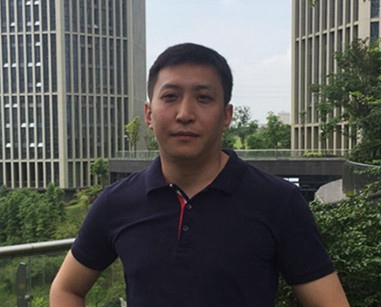
Zhao Yu, Deputy General Manager of Ruihan Medical
An RMB 8 million financing round is a modest sum in the broader mobile health sector. However, for Ruihan, it serves as recognition of their solitary dedication to the field of neurological rehabilitation.
Recently, Zhao Yu, Director of Shenzhen Ruihan Medical Technology Co., Ltd. (hereinafter referred to as Ruihan Medical), told VCBeat thatSecured nearly RMB 8 million in angel-round financing at the end of December 2016, led by Shanghai Zhonghe Venture Capital, with follow-on investment from Shanghai Qingrui Investment Center. The proceeds from this round will be used to optimize the organizational structure, improve the product portfolio, and establish initial pilot markets.
VCBeat first took notice of Ruihan Medical in September 2016. The company positions itself as a provider of post-operative rehabilitation robots, primarily engaged in the research and development, manufacturing, and sales of rehabilitation robotic systems. It has independently developed a hand rehabilitation robot system designed for patients with hand motor dysfunction due to conditions such as stroke. By integrating electroencephalogram (EEG) control with robotic technology, the system facilitates neurological rehabilitation for patients.
There are few domestic startups in this field, and the technological barriers are high. Therefore, every time Ruihan Medical participates in project roadshows, it consistently impresses investors and audiences, resulting in a high frequency of awards. Notably, it secured second place at the 2016 Fosun “Star Future” InnoStar competition and won the “Most Investment-Potential” Award at the 2016 Nobel Prize Summit.
Although Ruihan Medical has won numerous awards, it secured very few opportunities after each roadshow. “During that period, the company was tasked with both developing new products and exploring every possible avenue for financing. At its most extreme, we met with three investors per day, yet none resulted in investment,” said Zhao Yu, Deputy General Manager.
Coinciding with the 2016 capital winter, Ruihan Medical began meeting frequently with investors starting in August 2016. Most investors adopted a wait-and-see stance toward the rehabilitation sector, primarily due to concerns about its “superficial hype but underlying chill.”
Fortunately, four months later, Ruihan Medical encountered its “patron” and secured financing. So, what were the reasons behind Ruihan Medical winning the favor of Shanghai Zhonghe Venture Capital and Shanghai Qingrui Investment Center?
According to statistics from the National Health and Family Planning Commission, by the end of 2014, there were 6,914 rehabilitation institutions nationwide, with 2,181 organizations providing rehabilitation training services for physical disabilities. A total of 367,000 individuals with physical disabilities received rehabilitation training across China. Among the country’s total disabled population of 85.02 million, 24.72 million had physical disabilities. There is a significant gap between the supply of rehabilitation equipment and clinical demand, indicating promising prospects for this sector.
However, the boundaries of rehabilitation in the market are ill-defined, encompassing services such as massage, physical therapy, and Traditional Chinese Medicine (TCM). This ambiguity has resulted in low entry barriers, a proliferation of market participants, and a chaotic landscape that fails to reflect practitioners’ technical proficiency.
Furthermore, China’s healthcare sector has long attracted significant attention as an undervalued market, with rehabilitation representing an even more pronounced niche within this landscape.
With the advent of the third consumption upgrade in China, development across various industries is being driven forward. Among these, healthcare, tourism, and education are experiencing the fastest growth. For entrepreneurs, consumption upgrade does not mean making products more expensive; rather, it involves transforming premium products into everyday commodities accessible to the mass market. Consumers are no longer overly sensitive to price; instead, they demand higher quality and are willing to pay a premium for brand value.
On the other hand, the number of individuals in suboptimal health status in China continues to rise, particularly among white-collar office workers and adolescents, with a high incidence of cervical spondylosis. Relevant data indicate that the prevalence of cervical spondylosis among adolescents was 8% in 2007 and rose to 12% by the end of 2012. Consequently, demand for healthcare services is growing, making this sector highly worthy of long-term investment.
“This is a highly promising industry. To change the current state of rehabilitation in China, we have remained silent and persevered for five years,” said Zhao Yu.
Since the research and development of postoperative rehabilitation neuro-robots is a blank field in China, it is very difficult to explore and study the product. So far, 80% of the Ruihan team are R&D personnel, with hardware development primarily led by PhDs and Masters; the team consists of 16 members in total,Based in Shenzhen.
Among them, Wang Jing, the founder of Ruihan Medical, is a postdoctoral fellow at Georgetown University in the United States. In recent years, he has presided over eight key national and provincial/ministerial projects, published more than 30 academic papers, including 18 papers in SCI-indexed journals, which have been cited more than 200 times. He has been engaged in research fields related to EEG signal processing, brain-computer interfaces, and rehabilitation robots for more than 12 years.
Zhao Yu, the Deputy General Manager, graduated from South-Central Minzu University. He previously worked at CCTV’s News Channel and received the 2010 News Channel Annual News Editing Award. He specializes in marketing planning and campaigns. In 2014, he served as Planning Director at Chongqing Zhu Bajie Weima Technology Co., Ltd., where he was responsible for formulating the company’s annual marketing plan and approving industry-specific marketing proposals. Notably, he achieved RMB 820,000 in sales during a mid-year promotion with a budget of only RMB 5,000.
Zhao Yu transitioned from the news industry back to his original profession (advertising planning), where he subsequently orchestrated the marketing and promotion of the “Che Wuji” smart rearview mirror app. By introducing Wi-Fi direct connectivity, video capabilities, and photo enhancement features for the first time, he endowed the product with social sharing attributes. He successfully established 200 QQ groups and WeChat groups for car enthusiasts, accumulating a total user base of 200,000 members.
Since Zhao Yu joined Ruihan Medical, he has leveraged his prior extensive experience to significantly enhance the company’s visibility.
In fact, since 2012, Wang Jing has led a team of multiple PhD researchers in project development. To date, the team has independently developed three major categories of hand rehabilitation robots—Ruihan Type I, II, and III—and filed numerous invention patents. Since 2016, some of these products have undergone clinical trials at Beijing Tsinghua Changgung Hospital, successfully treating many patients.
Beijing Tsinghua Changgung Hospital is a large-scale comprehensive public hospital jointly administered by Tsinghua University and the Beijing Municipal Government. Located in the Tiantongyuan area of Changping District, Beijing, it covers a land area of 94,800 square meters, with a total floor area of 225,000 square meters and a planned capacity of 1,500 beds.
It is a university-affiliated hospital integrating medical care, teaching, scientific research, prevention, and rehabilitation. The hospital features a comprehensive range of medical departments, including more than 40 clinical and medical technology departments such as internal medicine, surgery, gynecology, pediatrics, ophthalmology, stomatology, laboratory medicine, pathology, and medical imaging.
The hospital implements the care philosophy of “My Patient, My Nurse,” under which a primary nurse assumes full responsibility for each patient from admission to discharge. This includes disease care, condition monitoring, therapeutic medication administration, health education, and daily living assistance, thereby ensuring the comprehensiveness, continuity, and coordination of nursing care, and enabling patients to feel dignity, respect, and safety. Accordingly, postoperative patients receive neurorehabilitation supported by robotic technology. The hospital provides efficient and compassionate diagnostic and treatment services to all types of patients, continuously improving cure rates and rehabilitation outcomes.
According to Zhao Yu, it was in late December 2016 when they presented their product to Dr. Pan Yu, Director of the Department of Rehabilitation Medicine at Beijing Tsinghua Changgung Hospital, who immediately agreed to sign a trial agreement. As clinical application progressed, Ruihan Medical’s hand rehabilitation robot gained high recognition from both clinicians and patients.
One patient, surnamed Zhang, left a deep impression on Zhao Yu. Mr. Zhang, 64 years old, is being treated at Beijing Tsinghua Changgung Hospital. Four months ago, he suffered a sudden cerebral infarction that resulted in left-sided hemiplegia. Although rehabilitation therapy helped him gradually regain the ability to walk, recovery of function in his left hand progressed slowly. After four months of rehabilitation, his left fingers could only flex slightly, with such weakness that he could not even grip an apple. He required family assistance for activities of daily living, such as eating and dressing. Naturally strong-willed, Mr. Zhang was filled with panic and frustration, became consistently depressed, and increasingly lost confidence in conventional rehabilitation training.
At this point, Dr. Pan Yu, Director of the Department of Rehabilitation Medicine, informed Mr. Zhang that he could accurately and rapidly improve his hand function through a novel brain-controlled hand function training method (Ruihan Neuro-Robotics). With a willingness to give it a try, Mr. Zhang began his rehabilitation treatment using the brain-controlled neuro-rehabilitation robotic hand.
The rehabilitation team at Beijing Tsinghua Changgung Hospital first assessed Mr. Zhang’s brain function using functional magnetic resonance imaging (fMRI) and electroencephalography (EEG), and conducted a professional and comprehensive hand function test. Subsequently, they fitted Mr. Zhang with an EEG cap and placed his left hand into an exoskeletal robotic hand. By watching videos of hand movements, Mr. Zhang was instructed to concentrate and mentally imagine his left hand performing the same actions.
At that moment, the exoskeleton robotic hand actually made a fist in response to Mr. Zhang’s imagination. “My brain can directly control the machine’s movements!” Mr. Zhang said in disbelief. The scenario he had only seen in movies was now happening to him, which greatly encouraged him. Moreover, Pan Yu told him that the signals controlling the robotic hand and those controlling his left hand originated from the same source; as his ability to control the robotic hand with his brain improved, the motor function of his left hand would improve synchronously.
To expand the distribution channels for Ruihan Medical’s products, Wang Jing led her team in developing consumer-facing (C-end) products. This was necessary because business-facing (B-end) products, targeted at medical institutions, are typically priced between RMB 50,000 and RMB 2 million, making them unaffordable for ordinary households.
The go-to-market strategy for consumer-facing products also differs from that of enterprise-facing products. Consumer-facing products are primarily offered on a rental basis, requiring a deposit of RMB 3,000–4,000 and charging RMB 1 per minute for daily rehabilitation sessions. In contrast, enterprise-facing products are mainly sold outright and will officially enter hospitals starting next year.
“Our operating costs are also relatively low.The product's components are produced in collaboration with manufacturers, including the following current partners:12 Manufacturers,Payment is made via an advance deposit, with the remaining balance settled upon completion of inspection. Product assembly is handled by in-house personnel.“Zhao Yu said.”
In the future, Ruihan Medical aims to establish a presence across the entire rehabilitation industry chain, spanning surgical rehabilitation, foot and ankle rehabilitation, and prosthetic rehabilitation, while extending its reach to upstream and downstream segments of the rehabilitation sector to provide related value-added services.
“Ruihan Medical’s choice of entry point into the rehabilitation sector is highly accurate,” said Zhang Xiongzi, Investment Director at Shanghai Zhonghe Venture Capital Center.
Shanghai Zhonghe Venture Capital Management Co., Ltd. is an industrial investment fund management company with overseas backgrounds, focusing on equity investments in new energy, new materials, natural resources, fast-moving consumer goods (FMCG), environmental protection, financial leasing, and industrial manufacturing.The team has over a decade of experience in direct investment within China, having executed more than 40 projects with total investments amounting to several billion RMB, and achieving a compound annual growth rate (CAGR) of over 35%.and independently developed a comprehensive corporate development strategy and a successful model for business operations.
“The Ruihan Medical Project has high technical barriers, and the team members are very hardworking. In the blank field of neurological rehabilitation in China, they have not only developed the product but also received positive feedback from hospitals, which is really commendable,” said Zhang Xiongzi.
Our engagement with the Rihan Medical team, from initial due diligence to finalizing the investment, took no more than four months. With each meeting,What impressed Zhang Xiongzi the most was that Wang Jing’s eyes were always red. “The members of their team work incredibly hard; staying up late to refine even the smallest details in product development is commonplace for them.” Each time, he would urge them to take care of their health.
“Faced with such a dedicated team, Zhang Xiongzi candidly admitted that this was also what drove his investment. ‘Their product brings value to the rehabilitation industry and is the only one of its kind in China, so we are willing to help them grow together and maximize their value.’”
It is reported that Ruihan Medical’s products have entered the final stage of design freeze for mass production, with the exterior and structural design led by LKK Design. Commercial promotion is expected to commence around May, and the company has reached cooperation intentions with multiple institutions, including Leyu Rehabilitation, Dr. Lv Chain, and Youban Technology. The project is currently undergoing Pre-A round financing.