

15 U.S. Aging-Tech Startups Revolutionizing Senior Care: Digital Health Innovations for the 50+ Market

The digital health market for individuals aged 50 and above offers substantial growth potential and continues to expand. Multiple factors are driving the development of healthcare for the 50+ demographic: patients are gaining greater empowerment due to high-deductible health insurance plans, increased price transparency, and emerging technological solutions. Meanwhile, healthcare reforms will continue to spur industry transformation, encourage entrepreneurial activities within the sector, and promote the adoption of new technologies by organizations to enhance the quality of care for the target population aged 50 and older.
As global innovation accelerates, more than 7,500 startups worldwide are developing new solutions in the digital health sector, seeking extensive opportunities to create technologies tailored to the target market of individuals aged 50 and above.
VCBeat has learned that the American Association of Retired Persons (AARP), in partnership with MedCity News, hosted the inaugural 50+ Innovation Leaders Summit. More than 150 individuals and companies were nominated for their commitment to developing new devices and services for this growing demographic. These innovation leaders—including entrepreneurs and companies transforming health services and products in key markets for adults aged 50 and above—have improved and revolutionized healthcare for over 100 million Americans in this age group.
These innovators face unique obstacles on their path forward—including complications from chronic diseases, the long-term effects of hospitalizations due to falls, and the growing prevalence of postoperative readmissions, which impose an increasing burden on older adults. Even the healthiest segment of the elderly population still faces the difficult choice between relinquishing independent living and paying for assisted living facilities.
The remaining individuals, due to dementia or other neurological disorders, will require greater assistance. Therefore, technology should be integrated with professional and home healthcare providers to address patients’ medication dependence and care coordination. However, at present, the initial response of these care service providers is still not to download mobile applications.
The 2016 Project Catalyst report revealed that over 75% of caregivers hoped to find emotional solace through technology while monitoring their loved ones. However, only 10% of caregivers were using existing technologies. By the end of 2014, 40 million Americans were providing unpaid care to adult patients, with 30% of them delivering more than 41 hours of care per week. Healthcare innovators have an obligation to design products and services for this diverse patient population and their caregivers, and platforms must broadly reflect users’ capabilities and preferences.
Given the life changes many older adults experience, such as social isolation, financial strain, limited mobility, and the potential presence of one or more chronic diseases, it has become crucial to call on businesses to address these challenges. Clinical studies have shown that if patients with chronic conditions also exhibit underlying manifestations of disorders such as depression, this may affect their medication adherence and ability to comply with care plans. Below are 15 representative innovative companies curated by VCBeat (WeChat ID: vcbeat).
1. SingFit Music Therapy
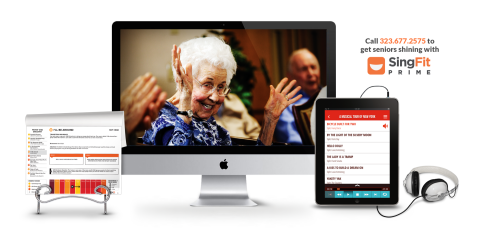
Many companies have recognized the value of software development in bridging the gap between psychological and physiological therapies, including SingFit, a provider of music therapy. SingFit leverages patented technology and a unique lyrical coaching system that enables individuals with dementia and visual impairments to sing and record their favorite songs.
Before singing, the lyrical coach provides voice prompts indicating which song is required. The SingFit app features over 200 popular songs, ranging from Tony Bennett, Patsy Cline, and Elvis Presley to pianist Nat King Cole. SingFit’s programming is designed by certified music therapists. It primarily includes themed playlists, carefully choreographed movements, and self-disclosure question sections, as well as a social area that facilitates communication and singing.
2. Quartet Electronic Medical Record Data Integration Platform
Another company, Quartet, seeks to improve behavioral health data to facilitate its integration into electronic health records (EHRs). It offers a free platform that enables collaboration among physicians, therapists, psychiatrists, and social workers in the provision of mental healthcare.
Quartet leverages validated predictive analytics to help identify patients’ potential underlying mental health conditions, matches them with local mental health providers, and ensures high-quality, goal-directed therapy through assessment. Meanwhile, Quartet provides convenient access authorization, enabling psychiatrists to assist in determining the optimal course of action for patients. Share, explore, and keep patient information up to date.
3. Great Call: Wearable Technology R&D Developer
Among the 50+ finalists for wearable technology developers is Great Call, a company with a diverse product portfolio that serves consumers directly by providing assistance to seniors in need of emergency aid. The acquisitions of Lively and HealthSense have enabled the company to predict high-cost health events among the elderly through remote monitoring and data collection.
4. Nymbl Science Balance Metrics
Nymbl Science, on the other hand, leverages wearable devices to help users improve their health through various approaches. Its application employs precise computational algorithms using smartphone sensors to measure users’ balance. Although balance has not yet become an indicator of overall human health, Nymbl Science has identified that similar metrics are currently not straightforward to obtain.
The team sought to change this situation by creating the Nymbl Science app to demonstrate that clinical medicine is literally in your hands. Nymbl Science states that its application “combines proprietary science with smartphone-based measurements to improve balance, ultimately preventing falls and helping people lead active, long lives.”
5. AliveCor Addresses Cardiac Issues
AliveCor is a U.S.-based digital health startup founded in 2011, primarily providing products and services to individuals with compromised cardiac function. The company has launched KardiaPro, a platform that leverages artificial intelligence to help physicians prevent strokes in patients. Previously, the company released a mobile application called Kardia, along with a compatible electrocardiogram (ECG) monitoring device priced at $99.
KardiaPro tracks patients’ weight, daily activities, blood pressure, and other metrics, leveraging its proprietary artificial intelligence technology to analyze and compare the data in order to identify potential risk factors that may have been overlooked by physicians. It then integrates all this information into the patient’s personal health record, enabling it to automatically alert doctors in emergency situations and assist them in determining the next steps for diagnosis.
Recently, the company completed a $30 million financing round, with investors including Japan’s Omron Healthcare and the U.S. non-profit organization Mayo Clinic. The company has also deepened its collaborations with multiple medical institutions, gaining direct access to millions of patients and securing substantial real-world data for scientific research.
6. Rijuven Promotes Medical Devices
Founded in 2012 by Raj Kapoor, MD, FCCP, and Evens Augustin, the company was established to commercially promote medical devices with global impact. Rijuven brings together a team of clinicians, technical experts, designers, innovation strategists, patients, and consumers to jointly create remarkable products. Rijuven has embarked on reforming the medical device market, transforming healthcare delivery through selected innovations that increase output, reduce costs, and expand care coverage.
Its main products and services include: i2Dtx, a comprehensive and accurate cloud-based medical device platform that leverages wireless networks to enable real-time assessment of patient care. By evaluating physical examinations in any format—including cardiac, pulmonary, cardiovascular, vital signs, as well as imaging and laboratory clinical results—it streamlines the diagnostic process and reduces costs; CardioSleeve, the first FDA-approved auscultation adjunct device for clinicians.
This device enhances the recording, display, and analysis of electrocardiograms (ECG) and heart rate using traditional stethoscopes through any wirelessly connected portable device, enabling real-time synchronization. i2Ptm, an FDA-registered chest patch, provides continuous monitoring of patients’ bed status, movement, falls, heart rate, and respiratory rate.
7. UnaliWear Smartwatch for the Elderly
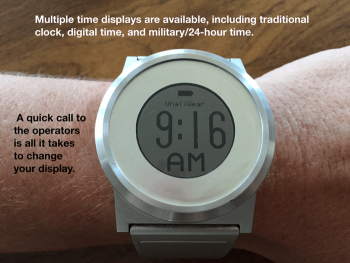
UnaliWear Kanega, with its deliberately understated design, is a smartwatch tailored for the elderly. It features built-in Wi-Fi and GPS modules, supports continuous voice recognition, and incorporates accelerometer-based detection. The device boasts three key highlights: fall detection, medication reminders, and guidance for returning home. In the event of a fall, children are immediately notified, enabling them to assess the situation and take prompt action. If an elderly user fails to take their medication after several reminders throughout the day, the UnaliWear Kanega sends an alert to their children. Should the user become disoriented, the built-in GPS provides navigation assistance to help them retrace their steps and return home.
To facilitate use by elderly users, UnaliWear Kanega adopts a voice interface design instead of physical buttons; to simplify operation, all notifications and prompts are delivered via audio alerts.
It is worth noting that the UnaliWear Kanega can be used independently without requiring a paired smartphone. It also boasts excellent water resistance, allowing it to be worn safely in the shower, much like the Apple Watch. Additionally, the UnaliWear Kanega features a night-light function and supports connectivity with hearing aids, making it accessible even for users with hearing impairments.
8. WellBe Stress Relief Bracelet
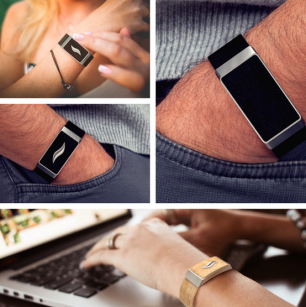
WellBe is a smart wristband that helps people find brief moments of relaxation and calm amidst their hectic lives. It works in conjunction with the WellBe mobile app, which detects and calculates the user’s stress levels based on time, location, and social interactions. The app then provides various stress-relief and meditation exercises to help users alleviate stress and achieve emotional tranquility.
The WellBe wristband features a built-in cardiac sensor that conducts three minutes of heart rate monitoring every hour. Once the mobile app is paired with the wristband and granted the necessary permissions, it utilizes a proprietary algorithm to calculate the user’s average stress level and stress triggers. This calculation integrates the hourly heart rate data received from the device with contextual factors including time, location, encountered events, and interpersonal interactions.
Wellbe was co-invented by Zach Sivan and Doron Libshtein. To support the product’s research and development, Wellbe R&D assembled a large team of experts in positive psychology, mobile application development, and cardiac monitoring technology. The team aims to create a smart hardware device that seamlessly integrates technology with art.
9.Omada Health
Omada Health A pioneer in “digital therapeutics,” it applies clinically validated behavioral medicine to the treatment of chronic diseases. This program helps people overcome unhealthy habits, thereby steering them away from serious yet preventable conditions. It also collaborates with corporate employers and health plans, focusing on high-risk populations.
10. Clover Health Disease Prevention

Clover Health, founded in 2014 by Vivek Garipalli—who previously operated healthcare companies in New Jersey—leverages historical insurance claims data to collect members’ medical histories. By matching this information with predictive models, the company identifies high-risk populations and helps them improve their health outcomes, shifting the focus from treatment to prevention, thereby reducing the medical costs it incurs.
Clover Health’s user base primarily consists of high-risk individuals aged 65 and older. By leveraging data analytics to assess these members’ health conditions and identify potential preventive measures, Clover Health aims to improve their health outcomes while reducing treatment costs. For instance, the company arranges for nurses to conduct regular in-home health check-ups and sends reminders to patients who have missed scheduled screenings or treatments to ensure continuity of care.
11. ZocDoc Consultation Appointment
ZocDoc was founded in 2007 with the mission of helping patients find and book doctors online via mobile devices, thereby facilitating timely access to medical care. The ZocDoc service is free for patients, generating revenue by charging physicians a fee. Patients or their family members can easily complete appointments through the ZocDoc website or its iOS, Android, and BlackBerry mobile apps by following a few simple steps: searching for suitable doctors based on the patient’s condition, selecting the best provider by reviewing available schedules and credentials, booking an appointment time slot, locating the doctor’s office on a map, and entering insurance information.
12. Zipdrug Medication Delivery Service
Zipdrug offers on-demand medication delivery services, bringing prescriptions to your doorstep with just a tap. When users first use the app, physicians electronically transmit prescriptions, pricing information, and usage instructions to designated pharmacies. Users then proceed to the pharmacy as directed by in-app notifications. Subsequently, Zipdrug dispatches couriers to pick up the medications. This entire process is conducted securely under stringent background checks, medication reviews, and HIPAA compliance safeguards.
Salaries within partner pharmacies are paid by Zipdrug; therefore, users only need to pay the out-of-pocket medication cost after insurance coverage, plus a $10 delivery fee. As some pharmacies partnering with Zipdrug may be less familiar to users, they retain the right to continue using their current pharmacy and pharmacist. Please note that Zipdrug does not deliver certain controlled substances, including analgesics, antiepileptic drugs, and medications containing stimulants. All other medications are dispensed in compliance with regulatory standards, such as syringes with a one-month shelf life.
13. Vital Connect Wearable Vital Signs Monitoring
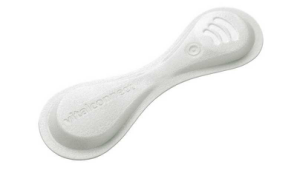
Vital Connect, a wearable vital signs monitoring company. In March 2016, the company launched a new wearable biosensor product—the disposable “VitalPatch”—for patient monitoring in both home and hospital settings. It has received clearance from the U.S. Food and Drug Administration (FDA). Similar in size and shape to an adhesive bandage, it is simply applied to the chest to collect data such as single-lead electrocardiogram (ECG), heart rate, heart rate variability, respiratory status, and skin temperature.
It transmits data via Bluetooth on mobile devices to Vital Connect’s secure servers, enabling care providers to access the data and receive notifications. The VitalPatch features a compact, lightweight design with a flexible, streamlined shape that does not interfere with patients’ daily lives. Its most distinctive feature is its fully disposable nature, achieved through the proprietary “VitalCore” system-on-chip (SoC). In June 2016, Vital Connect completed its Series B financing round, raising a total of $18 million.
14. Wellframe Patient GPS
Wellframe, founded in 2011, is an artificial intelligence company specializing in the healthcare sector. It is dedicated to helping patients develop rehabilitation plans through medical data, predictive algorithms, and mobile applications, enabling them to recover their health as early as possible. The company has created a mobile management platform for chronic diseases, which provides patients with a navigation system offering professional, specialized guidance and formulating rehabilitation plans to help them manage their conditions. Its to-do list application builds a direct and effective bridge between patients and caregivers. Jacob Sattelmair, CEO of Wellframe, describes it as “a GPS navigation system for patients.”
15. Solera Health Multi-party Services
Solera Health is headquartered in Phoenix, Arizona, USA. Solera Health provides a platform serving patients, providers, and other stakeholders, with the aim of facilitating broader access to the benefits of the Centers for Disease Control and Prevention’s (CDC) National Diabetes Prevention Program (DPP). The company’s technology enables better integration with the DPP, helping clients manage payment and reimbursement processes, thereby incentivizing all stakeholders to participate in disease prevention programs.
It is evident that many awardees have developed methods capable of transforming lives. By leveraging online and cloud-based platforms, they have shifted healthcare from traditional physician offices to the cloud, wearable technologies, and mobile applications. Other awardees have demonstrated remarkable creativity and ingenuity in the fields of alternative therapies, smart wearables, and product design.
Receiving daily medical treatment is a reality for many older Americans. These innovators have helped alleviate the burden on seniors and eliminated the stigma associated with receiving necessary care. These enterprises not only embody the hope and promise of the transition to value-based care models but also improve care coordination, delivery, and support services for the population aged 50 and above.