

How Maidou Doctor Expanded 'Famous Doctors to Home' to 8 Provinces and 100 Cities Within One Year
In 2017, VCBeat launched a case solicitation campaign themed “The Power of Downward Reach—Seeking Best Practices in China’s Primary Healthcare.”May 17–18, to be held in Chengdu byChina Association for the Promotion of Rehabilitation Technology Transformation and DevelopmentHosted by,VCBeat, VCBeatCo-hosted by“2017 China Primary Healthcare Innovation Practice Forum”,Call for Submissions: “Best Practice Cases in China’s Primary Healthcare” Across the Entire Industry. Centered on the release of the “2017 Report on Innovative Practices in China’s Primary Healthcare,” this initiative explores development trends in the primary healthcare sector from the perspectives of industrial policy, technological evolution, business models, and industry collaboration, while sharing outstanding practical cases in primary healthcare.
For more event details and registration, please clickRegistration Link。
In the summer of 2015, Xu Peng, founder of Maidou Doctor, began developing the “Renowned Doctors at Home” service. The preceding years of follow-up care services had enabled Maidou Doctor to accumulate a substantial base of expert physicians and patients. This strategic shift in business focus stemmed from Xu Peng’s firsthand observations during his visits to grassroots healthcare facilities under the scorching sun.
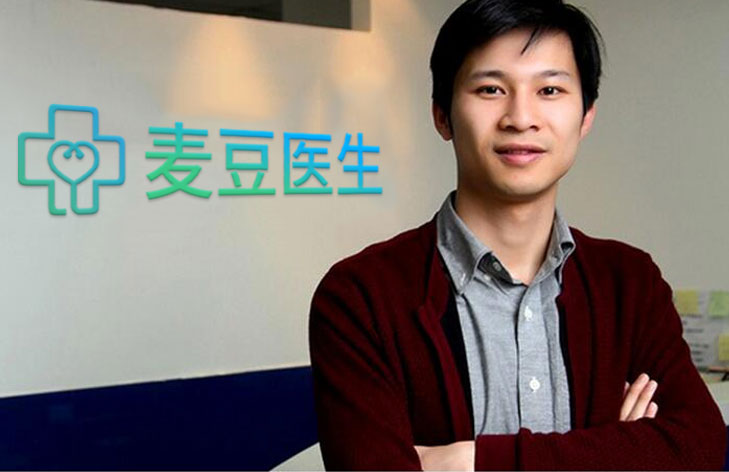
Xu Peng, CEO of Maidou Doctor
On one occasion, he accompanied specialists from a major hospital to a county-level hospital for teaching rounds; the wards were largely empty, with few patients present."High vacancy rates, high misdiagnosis rates for complex cases, and the inability to admit patients with difficult and complicated conditions—although Xu Peng had long heard about the medical conditions in certain county hospitals, this firsthand experience still left him deeply moved."
“This situationThis is not an isolated case; rather, it serves as a microcosm of primary healthcare in China. Not only patients but also primary-care hospitals seek the assistance and support of specialists.“Xu Peng said.”
Upon learning of this situation, MaiDou Doctor officially launched its "Renowned Doctors at Home" service in November 2015 after months of preparation. The initiative aims to decentralize high-quality medical resources, enabling patients to consult with renowned doctors close to home, while also helping primary care hospitals improve their clinical diagnosis and treatment capabilities.
How to Facilitate Matchmaking Deals?
Primary Care Hospitals Have Two Major Needs:
First, weak medical service capacity, the overall clinical proficiency of physicians is low, thus creating an urgent need for expert assistance;
Second, due to the limited expertise of physicians, primary care hospitals see very few patients., the state has long advocated that minor illnesses be treated at the village level and major illnesses at the county level; however, the limited medical capabilities of grassroots hospitals make it difficult to truly achieve this goal.
In response to these two needs, MaiDou Doctor leverages the Mingyi Daojia platform to direct experts and patients to primary care hospitals, thereby genuinely enhancing the quality of primary healthcare and retaining patients at the grassroots level.
Taking Hengshui Traditional Chinese Medicine Hospital as an example, experts from Maidou Doctor visit the hospital every two to three weeks. They provide support to grassroots hospitals and patients through outpatient teaching, consultation rounds, case discussions, and surgical demonstrations.
For hospitals and physicians, acquiring experts and patients not only generates benefits for themselves but also significantly enhances the clinical competence of primary-care physicians through hands-on guidance from experts.For experts, multi-site practice can also be realized to a certain extent through the Maidou Doctor platform and its network of partnered primary care hospitals.
Patients at the primary care level can book online appointments with specialists through the Maidou Doctor platform, accessing high-quality specialist diagnosis and treatment services right in their local communities, thereby avoiding the hardship of long-distance travel for medical care.
Save money, save worry, and save effort. Patient experience is the focus of MaiDou Doctor.Key Points.Following specialist outpatient consultations, Maidou Doctor invites patients to rate the specialists’ diagnostic and treatment services. According to statistical analysis by Maidou Doctor, the patient satisfaction rate is approximately 94%.
MaiDou Doctor's revenue primarily comes from consultation fees charged to a subset of patients and payments made by primary-care hospitals.From a model perspective, this is a win-win-win business. Not only can patients access doctors from first-tier cities, but experts can also establish one-on-one mentoring relationships with county hospital physicians through regular scheduled consultations. By guiding local core backbone physicians and enhancing their treatment capabilities, experts help retain patients within the hospital for care, thereby improving the hospital’s operational efficiency.
How to Go from 0 to 1?
In 2015, when Mingyi Daojia was launched, it coincided with the period just before New Year’s Day and the Spring Festival. Initially, Mingyi Daojia partnered with only one or two hospitals, and during the first three months, the business model was primarily validated through pilot programs at these hospitals. At that time, the monthly order volume barely reached 200.
Since March 2016, MaiDou Doctor has actively expanded its partnerships with hospitals to validate the entire business closed-loop within a broader hospital collaboration network.
“Since the Mingyi Daojia business directly penetrates county-level and prefecture-level hospitals at the grassroots level, the first step in expansion is to identify city managers who understand the local market in the target regions.”"We have encountered many pitfalls in recruiting city managers."“Xu Peng said.
As "Famous Doctors at Home" represents an entirely new model, there are virtually no existingSuccesstalent that can be hired and put to work immediately. Maidou Doctor once tried employing pharmaceutical sales representatives, but later found that although they had clear advantages in hospital business development, they exhibited significant disadvantages in subsequent operations.。
After several iterations, Maidou Doctor pinpointed the target industries and professional backgrounds for City Managers. In the process, it also developed a comprehensive training system for this role.。
“Today, among the team of over 100 members at Maidou Doctors, more than half are city managers.”。Xu Peng told VCBeat.
Once the city managers were in place, the next challenge emerged. MaiDou Doctor had virtually zero brand recognition in county-level markets. As an unfamiliar brand, it faced a series of obstacles in business development: how to gain access to hospital directors, how to stand out among numerous mobile health models, and how to earn the trust of hospitals.
It was through this continuous process of encountering setbacks, summarizing lessons, optimizing strategies, and re-implementing them that the Maidou Doctor team successfully onboarded another 10 county-level hospitals. Through these 10 hospitals, Maidou Doctor quickly validated its business model and continued to optimize it.
Within approximately one year, partnerships have been established with over 200 hospitals across more than 30 cities in eight provinces, including Shandong, Hebei, Henan, Shanxi, Liaoning, Anhui, Zhejiang, and Fujian.。
Currently, Maidou Doctor has achievedOver 10,000 Orders Per Month. According to Xu Peng's estimate,In 2017, Maidou Doctor’s business will expand to 15 provinces and approximately 100 cities across China.。
In 2015, Maidou Doctor secured RMB 60 million in Series A financing, primarily intended for team expansion, publicity, and promotion. However, as Maidou Doctor did not adopt a cash-burning strategy, expenditures in these areas were minimal.
What is even more remarkable,MaiDou Doctor has achieved break-even in one-third of the cities it covers., although overall profitability has not yet been achieved, it has been on a continuous growth trajectory.
Building a New Model of Medical Consortium
“The Two Sessions proposed the comprehensive establishment of medical consortiums. MaiDou Doctor’s ‘Renowned Doctors at Home’ service essentially assists hospitals in connecting with specialists from large tertiary hospitals, which itself constitutes a form of medical consortium,” Xu Peng told VCBeat.
According to him,"Bringing Renowned Doctors to Your Doorstep" is essentially a concept of a shared hospital. Unlike traditional hospitals, Maidou Doctor does not build its own facilities, purchase equipment, or hire doctors directly. Instead, it collaborates with hospitals to revitalize underutilized resources such as space, beds, and equipment in primary care institutions. By joining the Maidou Doctor sharing platform, hospitals can match with shared expert resources, thereby forming a vast medical consortium.。
In terms of partnerships, Huayi Xincheng Doctor Group, which had just secured RMB 100 million in angel financing in January, and the China Urology Alliance have both signed strategic cooperation agreements with Maidou Doctor to promote their expert physician services through the “Famous Doctors at Home” platform.
For patients, Xu Peng has crunched the numbers: each year in China, approximately 200 million patient visits are made from county and district areas to first- and second-tier cities for medical care. A substantial amount of financial resources and social costs are consumed by expenses unrelated to medical treatment itself.If calculated at an average of 3,000 yuan per person, the total annual non-medical expenditure for this population amounts to approximately 600 billion yuan. Since building a large hospital costs around 1 billion yuan, 600 billion yuan could fund the construction of 600 additional hospitals, which is highly unreasonable.
“The emergence of the sharing economy can"Significantly improve the utilization rate of social resources, allowing patients to access specialist care at their doorstep without the need for long-distance travel."Xu Peng said.
Building Value-Added Services
Zhu Hengpeng of the Chinese Academy of Social Sciences once stated in an article: “To establish a tiered diagnosis and treatment system, it is essential first to grant community health center directors sufficient authority, enabling them to determine how to best utilize doctors and nurses and how to attract patients. As for recruiting tertiary hospital physicians who are suited to serve as family doctors to work in community settings, this should not be left to the presidents of tertiary hospitals to consider; rather, it should be entrusted to the community health centers.”Initially, physicians from tertiary hospitals can engage in multi-site practice by holding outpatient clinics at community health centers for one or two days a week. Over time, if they achieve higher income and greater patient preference in these community settings, directors of community health centers should then devise strategies to retain them.。”
As Director Zhu pointed out, it has been difficult to effectively promote tiered diagnosis and treatment across large hospitals, medical consortiums, and primary care institutions alike, primarily due to a lack of incentives. For all stakeholders, the absence of economic value makes it challenging to establish a viable business model. What MaiDou Doctor is doing is building precisely this type of value-driven service.
Note: All data related to this company in the article were provided and confirmed by the interviewee.