

Israeli AI Startup Aidoc Secures $7 Million to Alleviate Radiologists' Workload
It may still be some time before artificial intelligence replaces physicians, but there are already numerous examples of AI sharing clinicians’ workload. Among these, medical imaging stands out as the most typical application area.
In recent years, complex medical imaging technologies have become increasingly common, yet the number of physicians capable of interpreting CT or MRI scans has not grown correspondingly. However, engineers specializing in medical imaging technology believe they can help lower the barrier to interpreting medical images.
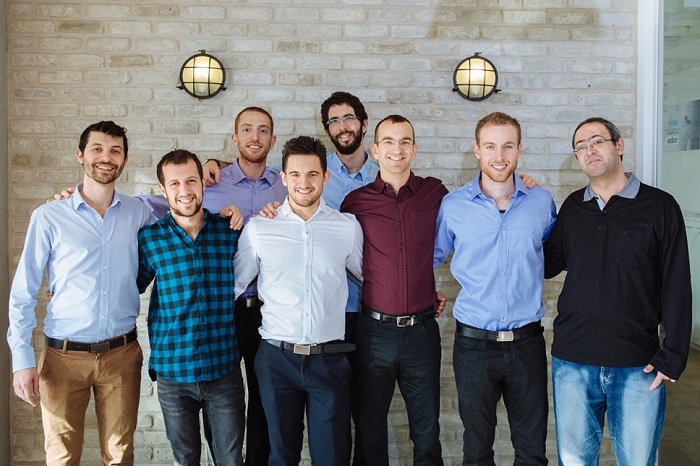
AiDoc Team (Image source: techcrunch.com)
This is the entrepreneurial idea behind the Israeli company AiDoc. The company recently secured $7 million in financing, led by TLV Partners, a venture capital firm based in Tel Aviv. AiDoc aims to decode medical imaging using artificial intelligence, seeking to deploy this technology across clinics to help radiologists analyze cases more efficiently. AiDoc has already developed deep learning algorithms that accelerate the identification of anomalies in imaging and clinical data, “seeing” abnormalities that are imperceptible to the naked eye.
“We fully understand how challenging the field of radiology is for physicians,” said Elad Walach, CEO and co-founder of AiDoc, in an interview with Globes, an Israeli business news website. “Diagnosing diseases from medical images places incredibly high demands on radiologists. Their task is as demanding as that of fighter pilots, with hundreds or even thousands of patients awaiting evaluation.”
This software is not a standalone solution; rather, it is designed to integrate into radiologists’ workflows to optimize their efficiency. Currently, AiDoc is still developing some of its technological tools and working to combine several technologies, such as computer vision, deep learning, and natural language processing algorithms.
In this field, AiDoc already has several competitors. According to the CEO, IBM Watson is their biggest competitor in this space. Additionally, Zebra, another company from Israel, is also a medical imaging firm. Its image analysis platform, Profound, addresses similar pain points and was launched last November in Europe, Asia, Latin America, and the Pacific region. Over the past three years, Zebra has been building its platform into a comprehensive diagnostic tool. Prior to the launch, they devoted time to training algorithms to automatically analyze images and diagnose diseases. Zebra has released several APIs, claiming that they offer functionalities for assisting in the diagnosis of breast cancer and predicting cardiovascular diseases.
AiDoc, on the other hand, aims to approach the issue from a different angle. They intend to start with the fundamentals—assisting radiologists and clinicians in using AI tools to identify issues at the earliest possible stage.
“In recent years, the growth in the number of radiologists has failed to keep pace with the surge in newly acquired CT and MRI scans, making medical image interpretation one of the most severe bottlenecks in today’s healthcare sector,” said founder Walach. “Although physicians are already working extremely hard, there is a limit to what human resources can achieve; therefore, AiDoc needs to provide them with support throughout this process.”
Rona Segev, Co-Founder of TLV Partners, the lead investor, stated in a press release: “The leadership of AI-driven enterprises, the open-sourcing of AI technologies, the declining cost of computational processing, and the enhancement of digital processing capabilities have all created opportunities for artificial intelligence to disrupt traditional industries.”
Team and Financing History
The core team consists of four members. The CEO, Chief Technology Officer, and Vice President of R&D are all graduates of the Israeli Defense Forces’ Talpiot program. CEO Elad Walach previously founded the IAF Algorithm Research Team and has expertise in machine learning and deep learning. CTO Michael Braginsky has experience in medical imaging and R&D. VP of R&D Guy Reiner specializes in computation and optimization. Chief Medical Officer Gal Yaniv is a radiologist with extensive clinical experience.
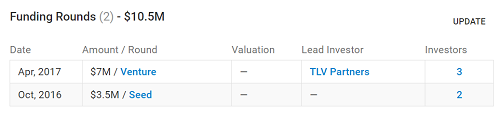
In October 2016, AiDoc secured $3.5 million in seed funding. This financing will be used to expand its R&D team and initiate marketing campaigns in the United States and Israel.