

Three CEOs Share Insights on Telemedicine Challenges and Business Models: More Complex Than You Think
Although “telemedicine” is often considered a broad term for many remotely managed medical services, it has become clear over the past decade that this term can be applied to the countless virtual care services, tools, and companies of today.
Therefore, to gain insight into the industry’s development direction in the coming years, the American Telemedicine Association recently convened an expert panel meeting in Orlando, inviting three CEOs from companies pursuing different strategic paths to share their perspectives on future growth. VCBeat (WeChat ID: vcbeat) has summarized their viewpoints.
“We often see a lot of hype surrounding telemedicine,Striking concepts and creativity, but as you advance this service, you must understand the actual number of patients treated via telemedicine.“, many companies are still in their early stages,” said Dr. Ateev Mehrotra, a professor of medicine at Harvard Medical School and Beth Israel Deaconess Medical Center.
But ATA shows some real figures,There was a single instance of one million to 1.5 million visits in 2016.. However, from a macro perspective of the healthcare industry, there are approximately 1 billion patient visits annually.
It sounds incredibly vast. So, how has telemedicine evolved to reach this level?
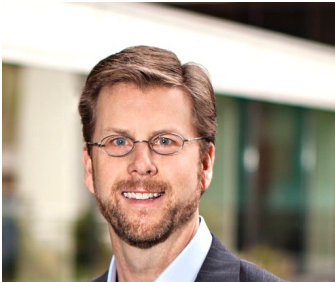
MDLive CEO Scott Decker
Telemedicine Faces High Costs and a Shortage of Primary Care Physicians
Scott Decker, CEO of MDLive, a telehealth platform provider, stated thatThe primary macro-level challenges affecting the telemedicine industry are identical to those in traditional healthcare, namely, excessively high costs and a shortage of primary care providers. (Editor’s Note: This is similar to China’s promotion of telemedicine and tiered diagnosis and treatment systems, where there is a comparable lack of physicians with practical clinical expertise at the grassroots level.). From this perspective, he stated that telemedicine companies can help broaden people’s understanding of how to manage their health.
Decker said, “We began by pursuing this low-acuity care business, but now we need to start considering how to push the boundaries. How much convenience can we provide to patients? This insight comes from continuous experimentation to assess user satisfaction with new technologies such as connected devices.”
He also stated: “"I don’t think people are very excited about seeing a doctor or going to the hospital, just as I don’t believe they feel particularly thrilled about visiting a bank or a shopping mall. However, they are willing to adopt new tools to facilitate these activities."“Although I believe we are at the forefront of telemedicine, I think it is time to take a forward-looking approach and proactively address what consumers may be interested in.”
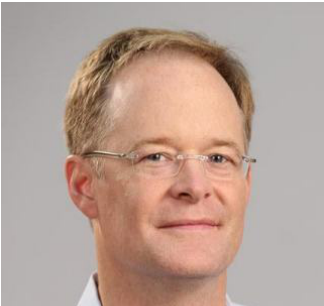
Hill Ferguson
Telemedicine Needs to Provide High-Quality Services for Patient Interaction and Evaluation
For Hill Ferguson, CEO of the Doctor on Demand platform and an app-based telehealth service provider, his company focuses on building its own brand as the primary touchpoint for their services. They aim not merely to provide technology, but to become synonymous with high-quality healthcare and sustained value.
Ferguson said, “On the Doctor on Demand platform,”Our mission is to deliver consumer-experience-based services and evolve them into a continuously improving relationship-driven experience.“One thing I make sure to do every morning is browse through all our customer reviews.”
He mentioned that a recurring theme has been, “That’s great; I want all my doctors to...” This experience is becoming increasingly common. “Because people have tried it, they report that it truly works. It’s not just about having a doctor, but having a good one. Naturally, the next question is how to become more engaged in one’s personal health. Therefore, our vision for the next three to five years is to conduct more customer feedback interviews.”
On the other hand, Dr. Roy Schoenberg, CEO of American Well, stated that although his company is at the forefront of telemedicine development, he does not consider them to be the primary audience for these services.In contrast, US healthcare companies are striving to become technology providers, with the aim of integrating new devices, virtual care models, and information systems.
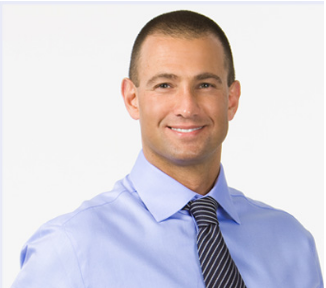
Roy Schoenberg
Telemedicine is a comprehensive system, by no means merely standalone devices or telemedicine technologies.
“I agree that branding must take precedence, as it builds trust and wins over users, thereby becoming something people highly anticipate. I believe it is beneficial for healthcare to be closely associated with branding; however, a brand should not merely represent a software company. In my view, healthcare brands should encompass all healthcare institutions.”
“As long as the services you provide are novel, distinct from traditional offerings, and have never been implemented by conventional medical institutions, I believe they can be launched under our brand.“But in reality, with every health plan now offering virtual care services, I believe software company brands are becoming increasingly irrelevant to these healthcare offerings.”
That said, Schoenberg does firmly believe that the industry itself will continue to grow, albeit not necessarily in predictable ways.
“I do not believe telemedicine products will experience straightforward growth. In terms of how this growth is realized, the integration of telemedicine services will increasingly represent mainstream healthcare.”
With technological advancements and widespread application, Schoenberg believes thatPeople will increasingly interact with it through familiar insurance providers, health systems, or hospitals, rather than through standalone devices or telehealth technology brands.。
He said, “Technology will recede into the background, serving as the enabler that connects Americans with these healthcare institutions.”
Given the differing views on the future, Mehrota asked the expert panel, in the context of a market void,How All Types of Companies Develop Their Own Business Models。
Data remains the most powerful tool for driving the expansion of business models.
For Decker, MDLive is undertaking plans and collaborations toto conduct more data collection, analysis, and sharing。
“I believe we will see greater integration and seamless connectivity, which will empower us to deliver more data-driven care models,” said Decker.
“You will be able to access, organize, and leverage vast amounts of data, with healthcare data companies facilitating this process. From our perspective, this is a natural extension for telehealth companies.”From a business model perspective, I believe data is shifting our focus from transaction processing to more value-driven development.”
Ferguson stated that he hopes to see devices designed with full consideration for consumers, capable of seamlessly integrating into existing workflows.Since his company employs both full-time physicians and part-time staff, he has not pursued the idea of expanding networks across different vendors. In reality, doing so would be akin to acquiring better tools, thereby enhancing employee efficiency.A significant portion of the integrated remote service offerings require in-person completion, such as laboratory testing.
Home Use May Be the Future Direction of Telemedicine
“We have already discussed the limitations of telemedicine, but we need to be realistic. Let us ask a different question: What is the resolution? Consider the fact that less than 10% of sore throats are caused by streptococcal pharyngitis. We do not need to allocate sufficient resources for every child; rather, we only need to reserve them for the 10% who actually require such care. However, we must indeed possess the capability to assist patients in completing further testing when physicians deem it necessary,” said Ferguson.
“Of course, there are many better ways to ensure this outcome, such as expanding the physician network. However, the actual issue is more severe, as it is not simply a matter of assigning tasks—for instance, deciding who should come and who should leave.”The biggest challenge is that some patients’ conditions require additional procedures for diagnosis, let alone the complexities of telemedicine, which is inherently involved in all medical services.”
Even so,He still believes that some complexConnectionMedical devices or home-use test kits can undoubtedly become a reliable direction for the development of telemedicine.。
“With technological advancements, an increasing number of such tests are proving highly valuable for telemedicine. Some testing protocols have become highly innovative and affordable, and can be performed at home,” he said.
“Telemedicine has seen robust development over the past decade, prompting many companies to focus on inventing remote medical devices that otherwise would not exist. This also applies to laboratory testing. We have witnessed the emergence of at-home telemedicine test kits for strep throat, urinary tract infections (UTIs), and numerous other diagnostic devices—all driven by the telemedicine industry.”
Source: www.mobihealthnews.com
Author: Heather Mack
Compiled by: Yang Di