

Zhongshan Ophthalmic Center Launches World's First AI-Powered "Robotic Ophthalmologist" at Expert Physician Level
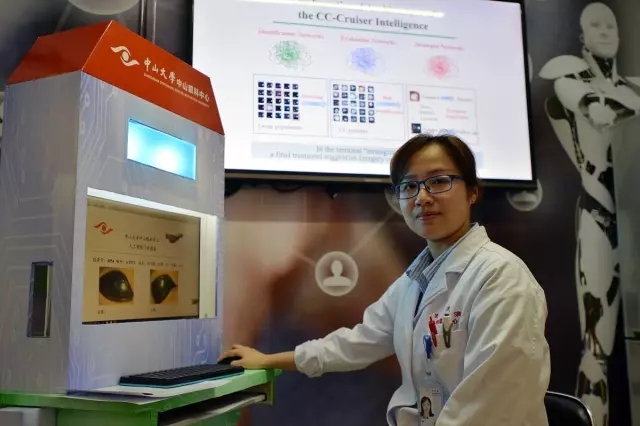
In recent years, the rapid development of artificial intelligence has significantly advanced the clinical application of medical robots, offering new approaches to addressing the shortage of healthcare resources.
VCBeat has learned that on May 4, clinicians and researchers at the Zhongshan Ophthalmic Center of Sun Yat-sen University developed China’s first artificial intelligence diagnostic decision-making system for ophthalmology. By simply uploading photos of the eyes of patients with congenital cataracts to a cloud platform, the system leverages in-depth AI analysis to generate a diagnosis, risk assessment, and treatment plan within minutes.
The AI platform has undergone clinical validation with over 50 patients. Its diagnostic and treatment accuracy reaches 93%, matching the performance level of professional ophthalmologists.
Ocular Image Analysis: This Is Exactly What Artificial Intelligence Does!
As a superficial organ, the eye’s direct visualization and imaging constitute the most critical components in the diagnosis of ocular diseases. Meanwhile, the increasing prevalence of portable devices equipped with high-definition cameras has made clinically valuable ocular images among the most accessible forms of medical imaging data.
The core technology of artificial intelligence (deep convolutional neural networks) relies on deep learning from large volumes of image data; therefore, AI-based diagnosis of eye diseases through image analysis represents a significant breakthrough in the medical application of artificial intelligence.
In February 2017, Professor Liu Yizhi from the Zhongshan Ophthalmic Center of Sun Yat-sen University led a joint research team from Sun Yat-sen University and Xidian University to establish the “CC-Cruiser Artificial Intelligence Platform for Congenital Cataracts” using deep learning algorithms.
This artificial intelligence program, simulating the human brain, analyzes and performs deep learning on a large number of congenital cataract images, continuously providing feedback to improve diagnostic accuracy.After embedding this program into the cloud platform, users can upload images via the platform to obtain a diagnosis, risk assessment, and treatment plan for congenital cataracts.The original research paper was published as the cover article (cover story: “Promising Machine Learning”) in the February 2017 issue of Nature Biomedical Engineering, and was featured as the highlighted news of that issue.
It was learned that the learning process involves analyzing a large number of ocular photographs—476 from healthy individuals and 410 from patients with cataracts of varying severity. The system first accurately identifies whether pathological changes are present, and then, for images from cataract patients, assesses disease severity based on the location, density, and extent of the opacities, providing corresponding treatment recommendations.Experimental results demonstrate that artificial intelligence achieves a diagnostic accuracy of up to 99% for cataract patients and provides correct treatment plans for 97% of cases.
Leveraging this artificial intelligence platform, the Zhongshan Ophthalmic Center launched “AI-Assisted Diagnosis and Treatment in Ophthalmology” in April 2017, utilizing an AI cloud platform to assist clinicians in diagnosis and treatment.Patients visiting the AI outpatient clinic, in addition to receiving routine diagnosis and treatment, have their examination data instantly synchronized to the CC-Cruiser cloud platform, while also benefiting from “expert-level” diagnostic and therapeutic services provided by AI robots.。
Machine "Expert Diagnosis and Treatment": Performance No Worse Than Humans
Complex and challenging ocular conditions, such as congenital cataracts, often require accurate diagnosis and treatment by specialists in the field. Currently, medical experts in China are predominantly concentrated in major cities, making it difficult for high-quality medical resources to reach towns and communities. The development of network communications and artificial intelligence has made it possible to expand and extend the reach of high-quality medical resources.
So, how effective is the CC-Cruiser platform? It has been verified to reach the level of senior ophthalmology experts. By initiating AI-based diagnosis and treatment and integrating the AI-assisted diagnostic system with primary care hospitals, it holds promise for enabling patients to “receive expert-level care through visits to primary care facilities alone.”In medical AI application scenarios, case records and imaging data will first undergo preliminary review by artificial intelligence programs,Followed by expert review, efficiency will increase by over 70%, significantly enhancing the efficiency of expert-assisted diagnosis.. Currently, CC-Cruiser has completed clinical pilot applications at three collaborative hospitals, achieving satisfactory results.
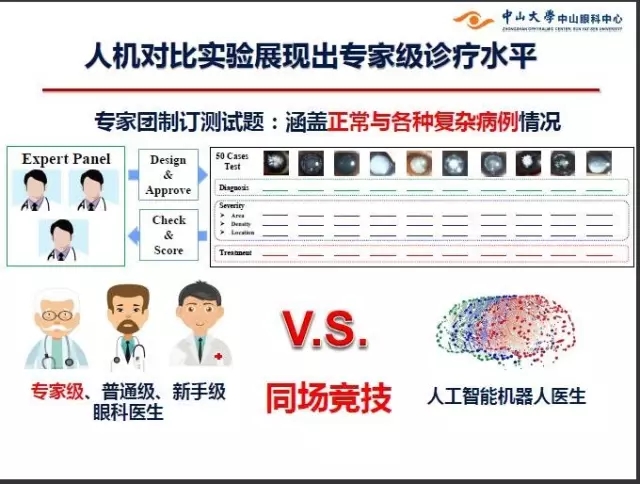
“Patients will receive two registration slips: one for an ophthalmologist and one for a robotic doctor,” said Lin Haotian, head of the research team and a cataract specialist at the Zhongshan Ophthalmic Center of Sun Yat-sen University.AI robots are currently handling the workload of more than ten staff members, primarily for first-time patients with congenital cataracts.。
What if the results provided by the robot and the ophthalmologist differ? A team of three experts will conduct a further consultation with the patient, and after evaluating all perspectives, they will formulate a treatment plan.
Furthermore, the Zhongshan Ophthalmic Center has connected with over 100 primary care hospitals in remote provinces and regions, including Tibet, Xinjiang, Yunnan, and Qinghai. A large volume of ophthalmic examination data is uploaded to the cloud platform daily for expert-assisted diagnosis.
Empowering Grassroots Levels to Explore New Models of Diagnosis and Treatment
The shortage of high-quality specialized medical professionals, coupled with prolonged training cycles, uneven distribution, and limited coverage, has become a major bottleneck hindering healthcare reform. The excessive workload of physicians in tertiary hospitals contrasts sharply with the significantly underutilized capacity of primary care providers, accurately reflecting the current predicament of China’s healthcare system.Artificial intelligence technology can integrate regional medical data, assist primary care ophthalmologists in diagnosis, and provide new strategies for rapidly improving the level of diagnosis and treatment of eye diseases in primary hospitals.。
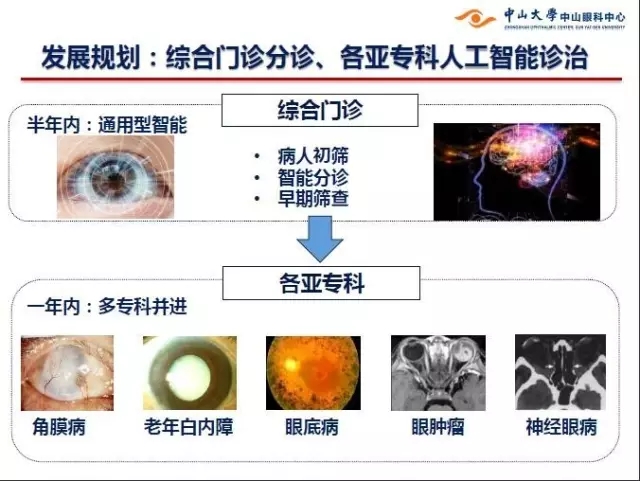
With the promotion and application of AI-assisted diagnostic and treatment systems, the more than 30,000 primary-care ophthalmologists in China are expected to rapidly enhance their clinical capabilities, transforming into “super doctors.”
Meanwhile,“Guangdong Provincial Engineering Center for Innovative Technologies in Ophthalmic Diagnosis and Treatment” plans to deploy “expert-level” AI-powered ophthalmologist robots on a long-term basis in areas with scarce primary care physician resources, so as to improve and ensure the standard of basic ophthalmic healthcare in these regions.。
The Zhongshan Ophthalmic Center has fully leveraged its integrated structure combining medical care, education, research, and prevention. By launching an AI-powered ophthalmology clinic as a catalyst, it is driving reforms in diagnosis and treatment models, offering new approaches to expanding and extending the reach of high-quality medical resources.