

Amalgam Rx Submits IPO Prospectus Following FDA-Cleared iSage Rx Launch for Insulin Dosing in Type 2 Diabetes
The team at WellDoc, a leading diabetes care company, launched the first FDA-cleared mobile application for diabetes management. Its founders, Ryan Sysko and Dr. Suzanne Clough, have since established a new digital health company, Amalgam Rx.
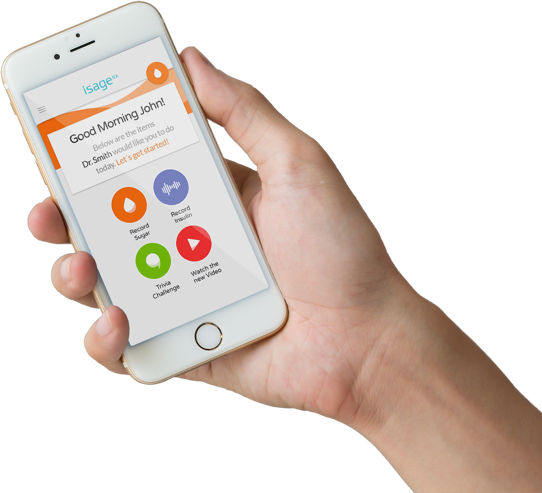
The new company is dedicated to developing next-generation digital therapeutics to assist patients with chronic diseases. Amalgam’s inaugural product, iSage Rx, is the first FDA-cleared and market-authorized mobile insulin dosing application for all branded basal insulins, including Lantus, Levemir, Toujeo, Tresiba, and Basaglar.
Determine the Precise Insulin Dosage and Duration
Worldwide, 50 million people with type 2 diabetes use basal insulin; however, it can take up to six years to determine the precise and accurate insulin dosage (or titration). Daily insulin injections not only provoke fear but also cause many patients with diabetes to worry about potential adverse events if their dosage is incorrect.
To make matters worse,Once the dosage is used incorrectly, they may have serious health problems such as stroke, heart disease, vision loss and nerve pain。
To address this issue, Ryan Sysko and Dr. Susanne Clough (an endocrinologist) designed iSage Rx to help millions of basal insulin users worldwide (who do not use mealtime insulin or insulin pumps) achieve optimal dosing.
It is the first of several new digital therapeutics co-developed by Amalgam with leading life sciences companies, designed to accelerate therapeutic development and commercialize clinically validated outcomes through regulatory-cleared solutions targeting specific chronic diseases. These solutions help healthcare providers, consumers, and life sciences companies address the challenges associated with adopting new evidence-based outcomes and delivering value-based care models.
iSage Provides Self-Management Support and Physician Remote Control
Sysko stated, “One major challenge we face is that insulin can be daunting for patients, who may not necessarily wish to continue treatment. Therefore, we aim to identify ways to help them optimize insulin therapy and determine appropriate insulin dosages.”
It has been learned by the reporter that,Among patients who initiated insulin therapy, 51% did not use the correct dosage, and their A1C (glycated hemoglobin) levels failed to reach the expected targets.We believe there is a significant opportunity here to leverage technology to provide self-management support, as well as educational and operational assistance, ensuring that patients receive the appropriate therapy.
iSage is a prescription-only, patient-facing iOS and Android application that works in conjunction with the provider portal used by physicians.The physician sets the target insulin level based on the patient's blood glucose levels, and then hands over control to the algorithm.
Patients can monitor their blood glucose levels, and iSage will adjust its insulin delivery based on the physician’s plan and input values.Currently, for safety reasons, physicians initially prescribe a very low dose that cannot be frequently adjusted until the patient completes the three-month follow-up evaluation.
Sysko said, "We have begun establishing this feedback mechanism to educate and support patients, which will help them return to normal life. Therefore, the first week may focus on identifying key concepts they should understand, such as the fundamentals of insulin."Only then can we focus on insulin management. We will introduce short quizzes and targeted videos. All of this is designed to alleviate patients’ fears when initiating medication, thereby enabling us to better manage their emotional responses.。”
“Individuals with chronic diseases make many seemingly small decisions every day that have a significant impact on their condition,” said Dr. Suzanne Clough, Chief Medical Officer and Founder of Amalgam Rx, in a statement. “We have seen how technology can empower patients to make better decisions and lead healthier lives.”
Decades of research and experience have demonstrated that the right balance of clinical, behavioral, psychosocial, analytical, and regulatory elements can create effective, highly personalized digital therapeutics. For healthcare providers, technologies that empower patients to better self-manage their conditions represent the only viable path to meeting growing demand, while simultaneously improving treatment outcomes and reducing costs.
AmalgamRx aims to build a platform to collaboratively advance digital therapeutics.
Furthermore, AmalgamRx’s objective is not to compete with numerous diabetes management technology companies, including Sysko and Clough’s former company, WellDoc. Instead, through partnerships and the provision of open APIs and SDKs, it aims to expand its service reach to a level comparable to that of WellDoc, Livongo, and mySugr., Sysko refers to such companies’ services as a diabetes platform or “operating system.”
"This is a critical area for us. Those focused on building platforms for diabetes patients can directly integrate our modules, bypassing the regulatory hurdles required to obtain insulin titration approval and eliminating the need for such development efforts. We can accelerate your project timeline by enabling you to access our APIs and SDKs," he said.
Sysko and Clough have many plans for the future. Although the FDA-approved algorithm is applicable to every insulin product on the market, they are also developing new algorithms for combination therapies from Sanofi and Novo Nordisk, as well as algorithms for controlling meal timing.
Integrating iSage with other tools will be a key focus for future development
Functional integration is another key focus area for the future, whether through integration with physician workflow tools or combination with connected blood glucose meters, continuous glucose monitoring systems (CGMS), or smart insulin pens.
Sysko stated, “Dose capture will be a critical component of titration. We expect to integrate these dose-capture devices into our applications, just as we are integrating Bluetooth into blood glucose meters and continuous glucose monitors (CGMs). Ultimately, patients are beginning to expect all these devices to communicate with one another.”