

Decoding Drug Approval Numbers: A Key to Understanding Pharmaceutical Products and Market Dynamics
Recently, VCBeat (WeChat: vcbeat) discovered several “interesting” anomalies while reviewing drug approval numbers, such as reversed registration categories for chemical and traditional Chinese medicines, different drugs sharing the same approval number, and multiple dosage forms listed under a single approval number.
Upon closer examination, it becomes evident that there is a wealth of information behind drug approval numbers. After reviewing the history of drug approval numbers, I have summarized several key points regarding drug standard approval numbers.
What is a drug approval number?
As a special commodity, pharmaceuticals are subject to stringent regulation. Therefore, the law stipulates: "The production of new drugs or drugs with existing national standards shall be subject to approval by the drug regulatory department under the State Council, and an exclusive identification number for the drug shall be specified in the approval document; this number is referred to as the Drug Approval Number."Drug manufacturers may only produce a drug after obtaining its drug approval number.。”
Simply put, a drug approval number serves as the production license for a pharmaceutical product, similar to the “ISBN” or “ISRN” for books and audio-visual publications.
It is also important to note that drug approval numbers have an expiration date (typically with a validity period of 3 or 5 years, depending on the drug category, such as new drugs, improved drugs, or generic drugs). Upon expiration, “re-registration” is required, while the approval number remains unchanged.
Since imported drugs are not manufactured domestically, an approval number is not mandatory for production; however, they must still be reported to the relevant authorities for approval.Drug Import License, also known as Approval Number。
Who approves drug approval numbers?
The above states that an application should be submitted to the “drug regulatory department under the State Council,” which essentially meansNational Medical Products AdministrationHowever, there is a historical background to note: The State Drug Administration (SDA) was established in 1998 by merging the National Pharmaceutical Administration under the former State Economic and Trade Commission with the Pharmaceutical Administration Department of the Ministry of Health, while also incorporating certain entities from the State Administration of Traditional Chinese Medicine. In 2003, it was reorganized into the State Food and Drug Administration (SFDA). Prior to the establishment of the SFDA, drug approval authority rested with the Ministry of Health and provincial health departments, leading to inconsistent standards, fragmented regulatory practices, and consequent chaos in drug approval numbers.
For the purpose of unified management, fromOn January 1, 2002, the State Food and Drug Administration began to centrally process drug approval applications, and a unified coding format was also implemented.
What are the naming conventions?
In accordance with the "Notice on Doing a Good Job in the Unified Reissuance of Approval Numbers" issued by the China Food and Drug Administration (CFDA), the format of drug approval numbers has been standardized, and drug approval numbers are being uniformly reissued nationwide for drugs manufactured by pharmaceutical production enterprises (including imported drugs). The rules are as follows:
Format of Drug Approval Number:National Medical Products Administration Approval Number: 1 letter + 8 digits, Format of the approval number for drugs in trial production:Guoyao Shi Zi + 1 letter + 8 digitsChemical drugs are designated with the letter “H,” traditional Chinese medicines with “Z,” health supplements regulated by the National Medical Products Administration with “B,” biological products with “S,” in vitro chemical diagnostic reagents with “T,” pharmaceutical excipients with “F,” and imported drugs repackaged domestically with “J.”
The first and second digits represent the source code of the original approval number, where “10” denotes drugs approved by the former Ministry of Health, and “19” and “20” denote drugs approved by the former State Drug Administration before January 1, 2002 ("19" denotes approvals granted in 1998 and 1999, while "20" denotes those approved in 2000 and 2001.), those using the first two digits of the administrative division code of each province refer to drugs originally approved by the respective provincial health administrative departments. The third and fourth digits represent the last two digits of the Gregorian year in which the approval number was reissued; however, for approval numbers issued by the Ministry of Health and the State Drug Administration, the last two digits of the year from the original approval number shall still be used.
Digits 5 through 8 represent the serial number, which also follows a specific pattern; the key identifier lies in the fifth digit. For new drugs, the last four digits start from 0001; for generic drugs, they start from 30001; and for transfers and license renewals, they start from 8001. In other words,If the fifth digit is 0, it is a new drug; if the fifth digit is 3, it is a generic drug; if the fifth digit is 8, it is a license renewal.
Figure 1: Regional Codes
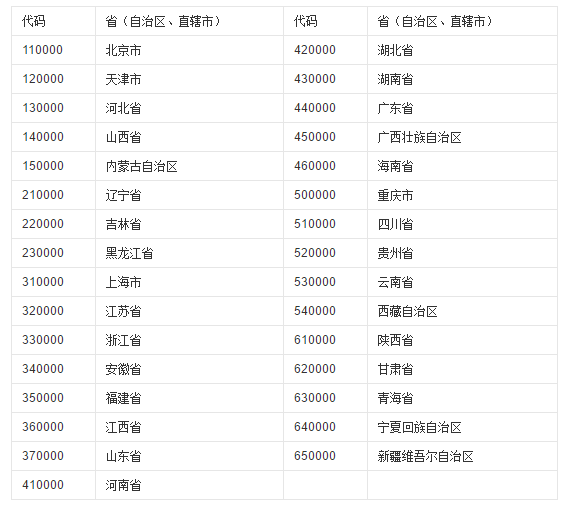
Figure 2: Registration Status of Amoxicillin Capsules
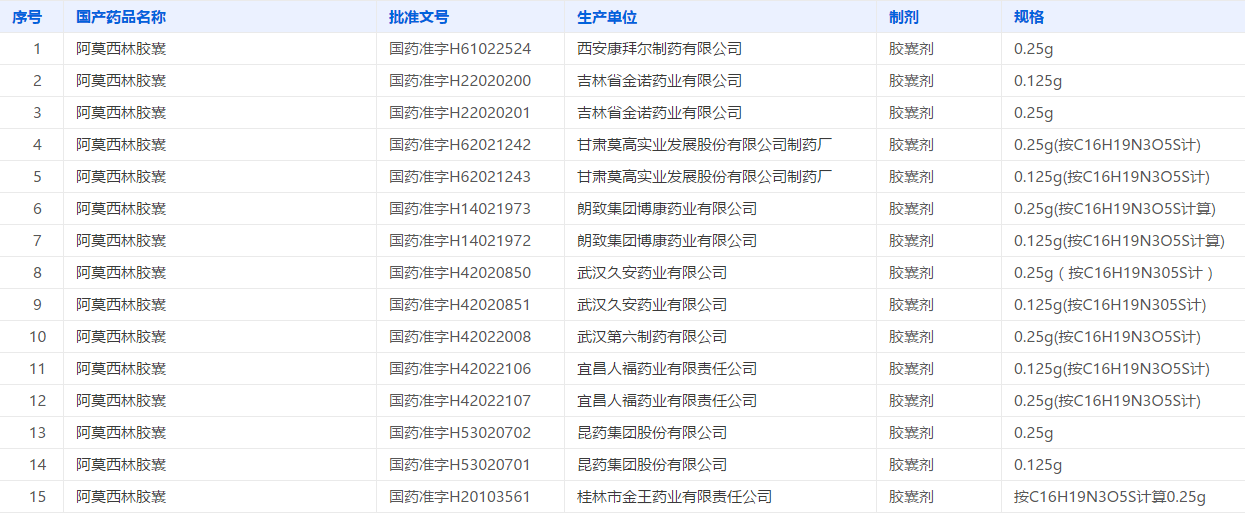
Taking the Amoxicillin Capsules search page as an example, the top-ranked result is “Guoyao Zhunzi H61022524.” This code can be interpreted sequentially as follows: domestically produced drug, chemical drug, originally approved by the health authorities of Shaanxi Province, and issued with a standardized approval number during the nationwide uniform reissuance in 2002.
It can also be seen that,Drug registration follows the “one certificate, one product” principle, the second- and third-ranked drugs differ only in specifications, yet they also require separate approval numbers.
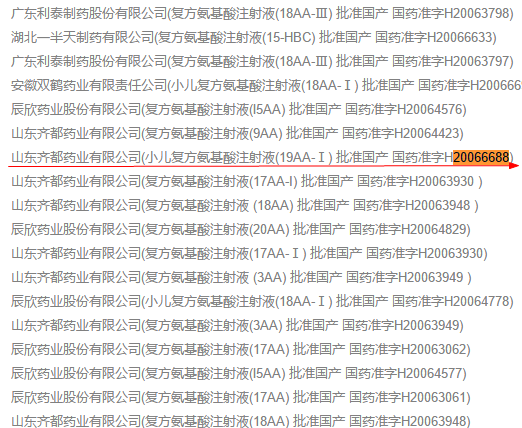
Taking “Guoyao Zhunzi H20066688” [Pediatric Compound Amino Acid Injection (19AA-I)] as an example, it can be interpreted that the product was approved by the China Food and Drug Administration (CFDA) in 2006. A query in the VBInsight drug database also shows that the CFDA accepted Shandong Qidu Pharmaceutical’s application for this drug in 2005 and approved its production in 2006.
Advanced Knowledge
All of the above are normal phenomena. So, where are the abnormal phenomena mentioned at the beginning? A few simple examples will make this clear.
For example,Two different dosage forms are listed under the same approval number.

It can be seen that the approval number “Guoyao Zhunzi B20020935” applies to two dosage forms (10 mL/20 mL per vial) of Bushen Oral Solution, both manufactured by Yueyang Xinhuada Pharmaceutical Co., Ltd.
Multiple manufacturers are simultaneously producing under the same approval number.
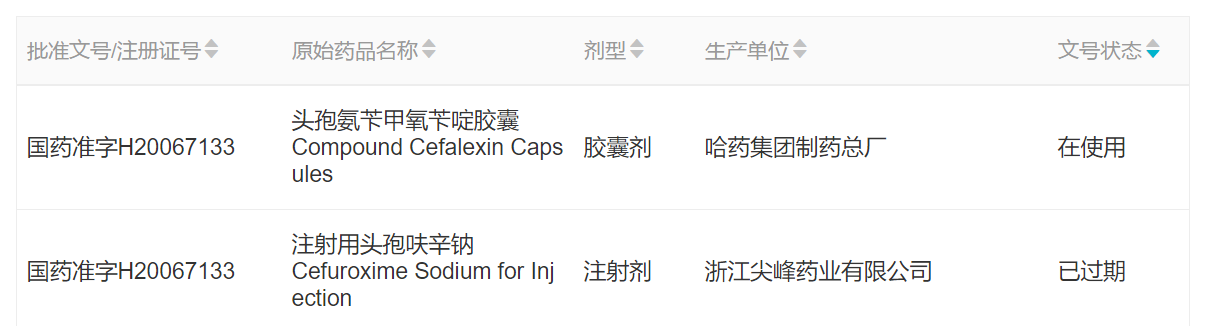
As can be seen, the approval number “Guoyao Zhunzi H20067133” was assigned to both the Cephalexin and Trimethoprim Capsules manufactured by Harbin Pharmaceutical Group General Pharmaceutical Factory and the Cefuroxime Sodium for Injection produced by Zhejiang Jianfeng Pharmaceutical. However, in January of this year, the China Food and Drug Administration (CFDA) issued the “Announcement on the Cancellation of Registration Approval Documents for 147 Drugs, Including Cefuroxime Sodium for Injection,” thereby clearing out a batch of similar duplicate and “zombie” approval numbers.
In fact, bringing a drug from R&D to market is a systematic engineering endeavor. The development of small-molecule chemical drugs typically requires over a decade of R&D (involving the screening of tens of thousands of compounds) and costs hundreds of millions of dollars, followed by multi-phase clinical trials to ensure safety and efficacy. In comparison, biologics (primarily derived from biological extracts) offer more efficient avenues for innovation. Consequently, biologics have provided pharmaceutical companies with opportunities for value reshaping and overtaking competitors on the curve, significantly boosting their willingness to engage in original research and development compared to the past.
There are approximately 180,000 types of domestically produced drugs and over 4,000 types of imported drugs currently on the market in China.In terms of drug registration submissions, data from the Center for Drug Evaluation (CDE) of the China Food and Drug Administration (CFDA) shows that in 2016, the CDE completed the review and submitted 12,068 registration applications (including renewals, new drug registrations, etc.) to the CFDA for approval, representing a 26% increase compared with 2015 and effectively eliminating the backlog. Of course, the majority of the reviewed applications were for chemical drugs, accounting for 83% of the total.
A company’s years of operational history are reflected in its drug approval numbers. Information such as the drug category, the approving authority, the registration and approval dates, whether it is a chemical drug or a generic drug, and the competitive landscape can all be deciphered from the drug approval number.
It is also worth noting that the Supreme People’s Court recently adopted relevant provisions that criminalize the fabrication of clinical data for drug registration, with the maximum penalty being death. In light of this information, one should no longer view a drug approval number as merely a simple string of digits.