

Scopis Files IPO Prospectus Following Success of Holographic Navigation Platform in Over 10,000 Surgeries
VCBeat has learned that Scopis, a company specializing in expert surgical navigation and medical augmented reality (AR) and mixed reality (MR) technologies, has announced the launch of a holographic navigation platform. The platform aims to provide surgeons using HoloLens headsets with more precise and rapid surgical guidance, and has already assisted physicians in performing 1,000 surgeries.
Surgical navigation systems are based on medical imaging data such as MRI and CT scans to display the patient’s internal anatomy on a computer screen. As the surgeon moves the probe, the system updates the display in real time, providing clear visualization of the surgical instrument’s anatomical location, thereby making surgical procedures faster, more precise, and safer.
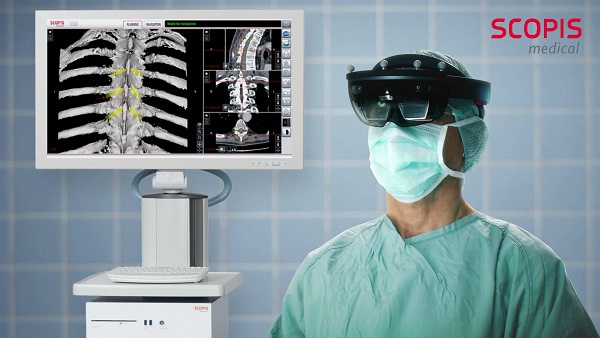
This company, named Scopis, was founded in 2012 and is headquartered in Berlin, Germany. It is a provider of surgical navigation systems. Its Holographic Navigation Platform integrates the HoloLens device into the Scopis image-guided navigation system, which projects AR overlays directly onto the patient to assist surgeons in spinal surgeries. Scopis adds additional 3D tracking to the overlays to enhance accuracy.
“How does the ‘Holographic Navigation Platform’ assist physicians in performing spinal surgery?”
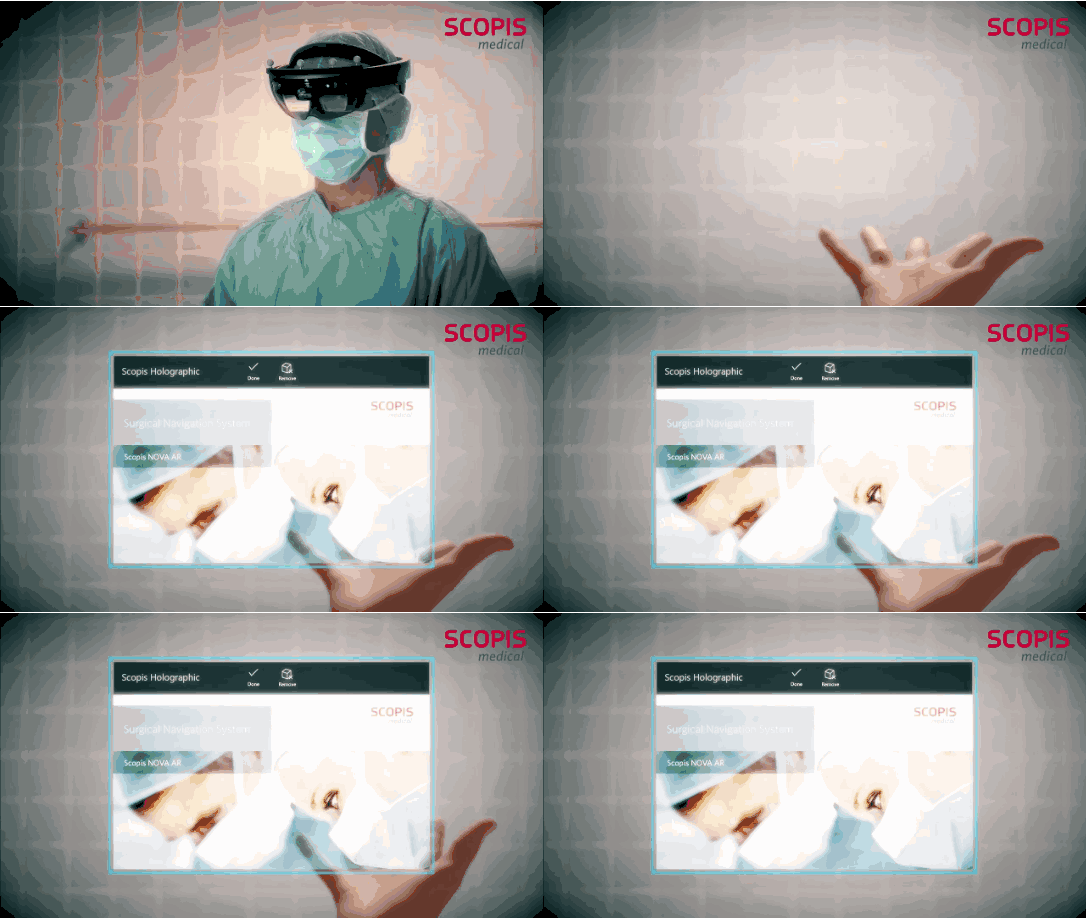
Scopis integrates the surgical navigation system into HoloLens, overlaying MR images onto the patient.
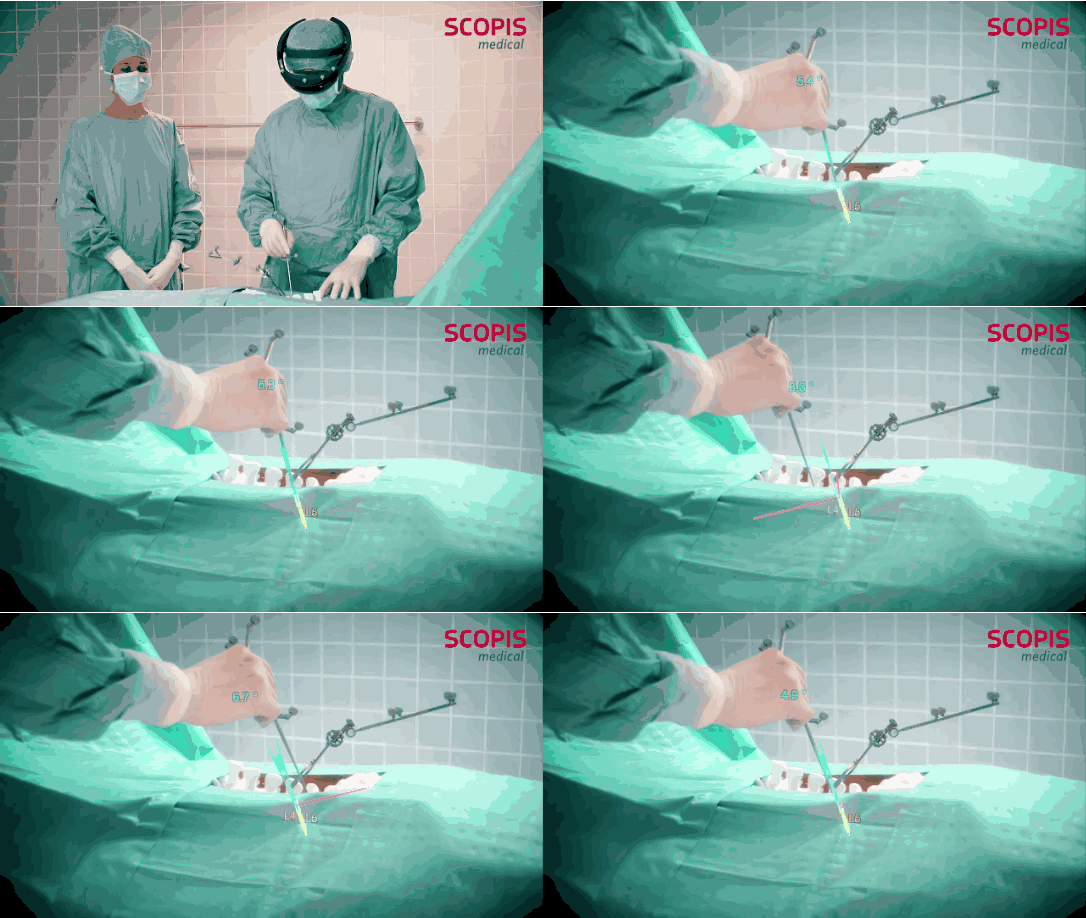
Surgeons don HoloLens headsets, which overlay the correct placement positions for surgical screws onto the patient’s body, assisting physicians in rapidly locating these sites. Real-time calibration is supported by displaying precise angular measurements.
Using gestures to individually display the spinal column image facilitates physician review and analysis.
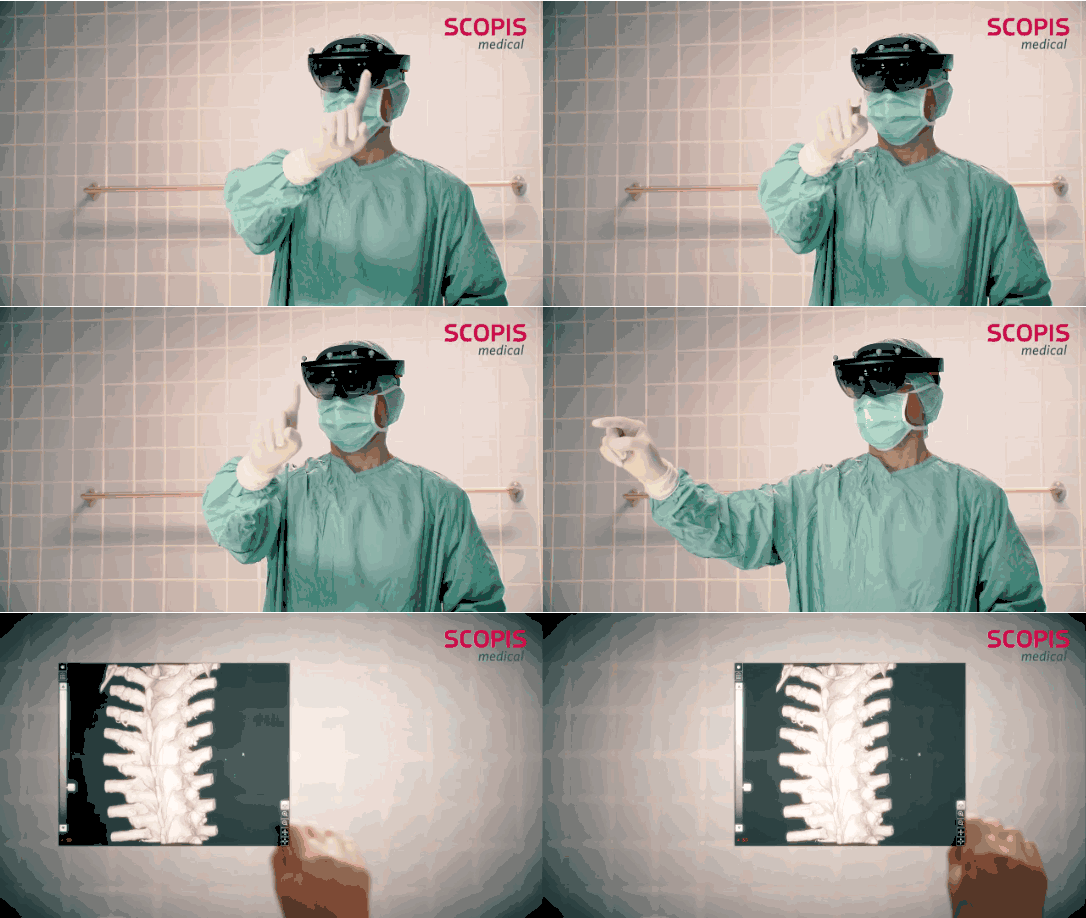
Zoomable holographic interface keeps critical information within the field of view.
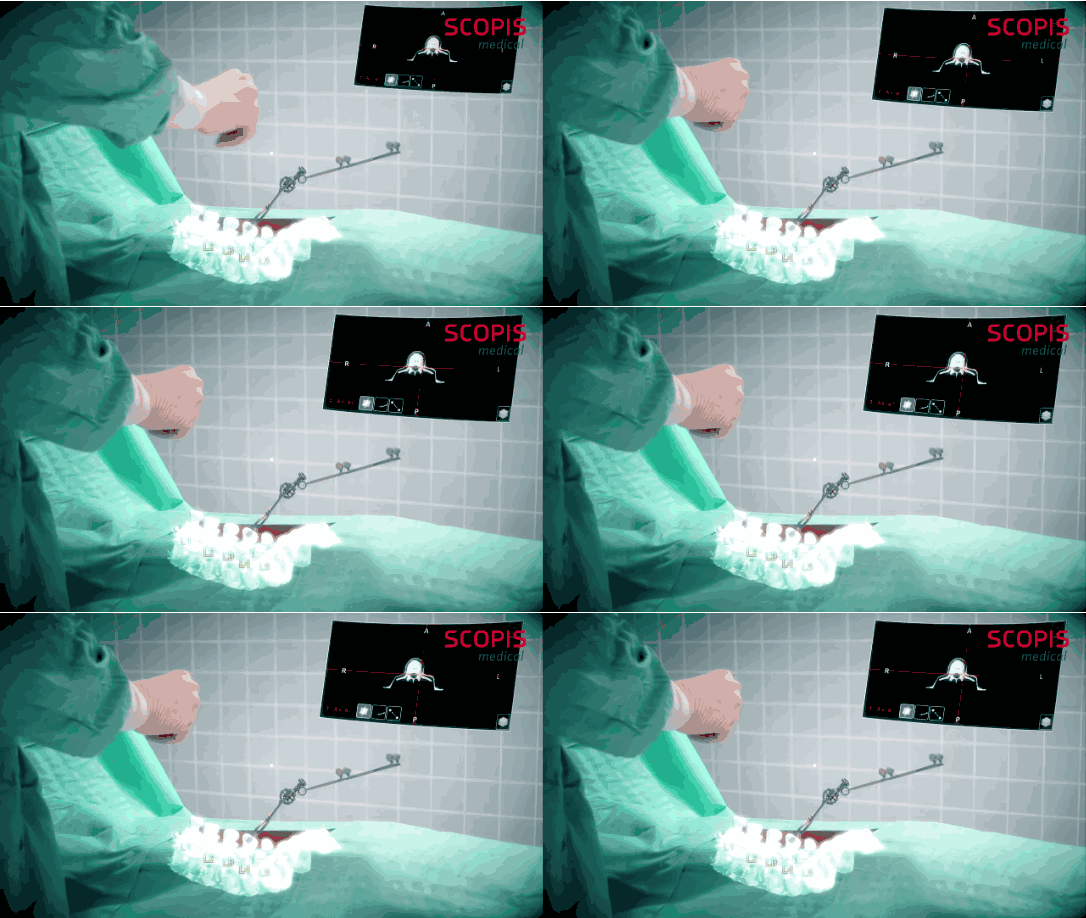
To enhance the accuracy of MR image overlays, Scopis has incorporated additional 3D tracking using infrared cameras, which is why we see small fiducial markers mounted on both the HoloLens and surgical instruments.
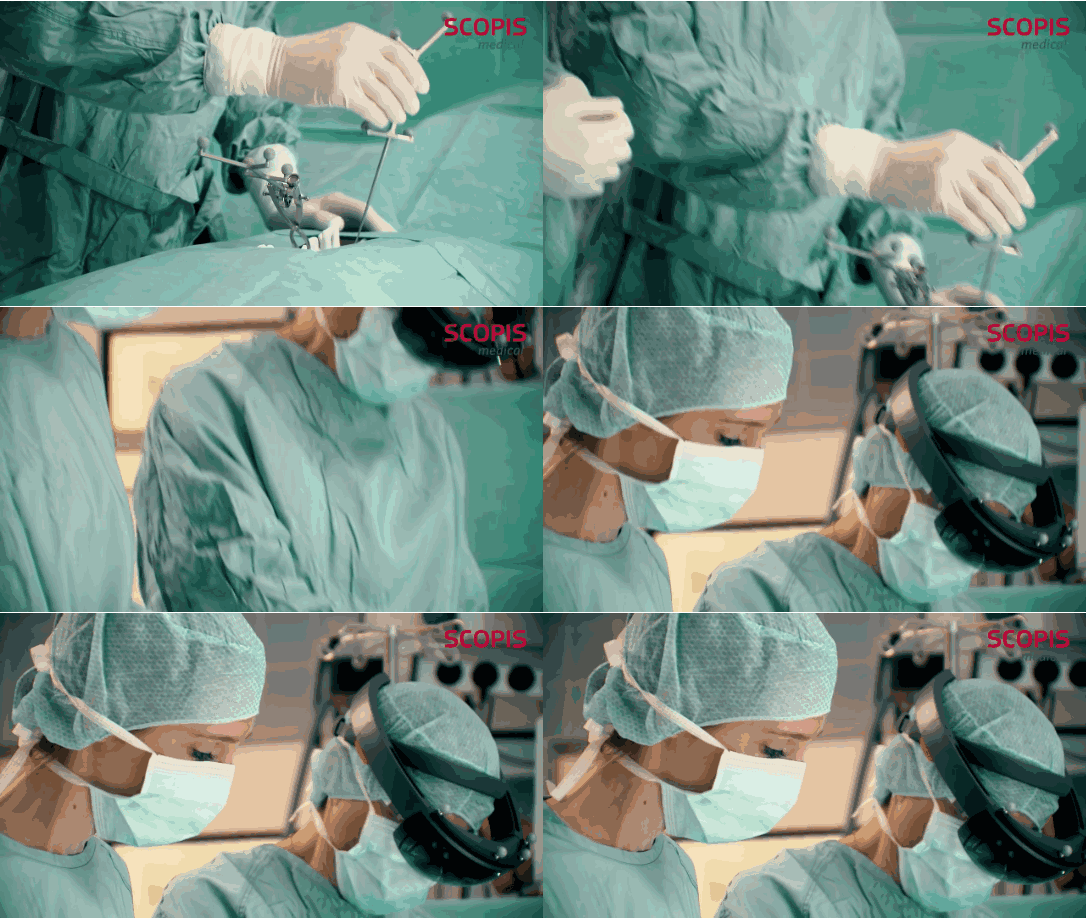
3D tracking enhances the precision of holographic image overlay; it moves with the patient, ensuring no loss of accuracy even when the patient’s position changes.
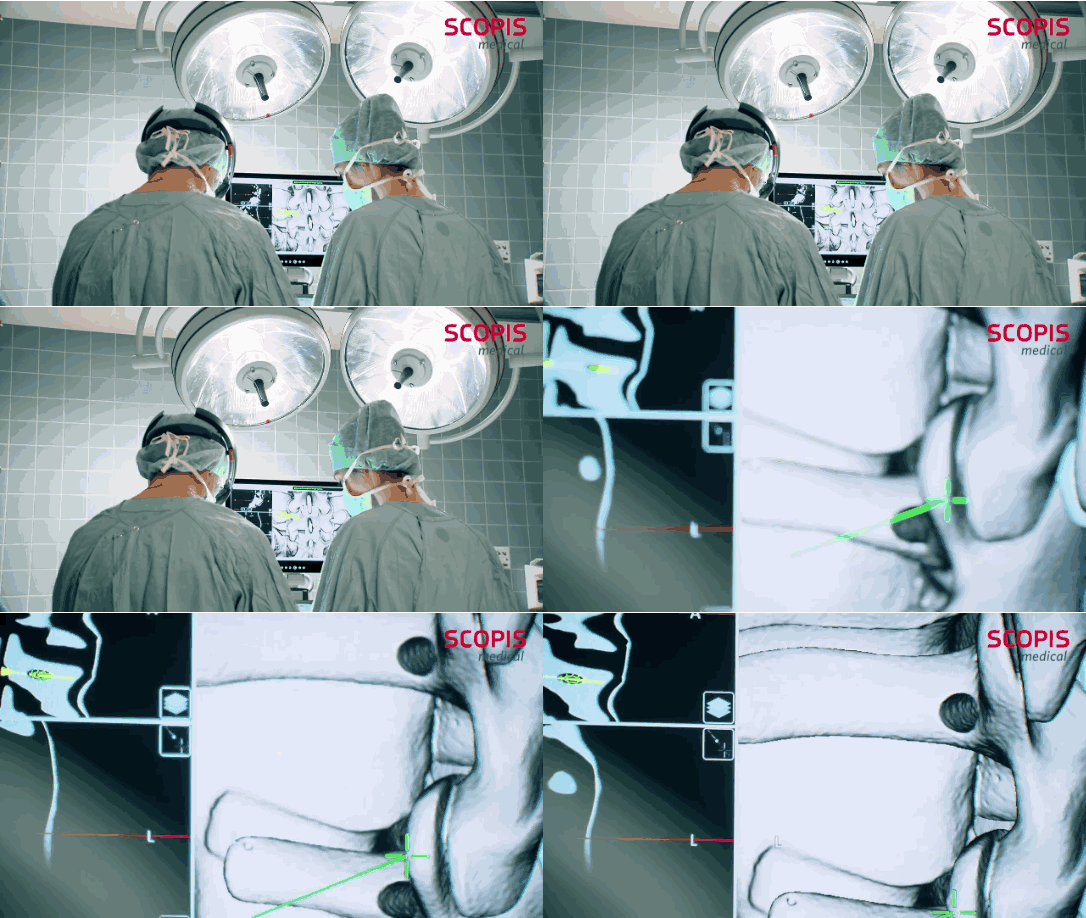
“Holographic Navigation Platform” also has a significant advantage: it reduces the risk of radiation exposure for both patients and physicians.。
During surgery, physicians rely on data from MRI, CT, and other imaging modalities to determine the surgical site, angle, and depth; with its assistance, the time required for such assessments can be reduced.
Professor Christian Woiciechowsky, Head of Spinal Surgery at Vivantes Humboldt Hospital, stated, “The Scopis Holographic Solution has the potential to make spinal surgery more efficient, safe, and accurate. Integrating mixed reality tools into surgical procedures represents a significant technological advancement for surgeons and will also bring greater benefits to patients.”
The “Scopis” holographic navigation platform is a versatile solution that not only facilitates spinal surgery but also applies to many other fields demanding extreme precision and speed. Bartosz Kosmecki, CEO and founder of Scopis, stated that it enables faster and more accurate localization of brain tumors in neurosurgical procedures.
This article is sourced from the internet, with animated images provided by Moduo. Collected and compiled by VCBeat.