

From Leading Physician Group to Genomic Medicine: Envision Genomics Files IPO to Tackle Rare and Undiagnosed Diseases in Children
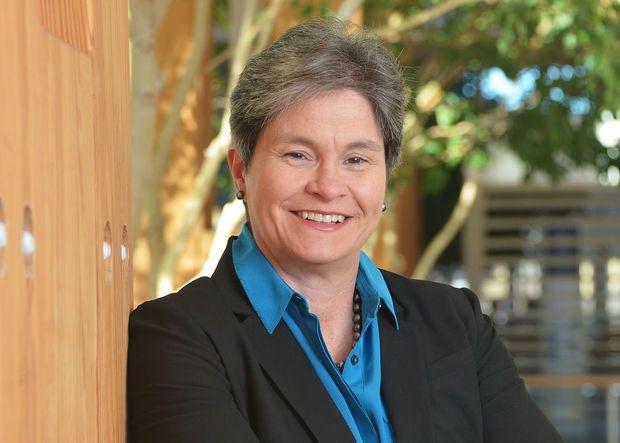
Dr. Terrell is a private-practice physician in North Carolina with over 20 years of experience in internal medicine. She also serves as the CEO of Cornerstone Health Care, one of the most professional physician groups in the United States.
Looking back on her career prior to Envision Genomics, Dr. Grace Terrell dedicated the majority of her efforts to the front lines of the healthcare industry.
Terrell is a privately practicing physician in North Carolina with over 20 years of experience in internal medicine. She also serves as the CEO of Cornerstone Health Care, one of the most professional physician groups in the United States.
In 1993, Terrell founded Cornerstone Health Care. Initially, Cornerstone Health Care comprised only 40 physicians from Canada and 16 clinics. Terrell has served as the company’s CEO since 2010.
After more than 20 years of development, Cornerstone Health Care has grown to nearly 400 physicians, operates over 90 clinics, and serves more than 12 partner cities.
Not only that, Cornerstone Health Care has also undertaken many “forward-thinking” initiatives, becoming the first healthcare institution in the United States to adopt electronic health records (EHR). Terrell revealed that Cornerstone Health Care operates seven days a week, providing patients with a full spectrum of medical services ranging from primary care to specialized care and medical imaging. “Compared with large hospitals, our services are much more affordable,” Terrell stated.
In 2012, to better facilitate the integration and transition between healthcare systems and other medical teams, Terrell established Cornerstone Health Enablement Strategic Solutions (CHESS), a comprehensive health management company.
Both companies were acquired by Wake Forest Baptist Medical Center—the institute that published the groundbreaking article on 3D bioprinting of organs in 2016. It was also in that year that Terrell met Jim Hudson, who brought about a turning point in her career.
In 2015, Hudson, Howard Jacob, Elizabeth Worthey, Jill Tapper, David Bick, Shawn Levy, Bruce R. Korf, and others founded Envision Genomics, a biotechnology company focused on whole-genome sequencing.
Over his 20-year career in internal medicine, Terrell has not only accumulated management experience through Cornerstone Health Care and HESS but also gained profound insights into clinical care. Consequently, Hudson extended a strong invitation to Terrell to join Envision Genomics.
Envision Genomics is one of 27 genomics companies collaborating with the HudsonAlpha Institute for Biotechnology, dedicated to advancing clinical testing for rare diseases, undiagnosed conditions, and hereditary cancers through whole-genome sequencing, thereby addressing current diagnostic challenges in these areas.
The HudsonAlpha Institute is a non-profit research organization based in Huntsville, dedicated to accelerating the clinical application of genomics, advancing the industrialization of biotechnology, and cultivating talent in the field. In essence, it integrates industry, academia, and research. Regarding its standing in the sector, in addition to collaborating with numerous startups and institutions such as the U.S. Department of Energy’s Joint Genome Institute (JGI), HudsonAlpha is also one of the clinical laboratory members of iHope, an initiative launched by Illumina. Furthermore, the City of Huntsville has named a new street after the institute: Genome Way.
“Hudson told me the company was based in Huntsville, Alabama, and collaborated with the HudsonAlpha Institute,” Terrell recalled. “I said, ‘Great, I’m in.’” She believes that genomics will ultimately disrupt the healthcare industry. The work being done by Envision Genomics, in collaboration with one of the best genomics teams in the United States, will undoubtedly bring greater benefits to more people.
“I believe my involvement can also bring something new to them,” she remarked. As a practicing clinician rather than a genomics researcher, she approaches issues primarily from a clinical perspective—namely, how to design healthcare delivery models within the context of genomics and how to effectively implement genomic medicine in practice.
Meanwhile, it is precisely her clinical background that affords her a clearer understanding of clinical pain points. Rare diseases and undiagnosed conditions are undoubtedly challenges that future healthcare must confront. Typically, it takes seven to eight years for a patient with a rare disease to receive a definitive diagnosis—a timeframe that does not even include subsequent treatment. During these years, patients consult numerous physicians, spend thousands or even tens of thousands of dollars, and endure years of anxiety before, if they are lucky, identifying the underlying cause.
Terrell believes that the work being done by Envision Genomics may offer new solutions for these individuals. “Each person would only need to undergo whole-genome sequencing once to potentially resolve the issue. This serves as a map of an individual’s genetic information, which can be stored and utilized permanently,” Terrell stated. “You can imagine a future where everyone has access to their own whole-genome data, enabling newborns to be screened for cystic fibrosis and sickle cell disease at birth.”
In the future, a simple test may suffice to identify the underlying cause of disease, eliminating the need for exorbitant costs and years of anxiety. Even for common conditions encountered in clinical practice, such an approach could expedite the determination of appropriate treatment regimens.
Guided by this objective, Envision Genomics has established a close partnership with the Center for Genomic Medicine at Smith Family Clinic. As another ally of the HudsonAlpha Institute for Biotechnology, Smith Family Clinic conducts comprehensive genomic testing for patients, thereby generating clinical and pharmacogenomic reports, and also facilitates patient access to clinical research opportunities.
Leveraging the HudsonAlpha platform, Envision can perform 15,000 clinical whole-genome sequencing cases annually. According to VCBeat, Envision Genomics has initiated early-stage collaborations with Huntsville Hospital for Women & Children, aiming to help the hospital address diagnostic challenges in pediatric rare diseases and conditions of unknown etiology.
Terrell also revealed that Envision Genomics aims to scale its operations by collaborating with hospitals across China. This approach will enable the interconnection of whole-genome data among hospitals nationwide, thereby facilitating the practical application of genomics in clinical settings. Terrell believes that genetic technologies will ultimately create a significant impact in the healthcare sector.
“What happens in Huntsville will inevitably have global repercussions, which is precisely why they were able to persuade me to join.” Huntsville is a city with a strong futuristic vibe, epitomized by NASA. She believes that Huntsville will also become a hub in the field of future medicine.
Next, the company will formulate corresponding strategic plans with the aim of attracting more partners to provide patients with more affordable and precise medications. Meanwhile, as the number of partners under the sharing model continues to grow, Envision Genomics plans to release its analytical tool, CoDi, in the near future, aiming to facilitate information exchange within the collaborative alliance.