

China's First Big Data Report on Home-Visit Nursing Reveals Combined Internal and Surgical Nurses' Revenue Nears RMB 100 Million
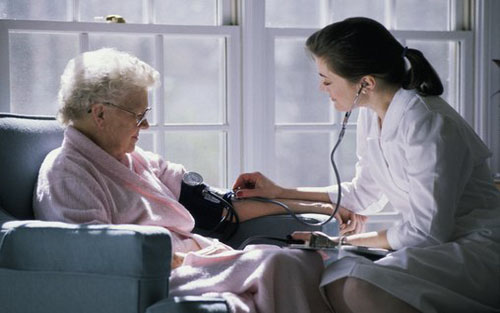
Today is International Nurses Day, a shared celebration for nurses worldwide, established to commemorate the founder of modern nursing, British nurse Florence Nightingale (also known as the "Lady with the Lamp").
With compassion, patience, meticulousness, and a strong sense of responsibility, the nurse provides care to every patient and excels in her nursing duties. Taking “burning oneself to illuminate others” as her life motto, she upholds the humanitarian spirit of saving lives, preventing and treating diseases, and selflessly dedicates sincere compassion to every patient. She is committed to devoting her youth and passion to the causes of disease prevention, life protection, pain alleviation, and the promotion of human health.
However, in both the traditional healthcare sector and the mobile health industry, nurses receive less attention than physicians. As a brand under First Video, “Medical Professionals to Your Home” focuses on nursing services. It has successively established China’s first Group of Grade-A Tertiary Hospital Nurses, the Group of Grade-A Tertiary Traditional Chinese Medicine Practitioners, and the Research Institute for Grade-A Tertiary Hospital Nurses, making it the nation’s first pilot project for internet-based medical and elderly care services.
Recently, VCBeat also published an article on nurse home visits.“Report on the Home Nursing Industry: The Global Market Value Will Reach $349.8 Billion, While the Chinese Market Is Still Dormant”article, which provides a detailed analysis of the current status and challenges of home-visit nursing services in China, has attracted widespread attention from industry professionals.
The article highlights the constraints on nurses providing home visits, primarily due to the lack of liberalization in policies allowing nurses to practice at multiple locations, unclear definitions of the services to be provided during home visits, uncertainties regarding risk mitigation for nurses making house calls, and the absence of industry standards for such services. In the field of nurse home-visit services, this represents a thorny entrepreneurial path. "Yihudaojia" operates similarly to ride-hailing platforms like Didi Chuxing, employing an asset-light model to connect patients with nearby doctors and nurses. It is a mobile health service platform offering nurse home visits, elderly care at home, and traditional Chinese medicine physiotherapy. The platform currently boasts over 32,000 certified practicing nurses.
To this end, Hushi Daojia has partnered with VCBeat to release, for the first time, big data on its 2016 home-visit nursing operations. The dataset covers more than 32,000 certified registered nurses on the platform, over 30,000 users served, and more than 100,000 valid orders. This initiative aims to present the current state of corporate development in the home-visit nursing sector, provide insights through analysis to support the growth of domestic home-visit nursing services, and help unlock the potential of China’s largely untapped home-visit nursing market.
1. Number of Orders Across China
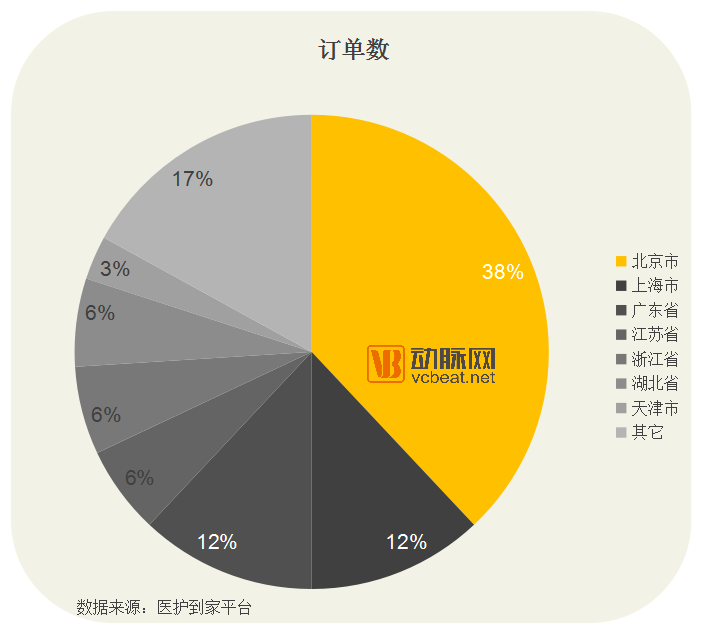
As can be seen from the above list, Beijing has the highest number, followed by Shanghai, Guangdong, Jiangsu, and others.On one hand, users in coastal cities have a high acceptance rate of nurses providing home visits; on the other hand, there is a greater degree of policy liberalization.
For example, in May 2016, the Guangdong Provincial Health and Family Planning Commission issued the “Key Work Plan for the Continuous Improvement of Nursing Services in Guangdong Province,” which explicitly supported exploring multi-site practice for nurses. The plan encouraged regions with appropriate conditions to pilot such arrangements; urged specialist nurses from tertiary hospitals to establish specialist nursing clinics at primary healthcare institutions; promoted nurses in hospitals at or above the county level to provide post-discharge transitional care and long-term care services through various models; supported primary healthcare institutions in delivering home-based nursing services; and encouraged nurses to conduct regular visits or work part-time in nursing homes and long-term care facilities.Once multi-site practice for nurses is permitted, it means that nurses can engage in flexible, multi-site practice after registering in a single location. There will also be clear policy support for nurses providing services through online appointment platforms.
Seven months later, Beijing implemented six new favorable medical insurance policies, focusing on the implementation of tiered diagnosis and treatment and the integration of medical care with elderly care. Specific measures include expanding the scope of medications covered by basic medical insurance, increasing the reimbursement rate for outpatient visits at community clinics, allowing reimbursement for long-term prescriptions issued to patients with four types of chronic diseases, and incorporating home-based medical services and the establishment of home hospital beds into the scope of medical insurance coverage.
Currently, Fengtai District in Beijing has launched pilot programs for home-based medical services at seven community health service centers, providing in-home medical care to elderly residents who are unable or partially able to care for themselves within high-age households and families facing family planning difficulties in the jurisdiction.Building on the pilot program for in-home elderly care services in Fengtai District, Beijing will expand its pilot initiatives for in-home care. The Beijing Municipal Health and Family Planning Commission has announced that community health service institutions in Dongcheng, Chaoyang, Haidian, and Fengtai Districts have been selected to conduct pilot programs providing in-home services to elderly residents. Pilot implementation plans have been formulated, actively encouraging elderly individuals living at home to sign contracts with community health service teams. Furthermore, community health service institutions are encouraged to provide services such as home visits, home hospital beds, and in-home rehabilitation and nursing care for elderly individuals who are seriously ill, disabled, partially disabled, or otherwise mobility-impaired or facing genuine difficulties.
2. Home Nursing Services
What specific services are included in home-based nursing care?
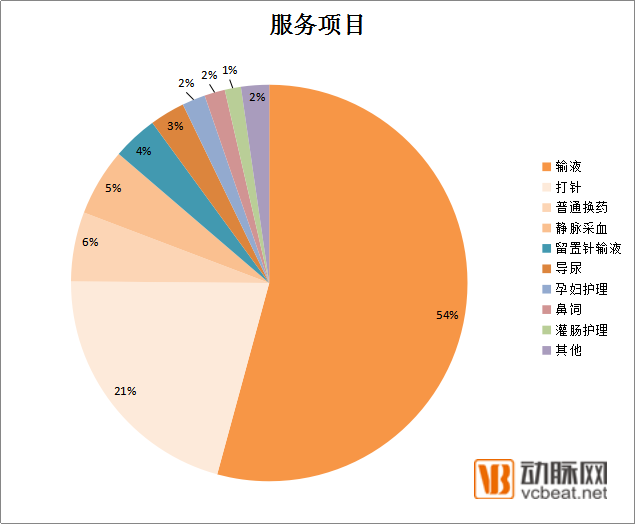
As shown in the figure, among the valid orders on the “Nurses to Home” door-to-door service platform, within the above-mentioned 18 nurse home-visit service items,Among them, intravenous infusions accounted for the largest volume, at 54.22%.
Meanwhile, specific job duties abroad also include intravenous infusions and injections., specialized wound care, urinary catheterization, colostomy care, etc.; according to the dosage and scheduled time of the pre-prescribed medicationDrug Administration Therapy, such as oral and intravenous administration; various immunizations and fertility-related injections (e.g., in vitro fertilization); 24/7 postoperative observation and care for the first week; and home safety assessments.
1. User Evaluation of Order Status
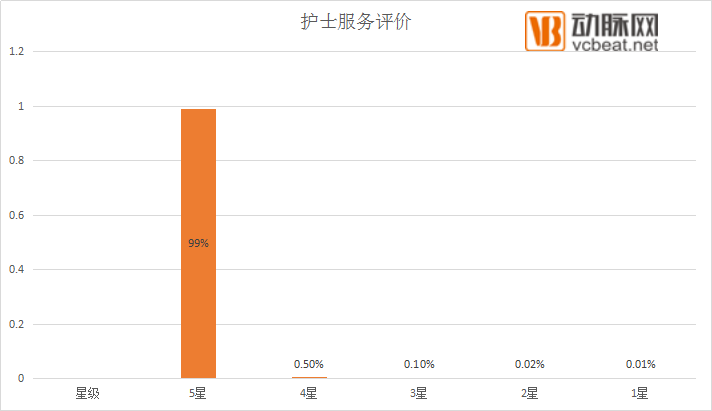
As shown in the chart, 99% of users gave a 5-star rating to home visit services provided by nurses, indicating that nurses have earned positive feedback from users during home visits.. Because "Nurses to Home" has established a ten-step standard for home nursing services, such as wearing uniform attire; carrying a medical kit with necessary supplies; entering the patient’s home (with self-provided shoe covers and garbage bags); introducing oneself and briefly communicating with the patient; inquiring about the required services; reviewing the patient’s medical history; and performing corresponding procedures based on the service content.
For example: injections, dressing changes, and catheter care; standardized procedures: adhere to the “three checks and seven verifications”; quality care: engage in psychological communication with the patient after treatment procedures; detailed documentation and filing after procedures; conclude nursing care in approximately one hour, remove medical waste for centralized disposal, and inform the patient of the next scheduled home visit.
3. Reasons for Order Cancellation
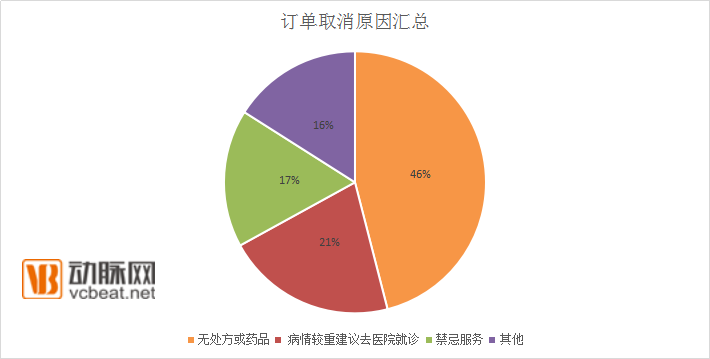
According to the chart, 35% of home nursing visits involve scenarios where patients lack prescriptions or medications. This primarily reflects risk control measures, as nurses are prohibited from providing home services in the absence of a valid prescription and corresponding medications. Home healthcare agencies abroad consistently emphasize this requirement within nurses’ job responsibilities:Compared with hospitals, home settings pose higher risks in the event of emergencies; nurses must carry out home-based medical and nursing care in accordance with medical orders.
3. Status of Assigned/Grabbed Orders (Including Valid and Invalid Orders)
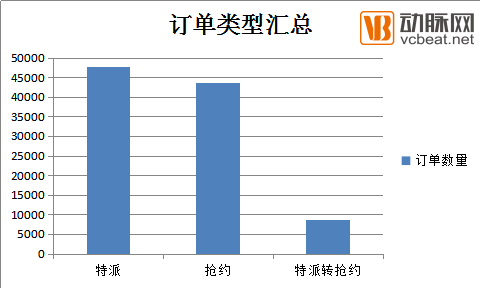
As shown in the chart, there is a high volume of both assigned and competitively booked orders. “Assigned” refers to scenarios where, after a user books a nurse for home care via the platform, they either request the same nurse who previously provided service or no nearby nurses accept the booking request; in such cases, the platform’s customer service contacts the local regional nursing supervisor, who then arranges the home visit.
4. Order Grabbing/Time Slot Distribution
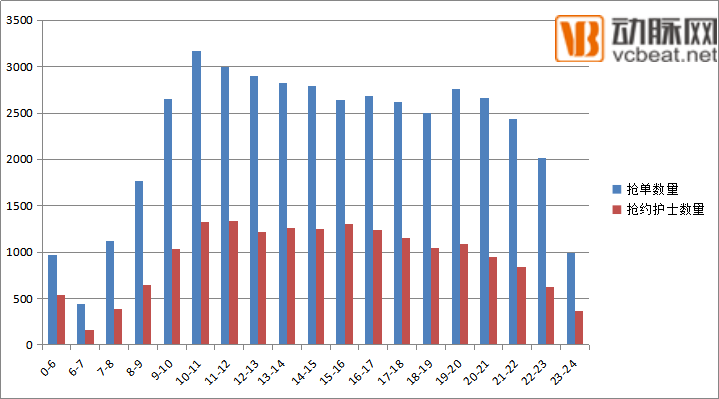
As can be seen from the chart,Peak periods for nurse appointment bookings and order acceptance are primarily concentrated between 10:00–13:00 and 19:00–21:00, coinciding with peak user activity hours.
5. Age Distribution of Patients
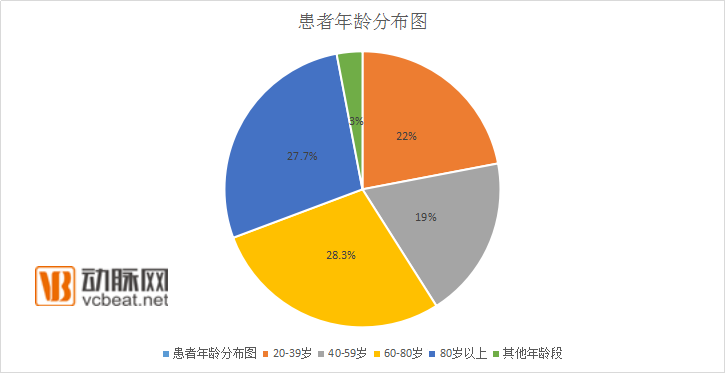
It is understood that when users make appointments, they mostly use their personal information to book for family members without filling in the patient's information. Therefore, the age of patients is mainly concentrated between 60 and 80 years old and over 80 years old, accounting for 28.3% and 27.7%, respectively. It can be seen that there is a great demand for nurses' home visits among middle-aged and elderly people.
6. Nurse Professional Title
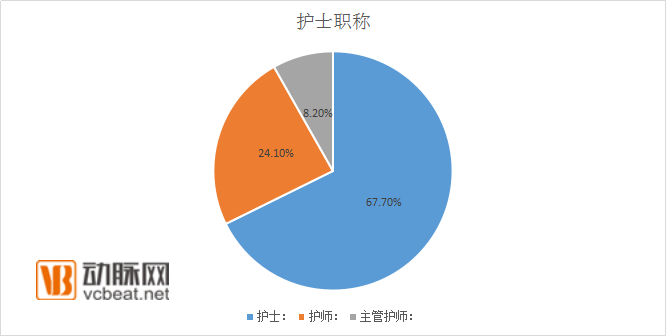
According to the chart: On the "Hushi Daojia" platform, registered nurses account for 67.7%, senior registered nurses for 24.1%, and nurse supervisors for 8.2%.
7. Point-Based Management for Nurse Practitioners
Yihujia evaluates nurses based on their comprehensive competence and assigns them an "Angel Score" to incentivize the provision of high-quality services.
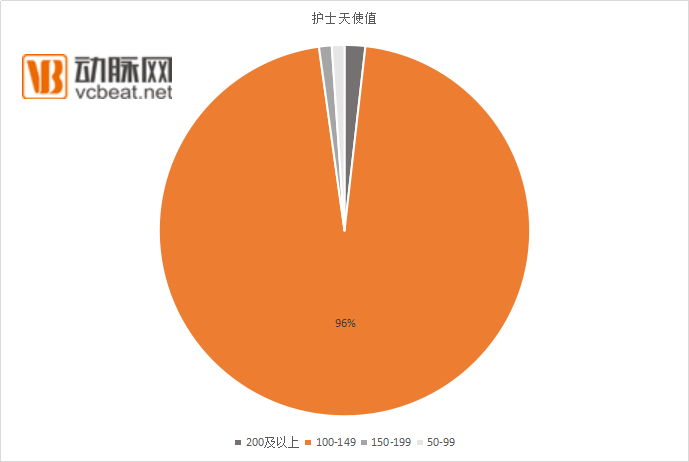
Statistical data indicate that 96% of nurses have an Angel Score ranging from 100 to 149. As a higher Angel Score corresponds to a higher level of nursing competence, the overall practice proficiency of nurses on this platform is considered to be at a moderate level.
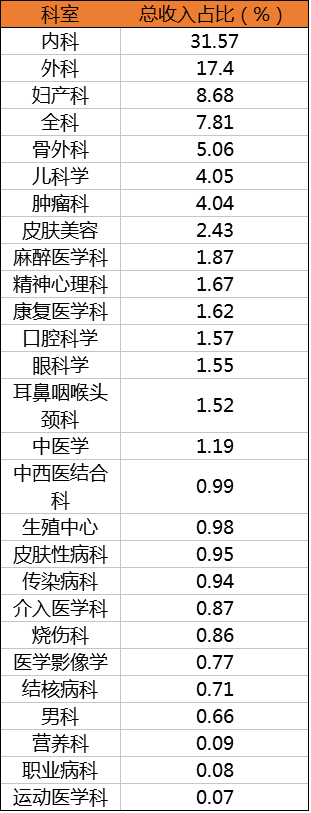
To date, nurses providing home-visit services through “Yihu Daojia” have generated tens of millions of yuan in revenue. The nursing staff covers 27 clinical departments, including internal medicine, surgery, obstetrics and gynecology, and pediatrics. The top four departments with the highest number of accepted orders and total revenue are internal medicine, surgery, obstetrics and gynecology, and general practice, as shown in the figure below:
Markets & Markets, the world’s second-largest market research and consulting firm, previously predicted that the global home healthcare market would reach a total value of $349.8 billion by 2020.According to its statistics, the total market value was $227.5 billion in 2015, with an expected compound annual growth rate (CAGR) of 9% through 2020.
The home healthcare market in the United States has gradually matured, capturing a significant market share. According to the latest rankings of U.S. home health agencies by LexisNexis, the top five institutions by national market share are Kindred Healthcare, Amedisys, LHC Group, Almost Family, and Encompass Home Health. The total revenues for these companies in 2016 were as follows: Kindred Healthcare reported $7.2 billion, a year-over-year increase of 2.3%; Amedisys reported $1.437 billion, a year-over-year increase of 12.3%; LHC Group reported $915 million, a year-over-year increase of 12.1%; and Almost Family reported $623 million.
1. Revenue Order Status by Department
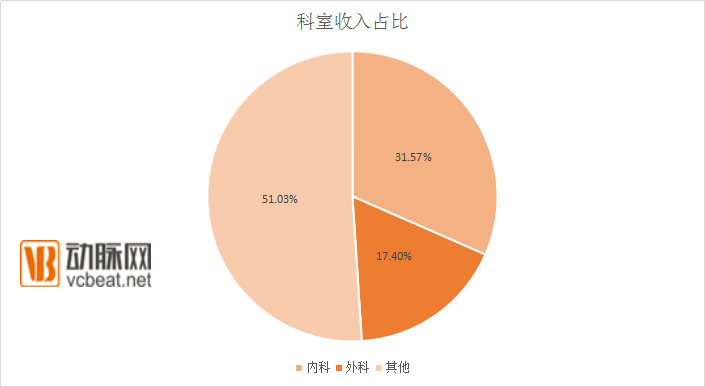
As shown in the chart, internal medicine and surgery account for 31.57% and 17.4% of revenue, respectively, while other departments collectively constitute 51%. These other departments include obstetrics and gynecology, general practice, orthopedic surgery, pediatrics, oncology, cosmetic dermatology, anesthesiology, psychiatry and psychology, rehabilitation medicine, stomatology, ophthalmology, otolaryngology-head and neck surgery, traditional Chinese medicine (TCM), integrated TCM and Western medicine, reproductive center, dermatology and venereology, infectious diseases, interventional medicine, burn surgery, medical imaging, tuberculosis, andrology, clinical nutrition, occupational diseases, and sports medicine.
In addition, internal medicine and surgery rank first and second, respectively. This is because most patients with trauma are immobile, resulting in high demand; their recovery periods are relatively long, leading to frequent requests for home visits. Internal medicine covers a wide range of diseases, and the management of common internal medicine conditions is relatively straightforward, allowing nurses to provide adequate home-based care.
IV. Implications for Entrepreneurs
1. Conditions Suitable for Home Nursing Services
According to the operational data from the "Medical Care at Home" platform, the top ten most common conditions are: common cold, upper respiratory tract inflammation, threatened miscarriage management, postoperative anti-inflammatory care, fever, constipation, gynecological inflammation, cerebral infarction, heart disease, and hepatobiliary inflammation.
2. User-Side Demand Services
Based on the most in-demand home nursing services, the top eight are: intravenous infusion, skin-whitening injections, IV catheter infusion, injections, routine dressing changes, venous blood sampling, enema care, and urinary catheterization. New entrants to the industry should focus on exploring these areas.
3. Nurse Type Classification
Based on nurses' caregiving experience and user evaluations, a comprehensive assessment is conducted, employing a point-based incentive system to encourage nurses to enhance service quality.
4. Establish professional practice standards for home-visit nurses.Standardization offers significant benefits to enterprises, facilitating easier control over product design, services, and quality.
As China’s population aging deepens further, the demand for elderly care and medical services continues to grow. The “integration of medical and elderly care” model is expected to become a breakthrough in achieving the goals of “adequate care and accessible medical services for the elderly” in an aging China. By the end of 2014, the number of people aged 60 and above in China had reached 212 million, accounting for 15% of the total population. Among them, a large number suffer from chronic diseases, and nearly 40 million are disabled or partially disabled. This has made the overlapping trend of elderly people’s demands for medical and health services and daily life care increasingly evident.
Postscript
Marx: “Whether human thinking possesses objective truth is not a question of theory, but a question of practice. Man must prove the truth of his thinking in practice; that is, practice is the sole criterion for testing whether cognition is true.” Under the actual needs of the general public, home-based nursing services have taken a crucial step forward.
Nevertheless, concerns lingering in the public mind and among government regulatory authorities persist. For instance, regarding nurses providing home-based care: Is holding a valid nursing license sufficient to engage in such services, or is completion of designated training and successful assessment required before commencing work? What knowledge areas should the training curriculum cover? Is it more advisable for home-visit nurses to be employed full-time rather than part-time? Do part-time nurses have adequate time and energy to devote to these duties? These are all issues that need to be addressed and clarified in the provision of nurse-led home care services.
How can risks associated with nurse home-visit services be mitigated? Are there relevant laws and regulations that address disputes arising from such home-based care? Is there appropriate insurance available to help both nurses and patients mitigate potential risks? Are there comprehensive regulatory frameworks in place governing issues such as the application process, qualification accreditation, and labor disputes for enterprises providing nurse home-visit services?
For institutions and enterprises, the models, effectiveness evaluations, safety protocols, and regulatory frameworks for home-based nursing services require further refinement and establishment. Key questions include: Is it necessary to sign service agreements and informed consent forms prior to service delivery? How should assessments be conducted before procedures? Is every procedure fully documented and traceable? How is service quality evaluated? How can the safety of both nurses and patients be ensured? How can ethical issues in medical nursing be regulated and mitigated?
……
In the field of at-home nursing services, “Yihu Daojia” is merely one player. Its operational data cannot fully represent industry-wide user needs, pain points, business models, and other issues. There may still be unmet needs waiting to be uncovered; other platforms may possess more robust operational big data; and there may be better solutions for the relationship between platforms and nurses. We remain watchful and look forward to more industry insiders sharing their data, practical insights, and perspectives on the sector.