

Swiss Blood Testing Firm DBS System Secures $2.5M Series A Funding to Advance Novel Microsampling Device
DBS System
Developer of Blood Testing Systems
VCBeat (WeChat ID: vcbeat) has learned that Swiss blood testing company DBS System recently announced it had secured $2.5 million in financing, led by Investiere and followed by the Nest Collective Foundation. Although the funding was denominated in Swiss francs, the amount is roughly equivalent in U.S. dollars at current exchange rates. Specifically, Investiere contributed $800,000, the Swiss pension fund Nest invested $700,000, and an additional $1 million came from existing shareholders and angel investors. Notably, Nest and Investiere are collaborating to establish a Swiss venture capital portfolio for systematic co-investment; their joint investment in DBS System marks the first deal under this portfolio.
DBS, or “Dried Blood Spot.” DBS’s blood testing devices utilize microfluidic technology to extract more information from dried blood than traditional blood tests, making home testing more accessible. This micro-sampling method requires significantly less blood than existing blood testing methods.
DBS System is a medical technology startup located in Health Valley, Geneva, Switzerland. Founded in 2010 by Aurélien Thomas, Julien Déglon, and Julien Dumont, the company aims to provide clients with a series of services including drug screening, biomarker testing, and genetic testing. DBS’s service portfolio covers clinical chemistry parameters, gDNA sequencing, RNA quantification, therapeutic drug monitoring, metabolomics analysis, proteomics analysis, steroid quantification, trace element quantification, drug abuse screening, as well as PEth and CYP450 phenotyping.
DBS’s first-generation HemaXis system, the HemaXis DB launched in 2015 for whole blood collection, is sold to pharmaceutical companies and research hospital laboratories. The device has already been launched in the European market, and DBS is establishing partnerships with several institutions in Europe and the United States. This round of funding will be used to develop the second-generation blood collection device, the HemaXis DP, which can separate plasma from serum without the need for centrifugation or filtration.
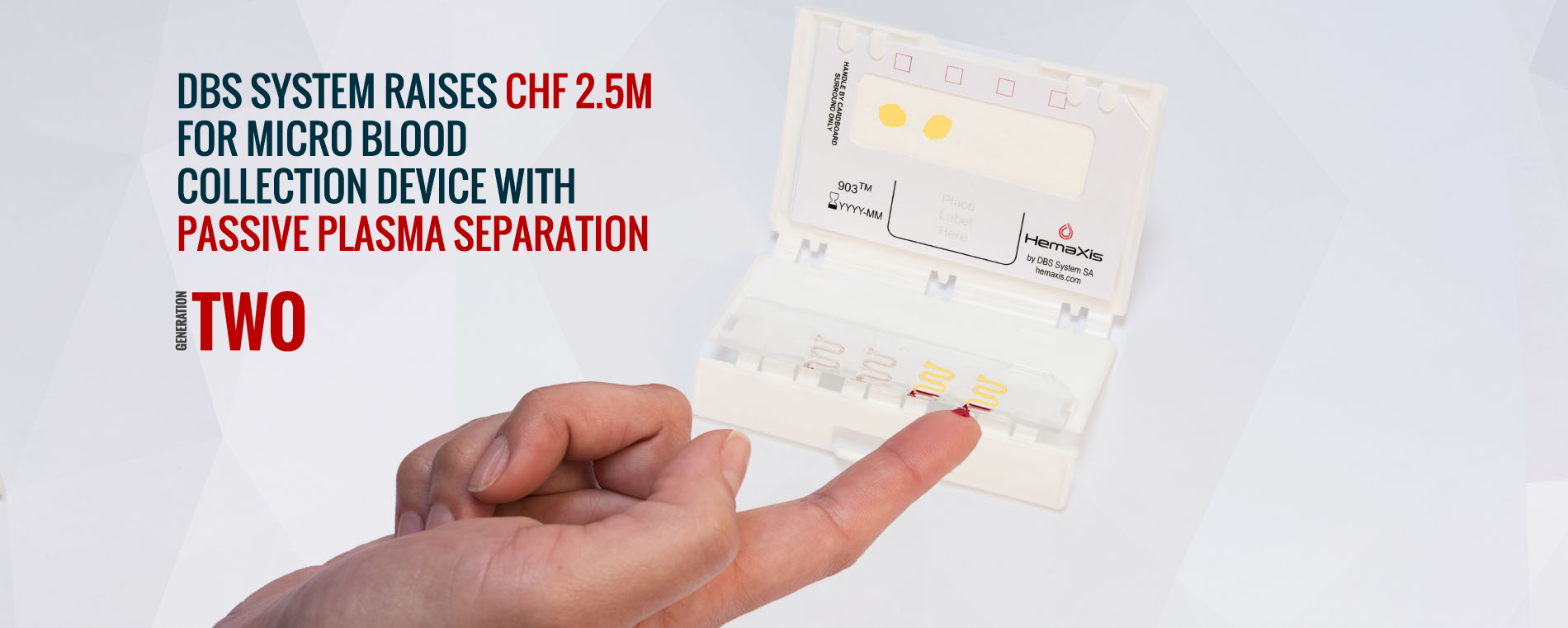
DBS System’s blood collection devices leverage advanced microfluidic technology to significantly simplify and reduce the cost of blood sampling, without requiring modifications to existing laboratory analysis workflows. DBS System aims to position itself as a leading medical device manufacturer for collecting and preparing microliter-scale whole blood, plasma, and serum samples through its patented HemaXis microfluidic device platform.
Eric Ödman, CEO of DBS System, stated in a press release: “Our technological advantages are clear. The device can be used by anyone in non-clinical settings, delivering reliable, safe, and standardized blood samples. It simplifies logistics and integrates seamlessly with existing workflows, collectively generating significant cost savings for laboratories. This model benefits both us and our partners: they can expand their market reach by serving more patients, while we leverage their channels to build brand awareness and drive specified use of our devices through their distribution networks. We estimate the addressable market size to reach $20 billion.”
In fact, several companies are attempting to reshape the landscape of blood testing. At this year’s CES, Seventh Sense Biosystems unveiled its TAP device, which can draw blood within two to three minutes without the need for large needles. Additionally, there are home laboratory testing companies such as EverlyWell and myLabBox, as well as health companies like Segterra and Cor that promise to deliver insights from blood tests.
Of course, investors have become particularly cautious about investing in this field following the Theranos scandal. Theranos promised to revolutionize blood testing with its advanced finger-prick system but exaggerated its technological capabilities, violating investors’ trust and relevant FDA regulations. After several rounds of litigation, Theranos ultimately reached a settlement with investors, agreeing to provide refunds and compensation.