

National Champion: RayScan PET/CT Breaks GPS Monopoly and Competes Globally
The successful maiden flight of the domestically produced C919 large aircraft and the nationwide rollout of high-speed rail have once again sparked national pride, as these “pillars of the nation” profoundly impact our daily lives. In fact, a similar pillar has emerged in the healthcare industry: RaySkan’s PET/CT equipment has entered the market, not only breaking the monopoly held by foreign giants known as “GPS” (GE, Philips, and Siemens) but also driving a significant drop in PET/CT prices. To explore whether RaySkan’s RAY-SCAN 64 PET/CT product is truly competitive against these industry titans, VCBeat conducted an exclusive interview with Liu Yajing, Vice President of Beijing RaySkan Technology Development Co., Ltd.
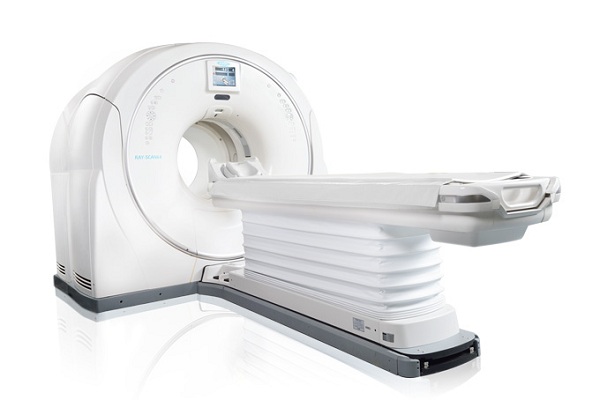
RuiShiKang RAY-SCAN 64 PET/CT
As the most advanced functional imaging product in contemporary medical imaging, PET/CT is hailed as the “crown jewel of high-tech modern medicine.”It enables imaging of physiological functions, metabolism, and receptor distribution in human tissues, featuring high sensitivity, accuracy, specificity, and precise localization.。
Among them, PET can image the function, metabolism, and receptor distribution of human tissues. Since biochemical changes in most diseases precede morphological changes in tissues,Therefore, PET can provide early information on the progression of many diseases, enabling preemptive diagnosis and precise imaging of the development status and distribution of lesions.。
CT is the abbreviation for computed tomography, which can accurately display information about the human body's anatomical structures, morphology, and density.
PET/CT is an organic integration of CT and PET, providing accurate spatial localization between the two modalities. It enables precise overlay of anatomical structural images with functional/metabolic/biochemical images of the human body, allowing physicians to obtain the most comprehensive information and achieve complementary advantages, mutual coordination, and cross-validation.
Currently, PET/CT has been widely used in clinical practice. Its value in tumor diagnosis, staging, and restaging; in assessing myocardial ischemia, myocardial infarction, and myocardial viability; and in evaluating epilepsy, neurodegenerative diseases, and brain tumors has been fully substantiated by extensive reports both domestically and internationally. Furthermore, PET/CT is employed for cancer screening in high-risk populations, aiming to achieve early detection, early diagnosis, early treatment, and personalized medical therapy.
Liu Yajing told VCBeat,2003Since the introduction of PET/CT to China, there are currently approximately 300 PET/CT scanners installed in hospitals across the country, predominantly supplied by the “GPS” companies (GE Healthcare, Philips, and Siemens Healthineers). It is reported that the United States, with a population of 300 million, now has over 5,000 PET/CT scanners, averaging more than 10 units per million people. As a developing country, if China adopts a ratio of 2 units per million people, it would require 2,600–3,000 PET/CT scanners. This represents a market size in the hundreds of billions of yuan, indicating substantial market potential.。
In addition, policy support has been extended to the establishment of third-party imaging centers. VCBeat has learned that on October 25, 2016, the Central Committee of the Communist Party of China and the State Council issued the Outline of the “Healthy China 2030” Plan. The Outline proposes guiding the development of specialized medical laboratory testing centers, medical imaging centers, pathological diagnosis centers, and hemodialysis centers, among others. It also supports the development of third-party evaluations of medical services and health management services, as well as health market research and consulting services.
According to the regulations of the National Health and Family Planning Commission, third-party imaging centers are required to have the following imaging equipment::
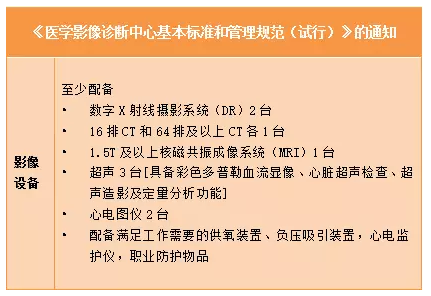
thisEquipment Configuration Standards Prescribed by the National Health and Family Planning Commission, the regulations of local Health and Family Planning Commissions are stricter and more detailed.
The Jiangxi Provincial Health and Family Planning Commission stipulates that medical imaging centers shall establish departments corresponding to the specialty of clinical medical imaging diagnosis, with at leastConfigure five departments for clinical diagnostic imaging: X-ray, ultrasound (US), computed tomography (CT), magnetic resonance imaging (MRI), positron emission tomography–computed tomography (PET-CT), and positron emission tomography–magnetic resonance imaging (PET-MRI).
Regulations of the Zhejiang Provincial Health and Family Planning CommissionImaging Equipment: At least 2 DR units, one 16-slice CT scanner, one CT scanner with 64 slices or more, and one 1.5T or higher MRI scanner; 3 ultrasound systems (equipped with color Doppler flow imaging, echocardiography, contrast-enhanced ultrasound, and quantitative analysis capabilities).On this basis, SPECT, PET-CT, and PET-MRI can be optionally configured to conduct nuclear medicine diagnostic examinations.。
These regulations also highlight the emphasis local governments place on PET-CT during implementation.
Given that the PET/CT market is valued at over RMB 100 billion and traditional giants have been cultivating this sector for many years, on what basis can Raycan compete with these industry behemoths? Let us first take a closer look at Raycan as a company.
VCBeat has learned that Beijing Rayvision Kang Technology Development Co., Ltd. is a national high-tech enterprise registered in the Zhongguancun High-Tech Park. Its main products include human PET/CT, SPECT, and PET systems, as well as small-animal multimodal molecular medical imaging equipment for new drug development and biomedical research. The company boasts an R&D team of nearly 70 members, all holding bachelor’s or graduate degrees, with over 70% possessing doctoral degrees or overseas study experience.
Partners include research institutions and universities such as Peking University, Shanghai Jiao Tong University, the Chinese Academy of Sciences, PLA General Hospital (301 Hospital), Johns Hopkins University in the United States, and Georgia Institute of Technology in the United States, with strong support from the government.
While teams and partners merely reflect a company’s strength, products constitute the most critical competitive advantage.In February 2014, the RAY-SCAN 64 PET/CT integrated system from Ruishikang passed the review by the China Food and Drug Administration (CFDA) and obtained the Medical Device Registration Certificate.. Its several advantages have gained recognition from physicians in clinical applications, with performance comparable to that of industry giants.
High Sensitivity, High Fusion Accuracy, High Acquisition Speed, High Spatial Resolution
The system primarily consists of two components: a high-sensitivity, high-resolution 36-ring PET scanner and a high-performance 64-slice CT scanner. It features technical advantages including high sensitivity, high fusion accuracy, rapid acquisition speed, and high spatial resolution. To ensure high fusion accuracy, RaySeeCon adopts a concentric design for the PET and CT gantries, allowing patients to undergo both PET and CT scans without needing to be repositioned.
The two can be precisely integrated. To this end, we adoptedTesting Standards Recommended by the Beijing Medical Equipment Testing Institute, we employed the internationally recognized standard chest phantom for image fusion and accuracy assessment. Experimental results demonstrate that the precision of our dual-modality image fusion has reached an internationally advanced level.
Supports independent use of the PET and CT components
The CT component of the device utilizes a mature, high-end 64-slice CT system, which, compared to conventional CT scanners, offersHigh-Speed Data Acquisitioncharacteristics. In a single rotation scan, conventional CT can acquire 630 image data points, whereas Ruisikang can acquire 1,008 image data points in a single rotation scan, thereby obtaining medical images with higher resolution. Moreover, the CT system used by Ruisikang demonstrates strong stability.
Meanwhile, the Ruishikang CT scanner requires only 0.35 seconds per rotation, enabling cardiac scanning and improving equipment utilization. Moreover, this scanning speed applies not only to cardiac imaging but also to whole-body scans.. This is also at a leading level within the industry.
In terms of PET-related parameters, Rayscan has conducted performance testing in accordance with the NEMA standards recommended by the National Electrical Manufacturers Association (NEMA), a mainstream international standard. It can be stated that the PET systems manufactured by Rayscan have reached the level of mainstream international models in both resolution and sensitivity.
To address the widespread diagnostic and treatment demands across China, RaySightRetains the modular design with partially independent PET and CT components, supporting their standalone operation to enhance equipment utilization efficiency.。
The PET component offers two data acquisition modes: 3D and 2D.
RayVision’s PET component offers two data acquisition modes. The widely adopted 3D mode enables efficient data collection and reduces scan time, making it broadly suitable for routine clinical diagnostic applications. Based on a standard average bed position scan time of 3 minutes, and considering an average patient height corresponding to 5–6 bed positions, the total 3D scan time per patient can be controlled to approximately 20 minutes.
Additionally, the additionally provided2D Mode, which can significantly reduce scattering effects and improve image quality, thereby meeting the needs of scientific and clinical research.
More Unique Technical Designs
In addition, the RaySight devices feature more unique technical designs.Two-Dimensional Collimated Scattering Control ModuleThe establishment of this has effectively reduced shoulder-induced artifacts, providing a higher level of imaging assurance.
Establishment of Automatic Exposure Control Technology, while ensuring imaging quality, meeting the requirement for low radiation dose. Li Zhengjiang, Product Director at Ruishikang, told VCBeat that Ruishikang primarily focuses on image-basedAcquisition and Post-ProcessingTwo approaches to reduce radiation dose: During acquisition, the system automatically and dynamically adjusts tube current based on the specific requirements of different anatomical regions, thereby effectively reducing radiation exposure. In the post-processing stage, advanced iterative reconstruction techniques are employed to obtain high-quality images while further lowering the radiation dose.
Finally, Raycan has also integrated a built-in quality control rod source system. The equipment utilizes an internal Ge-68 calibration source to facilitate and meet the daily monitoring requirements for technicians. This process is fully automated, eliminating the need to manually handle and position radioactive sources during each quality control check, thereby minimizing radiation exposure risks for operators.
To more accurately assess the performance of its equipment, RaySkyn conducted comparative studies against “GPS” devices at PLA General Hospital (301 Hospital) and Beijing Cancer Hospital. Imaging was performed on the same anatomical site of the same patient using both the industry giants’ equipment and RaySkyn’s system. Patient and device information were then blinded, and expert physicians evaluated the images. The physicians stated:Both images meet medical requirements and are indistinguishable.
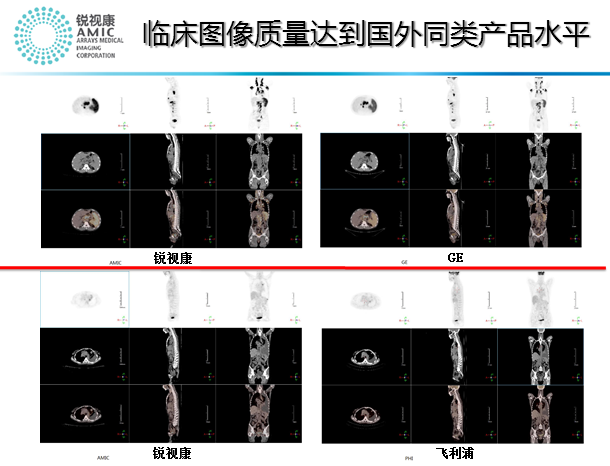
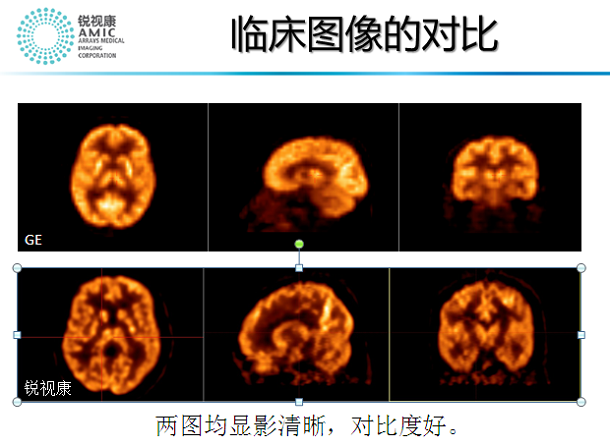
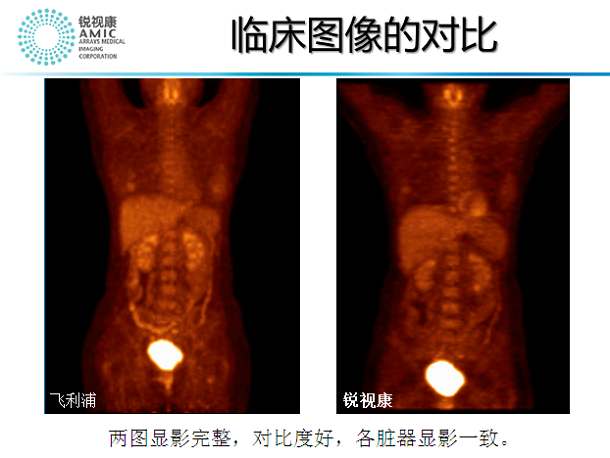
"We laypeople can't make sense of professional images,"VCBeat specifically consulted experts for their opinions. Professor Tian Jiahe from the 301 Hospital provided the following evaluation:: “The PET/CT system manufactured by Ruishikang is currently undergoing clinical research at the Chinese PLA General Hospital. During the ongoing clinical trials,Preliminary evidence confirms that the diagnostic performance of Raycan’s domestically produced PET/CT is largely comparable to that of imported PET/CT systems.。
"Recently, we identified a suspicious lesion in an asymptomatic family member of one of our hospital staff members during a screening with the RaySearch PET/CT system. Subsequent surgical confirmation revealed bronchioloalveolar carcinoma. The patient presented no clinical symptoms whatsoever; it was solely through PET/CT diagnosis that this patient’s life was saved, enabling timely treatment."
During its market expansion, RayVision has not only prioritized the Chinese market but also turned its attention to overseas markets along the “Belt and Road” routes. For countries along these routes, which have a combined population of 4.4 billion and a cumulative economic output exceeding $21 trillion, there is an urgent and essential demand for advanced medical technologies and health services. However, the high prices of Western medical equipment brands, coupled with the substantial costs of after-sales support and training following installation, as well as concerns over the protection and sharing of core technologies, have created significant opportunities for Chinese enterprises like RayVision.

Left: Liu Yajing Right: Senior Official of the Egyptian Ministry of Defense
In addition to corporate strength, product advantages, and clinical practice, support from national projects will also boost the development of domestically produced medical equipment. In 2013, Rayscan received key support from the special project "Construction of the Industrial Chain for Major National High-Performance Medical Diagnosis and Treatment Equipment," jointly launched by four ministries and commissions: the National Development and Reform Commission, the Ministry of Industry and Information Technology, the Ministry of Health, and the Ministry of Finance (project name: Construction of the PET-CT Molecular Medical Imaging System Industrial Chain).
VCBeat has learned that although China is prohibited from issuing specific policies or regulations to mandate the procurement of domestically produced medical equipment by hospitals following its accession to the WTO, local governments are permitted to encourage hospitals to purchase domestic products when their performance is comparable to imported alternatives. Additionally, support can be provided in terms of approval processes for medical device procurement and tax incentives.. These are also advantages for domestic enterprises.
In the interview, VCBeat had expected Liu Yajing to highlight her product’s price advantage. However, she stated, “Our products are no inferior to those from abroad. Why should we lower our prices? Such a mindset is itself unscientific.”
For more detailed information about RaySight products, you are welcome to visit their booth (No. 1H02) at the 77th China International Medical Equipment Fair (CMEF) on the 15th to communicate with their team.