

National Health and Family Planning Commission Announces 70 Key Tasks for Deepening Medical Reform in 2017, Including Medical Consortium Development and Training 25,000 General Practitioners
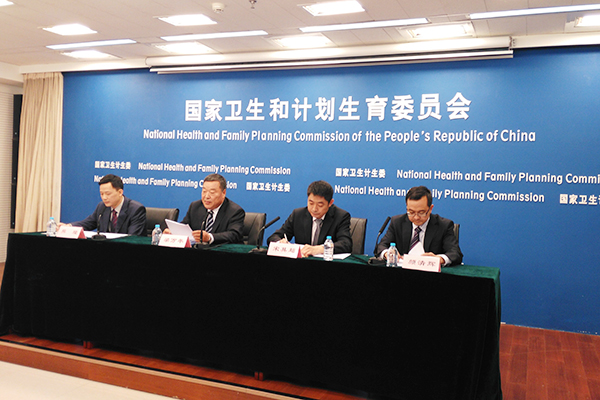
Press Conference Venue
According to VCBeat, on the morning of May 11, the National Health and Family Planning Commission held a special press conference in May to introduce the key tasks for deepening healthcare reform in 2017. Liang Wannian, Director of the Department of System Reform at the National Health and Family Planning Commission and full-time Deputy Director of the State Council Healthcare Reform Office, stated that,Key policy documents on healthcare reform to be formulated and issued in 2017 mainly include 14 policy documents covering areas such as promoting the construction and development of medical consortia, establishing a modern hospital management system, and strengthening comprehensive supervision of the healthcare industry. In addition, 56 specific key tasks will be proposed around the construction of five fundamental systems.
Recently, the General Office of the State Council issued the “Key Tasks for Deepening the Reform of the Medical and Health Care System in 2017” (Guo Ban Fa [2017] No. 37), specifying 70 key tasks to be prioritized this year.
Liang Wannian stated that the key priorities for healthcare reform in 2017 primarily centered on establishing the framework for five fundamental healthcare systems: tiered diagnosis and treatment, modern hospital management, universal health insurance, pharmaceutical supply assurance, and comprehensive regulation. The emphasis was on designating 2017 as the “Year of Implementation,” ensuring clear accountability, setting concrete requirements, and conducting rigorous assessments, thereby facilitating the effective implementation, supervision, and evaluation of major reform measures already introduced. This year’s tasks are divided into two main categories: documents requiring research and formulation, and key initiatives aimed at promoting implementation.
1. Documents that need to be researched and formulated.The document lists key healthcare reform policy documents to be formulated and issued in 2017, comprising 14 policies primarily focused on advancing the construction and development of medical consortiums, establishing a modern hospital management system, and strengthening comprehensive supervision of the healthcare industry. It also specifies the lead departments responsible for each initiative. Furthermore, to ensure timely progress, specific deadlines have been set for the completion of each policy document.
Second, key tasks that require focused implementation.Focusing on the establishment of five fundamental systems, 56 specific key tasks are proposed.
Liang Wannian stated that, in terms of building a tiered diagnosis and treatment system,Key tasks include: further expanding the scope of pilot programs,Pilot programs for tiered diagnosis and treatment and family doctor contract services have been expanded to over 85% of prefecture-level cities.; vigorously promote the family doctor contract service,The coverage rate of contract-based services for key populations exceeds 60%.;Comprehensively Launch Pilot Programs for the Construction of Medical Consortia in Various Forms, all tertiary public hospitals must participate and play a leading role,Implement total budget payment under the medical insurance system for division-of-labor and collaborative models such as vertically integrated medical consortia.
In the Construction of Modern Hospital Management Systems, mainly including: expanding the scope of comprehensive reform demonstration for county-level public hospitals, and launching demonstration work for urban public hospital reform;
Comprehensively advance the comprehensive reform of public hospitals, with all public hospitals fully abolishing drug markups (except for traditional Chinese medicine decoction pieces); implement policies on medical service price reform;
Promote the establishment of a modern hospital management system and launch pilot programs for developing charters for public hospitals;
Carry out pilot programs for the reform of the compensation system in public hospitals.
In the construction of a universal health insurance system, mainly including:Completed the integration of the basic medical insurance system for urban and rural residents, implemented the "six unifications" policy, and streamlined the management system;
Promote the establishment of a diversified and composite payment system primarily based on diagnosis-related group (DRG) payments, and select certain regions to pilot DRG-based payment reforms.
Nationwide Promotion of Medical Insurance Information Networking to Enable Direct Settlement of Inpatient Costs for Cross-Regional Medical Care in Compliance with Referral Regulations;
Support the participation of commercial insurance institutions and other social forces in the administration of medical insurance.
In the construction of the drug supply guarantee system, mainly including: implementing the "Several Opinions on Further Reforming and Improving Policies for Drug Production, Circulation, and Use," guiding provinces (autonomous regions, and municipalities) to formulate detailed policy measures; further expanding the scope of designated production for drugs in short supply;
Cultivate entities for centralized procurement and encourage cross-regional joint procurement; promote the standardization of procurement codes for high-value medical consumables, and pilot centralized procurement of high-value medical consumables;
Pilot the “Two-Invoice System” in provinces designated as comprehensive healthcare reform pilots and cities designated as public hospital reform pilots.; increase the number of drug varieties subject to national price negotiations, and ensure effective coordination between price negotiations and medical insurance policies.
In terms of the construction of a comprehensive regulatory system,Key measures include: promoting the application of intelligent monitoring systems for medical insurance; implementing regulations such as prescription reviews; and guiding local authorities to establish specific lists of high-cost drugs, including adjuvant and nutritional agents, for prioritized monitoring.
StrengthenSupervision and management of non-profit private medical institutions regarding property rights ownership, financial operations, and the use of fund surpluses.
In terms of coordinating reforms in related fields, the main measures include: urging local authorities to refine implementation details, permitting medical and health institutions to exceed the current wage control levels applicable to public institutions, and allowing revenue from medical services—after deducting costs and allocating various funds as prescribed—to be primarily used for personnel incentives.
Continue the training of general practitioners, with more than 25,000 general practitioners to be trained., continue to implement the special post program for general practitioners, add approximately 70,000 physicians to standardized residency training, and advance pilot programs for the standardized specialist physician training system;
The fiscal subsidy standard for per capita basic public health service funding was raised to 50 yuan; efforts were made to improve the provincial, municipal, and county population health information platforms;
Continue to organize and implement initiatives such as the Action Plan for Improving Medical Services.