

Meibei Medical Aesthetics Files IPO Prospectus: Focused on Surgical Procedures with RMB 250 Million GMV in 2016
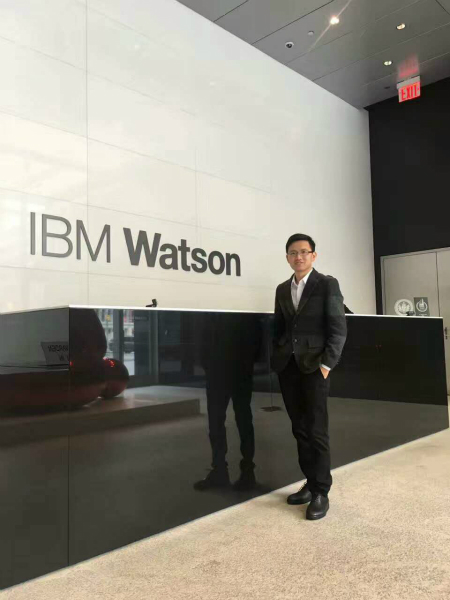
Gong Liansheng Visits U.S. AI Companies
Gong Liansheng, a Chongqing native born in 1986, founded Meibei, a medical aesthetics O2O platform with over 300 employees, which has become immensely popular.
By conventional wisdom, entrepreneurs are expected to possess a fierce, wolf-like drive and be prone to bold, unconventional talk. Yet upon meeting Gong Liansheng for the first time, one finds him slender and scholarly, exuding a gentle and refined demeanor.
In his office on the 29th floor of the Wanda Office Building in Jinniu District, Chengdu, Gong Liansheng handed the reporter a bottle of mineral water. After brief pleasantries lasting less than five minutes, he invited the reporter to a more comfortable setting for a chat.
The reporter agreed. They drove to a quiet teahouse. While maker cafes are ubiquitous in Beijing, Shanghai, Guangzhou, and Shenzhen, Chengdu is characterized by its abundance of teahouses. It is standard practice for entrepreneurs in Chengdu to gather with a few friends to sip tea from covered bowls.
A conversation, free from any pretentious sentimentality. For a startup, “to quote Ren Zhengfei, one must diligently grind tofu.”
“In late April, I will go to the United States,” he said. “I will visit some currently popular artificial intelligence companies to introduce their advanced concepts.” He maintained a humble smile throughout.
High Gross Margins: Medical Aesthetics and Plastic Surgery Ride the Wave
Founded in 2011, what is the scale of Meibei as a medical aesthetics enterprise? “In 2016, the gross merchandise volume (GMV) across the entire platform approached RMB 250 million.” These are staggering figures! The company specializes in surgical cosmetic procedures.
“Medical Aesthetics,” short for medical cosmetology, was initially confined to public hospitals—such as departments of plastic and reconstructive surgery and burn units—where it focused on procedures like repair of cranial vault defects, skin grafting for burn injuries, and reconstructive surgeries for severe trauma and disfigurement.
Since 2005, during the “Golden Decade,” private medical aesthetic hospitals engaged in rapid expansion and market capture. This swift growth was driven by the industry’s exceptionally high gross margins, low transparency, continuous technological advancements, and the adoption of group-based operations and management.
Whether it is surgical plastic procedures such as rhinoplasty, blepharoplasty (double eyelid surgery), breast augmentation, and liposuction, or non-invasive minimally invasive treatments such as hyaluronic acid fillers, botulinum toxin injections, skin-whitening injections, and fat-dissolving injections, these techniques are becoming increasingly mature, and public acceptance is on the rise.
A female friend of a reporter, born in the post-1995 generation and preparing for rhinoplasty, can clearly distinguish between injectable fillers, silicone implants, expanded polytetrafluoroethylene (ePTFE) implants, and autologous cartilage rhinoplasty. She once complained, “It’s all because I have a severely flat nose. If I were to undergo autologous cartilage rhinoplasty, there wouldn’t be enough ear cartilage. Money is not an issue.”
“Plastic surgery, particularly minimally invasive procedures, has become increasingly prevalent. ‘Currently, the highest volumes of cosmetic surgeries are still concentrated in Beijing, Shanghai, Guangzhou, and Shenzhen; however, key southwestern cities such as Chengdu and Chongqing are experiencing rapid growth. The opportunities are there—it depends on whether you are willing to put in the effort,’ said Gong Liansheng.”
Chengdu, one of the birthplaces of modern private medical aesthetics, saw the establishment of Huamei Plastic Surgery Clinic, which pioneered the role of medical aesthetic consultants. This innovation freed doctors from cumbersome consultation and patient intake duties, significantly alleviating their workload, particularly for small brick-and-mortar institutions.
“Medical aesthetic consultants represent a model innovation unique to China, emerging in response to the particularly scarce supply of physician resources; such roles do not exist in other countries. Meibei employs over 100 consultants, who are primarily responsible for conducting consultations, scheduling appointments with physicians, facilitating patient intake, and providing post-procedure recovery support. For patients traveling from other regions, these consultants also offer airport pickup and drop-off services, assist with hospital evaluations, and provide companionship during treatment,” Gong Liansheng told reporters.
While we do not rule out the possibility of aggressive marketing by consultants at unscrupulous institutions, hospitals partnered with Meibei adhere to a strict protocol: treatment plans are determined by physicians following in-person consultations based on each patient’s individual characteristics, thereby avoiding any form of marketing.
Cosmetic Surgery: Addressing the Issue of Low Transparency
Similar to consumer healthcare sectors such as dentistry and ophthalmology, the medical aesthetics industry also faces the challenge of low transparency. The internet has the potential to change this status quo. While industries like tourism, automotive, and real estate have largely undergone digital transformation, the healthcare sector has not yet been thoroughly transformed. This gap presented the opportunity for Gong Liansheng to launch his venture.
As early as 2009, Gong Liansheng concurrently served as the online operations manager for the Laser Cosmetic Center of West China Health Care Hospital, Sichuan University. This marked his first exposure to the medical aesthetics industry, where he observed that public awareness remained relatively low. During that period, he frequently received inquiries from friends regarding treatments such as freckle removal and skin rejuvenation, as well as cosmetic surgical procedures like double eyelid revision.
“The sheer number of people consulting me about double eyelid revision surgery was entirely unexpected.” Previously, many individuals seeking double eyelid surgery opted to have the procedure performed by inadequately qualified practitioners at beauty salons. Dissatisfied with the outcomes, they subsequently underwent multiple revision surgeries.
On one hand, there is robust consumer demand; on the other, patients struggle to find qualified doctors and reputable hospitals, fearing the risk of disfigurement. The underlying cause is the lack of an efficient and transparent consultation platform.
Recognizing this pain point, Gong Liansheng teamed up with his college friend Zhang Jie to establish Meierbei Plastic Surgery Network in 2011. Zhang Jie primarily oversaw the team’s digital marketing efforts, and they were soon joined by another co-founder, Du Zaiqian. Their mission was to leverage internet communication platforms to curate authentic medical information and promote transparency in the medical aesthetics industry.
“The disappearance of sky-high prices for hyaluronic acid and botulinum toxin is largely attributable to the popularization of knowledge by medical aesthetics internet platforms.”
During a lull in the conversation, Gong Liansheng showed the reporter his porcelain-fused-to-metal (PFM) crowns. “I used to walk with my head down and was afraid to smile. After getting the PFM crowns, I can now hold my head high and smile with confidence. I also had hyaluronic acid injections. I believe that medical aesthetics delivers tangible results and is worth focusing on.”
He also revealed that his family has been quite supportive since he started his business, noting, “My older sister underwent silicone rhinoplasty and was very pleased with the results.”
FoundInitial Seed Users
The integration of the internet into healthcare can address two major challenges: user education and rapid, low-cost customer acquisition. In this regard, Gong Liansheng possesses distinct advantages.
Gong Liansheng is a typical example of an entrepreneur who started his business during his university years, having engaged in educational training, e-commerce operation services, tourism marketing, and real estate marketing.
“I started my journey as a webmaster in 2005, learning how to leverage community marketing to reach precisely targeted users. In the early days, platforms like Douban—a hub for artsy and literary enthusiasts—were already seeing discussions around beauty and skincare. Other communities, including Zhihu and later maternal-and-child-focused forums, also served as natural breeding grounds for identifying and engaging seed users.”
By providing precise, science-based answers online to attract niche users with questions and needs, this is the common founding model for most communities. Meibei also accumulated its user base by answering netizens’ queries. “On Zhihu, a single question about double eyelid surgery can even generate two to three thousand interactions.”
However, Meibei’s strategy is to focus more narrowly, starting by addressing the issue of double eyelid surgery. “Starting with a small procedure allows us to concentrate our efforts, attract more loyal users, and create a virtuous cycle. It also makes it easier to help consumers find appropriate doctors and hospitals in the later stages.”
It is evident that Meibei directly entered the surgical plastic surgery sector, rather than non-surgical cosmetic procedures. Gong Liansheng told reporters that last year, only 5%-10% of order volume came from standardized non-surgical products such as hyaluronic acid fillers, botulinum toxin injections for facial slimming, and hair removal, which also contributed minimally to revenue.
“Minimally invasive cosmetic procedures, such as skin rejuvenation and hair removal, are relatively standardized and can be easily accessed on platforms like Taobao. In contrast, surgical plastic surgery remains an area with unresolved challenges, presenting opportunities for startups. For instance, patients may traverse an entire city only to find no specialist capable of performing double eyelid revision surgery—this is the problem we aim to solve.”
Therefore, Meibei initially focused on urban areas, seeking out the best local ophthalmic revision surgeons. The primary source of these doctors was through offline hospital visits. Starting in Chengdu, such as at Chengdu Second People's Hospital, the Meibei team visited numerous plastic surgery hospitals of all sizes throughout Chengdu, capturing authentic scenes of the facilities, verifying physicians’ credentials, and most importantly, uploading genuine postoperative case records.
“That period was the most grueling for our team. We visited hospitals and organized massive amounts of information, working ourselves to the bone. As the boss, I had to lead from the front. All for one purpose: obtaining authentic information about doctors and hospitals.”
“So, Meibei wasn’t initially positioned as a community for cosmetic surgery experts?” the reporter asked.
“At the outset, we did not build a vertical community from scratch; instead, we focused on precise doctor-patient matching. Our core lies in authentic, unadulterated information!” He specifically emphasized Meibei’s initial growth trajectory.
“At the outset, we shouldn’t blindly build a community; instead, we need to be selective. Consider this: we rarely engage in offline customer acquisition campaigns. Think about it—what are the odds of randomly encountering someone who will, precisely three months later, undergo rhinoplasty or double eyelid surgery?”
Turbulence, a Heart Striving Forward
Generally, for a business model to be viable, it must feature either high frequency or high average transaction value. Coincidentally, the medical aesthetics and plastic surgery industry is characterized by low frequency but high average transaction value. Meibei initially adopted a consultation and referral model, achieving success through channel partnerships.
The primary revenue model involves providing assistant services to physicians, generating income through commissions on surgical procedure fees. Only after the platform matured did it expand into verifiable revenue streams such as advertising, centralized drug procurement, and financial installment facilitation fees.
The Meibei team spent over a year establishing a strong presence in the Chengdu market. Starting in 2012, it rapidly expanded into national markets, including Beijing and Shanghai. Naturally, the Meibei team grew from its initial three members to more than 200 employees.
“As the number of people increases, service quality becomes inconsistent,” Gong Liansheng stated bluntly. “This was my first challenge. Online users don’t care about what’s happening internally within your organization. Sometimes, when I see a negative comment on Weibo, I get anxious and feel compelled to find out exactly what happened to that individual.”
To strengthen its management system, the Meibei team has introduced modern office management technologies and invested in a call center and a customer service management system, enabling real-time monitoring of user service workflows and ensuring platform-level control over service quality.
“My leadership style is centered on recognizing talent and empowering individuals with full trust. Once a team exceeds 100 members, management approaches must evolve.” Meibei has boldly delegated authority, clearly defining employee responsibilities while fostering individual innovative potential. In line with the specific circumstances of each department, the company has launched an enterprise-wide revenue-generation strategy to stimulate employee enthusiasm.
Centered on the user, Meibei has established an evaluation system for medical aesthetic institutions, a physician rating system, and an internal service assessment system. This has transformed consumers’ decision-making processes, making it more convenient for users to consult, review case studies, and match with physicians.
Meibei’s technical team is developing intelligent algorithms. “The scoring algorithms include hospital models and physician models. For hospitals, factors such as registration date, operational history, and scale are taken into account. For physicians, the evaluation primarily focuses on educational background, professional titles, and online reviews. These parameters are fused to generate a comprehensive score, which is updated every one to two weeks to provide users with an auxiliary reference for decision-making.”
Gong Liansheng also has his own views on mobile apps. “Over the past two years, the focus has remained on the mobile end. During the website era, developing an app revealed that it was actually very difficult for users to place orders; they would not purchase products such as botulinum toxin, nor did they know how many units to administer, or even clearly understand what problems needed to be addressed. At that time, attempts to build e-commerce models centered around users were hopeless.”
Currently, Meibei also aims to productize its user services through increased investment in mobile development. “We hope to standardize the evaluation and service process for users—covering aspects such as customers’ plastic surgery history, personal preferences, and risk control management—into a standardized product, similar to a customer service chatbot. This would enable customers to resolve issues independently while seamlessly integrating with our customer service system.”
“From the user’s perspective, what is visible is that we provide access to more cities and better specialists. In reality, we are gradually introducing specialists’ patented academic expertise, focusing on medical quality at the service level. By investing in platform-based products, we aim to serve a larger population and meet their personalized needs while simultaneously reducing costs.”
It is clear that one should not be misled by his gentle appearance; Gong Liansheng undoubtedly possesses an aggressive and ambitious spirit.
Physicians Are the Guarantee of Surgical Quality Assurance
Currently, aesthetic clinics that are open for business generally possess the qualifications mandated by national regulations and employ licensed physicians. Under existing national standards, the risk of surgical accidents is very low. How does Meibei ensure surgical quality?
"The core is still the doctor."
“Doctors have their own professional circles and can refer patients to one another. Initially in Chengdu, once a surgeon gained recognition for performing high-quality double eyelid surgery, rhinoplasty specialists would also seek collaboration. This is particularly true for renowned experts, who attract many patients by reputation, creating a virtuous cycle. Our goal is to identify such expert physicians.”
Meibei Platform maintains stringent criteria for physician selection. “Among cosmetic and plastic surgeons, only about 30% have received formal training in aesthetic surgery; the remaining 70% typically transition from other specialties such as dentistry, orthopedics, or internal medicine. Therefore, our primary focus is on selecting physicians with extensive clinical experience. In each city, there are only 5 to 10 top-tier doctors.”
In the medical aesthetics industry, physicians who specialize in a single procedure and perform thousands to tens of thousands of surgeries are scarce. The majority of practitioners have less than three years of professional experience and have performed fewer than 1,000 clinical procedures.
Therefore, in a large number of newly established medical aesthetic institutions, assistant physicians and nurses are administering injections and performing minor diagnostic and therapeutic procedures. Many practitioners have transferred from internal medicine, obstetrics, or orthopedics, or are recent graduates who have just obtained their physician practice certificates and have only one year of experience. At best, their annual surgical volume may be fewer than 100 cases. This situation is widespread across the industry, indicating that early-stage irregularities remain quite evident.
“Our positioning is to connect with senior physicians, essentially serving as their assistants. The most critical aspect—determining and designing the surgical plan—remains the physician’s responsibility. Startups must maintain a steady pace; our current focus is on excelling in complex surgical procedures. Meibei prioritizes quality over quantity.”
Currently, Meibei partners with over 3,000 fully qualified medical aesthetic institutions and has 2 million registered members. “A physician’s clinical experience is particularly crucial. For instance, most doctors are reluctant to perform maxillofacial surgeries or accept revision cases, as the absence of muscle tissue makes these procedures highly challenging.”
As of May 2017, the Meibei platform had cumulatively facilitated over 40,000 surgical procedures, with double eyelid surgery and rhinoplasty accounting for 50% of the total. In 2017, the proportion of autologous fat grafting and skin management procedures increased.
“What types of hospitals or institutions partner with Meibei?” the reporter asked.
"In fact, many doctors at the majority of hospitals we partner with are shareholders and even entrepreneurs. They possess not only technical patents but also personal brands and loyal patient bases. These so-called expert-led outpatient clinics represent the core resources our platform has accumulated over the years. The cumulative user evaluations of these doctors—such as their sense of responsibility, satisfaction with surgical plans, and postoperative recovery outcomes—are verifiable and stand up to scrutiny."
Secured Series A funding to expand dermatology and autologous fat grafting offerings
"In response to the demand for aesthetic enhancement, Meibei is more focused on building the category of 'medical aesthetics and plastic surgery' than on skincare or cosmetics."
“For instance, with double eyelids, most people use adhesive tapes, but the effect is not permanent. Or in skin care, most people prefer facial masks over mesotherapy injections due to fear of needle pain or infection, which essentially reflects concerns about medical quality. As the aesthetic medicine industry matures and platforms rigorously screen physicians, the risks associated with plastic surgery become controllable. We hope that more people will choose aesthetic medical procedures themselves rather than opting for alternative products.”
Of course, the reality is that most people still harbor prejudices against plastic surgery. The excessive exposure of botched cases has also given rise to ethical and moral concerns. On a broader scale, medical aesthetics represents an emerging lifestyle; however, there remains room for adjustment and optimization in the supporting resources, including technology, public perception, and participation levels.
"We aim to enhance patient satisfaction in plastic surgery. Currently, most dissatisfaction does not stem from medical malpractice but rather from issues of standardization—such as nasal deviation or slight widening that necessitates revision surgery. It is this type of dissatisfaction that we must strive to overcome."
The Meibei team’s journey has not been smooth sailing; to scale up, it must bring in capital.
“During our initial discussions with investors, Meibei’s business model faced skepticism, as capital providers placed greater emphasis on medical devices, consumables, and physical chain operations. Back in 2014, I felt somewhat uncertain, wondering whether the medical aesthetics industry truly lacked value.”
Gong Liansheng is also well aware of investors’ mindset. “In the medical aesthetics sector, investing in chain clinics and hospitals tends to yield quicker results and faster returns, whereas internet platforms generate returns very slowly. This ultimately depends on the investor’s strategic direction.”
However, challenges in the medical aesthetics industry do exist. With pay-per-click bidding costs often ranging from RMB 3,000 to 5,000, hospitals face an unsustainable financial burden and therefore place significant emphasis on platforms’ customer repurchase rates. Meibei has made every effort to maximize patient satisfaction with plastic surgeons’ surgical outcomes.
Meibei’s consistent forward momentum has been driven by its low-profile and steady approach, a down-to-earth team, and an unwavering commitment to solving users’ problems. In late 2014, Meibei secured RMB 20 million in Series A financing, led by Shenzhen Capital Group’s Tongchuang Weiye and participated in by Jingji Shijie (Competitive World). Later, Yang Haoyong, founder of Guazi Used Cars, also made an equity investment of several million yuan.
Currently, Meibei’s business has expanded to cover 34 provinces, municipalities, and autonomous regions across China. The cities of Beijing, Shanghai, Guangzhou, and Chengdu account for 60%–70% of the platform’s transaction volume. In addition to its core double eyelid and rhinoplasty services, the company will further expand its offerings in dermatology and autologous fat grafting this year.
"This trip to the United States focuses on AI, specifically its applications in enhancing efficiency for both users and physicians, with the aim of further strengthening Meibei's product capabilities in addressing the needs of users and merchants."
For Gong Liansheng, who enjoys boxing, soccer, and swimming as well as quiet reading, pacing always follows his own set of principles. “Meibei is a pragmatic team that avoids aggression. In the future, we will continue to focus on solving users’ problems, ensuring quality and excellence, and creating differentiation. This will not change.”