

Yizhan Medical Submits IPO Prospectus After Expanding AI and Third-Party Imaging Centers in Grassroots China
In 2017, VCBeat launched a case study collection campaign themed “The Power of Downward Reach: Seeking Best Practices in China’s Primary Healthcare.”May 17–18, to be held in Chengdu byChina Association for the Promotion of Rehabilitation Technology Translation and DevelopmentHosted by,VCBeat, VCBeatCo-hosted by“2017 China Primary Healthcare Innovation Practice Forum”, soliciting “Best Practice Cases in China’s Primary Healthcare” from across the entire industry. Centered on the release of the “2017 Report on Innovative Practices in China’s Primary Healthcare,” it explores development trends in the primary healthcare industry from the perspectives of industrial policy, technological evolution, business models, and industry collaboration, while sharing outstanding practical cases in primary healthcare.
To learn more about event details and register, please clickRegistration Link。

After securing tens of millions of dollars in two rounds of financing from SoftBank SAIF Partners, Matrix Partners China, and Northern Light Venture Capital, Xi'an Wingspan Electronic Technology Co., Ltd. did not rest on its laurels.
The vast and sparsely populated Tibet region has virtually no primary care physicians. Medical equipment provided through national aid programs, lacking expert guidance, eventually becomes idle and effectively useless over time.
In 2016, Wingspan Technology entered into a pilot collaboration with the People's Hospital of Chamdo Prefecture to implement the “1+1+10” model,namely, a private data cloud, a regional imaging center, support from 10 county-level hospitals, and radiologist support。
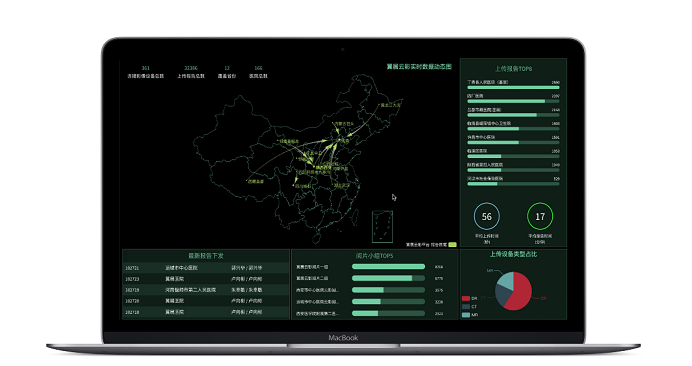
Through a compact Wingspan Box, primary healthcare facilities connect to the external network and upload imaging data to the Wingspan Cloud Imaging Diagnostic Platform. Radiologists from Changdu People’s Hospital provide diagnoses, while online remote experts offer quality control guidance, thereby extending services to dozens of primary medical institutions in the Changdu region of Tibet. This initiative fundamentally addresses the challenges faced by primary care physicians in interpreting medical images.
The success of this project is inseparable from the accumulation of Wingspan Technology in previous years.
Since 2014, Wingspan Technology has gradually evolved from adding Chinese language tools to foreign medical device operating systems to providing services such as PACS and hospital information systems. In 2014, Wingspan Technology established its own cloud-based diagnostic platform and the “Yingling” APP. In the same year, it founded its own physician group to undertake online diagnostic image interpretation services.Many newly licensed physicians leverage this tool to enhance their professional competence and engage in learning and discussions with experts from physician groups, thereby gaining opportunities for rapid professional growth.
In terms of financial instruments, Wingspan Technology collaborates with financial institutions to meet the hardware equipment needs of medical institutions through financial leasing. Its steadfast R&D spirit and capabilities have enabled Wingspan to become one of the drafting entities for the Chinese national standard on image connectivity for medical diagnostic X-ray equipment, standing as the sole enterprise among these drafting entities.
As of now, Wingspan Technology hasSmart imaging ecosystem services built around imaging equipment services, informatics products and services, remote diagnosis, and physician groups,Connected to over 1,500 hospitals, covering nearly 20 provinces across China.。
Artificial Intelligence
There are approximately 170,000 physicians in China with registered qualifications in medical imaging, of whom about 110,000 are on the Wingspan Technology physician group platform, accounting for nearly half of the total. However, at the current stage, the professional competence of physicians in China varies significantly. To ensure the accuracy of diagnoses on the platform, Wingspan Technology’s physician group has established an independent assessment mechanism, but only about 10% of physicians can pass this evaluation.
“We aim to increase this 10% to 20%, or even 30%!“A relevant person in charge at Wingspan Technology told VCBeat.”
Many primary care hospitals face a severe shortage of physicians. According to data from VCBeat’s Eggshell Research Institute, the annual growth rate of medical imaging data in China is currently around 30%, while the annual growth rate of radiologists is only about 4.1%, resulting in a gap of 23.9 percentage points. The growth in the number of radiologists falls far short of the surge in imaging data.
This means that radiologists will face increasing pressure in processing imaging data in the future, potentially far exceeding their capacity. Moreover, it takes at least five years to train a single physician. It requires a considerable amount of time for these doctors to accumulate rich clinical diagnostic experience after graduation, which is utterly inadequate compared to the rapidly growing demand.
In 2017, artificial intelligence was a major hotspot, both in terms of policy and capital.
As a technology closely related to medical imaging, Wingspan Technology has also embarked on explorations in artificial intelligence. In February this year, Wingspan Technology established an AI team comprising over a dozen algorithm engineers, most of whom are based in the United States. The core R&D algorithm engineering scientist previously won first place in the 2015 Kaggle Global Artificial Intelligence Competition.
According to a relevant person in charge at Wingspan, “The comprehensive online-to-offline ecosystem that Wingspan has developed over many years has enabled the rapid implementation of the aforementioned scenarios, which constitutes one of Wingspan Technology’s core competitive advantages. Furthermore, since AI-assisted diagnosis is developed based on big data, it holds significant importance for enhancing physicians’ overall capabilities and shortening their learning and professional development curve. For instance, radiologists who have recently graduated and joined the imaging department can rapidly improve their professional skills through online image interpretation and AI-assisted diagnosis.”
Xi'an Wingspan Electronic Technology Co., Ltd.'s AI-assisted diagnostic system is primarily applied in two aspects:
First, by embedding artificial intelligence into medical imaging equipment from Xi'an Wingspan Electronic Technology Co., Ltd. or its partner manufacturers, rapid annotation can be performed on images, making existing medical imaging devices smarter, more accurate, and better able to assist physicians in diagnosis;
Second, by integrating it into an online diagnostic platform, both physicians and patients can upload medical images and obtain AI-generated diagnostic results by clicking the “Smart Diagnosis” button, allowing physicians to verify and refine the findings. Meanwhile, patients can also directly select AI-based consultation services on the platform to compare these results with those provided by physicians. After being annotated by AI algorithms, diagnostic recommendations are generated.
The online diagnostic services of Wingspan Smart Imaging generally consist of four steps:
First, assess physicians' competencies;
Second, by cross-validating results among multiple physicians;
Third, through online physician comparison;
Fourth, AI-powered comparison (under development).
Utilize these four steps,Wingspan Smart ImagingBy progressively improving the diagnostic accuracy of radiologists, we then deliver optimal service outcomes for patients. While conventional hospitals typically take anywhere from three days to a week to provide imaging films, Wingspan’s smart imaging service currently boasts a response time of just 26 minutes—far surpassing the speed of traditional offline hospital diagnosis and report delivery. Meanwhile,Through multidimensional corroboration between artificial intelligence and different physicians, the accuracy rate of image interpretation can exceed 90%.。
From offline hospitals and third-party medical imaging diagnostic centers, to online intelligent medical imaging diagnosis platforms and physician groups, and further to medical equipment, Wingspan Technology has established a complete closed-loop ecosystem for medical imaging services.
Third-Party Medical Imaging Center
Third-party medical imaging centers serve as a valuable supplement to regional healthcare resources. Many community hospitals, constrained by limited conditions, lack basic equipment such as MRI and CT scanners. Therefore, collaborating with third-party medical imaging centers can extend the services of community hospitals, thereby facilitating the allocation and supplementation of medical resources within the region. As planned,In 2017, Wingspan Technology will establish 10 third-party medical imaging centers.。
Building upon third-party medical imaging centers, the Wingspan Imaging Cloud Platform enables the digitization, lossless storage, and diagnosis of medical films. As mutual recognition within the healthcare system advances, its advantages will become increasingly evident. Patients can receive consistent medical services across different hospitals using the same imaging data, thereby eliminating unnecessary and repetitive scans, reducing radiation exposure, and lowering diagnostic and treatment costs.
Furthermore, by supplementing with medical devices and online physician groups, Wingspan Technology has addressed the challenge of departmental development in primary care hospitals. Coupled with remote diagnostics, this approach retains patients within local primary healthcare institutions, thereby genuinely supporting the national implementation of tiered diagnosis and treatment.
Currently,More than 1,000 primary care hospitals have partnered with Wingspan Technology.。
Primary Care
In its first year of operation, Wingspan Technology achieved profits exceeding RMB 10 million. By embedding its services within healthcare institutions and adopting a business model combining B-side procurement with C-side revenue sharing, the company has established a stable profit stream. This startup team of over 140 employees continues to expand its market presence across China, from the northwest to the eastern and southern regions, integrating its innovative medical imaging model into primary healthcare facilities nationwide.
Note: All data related to this enterprise in the article were provided and confirmed by the interviewee.