

Chinese Hospital Presidents Embrace Integration of Emerging Technologies and Medical Practice
From May 5 to 7, 2017, the “9th China Hospital Presidents Conference,” hosted by the Editorial Office of Chinese Hospital Management Magazine, was held in Chongqing, bringing together nearly 3,000 leaders from health and family planning administrative departments, hospital administrators, and industry experts across China. As one of the conference partners, Huiyi Huiying engaged in in-depth interactions with on-site attendees and published key takeaways and survey results through the VCBeat platform.
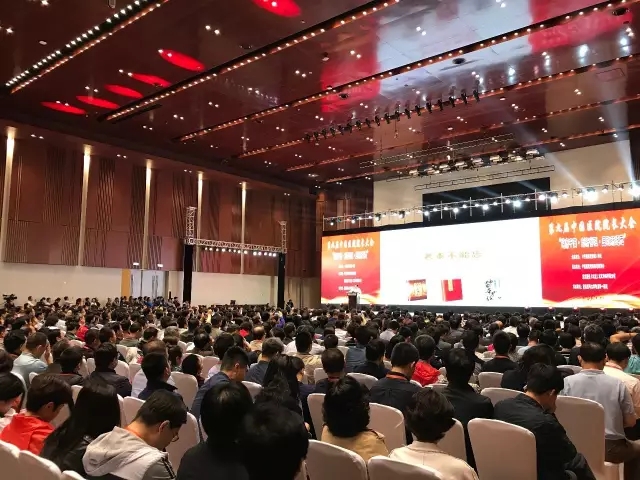
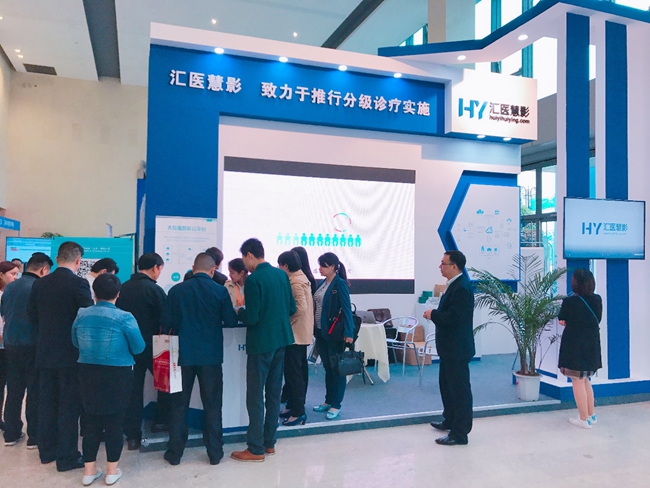
On-site at the 9th China Hospital Presidents Conference
In China, hospitals are among the most difficult institutions to operate, and being a physician is one of the most challenging professions. China’s healthcare system has achieved world-leading efficiency, with medical service prices far below the average levels in developed countries. Despite receiving incomes significantly lower than those in many other countries, Chinese doctors deliver high-efficiency, high-intensity medical services. Nevertheless, given the country’s vast population and complex national conditions, China’s healthcare service capacity remains strained across various dimensions, with numerous persistent issues. Examples include the unequal distribution of medical resources and doctor-patient conflicts.
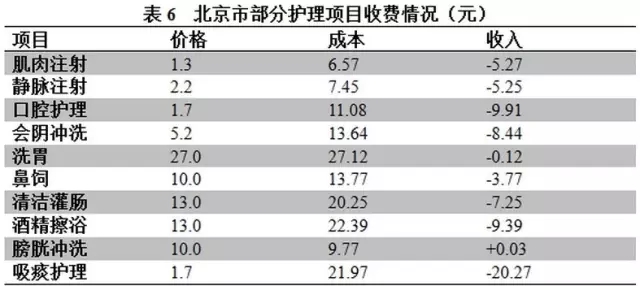
At the opening ceremony of the conference, Fan Daiming, an academician of the Chinese Academy of Engineering, stated during his keynote speech on healthcare reform: “I have here a table listing some nursing services in Beijing. As you can see, only bladder irrigation generates a profit, and that profit is a mere three fen. I once asked someone at a wet market who washes cattle bladders for a living how much he charges per service, and he replied, ‘15 yuan.’ It was utterly infuriating.”
Not only are physicians’ incomes excessively low, but nursing staff also face the same issue. “Nurses receive poor compensation and benefits, leading to severe turnover. A survey of nurse turnover rates in 696 tertiary hospitals across China found an average turnover rate of 5.8%, with a peak of 12%,” introduced Academician Fan Daiming. Currently, China faces a shortage of 2 to 3 million nurses. Moreover, the existing nursing workforce is predominantly concentrated in hospitals along the eastern coastal regions and in major cities, resulting in acute shortages in underdeveloped western areas and rural hospitals.
In this regard, Academician Fan Daiming has called for improved compensation and benefits for healthcare professionals, while also urging current medical personnel to enhance their professional competencies and strengthen continuing education. “Medicine is a profession that requires lifelong learning. It is essential to provide concrete guarantees in terms of time and funding for physicians’ continuing education, thereby continuously improving their diagnostic and therapeutic capabilities. In light of the current trend toward increasing subspecialization, fragmentation of medical knowledge, and overly narrow professional divisions, it is not only necessary to offer training in general practice and multidisciplinary team (MDT) approaches, but also to intensify and organize training programs focused on Integrative Medicine to elevate professional standards.”
Academician Fan Daiming’s insightful analysis resonated strongly with the attendees. The data team at Huiyi Huiying deeply concurred, as these perspectives are further corroborated by Huiyi Huiying’s data models.
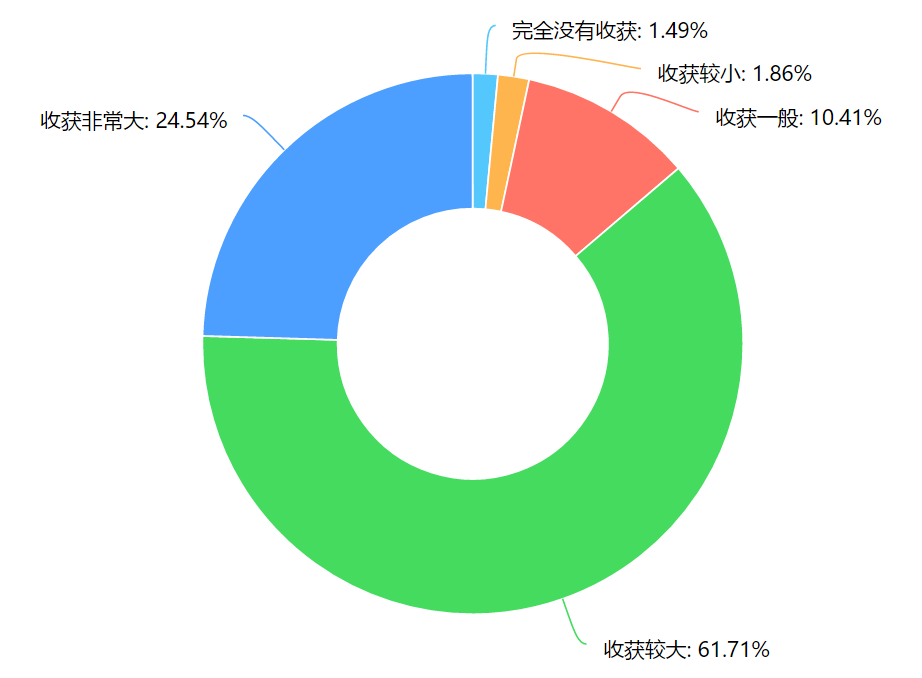
Huiyi Huiying Research Data Model
"Informatization Management and Performance Management Are the Focus of Hospital Administrators"
The conference featured 14 sub-forums, including topics such as the construction of hospital cost accounting and performance evaluation systems, data-driven upgrades of hospital management services, refined information systems supporting hospital management, applying the Balanced Scorecard to drive hospital quality management performance, and leveraging information technology to facilitate the development of medical consortiums.
With the release of the “13th Five-Year” Plan for Deepening the Reform of the Medical and Healthcare System, public hospital reform, drug price reform, tiered diagnosis and treatment, and the separation of prescribing from dispensing have remained focal points. In this context, hospital management has shifted its focus toward internal reforms, seeking performance improvements through systemic changes, efficiency gains through new technologies, and economic benefits through enhanced efficiency.
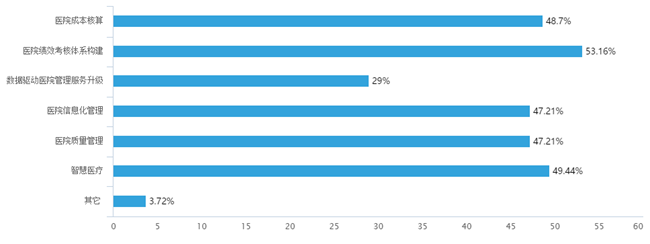
Statistics on Topics of Interest to Attendees at the 9th China Hospital Presidents Conference
At this Hospital Directors’ Conference, the top three topics of interest to attendees were: construction of hospital performance appraisal systems, smart healthcare, and hospital cost accounting. These three topics may represent:
I. Construction of a Hospital Performance Appraisal System—How to Improve Hospital Operational Efficiency and Enhance the Motivation of Departments and Individuals;
II. Smart Healthcare — Leveraging New Technologies to Break Through the Various Dilemmas Facing China’s Healthcare Industry
III. Hospital Cost Accounting — Enhancing hospital profitability through cost containment while maintaining service levels.
Hospital presidents at all levels and healthcare administrators are eager to leverage the dividends of next-generation information technologies—such as the internet, big data, and artificial intelligence—to enhance overall hospital efficiency and deeply unlock value across clinical operations, workflow processes, scientific research, and medical education.
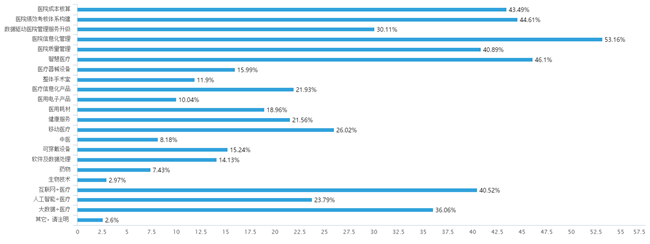
Survey on Topics of Interest for the Next Hospital Presidents' Conference
In a survey on topics of interest to attendees, the top three were: hospital information management (53.16% expressed interest), smart healthcare (46.1%), and construction of hospital performance evaluation systems (44.61%).
Furthermore, another valuable finding is the surprisingly high level of attention hospital administrators are paying to “Big Data + Healthcare” and “Artificial Intelligence + Healthcare.” This indicates that hospital operators are gradually breaking free from traditional mindsets, becoming willing to dismantle information silos and leverage informational tools, artificial intelligence, and big data technologies to liberate medical staff from low-level, tedious, and repetitive tasks, thereby enhancing the quality and experience of healthcare services.
Meanwhile, we have also found that healthcare administrators at all levels are actively exploring the use of next-generation technologies to drive business, process, and academic innovation, as well as systemic reforms in the healthcare sector. Moreover, these administrators hold high expectations for “Internet + Healthcare,” with 40.52% expressing such optimism.
In fact, after more than three years of rapid development, “Internet + Healthcare” has become an indispensable supplement to the healthcare sector. Following a period of unregulated expansion, internet-based diagnosis and treatment services have gradually drawn national attention, with authorities preparing to strengthen standardized regulation. So, where exactly do the future opportunities lie for “Internet + Healthcare”?
The Continuously Evolving Medical Consortiums May Become the New Breeding Ground for Internet Healthcare
The General Office of the State Council recently issued the "Key Tasks for Deepening the Reform of the Medical and Health System in 2017," deploying 56 key tasks for healthcare reform. Among these, the comprehensive launch of pilot programs for the construction of medical consortia in various forms and the full-scale implementation of comprehensive reforms of urban public hospitals have been designated as priorities.
On April 26, the General Office of the State Council issued the “Guiding Opinions of the General Office of the State Council on Promoting the Construction and Development of Medical Consortia,” which stated: “To achieve regional resource sharing, medical consortia may establish medical imaging centers, clinical laboratory and testing centers, sterile supply centers, and logistics service centers, so as to provide integrated services to all healthcare institutions within the consortium.”
The application of new technologies, particularly internet information technology, offers inherent advantages in promoting regional resource sharing, scientific research exchange, and teaching and training within medical consortia. As the tiered diagnosis and treatment system is further implemented, an increasing number of healthcare institutions are forming medical consortia characterized by a mentorship-driven development model, which has charted a clear course for internet-based healthcare. In response to this trend, Huiyi Huiying discontinued its remote medical services targeted at individual consumers (C-end) in 2016, shifting its focus to providing customized, integrated medical imaging solutions centered on medical consortia.
Medical AI Will Provide Reliable Support for Medical Imaging Services within Medical Consortiums
Besides internet healthcare, healthcare plus artificial intelligence is another major hotspot. In this year's Government Work Report delivered at the Two Sessions, artificial intelligence has begun to enter the public spotlight.
Applying artificial intelligence to the medical field has become a widely explored direction in the industry, giving rise to countless players and intensifying competition to a fever pitch. In this regard, Dr. Chai Xiangfei, CEO of Huiyi Huiying, has expressed the view that medical imaging is the most feasible area for the integration of AI and healthcare, and the one most likely to achieve breakthroughs first. The application of AI in medical imaging can be broadly divided into two levels: one is to assist doctors in completing basic screening tasks; the other, at a deeper level, is to help doctors make conclusive judgments that would otherwise be beyond their reach.
In practical implementation, medical imaging fundamentally requires three key elements: first, optimizing deep learning methods; second, accumulating large volumes of high-quality data; and third, establishing a high-performance computing environment. At the technical level, Huiyi Huiying integrates imaging cloud services, digital intelligent film, and intelligent diagnosis to provide computational support for its deep learning engine. The results generated by machine learning are incorporated into physicians’ image interpretation workflows. When the system makes an erroneous judgment, physicians correct the diagnostic outcome, and this feedback is fed back into the system for secondary learning. “Through this closed-loop online learning process, we continuously update effective data and steadily improve the accuracy of our algorithms.”
Currently, Huiyi Huiying’s independently developed artificial intelligence solutions primarily focus on the auxiliary screening phase to reduce physicians’ missed diagnosis rates. As an independent third-party intelligent imaging platform, Huiyi Huiying centers its strategy around medical consortia and adopts a comprehensive value-chain approach in the medical imaging sector. It features three core modules: an imaging cloud platform, a radiotherapy cloud platform, and an AI-assisted diagnosis and treatment system, thereby covering the mobilization, digitization, and intelligent transformation of medical imaging.
Smart Imaging Cloud enables regional medical consortiums for imaging, aligning with national policy initiatives to promote tiered diagnosis and treatment. It also helps hospitals establish mobile-based internal imaging management, freeing physicians from being tethered to bulky workstations and thereby enhancing their workflow efficiency. Furthermore, the imaging cloud service lays the foundation for AI-assisted diagnosis, integrating hospitals, physicians, and patients into the entire clinical workflow to improve diagnostic efficiency and accuracy.
Huiyi Huiying's Booth at the Hospital Presidents' Conference