

Sinovation Health Tech Files for IPO: Redefining Continuous Health Monitoring Without Wearables
As people place greater emphasis on health, attention is shifting from disease treatment to disease prevention. With the widespread adoption of wearable devices, it has become a common consensus that continuous monitoring of physiological data can facilitate health management and disease prevention.
In the early days of wearable devices, people purchased them out of curiosity to experience their functionality. Over time, however, a segment of users set these devices aside. This is particularly true for middle-aged and elderly individuals, as well as busy professionals in high-risk occupations—precisely the groups most in need of monitoring their physiological data. Yet, they frequently forget to wear the devices. For their children, family members, and attending physicians, ensuring consistent use of health-monitoring devices to capture vital health data remains a significant challenge.
However, one company—Zhongke Xinzhi—took a different approach. Instead of developing wearable devices, it integrated health monitoring sensors into beds and chairs. As long as you are sleeping or sitting down to work, the system can capture the precise, continuous physiological data needed for comprehensive health assessment and management.
Guangzhou Zhongke Xinzhai Technology Co., Ltd. is a joint venture established by the Shenzhen Institutes of Advanced Technology, Chinese Academy of Sciences, and Guangzhou Zhixiang Medical Technology Co., Ltd., dedicated to advancing cutting-edge biosensing technologies.Through precise, continuous, and non-invasive vital signs monitoring, establish personalized health models for each individual to assist users in achieving self-management of their health throughout the entire life cycle.
Pang Zhiqiang, founder of Zhongke Xinzhi, told VCBeat that the core of Zhongke Xinzhi lies in developing cutting-edge biosensor technology. Only with high-quality sensors can data be collected accurately, thereby laying the foundation for subsequent health management services.
The team at Zhongke Xinzhai comprises alumni from the Chinese Academy of Sciences, Sun Yat-sen University, Tsinghua University, Wuhan University, Jiaotong University, and CEIBS. The majority of its employees are former executives at Johnson & Johnson, Shenzhen Development Bank, and Umed Medical.
“Xin Xiao”’s Three Major Application Scenarios
Zhongke Xinzhi’s core product is the “Xinxiao” series, a physiological signal detection and analysis device that monitors vital signs based on human body vibration signals, ultimately achieving low psychological and physiological burden monitoring (no electrode patches required, comfortable). Pang Zhiqiang told VCBeat that the Xinxiao products currently have three major application scenarios:
Measuring Sleep Data to Prevent Cardiovascular Diseases
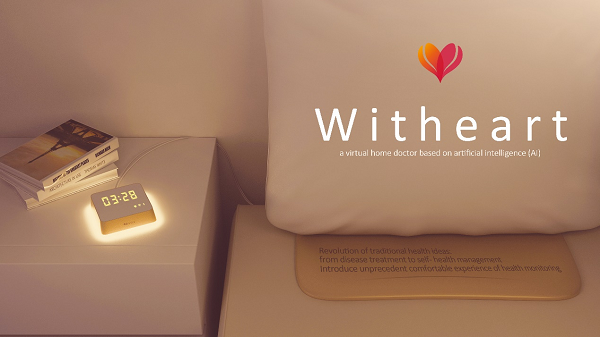
By simply placing the “Xin Xiao” device under the pillow, users’ heart rate (HR), heart rate variability (HRV), respiratory rate, and body movements are faithfully recorded throughout eight hours of sleep. This not only enables precise analysis of risks associated with cardiovascular conditions, autonomic nervous system disorders, and sleep-disordered breathing, but also automatically establishes a personalized health data profile for each individual.
Throughout the entire process, no user intervention is required; all detections are non-intrusive, meeting the requirements for low physiological and psychological burden. Furthermore, the signal acquisition board within the detection device is entirely passive, emitting no electromagnetic radiation, thereby ensuring safety during long-term use.
Pang Zhiqiang stated, ““Xin Xiao” can not only serve standard adult beds, but also be applied to cribs and specialized nursing hospital beds. The “Xin Xiao” product enables precise acquisition of the human body’s ballistocardiogram (BCG).。
It can detect neonatal distress, record physiological growth data in toddlers, and monitor children’s nighttime sleep; it can also assess cardiovascular risk, analyze sleep quality, and identify sleep apnea syndrome. In healthcare settings such as hospitals and nursing homes, “Xin Xiao” further enables bedside monitoring, bed-exit alerts (for in-hospital patient safety management), and continuous vital signs monitoring for patients in bed. It covers all stages of human life.
Measure Data While Seated in a Chair to Provide Early Warning of Sudden Cardiac Death
In addition to unobtrusively quantifying users’ eight hours of sleep, the “Xin Xiao” product can also monitor physiological conditions during their eight-hour workday to help prevent sudden health emergencies. Many professionals, such as startup founders, physicians, editors, and journalists, endure long working hours, high intensity, and frequent late nights, making them prone to health issues. In extreme cases, this can lead to severe outcomes such as paralysis or sudden cardiac death, as frequently reported in the news. The Xin Xiao stress-relief cushion is specifically designed to serve these individuals.
The “Xin Xiao” seat cushion not only features an ergonomic design to effectively prevent spinal issues caused by prolonged sitting, but also incorporates built-in sensors that enable unobtrusive monitoring of multiple physiological indicators, such as heart rate, during users’ casual rest and work periods.
Whether users are working diligently or studying hard, “Xin Xiao” can remind them to avoid the risk of sudden death due to excessive fatigue. It can also accompany users in adjusting their daily routines, enabling them to face work in their best condition. Mr. Cai, Head of Marketing at Zhongke Xinzhi, told VCBeat that in practical applications, HRV-based emotional stress analysis combined with psychological adjustment has helped an adolescent girl with anxiety disorder overcome her struggles and gain admission to her desired school.
Measuring Drivers' Health Data to Prevent Diseases and Traffic Accidents
If anyone spends the most time sitting, it is undoubtedly long-haul bus drivers. Pang Zhiqiang told VCBeat that the idea of designing products for drivers was initially proposed by Honda’s exhibitors after they visited Zhongke Xinzhai’s booth at the CES expo. Car drivers often work more than 12 hours a day, spending both their working and resting hours in their vehicles, and frequently stay up late, making them highly susceptible to health problems.
Moreover, drowsy driving is prone to causing traffic accidents. The product designed by “Xin Xiao” for drivers can issue alerts when signs of fatigue or abnormal physiological data are detected, thereby reducing the likelihood of traffic accidents.
Heart rate monitoring is accurate to the millisecond.
When discussing the company’s core technological advantages, Pang Zhiqiang first thought of the “Xin Xiao” product’s exceptionally high signal detection sensitivity, with a data sampling frequency of up to 1,000 samples per second—all of which rely on the company’s research into cutting-edge biosensors. This forms the foundation for the product’s precise, continuous, and non-invasive monitoring.
By monitoring heart rate with millisecond precision, the “Xin Xiao” product offers unique advantages in HRV data analysis. It can quantify the subject’s autonomic nervous system regulation, cardiac load level, emotional stress, fatigue, and stress resilience. It not only accurately reflects the test subject’s emotional indicators but also assesses the level of their autonomic nervous system regulation.
In practical applications, XinXiao’s short-term assessment products directly demonstrate significant improvements in subjects’ emotional states and stress resilience before and after mindfulness practice.
Speaking of the product's advantages, Pang Zhiqiang told VCBeat, ““HeartEase”’s greatest advantage is that it does not need to worry about user stickiness, since everyone needs to sleep and working individuals need to sit down. As long as users are lying in bed or sitting in chairs“Xin Xiao” will continuously record precise user physiological data, providing a basis for subsequent disease prevention and early warning.
The "walk-in, test-and-go" convenience minimizes user burden, while precise measurement devices and comprehensive data analytics models maximize the value of users' vital signs data.