

Bailead's AI-Powered Breast Cancer Diagnostic System Receives CFDA Certification with Lesion Detection Rate Up to 96.8%
2015Year1Month16On [date], renowned young singer Yao Beina passed away due to a recurrence of breast cancer, at the age of only33Age;
On April 6, 2009, the renowned healing-voice singer A-Sang passed away from breast cancer at the age of 34;
On May 13, 2007, Chen Xiaoxu, the actress who portrayed Lin Daiyu in the 1987 television adaptation of *Dream of the Red Chamber*, passed away from breast cancer at the age of 42.
Unknowingly, breast cancer has claimed so many vibrant lives. While we mourn these losses, should we not also sound the alarm? According to the 2012 breast cancer incidence data released by the National Cancer Center and the Bureau of Disease Prevention and Control under the Ministry of Health: among tumor registration areas in China, breast cancer ranks first among malignant tumors in women, with a significant upward trend in incidence in recent years. Currently, there are approximately 470,000 patients in China. In 20 years, breast cancer will become the most prevalent malignant tumor in China.
The key to breast cancer prevention and control is early detection. Early-stage breast cancer, particularly stage 0 (carcinoma in situ), can be radically cured through surgery while preserving the breast, at a relatively low cost, with a 5-year survival rate exceeding 90%. For mid-stage breast cancer, even with standardized treatment, the cure rate is only around 50%. In late-stage breast cancer, the condition is more severe with extensive metastasis of cancer cells; cure is difficult to achieve, and treatment aims primarily to prolong survival.
Practice has proven that regular breast cancer screening for women of appropriate age is the most effective approach to detecting early-stage breast cancer and improving cure rates. Early-stage breast cancer often presents with subtle symptoms and minute lesions, making it difficult to detect through routine physical examinations. Mammography can identify early-stage lesions as small as 0.1 mm, thereby serving as the gold standard for breast cancer screening.
From 1973 to 1980, the American Cancer Society and the National Cancer Institute further implemented breast cancer screening programs, with findings confirming that regular breast cancer screening (mammography) can reduce breast cancer mortality. In developed countries such as those in Europe and America, annual mammography for women over the age of 35 has been widely adopted, significantly reducing the threat of breast cancer to women's health in these nations.
According to VCBeat, breast cancer incidence in China is on the rise. However, less than 20% of cases are diagnosed at an early stage, with most patients identified only in the middle or late stages, presenting a severe situation. This is partly due to low public awareness of cancer screening and partly due to a shortage of specialized physicians, which hinders the comprehensive implementation of breast cancer screening at the primary care level.
As artificial intelligence technology matures, leveraging AI-assisted diagnostic tools for breast cancer screening and auxiliary diagnosis represents a viable approach to improving breast cancer survival rates in China. The focus of today’s story is Yibao Technology, a startup specializing in AI-powered breast cancer screening. Its founder, Zhou Ming, is an AI technical expert who returned to China after studying in the United States.
Entrepreneurs in the High-Tech Sector
During his studies at Tsinghua University in the 1990s, Zhou Ming was already exposed to neural networks, as simulating human cognitive processes for machine learning was a hot topic in academia. After graduation, Zhou remained at the university to oversee teaching and research at the Computing Center of the School of Environment. He became one of the first Microsoft Certified Systems Engineers (MCSE) in China and participated in the development of the country’s first provincial-level information system. To further advance his expertise in cutting-edge technologies, he secured a full scholarship to the University of Cincinnati in the United States, where he earned both a Master of Engineering and a Master of Business Administration.
He worked for over a decade at international IT giants such as Computer Associates (CA) and IBM, and has many years of continuous entrepreneurial experience. At that time, CA was the world’s third-largest independent software company, headquartered in New York, USA. He participated in the development of Neugent, the industry’s first commercial neural network software, which leveraged neural networks to unlock business value. This field was then referred to as data warehousing, rather than big data, and fell under the domain of Business Intelligence (BI).
At IBM, he was responsible for the research and development as well as operations of multiple Business Analytics product lines, leading a global team of nearly 100 members, with products spanning PC, mobile, and cloud platforms.
His partner is an alumnus of the Department of Electronic Engineering at Tsinghua University, who earned a Ph.D. in image processing from Stony Brook University in New York, USA. He specializes in research on medical imaging algorithms and has published papers in the prestigious international journal Science. Zhou Ming stated that their skills are complementary: one focuses on algorithms and models, while the other handles product engineering and commercialization.
When it comes to returning to China to start businesses, Zhou Ming told VCBeat that many of his college classmates had entrepreneurial aspirations after graduation. It is natural for them to study abroad first to gain experience with the aim of learning modern advanced technologies; after years of accumulating technical expertise and practical experience, they return to their homeland to realize their dreams through entrepreneurship. Despite more than 30 years of rapid economic growth since the reform and opening-up, China still lags significantly behind developed countries in fields such as healthcare, and the difficulty of accessing medical services remains a widespread issue among the general public.
Zhou Ming believes that the application of modern artificial intelligence technologies can help address the shortage and uneven distribution of medical resources in China, and that AI is inevitably a key technology for promoting tiered diagnosis and treatment and achieving cancer screening. Therefore, Yibao Technology was officially established on July 1, 2015, combining medical imaging with artificial intelligence and focusing on AI for breast cancer—using artificial intelligence to analyze breast imaging to assist physicians in diagnosis.
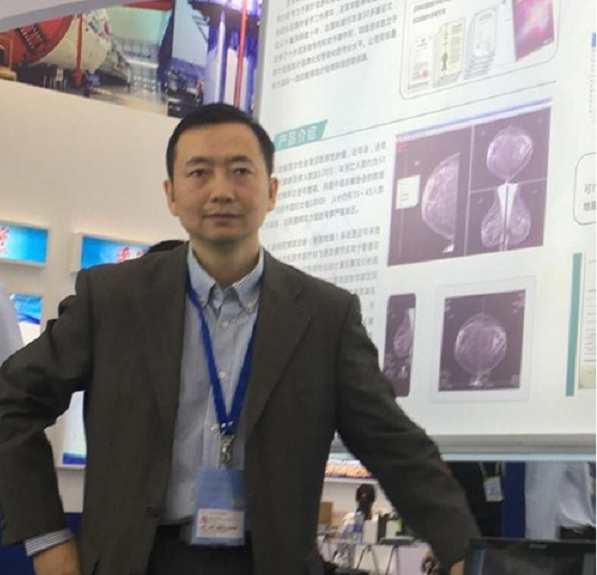
Zhou Ming Attended the 2016 China Hi-Tech Fair
Product has obtained CFDA certification
The annual growth rate of medical imaging data in China is 30%, while the overall number of radiologists has remained virtually stagnant. This has led to widespread heavy workloads, resulting in misdiagnoses and missed diagnoses. Rather than elaborating on these issues here, we will examine how Yibao Technology leverages artificial intelligence to address them:
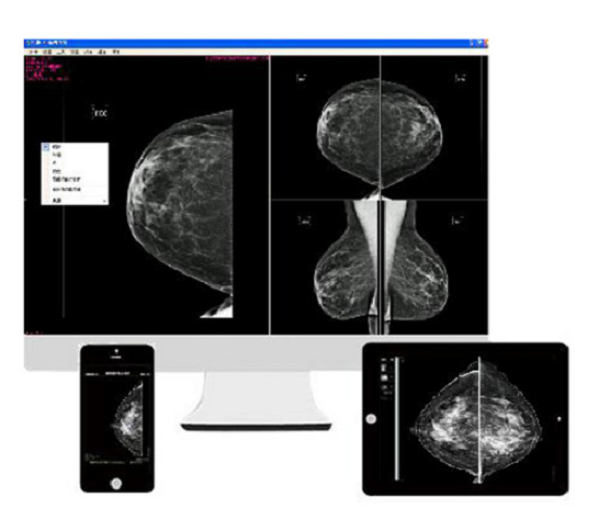
Yibao Technology currently offers three solutions,Mammography Imaging System Workstation, Breast Health Cloud Diagnostic System, and Mobile Terminal for Breast Imaging.
Mammography Imaging System Workstation: As a dedicated workstation for breast imaging, it integrates with PACS or connects directly to mammography equipment. It effectively detects and marks suspicious lesions on digital breast images acquired via molybdenum-target mammography, CR, and digitizers, including microtumors smaller than 5 mm. The detection rates for clustered microcalcifications and masses are as high as 96.8% and 86.5%, respectively, with false positive rates of 0.2 per image and 0.3 per image, respectively.
This product comprises three functional modules: patient management, image viewing, and report output. Users can view and adjust DICOM-compliant digital mammography images, perform image enhancement operations, and print the generated diagnostic reports.
The cloud-based diagnostic system was designed and developed to address the shortage of professional radiologists in primary healthcare institutions. It can be understood as migrating the mammography imaging workstation to the cloud, where it continuously self-learns and evolves, thereby improving the efficiency and accuracy of breast cancer diagnosis in primary hospitals.
Mobile Terminal for Breast ImagingDesigned to facilitate physicians' mobile work, the breast imaging mobile terminal is a comprehensive mobile client for information collection, processing, and dissemination, integrating dual networks (Wi-Fi and 3G/4G).
Patients' health records, electronic medical records, medical imaging data, and other information are stored in cloud-based databases. Patients, the general public, and medical specialists interact with the cloud system via mobile breast imaging terminals (such as tablets, smartphones, PDAs, and other mobile devices), exchanging data in real time with hospital internal systems through a publishing platform. This enables remote diagnosis, treatment, and consultation services anytime and anywhere.
Zhou Ming stated that the product obtained CFDA certification at the end of last year and has been installed and used in multiple large Grade A tertiary hospitals, including Beijing Cancer Hospital and Shaanxi Provincial Cancer Hospital, to carry out clinical analysis and validation. The company is committed to building the largest breast imaging database and intelligent breast cancer detection platform.
By working closely with hospitals to continuously enhance product functionality and leveraging the expertise of professional physicians, we are extending breast cancer screening services to primary healthcare institutions, enabling people to access cancer screening in their local communities.The product is positioned to serve medical institutions at all levels in urban and rural areas, as well as health examination centers and imaging centers, aiming to assist grassroots patients and promote screening for cervical and breast cancers.
Currently, Yibao Technology is undergoing angel round financing, and the funds will be used for product iteration and market promotion...