

Three U.S. Medical AI Startups Honored by NVIDIA for Transforming Healthcare with Deep Learning
In a VCBeat news article published a few days ago, we covered the GTC 2017 (GPU Technology Conference 2017) hosted by AI computing company NVIDIA in San Jose, USA. Previously, NVIDIA announced the 2017 Global Impact Awards, which recognized pioneering research conducted by universities worldwide to address challenges in social, humanitarian, and environmental fields. The University of Maryland and the Mayo Clinic received the award for their medical research.
The awards for AI companies served as the grand finale at GTC, with the NVIDIA Inception Awards offering a total of $1.5 million in prize money to AI startups. This marks the first competition held under the NVIDIA Inception virtual accelerator program.
Jensen Huang, founder and CEO of NVIDIA, stated, “A decade ago, we began building an entirely new computing platform to enable everyone to make new discoveries and contribute to the world. Today, we are deeply impressed by the fruits of your labor.”
The competition’s jury and sponsors boasted an “all-star lineup,” with NVIDIA CEO Jensen Huang serving as a judge, alongside executives from Goldman Sachs, Fidelity Investments, SoftBank, Microsoft, and Coatue Management. Last month, the judges selected six winners—comprising first-place and runner-up recipients across three categories—from among the 14 finalist companies. The three categories were: Hottest Emerging Application Award, Most Disruptive Application Award, and Best Social Innovation Award. Of the six winning companies, three were in the healthcare sector. What specific subfields do these healthcare companies operate in, and what were the reasons for their awards? VCBeat takes you through an overview.
Social Innovation Award
Champion: Genetesis—A New Approach to Diagnosing Chest Pain in the Emergency Room
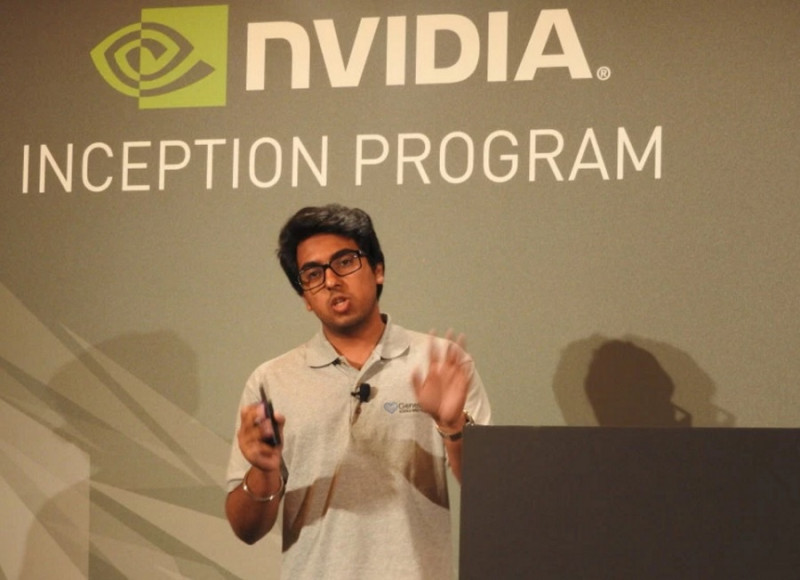
Genetesis CEO Peeyush Shrivastava on the Application of AI in Products
In the United States, hospital emergency departments see 10 million chest pain patients annually. Currently, emergency rooms lack effective means to treat chest pain, and in 75% of cases, it is difficult to determine whether the pain is related to a heart attack or caused by other factors. Determining whether a patient has heart disease takes too long; electrocardiogram (ECG) results often fail to provide a definitive conclusion, so patients frequently need to undergo additional tests, which consumes considerable time. This prolonged workflow puts patients at risk and results in $6.6 billion in significant waste for hospitals each year.
Typically, hospitals connect patients to an electrocardiogram (EKG) machine. However, the results are not definitive, and a six-hour troponin test is required. These results are also inconclusive, so patients may need to undergo additional testing. The entire process takes several hours, and doctors often keep patients under observation for an extended period. Approximately 5% of patients are discharged without a diagnosis of heart disease, while another 2% die at home.
Cincinnati-based Genetesis is conducting clinical trials for CardioFlux, which leverages deep learning, sensors, and physics to accurately diagnose chest pain. CardioFlux is a non-invasive biomagnetic imaging system capable of measuring weak magnetic fields in the chest. Powered by GPU-accelerated artificial intelligence, it generates a 3D map of cardiac electrical activity in just 90 seconds, providing physicians with a rapid and accurate method to diagnose arterial blockages and pinpoint their location.
CardioFlux provides physicians with 3-D mapping tools to visualize each patient’s underlying electrical activity, enabling the diagnosis, characterization, and treatment guidance of various cardiac conditions, including myocardial ischemia, atrial fibrillation, ventricular tachycardia, and other cardiac arrhythmias.
CardioFlux’s intelligent diagnostic tool is a non-invasive front-end device that utilizes passive biosensors to detect the heart’s natural magnetic emissions, performing completely non-invasive magnetocardiography scans without radiation.
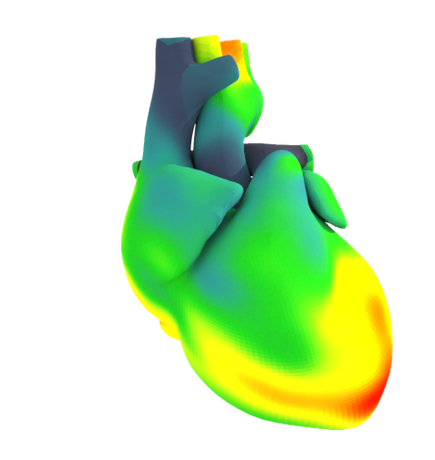
Following the scan, CardioFlux’s backend displays a 3D image of the patient’s heart, enabling physicians to track time-varying electrical conductivity within the heart, identify diseases, and rapidly localize abnormal regions.
Peeyush Shrivastava, CEO of the company, stated, “It is fantastic to win this award. It is highly significant for our company that CardioFlux has been showcased on this world-class platform.” The system utilizes artificial intelligence for diagnostics and employs radiation-free biomagnetic imaging, which can also be applied to other tests such as those for brain, liver, and fetal conditions, generating thousands of 3D images with a resolution of 1 millimeter for patients.
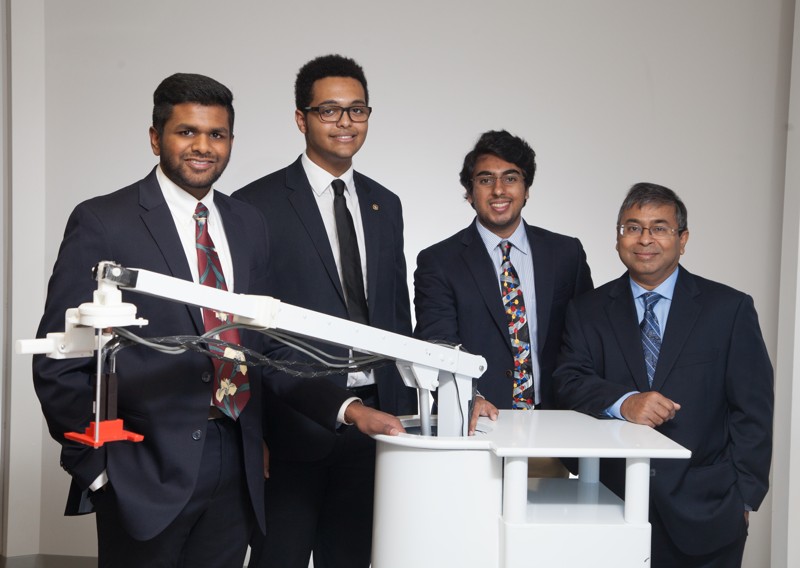
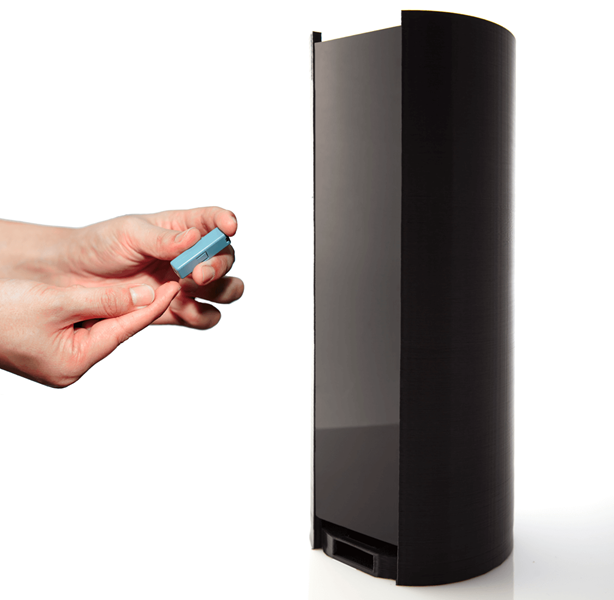
The Genetesis team, from left to right: Vineet Erasala, Vice President of R&D at Genetesis; Manny Setegn, Vice President of Engineering; Peeyush Shrivastava, Chief Executive Officer; and Chandan Srivastava, Chief Financial Officer. The device displayed in front of them is the one launched by Genetesis.
Genetesis was founded in September 2013 and is headquartered in Cincinnati, United States. Its product, CardioFlux, is the first non-invasive tool for generating images of cardiac electrical current distribution. To date, the company has completed two rounds of seed funding: the first round in October 2014, raising $260,000; and the second round in November 2016, securing a $1.2 million investment from CincyTech and Mark Cuban.
Runner-up: Bay Labs—Portable Ultrasound Scanner
Bay Labs, based in San Francisco, aims to equip every general practitioner with an affordable ultrasound scanner to help patients combat heart disease. The company has assembled a team of clinicians, engineers, and scientists who are developing breakthrough technologies in cardiovascular imaging and care to tackle heart disease, the leading cause of death worldwide.
Bay Labs leverages GPU-accelerated deep learning software to recognize ultrasound images, enabling easier interpretation and analysis of scan results. The company states that this solution can serve more than eight times the number of patients compared to existing ultrasound equipment, reducing the cost per scan from $400 to $50.
Bay Labs initially started as a software company, developing a deep learning-based software for diagnosing rheumatic heart disease. This software works in conjunction with ultrasound equipment to enable rapid diagnosis and deliver valuable medical insights. Currently, Bay Labs has also expanded into the research and development of ultrasound devices, creating affordable portable ultrasound scanners integrated with artificial intelligence technology to assist general practitioners in the rapid diagnosis of heart disease.
According to CDC data, one in every four deaths in the United States is attributed to cardiovascular disease. Bay Labs believes that deep learning has the potential to address cardiovascular disease, the leading cause of mortality. Bay Labs aims to contribute globally by providing high-performance algorithmic capabilities. Empowered by both portable design and artificial intelligence, such devices are also well-suited for primary care settings in China.
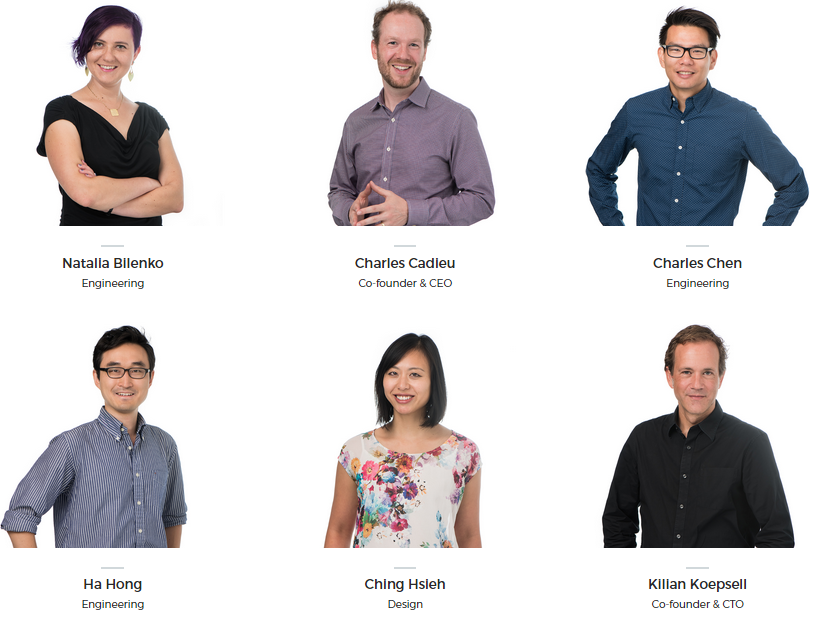
Core Team of Bay Labs
Bay Labs was founded in November 2013 and is headquartered in San Francisco, California. The company’s founder and CEO is Charles Cadieu, who holds bachelor’s and master’s degrees in Electrical Engineering and Computer Science from the Massachusetts Institute of Technology (MIT), as well as a Ph.D. in Neuroscience from the University of California, Berkeley. Charles Cadieu is an entrepreneur and neuroscientist who has brought cutting-edge visual algorithms to market, with his work spanning the full spectrum of visual processing—from low-level image representation to high-level object recognition. As an entrepreneur, he has founded multiple companies and was an early member of IQ Engines, which was acquired by Yahoo! and now powers visual search on Flickr.
Bay Labs secured a $2.5 million seed round led by Khosla Ventures. Other investors included the National Science Foundation, Eleven Two Capital, angel investor Vince Manis, cardiologist Randy Martin, and ultrasound innovator Kevin Goodwin.
Charles Cadieu stated, “Deep learning technology perfectly addresses the challenges in ultrasound imaging, as physicians require years of training to learn how to interpret ultrasound images. As ultrasound equipment becomes more affordable, it is increasingly being adopted, particularly in developing countries and rural areas. In these regions, there may be a lack of trained personnel to properly operate the equipment or interpret ultrasound images, whereas artificial intelligence can provide assistance.”
Most Popular Emerging Application Award
Champion: Athelas - Blood Testing
This award category targets young startups with annual revenues under $5 million. San Francisco-based Athelas stood out with its portable device that enables users to measure their white blood cell count anytime, anywhere.
The device leverages deep learning and machine vision to rapidly analyze blood cells and generate diagnostic reports. With just a few drops of blood, it can identify conditions such as leukemia, infections, and inflammation within minutes. The device is priced at $250, with individual test strips costing $10 each. This technology has been submitted to the FDA for approval and is currently available for use in clinics and by home users.
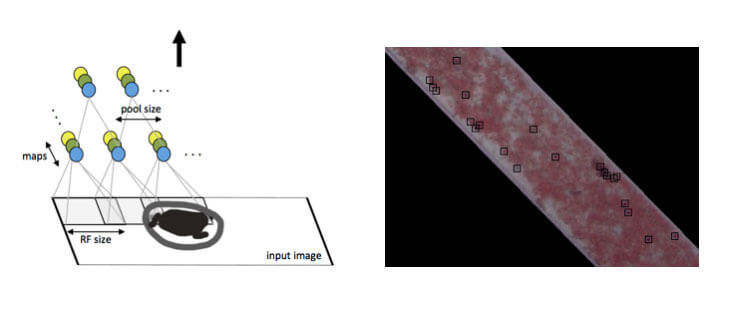
WBC (White Blood Cell Count) is a powerful clinical marker used to identify infections, monitor inflammation, and screen for leukemia. Athelas is a low-cost device that enables users to perform the count at home using just a single drop of blood. This instrument employs computer vision algorithms to analyze blood morphology, determining the presence and concentration of cells.
Athelas is headquartered in Mountain View, California. Its founder, Tanay Tandon, was only 20 years old at the time. Tanay Tandon stated, “Companies like NVIDIA define the industry and will continue to do so, which also benefits startups. This victory has further motivated us to pursue continuous innovation.”
The company was established relatively recently, officially founded in September 2016, and has undergone two rounds of financing to date. The first investor was Dorm Room Fund, with the amount undisclosed. The second round, a seed investment, came from the renowned Y Combinator, amounting to $120,000.
Runner-up: Focal Systems – An AI Product for Supermarket Shopping
Most Disruptive Application Award
Champion: Deep Instinct – Leveraging Artificial Intelligence to Predict and Prevent Malware Attacks
Runner-up: Smartvid.io – AI-Powered Construction Safety Monitoring
The Founders Plan Competition is one of the startup competitions with the highest total prize pool, awarding $375,000 to each champion company and $125,000 to the runner-up.
This is the inaugural competition under NVIDIA Inception’s Virtual Accelerator program. The NVIDIA Inception Virtual Accelerator program supports 1,300 AI startups by providing resources such as GPUs, industry networking opportunities, and other assets to help them succeed.