

First World Orthodontic Health Day Highlights Challenges of Orthodontist Shortage and Technological Gaps
# The First World Orthodontic Health Day: Official Launch of a Series of Posters
At its 2016 Annual Dental Congress, the FDI World Dental Federation introduced a definition of “oral health,” recognizing it as an integral component of overall health.
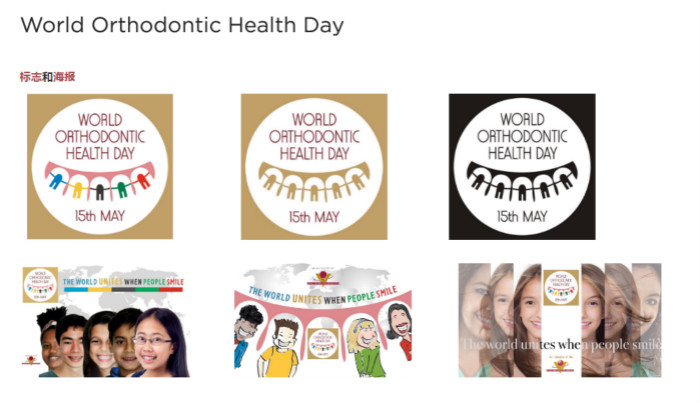
Meanwhile, the World Federation of Orthodontists (WFO), established on May 15, 1995, officially designated May 15 as “World Orthodontic Health Day (WOHD)” during its Executive Committee meeting held in San Diego, USA, on April 30, 2017. This year marks the inaugural observance, and the poster has been published on its official website.
The origins of modern orthodontic treatment techniques can be traced back to the early 20th century. In 1927, Charles Henry Tweed, one of the most prominent students of Edward Hartley Angle, who is hailed as the father of modern orthodontics, established the first specialized orthodontic clinic in history in Arizona, United States.
In 1929, through Tweed’s relentless efforts, Arizona enacted the first “Orthodontic Specialist Act” in U.S. history. On July 22, 1933, Tweed was issued Certificate No. 1 as a Specialist in Orthodontics by the State of Arizona, becoming the first certified orthodontic specialist in U.S. history.
The purpose of establishing Orthodontic Health Day is to raise public awareness of orthodontics, highlight that orthodontic treatment significantly benefits oral health, and encourage orthodontists to provide healthy orthodontic care to the general public.
Misaligned teeth can lead to dental diseases such as dental caries or periodontitis.
According to the white paper “Global Oral Health” released by the FDI World Dental Federation in March 2017, Japan has the lowest prevalence of dental caries (16%) among adolescents aged 6–19 years worldwide, while China’s prevalence is at a moderate level, ranging from 40% to 59%.
For general dental malocclusions, the optimal time for orthodontic treatment is during the early permanent dentition stage (i.e., around 12–13 years of age), as children have just completed the eruption of their permanent teeth and are in a period of vigorous growth and development. In contrast, functional malocclusions often occur during the mixed dentition stage (i.e., 6–12 years of age); if treatment is delayed, they may progress into skeletal malocclusions. Therefore, the optimal period for correction is during the mixed dentition stage.
As for the correction of skeletal deformities, treatment should be administered during the pre-peak phase of growth and development (ages 10–12 for girls and 11–13 for boys). However, many people in China remain indifferent to dental diseases. This lack of awareness regarding oral health issues has become a significant factor contributing to the high prevalence of periodontal disease in China.
The fact is that Chinese people have virtually no preventive awareness regarding dental health. The prevalence of oral diseases among the Chinese population exceeds 80%, with many individuals suffering from conditions such as gingival bleeding and periodontal disease. However, fewer than 10% actually seek treatment, as the majority lack awareness of oral health issues.
For individuals, teeth serve not only the physiological function of mastication but also an aesthetic purpose. Malocclusion can impair chewing efficiency, thereby affecting overall systemic health. Furthermore, dental misalignment can have direct local effects on the teeth themselves.
For instance, it can easily lead to dental diseases such as caries or periodontitis. Orthodontics is the optimal approach to restoring both the physiological and aesthetic functions of teeth. Clearly, while orthodontic treatment corrects the teeth, it ultimately transforms one’s life.
Data indicate that the per capita GDP of a region is positively correlated with the number of dentists per 100,000 people in that area. From this perspective, China’s dental market, where per capita GDP remains on an upward trajectory, will continue to exhibit stable growth.
According to Euromonitor statistics, the number of dentists per 10,000 people in China was 1.0 in 2013. In comparison, this figure stood at 8.0 in Japan in 2010, 5.8 in Canada in 2008, and 5.3 in the United Kingdom in 2012. China significantly lags behind developed countries in this indicator. Undeniably, there is substantial market growth potential in China’s dental sector, particularly for high-margin services such as orthodontics and dental implants.
Lack of Insurance Coverage and Shortage of Orthodontists Drive Up Medical Costs
Despite the vast market potential, the orthodontic sector faces several challenges. Yuan Feng, Dean of Qimei Orthodontics, a private clinic, revealed, “China has only 3,000 orthodontists, who are concentrated in major cities, with very few practicing in smaller regions.”
In addition to the shortage of orthodontists, the high cost of orthodontic treatment deters many people from seeking care. In Japan, dental examinations were included in the national health insurance system as early as the 1990s, whereas the cost of treating dental problems in China remains prohibitively expensive.
Japan launched the “8020” campaign early on, setting a goal of retaining 20 healthy teeth at age 80 and urging people to care for their teeth from childhood. Japan provides universal oral health care, with two free, government-subsidized dental check-ups per year for all citizens, offering everyone two opportunities annually for preventive oral health services.
Low public awareness of oral diseases and gaps in the health insurance coverage for periodontal conditions have contributed to the persistently high prevalence of oral diseases among the Chinese population.
Another major reason is the shortage of orthodontists. In the United States, orthodontics has long been the most sought-after career among dental graduates due to its top-tier income and strong sense of professional fulfillment.
Unlike in China, the vast majority of U.S. orthodontists do not remain at large general hospitals or academic institutions after graduation; instead, they choose independent practice, working in private clinics and private dental chains. Furthermore, the open policy on multi-site practice for orthodontic clinics in the United States allows multiple clinics to collaborate on training assistants and building teams.
The physician training systems in Europe and the United States are relatively well-established. By the time physicians obtain their medical licenses, they are typically in their thirties and possess the capability to establish private practices. Furthermore, with well-developed financial support systems in these regions—including access to loans and insurance—licensed physicians can generally secure financing to open their own clinics shortly after graduation.
These two advantages are precisely what domestic physicians in China lack. For a long time, China’s healthcare system has been dominated by public hospitals, and most physicians are trained within these institutions. For such physicians, independent practice means forgoing the benefits provided by public hospitals, while establishing their own practices entails bearing pressures related to licensing applications, site selection, and investment.
To master traditional orthodontic techniques, clinicians need to enhance their technical proficiency.
Two revolutionary new technologies in 20th-century orthodontics are implant anchorage and bracketless clear aligner therapy. Implant anchorage enables orthodontists to achieve superior clinical outcomes; for instance, it facilitates the treatment of certain skeletal malocclusions that were previously unmanageable, thereby expanding the scope of treatment. Bracketless clear aligner therapy offers advantages such as enhanced aesthetics, improved comfort, and easier maintenance of oral hygiene, leading to its increasingly widespread application. However, its use in complex cases presents greater technical challenges and demands higher levels of expertise from clinicians.
So, how can orthodontists establish effective communication with patients to enhance service quality and technical proficiency? At the International Orthodontics Forum held during the recently concluded 10th Annual Conference of China’s Private Dental Association, Lin Xinping, founder of Hangzhou Yaboya Orthodontic Specialty Clinic, stated: “Every orthodontic specialist hopes to attract more patients. This is particularly true for young orthodontists who, at the start of their careers, often have a limited patient base. They strive to find more effective ways to attract patients and improve the success rate of converting initial consultations into treatment cases.”
Is there truly such a shortcut? The answer is a resounding yes. Orthodontists should genuinely treat patients as friends, comprehensively considering issues from the patient’s perspective, in order to earn their approval and retain them.
Regarding how to improve medical skills, systematic study and practice, regular case-based thematic discussions, participation in academic conferences and symposia, and self-directed learning—particularly of classic traditional techniques—are effective avenues for enhancing technical proficiency.
When it comes to orthodontic techniques, Tucson inevitably stands out as a mecca for orthodontists worldwide. In 1941, the Charles H. Tweed Foundation, established by Tweed, was founded in Tucson, Arizona, USA. The Tweed-Merrifield appliance technique serves as the most classic theoretical foundation in contemporary orthodontics.
According to Professor Teng Qimin, the first Chinese instructor at the Tweed International Orthodontic Training Center, the Tweed Concept International Orthodontic Training Course was established in 1941. Typically held twice a year, around April and September, each session lasts for two weeks. The program has continued for more than half a century and has remained popular for decades.
Tweed emphasizes facial profile as the primary consideration, which aligns with our current clinical objective: to achieve a more ideal facial profile for patients. Although the Tweed-Merrifield technique is considered an older approach in contemporary orthodontics, its theoretical foundations remain classic. Regardless of how rapidly orthodontics advances, it cannot replace the profound influence Tweed has had on the field.
“Precision” has long been the central theme of orthodontic treatment, widely acclaimed in the field. From Angle’s and Tweed’s edgewise appliance techniques to Andrews’ straight-wire appliance technique, and with the advancement of 3D printing technology, personalized lingual appliances and clear aligner systems have become the focal points of precision orthodontics. The current trend is to better integrate traditional theories, such as Tweed’s, with clear aligner therapy, optimizing tooth positioning while simultaneously enhancing facial aesthetics.
New technologies in orthodontics have gained widespread popularity among patients due to their clinical advantages. Many orthodontists are eager to learn and implement these treatment modalities. However, it is essential to emphasize that before mastering advanced orthodontic techniques, practitioners must first establish a solid foundation in basic orthodontic principles and techniques. This foundational competence is crucial for effectively acquiring new skills and ultimately providing superior patient care.