

Guangdong Provincial Hospital of Traditional Chinese Medicine Leads Establishment of China's First TCM Medical Consortium
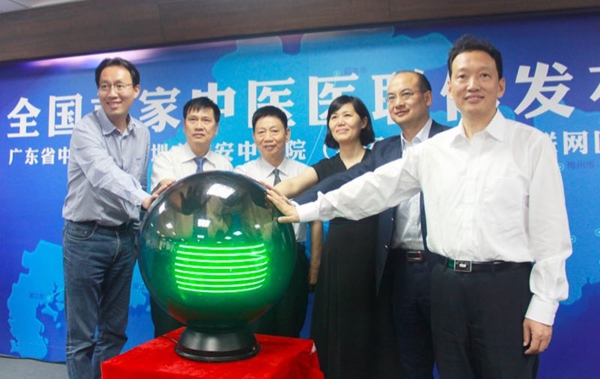
On May 15, Guangdong Provincial Hospital of Traditional Chinese Medicine, Shenzhen Bao'an Hospital of Traditional Chinese Medicine (Group), and Guangzhou WeDoctor Internet Hospital signed a tripartite agreement to establish China's first TCM Medical Consortium.
As the first Traditional Chinese Medicine (TCM) Medical Consortium in China, it actively implements the policy call put forth at the Guangdong Provincial Health and Wellness Conference on March 29 to earnestly advance the construction of a Healthy Guangdong and enhance the capacity of primary healthcare services. It is a specific implementation project of the General Office of the State Council’s Opinions on Promoting the Construction and Development of Medical Consortia.
The Traditional Chinese Medicine (TCM) Medical Consortium will focus on the joint development of key initiatives, including teleconsultation centers, training centers, imaging diagnostic centers, laboratory diagnostic centers, and patient transfer centers. By leveraging WeDoctor’s hardware, software, platforms, services, and internet healthcare capabilities, the consortium aims to achieve comprehensive medical and health services such as resource sharing, remote consultations, and discipline construction within the consortium. This initiative seeks to enhance the comprehensive service capabilities of member institutions and support primary healthcare facilities in achieving six key improvements through the “Internet + TCM” model: introducing one new technology, promoting one TCM-specific therapy, establishing one key specialty department, cultivating a team of talented professionals, resolving one critical management challenge, and addressing one urgent operational issue.
It is reported that Guangdong Provincial Hospital of Traditional Chinese Medicine is a National Clinical Research Base for Traditional Chinese Medicine. It boasts 10 national key clinical disciplines, 23 national key clinical specialties, and 37 provincial key clinical specialties, making it one of the largest TCM hospitals in China with the highest patient volume.
By leveraging internet platforms, high-quality medical resources, such as those from renowned and experienced TCM practitioners, can be extended to medical consortium members. Through collaborative discipline development, remote consultations, and mentorship-based training, regional coordination can be achieved, thereby enhancing the service capacity of primary healthcare institutions and the quality of traditional Chinese medicine services.
At the Guangdong Provincial Health and Wellness Conference held on March 29, it was pointed out that efforts should be grounded in Lingnan traditions to vigorously promote the innovative development of Traditional Chinese Medicine (TCM) and foster the integrated development of the health sector with related industries. Chen Dacan, President of the Guangdong Provincial Hospital of Traditional Chinese Medicine, stated that compared with traditional models, internet-enabled medical consortia have emerged as a new and effective approach to building such consortia.
Internet technology can help hospitals break away from traditional constraints, transcend institutional boundaries, extend their service radius, and develop new service models. In particular, it enables the establishment of an integrated patient data-sharing platform among member institutions of medical consortia and between hospitals at different levels, with internet-based connectivity built on a foundation of information security. This serves as one of the foundational guarantees for the effective implementation and efficient operation of tiered diagnosis and treatment systems or medical consortia, benefiting patients, physicians, and hospitals alike.
On the day the Traditional Chinese Medicine (TCM) Medical Consortium was established, Ms. Zhang, a Shenzhen resident, initiated a remote consultation through the Kaixuan Community Health Center in Bao’an District, Shenzhen. As the first beneficiary, she received a joint consultation from experts at Shenzhen Bao’an Traditional Chinese Medicine Hospital (Group) and Guangdong Provincial Hospital of Traditional Chinese Medicine. Going forward, TCM hospitals across China, including Shenzhen Bao’an Traditional Chinese Medicine Hospital (Group) as a founding member of the consortium, will be able to initiate convenient remote collaboration requests, effectively enhancing the medical service capabilities of primary healthcare institutions.
“WeDoctor has connected high-quality medical resources, primarily comprising over 2,400 key hospitals and 7,300 expert teams across China, and invested nearly RMB 300 million to build a Medical Consortium Platform covering six major systems, thereby accumulating extensive online and offline operational capabilities,” stated Liao Jieyuan, Chairman and CEO of WeDoctor. He added that WeDoctor will fully open up its resources, systems, and operational advantages to facilitate the decentralization of high-quality medical resources to grassroots levels within Traditional Chinese Medicine (TCM) medical consortia, thereby better implementing tiered diagnosis and treatment and meeting the public’s health needs.
AI Technology Becomes the "Super Assistant" for Traditional Chinese Medicine Medical Consortiums.
On that day, Professor Li Hongyi, a dermatology expert at the Guangdong Provincial Hospital of Traditional Chinese Medicine, remotely collected Mr. Zhao’s four diagnostic information (inspection, listening and smelling, inquiry, and pulse-taking) from Jiaxing, Zhejiang, via smart devices provided by the Wuzhen Internet Hospital. Based on this data for syndrome differentiation and treatment planning, Professor Li and physicians at the Wuzhen Internet Hospital jointly issued an electronic prescription of traditional Chinese medicine for the patient.
At the signing ceremony, heads of traditional Chinese medicine (TCM) hospitals and relevant experts from across China and Guangdong Province attended. On that day, Shenzhen Bao’an Traditional Chinese Medicine Hospital (Group) became one of the inaugural members of the medical consortium, which is expected to eventually encompass more than 120 TCM medical institutions nationwide.
In the future, the Traditional Chinese Medicine (TCM) Medical Consortium will continue to explore new models and mechanisms for building disciplinary alliances and integrate into the Belt and Road Initiative. By promoting TCM internationally, it aims to provide people in provinces and countries along the Belt and Road with efficient, convenient, and high-quality TCM health services.