

WeDoctor Showcases Internet-Based Medical Consortium Model at Shanghai Pharmaceutical Trade Fair Amid IPO Filing
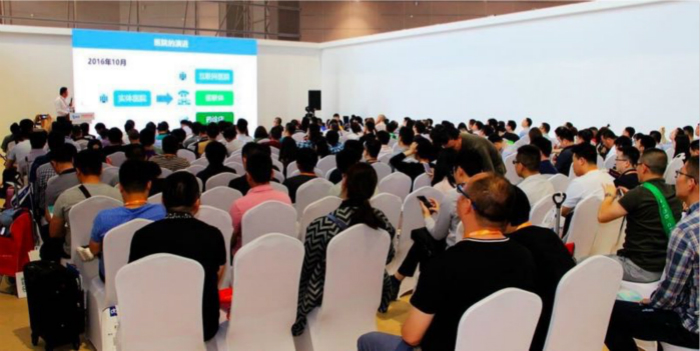
On May 16, the 77th National Pharmaceutical Trade Fair opened in Shanghai. WeDoctor, a leading mobile internet healthcare platform in China, was invited to participate and prominently promoted its Internet-based Medical Consortium model to the entire industry. Among more than 7,000 exhibiting organizations from over 30 countries, WeDoctor was the only one featuring innovation in the medical consortium model as its exhibition theme, drawing significant attention from attending healthcare institutions and pharmaceutical companies both domestically and internationally.
“The Internet-based Medical Consortium has enabled the free flow of information, physicians, and patients, truly achieving interconnectivity within the consortium,” stated a president of a primary care hospital from Hunan Province at the event. He noted that WeDoctor’s Internet-based Medical Consortium model has addressed the most significant pain point facing current medical consortia.
On April 26 this year, China fully launched pilot programs for the construction of Medical Consortiums, exploring the formation of diverse consortium models across different regions and hierarchical levels. However, due to the lack of platform support, various localities have encountered difficulties in implementing these initiatives. Furthermore, continuing to adopt traditional Medical Consortium models often results in challenges where senior specialists and prominent physicians struggle to provide services at the grassroots level, leading to a tendency toward formalism.
At the National Partner Recruitment Conference for WeDoctor’s Internet-based Medical Consortium, held during the Pharmaceutical Trade Fair, WeDoctor’s internet-based medical consortium solution was well received by the attendees.
“WeDoctor launched its Medical Consortium Initiative in April 2016, establishing three core capabilities: system infrastructure, user traffic, and operations. By integrating high-quality medical resources to create a national medical consortium platform, WeDoctor leverages the internet to extend medical resources to grassroots levels, providing integrated online and offline healthcare services to local communities,” said Yang Jianchun, Vice President of WeDoctor and Executive Director of Wuzhen Internet Hospital.WeDoctor’s Medical Consortium System comprises seven subsystems: remote diagnosis and treatment, remote consultation, remote referral, remote training, cloud-based electronic medical records (EMR), cloud-based laboratory and imaging services, and payment and settlement. The system features hardware and software solutions refined through large-scale operations, referral channels connecting more than 700 major Grade A tertiary hospitals across China, and consultation resources from 7,300 expert teams spanning 28 medical specialties.。
After nearly seven years of accumulation, WeDoctor now has over 172 million real-name authenticated patients, making it China’s largest mobile internet healthcare access point. WeDoctor has established medical and operational teams in 32 provinces and municipalities, led by hospital management experts such as Zhang Qunhua and He Chao. The company is scaling up its capabilities in systems, traffic, and operations to assist major public hospitals in establishing medical consortia.
Driven by the combined forces of policy support and market demand, WeDoctor is emerging as a “pioneer” in exploring internet-based medical consortia. In February, WeDoctor launched its “311 Initiative,” which aims to deeply integrate its existing internet medical consortium framework by establishing robust connections with 1,000 provincial, municipal, and county-level medical consortia and 100,000 primary healthcare institutions across China. By linking with tertiary hospitals, the initiative deploys medical, pharmaceutical, and diagnostic capabilities to grassroots hospitals, thereby enhancing their service efficiency and capacity, and truly enabling patients to receive treatment for serious illnesses within their own counties.
On April 20, WeDoctor assisted Shanghai Huashan Hospital, ranked among the top 10 in China, in establishing the Huashan Medical Consortium. On April 29, at the inaugural conference of the National Medical Consortium Alliance, jointly initiated by the Chinese International Exchange and Promotive Association for Medical Care (CIEPAM) and 100 large-scale hospitals, Liao Jieyuan, Chairman of WeDoctor, was elected as Executive Vice Chairman. Zhang Zongjiu, Director of the Bureau of Medical Administration and Hospital Supervision under the National Health and Family Planning Commission, presented letters of appointment to Academician Han Demin, Chairman, and Liao Jieyuan, Executive Vice Chairman.
Recently, WeDoctor integrated its 33 physical medical institutions to form a cross-provincial medical group and achieved interconnectivity among these institutions via the internet, setting an application benchmark for “healthcare + internet.” Just one day earlier, on May 15, WeDoctor assisted Guangdong Provincial Hospital of Chinese Medicine, the largest traditional Chinese medicine (TCM) hospital in China, in establishing the nation’s first TCM medical consortium.
“The core of a medical consortium lies in ‘connectivity.’ WeDoctor has operationalized this concept into five dimensions: data connectivity, capability connectivity, service connectivity, payment connectivity, and supply chain connectivity.” Taking capability connectivity as an example, Yang Jianchun stated that, leveraging internet technologies, WeDoctor enables diverse forms of collaboration, including remote consultations, two-way referrals, remote teaching, remote training, joint development of specialty departments, clinical preceptorship, operational guidance, teaching rounds, and research and project collaboration. This facilitates the sharing of capabilities such as medical imaging and laboratory testing within the medical consortium, promoting the sharing and downward dissemination of expertise from tertiary medical institutions and specialists to grassroots levels, thereby ensuring the vertical integration of high-quality medical resources throughout the consortium.
It is understood that,WeDoctor has connected high-quality medical resources, including over 2,400 key hospitals, 280,000 experts, and 7,300 expert teams across China. It has invested nearly RMB 300 million to build a Medical Consortium Platform comprising six major systems, thereby accumulating extensive operational capabilities in both online and offline settings.WeDoctor will fully open up its resources, systems, and operational advantages to facilitate the decentralization of high-quality resources within Traditional Chinese Medicine (TCM) medical consortia to the grassroots level, thereby better implementing tiered diagnosis and treatment and meeting the public’s health needs.