

Liao Xinbo: Empowering Physicians Is the Source of 'Downward Force' in Primary Healthcare
On May 17, the “2017 China Grassroots Medical Innovation Practice Forum” was grandly held in Chengdu.Mr. Liao Xinbo, Executive Chairman of the Greater Health Club under the Guangdong Venture Capital AssociationDelivered the first presentation in the afternoon, themed“Liberating Doctors Against the Backdrop of China’s New Healthcare Reform”. VCBeat (WeChat: vcbeat) promptly compiled the content of his speech.
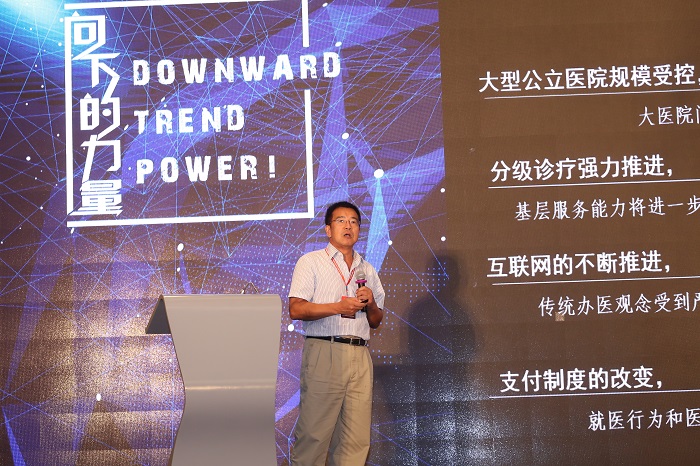
Liao Xinbo has 11 years of experience in clinical pathology and 11 years in hospital management, having served as Director of the Office, Assistant to the President, and Vice President. From 2004 to 2016, he held the positions of Deputy Director-General and Inspector at the Guangdong Provincial Department of Health. Currently, in addition to serving as Executive Chairman of the Big Health Club under the Guangdong Venture Capital Association, he is also a visiting professor and adjunct supervisor at six universities, including Sun Yat-sen University, and a core expert member of the China Patient Safety Alliance.
Since 2006, he has continuously explored the deep-seated issues of China’s healthcare reform. His views, characterized by their clarity, incisiveness, and objectivity, have drawn significant attention from all sectors of society, establishing him as a representative figure among official bloggers and in China’s modern democratic politics. Known online as “Bozi Ge,” he is also an undisputed healthcare “internet celebrity.”
In his remarks today, Liao Xinbo first expressed his endorsement of the conference theme—“The Power of Downward Momentum”—and expressed his belief that this downward force will solidify the foundation of China’s healthcare system and facilitate the implementation of healthcare reform.
He stated that the series of policies recently introduced constitute a “downward force” bolstering primary healthcare: controlling the scale of large public hospitals, gradually reducing outpatient visits at these institutions, vigorously promoting tiered diagnosis and treatment, further enhancing service capacity at the grassroots level, and advancing the development of “Internet + Healthcare.”
“How can we make this downward force truly powerful? I believe that, in the current context, only by liberating physicians can we fundamentally garner support for healthcare reform.”
Background: The Downward Shift of Medical Resources—A Long and Arduous Journey
Liao Xinbo noted that numerous healthcare professionals have gathered to offer insights and speak freely on promoting the healthy development of “Internet + Healthcare.” He summarized their views on the future direction of the medical industry, stating that the primary influencing factor isMedicalChanges in Payment Systems, which will lead to significant changes in physicians' working conditions and hospitals' profit models; secondly,Personnel System, personnel management is gradually shifting toward a record-filing system for staffing quotas, and the relationship between physicians and hospitals will undergo a transformation, with physicians increasingly transitioning from “institution-affiliated individuals” to “socially mobile professionals”; additionally, the government needs to “devolve authority” to the market,Developing Socially-Run Medical ServicesThis is also an important decision by the government. Recently, Premier Li Keqiang has frequently raised this point during government meetings and inspections, stating that the development of high-end healthcare should be supported—a notion that was previously considered too sensitive to mention.
“How physicians will enter the high-end market in the future, how hospitals’ profit models will evolve, and how compensation incentives can encourage physicians to provide better care are all related to the theme of ‘physician liberation.’”
In 2017, the government vigorously promoted the medical consortium policy, proposing that all hospitals at Level II and above should fully establish medical consortia by 2020. Premier Li Keqiang referred to it as “Alleviating Patients' Healthcare Burdens Through Integrated Medical Consortia”. Liao Xinbo stated that medical alliances would foster collaboration among various institutions through talent sharing, technical support, mutual recognition of test results, prescription portability, and service coordination. A key focus in promoting these medical alliances is the implementation of multi-site practice for physicians.
However, regarding the concrete implementation of shifting medical resources “downward,” Liao Xinbo believes that this process is fraught with difficulties and will be a long haul. Since the 2009 healthcare reform plan, he has argued that rather than merely “encouraging” doctors to work at the grassroots level, efforts should focus on “attracting” them there. Indeed, within the framework of medical consortia, critical questions must be addressed, such as whether medical experts from large hospitals should also descend to the grassroots level and how physician talent should flow.
"However, at present, all sectors of the healthcare industry are actively offering suggestions and recommendations from various perspectives."Healthcare professionals across all sectors are actively adapting to change, including the conference organizer VCBeat, each leveraging their unique strengths to make meaningful contributions.“How medical alliances can evolve into a flexible and practical model, ensuring that policies are effectively implemented in a beneficial direction, is an issue that every practitioner must focus on and drive forward in the future.”
He cited the example of regional specialty alliances: many such alliances are formed spontaneously by physicians, while others are promoted by the government, established through hospital-to-hospital collaborations, or driven by private healthcare providers. Liao Xinbo believes that diverse forms of collaboration should be encouraged, and that regulatory restrictions need to be further relaxed to liberate physicians.
How to Liberate Physicians: Drawing on the Experience of Developed Countries
So, under the background of the new healthcare reform, how should doctors be liberated? He proposed that,The physician-hospital relationship in countries such as the United States can serve as a valuable reference for China.. In the United States, independent medical teams account for a significant proportion; physicians may choose not to be employed by hospitals, but instead practice medicine through physician groups or inter-group collaborations.
However, from the 1930s until the end of the last century, a large number of American physicians transitioned from independent private practice to joining physician groups or becoming hospital employees. The rationale is that physician groups or hospitals enable doctors to focus on their clinical expertise without being distracted by management, investment, and other non-clinical responsibilities. Many American physicians believe that although compensation in hospitals may be lower than in independent practice, the benefits such as paid leave and opportunities for scientific research make it a more suitable choice based on their personal values. This example offers valuable insights for China’s healthcare reform—Multi-site practice should not overemphasize the “multi-site” aspect; rather, it should ultimately achieve a return to value by providing physicians with greater choices.。
In summary, the diverse medical practice models in countries such as the United States and the United Kingdom allow physicians to determine their mode of practice through market choices and personal preferences. In this context, physicians enjoy professional autonomy, and multi-site practice is not a chaotic scenario but rather an orderly arrangement under market regulation.
And currently in China, Premier Li Keqiang is vigorously promotingChain Outpatient Clinics,It also lays the foundation for liberating physicians in the future and providing diverse pathways for medical practice.
The development models of Chinese physician groups mainly include three types: practicing within the public healthcare system, practicing outside the public healthcare system, and practicing via mobile health. Here, emphasis should be placed on the mobile health approach; how to leverage the internet to improve medical efficiency and facilitate the signing of family doctor contracts are new models currently under exploration. He pointed out that although there are many apps capable of connecting with the family doctor model, a robust business model has yet to emerge. Therefore, the government still needs to promote internet development and support online general practitioners.
Furthermore, reform of the payment system is a key focus in “liberating” physicians’ practice patterns. In the United States, Medicare payments are linked to physicians rather than hospitals, a design intended to accommodate their diverse practice arrangements. Similarly, China’s promotion of multi-site practice by physicians also requires such payment reforms to facilitate the implementation of tiered diagnosis and treatment. Liao Xinbo further proposed a bold vision for payment system reform: separately reimbursing four service components—hospital services, physician services, diagnostic and laboratory testing services, and pharmaceutical services.
Finally, Liao Xinbo noted that technology must keep pace with the new healthcare reforms. “The internet is an excellent tool for delivering medical services; government oversight is unnecessary, as big data can monitor compliance and legality.”